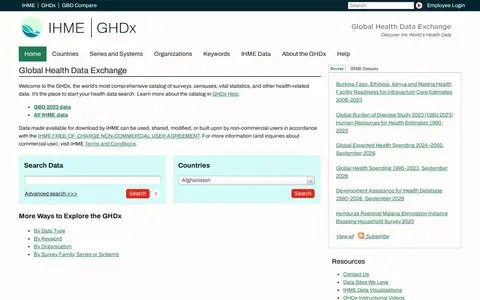
The Global Health Data Exchange (GHDx) is a catalog of global health and demographic data. It records information about data topics, links to data providers, and offers direct downloads where permission exists. The catalog covers surveys, censuses, vital statistics, registries, indicators, estimates, administrative health data, and health-related financial data. IHME-published data downloads may be used by non-commercial users under a free non-commercial user agreement.
Directory
Search results
Published directory entries matching your search.
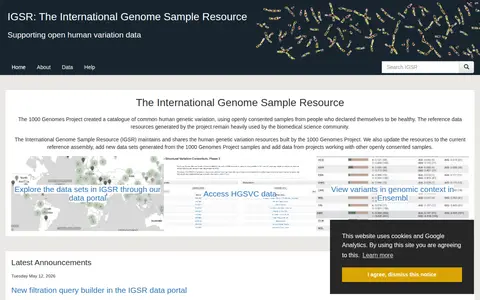
The International Genome Sample Resource maintains and shares human genetic variation resources built by the 1000 Genomes Project. It updates these resources to the current reference assembly, adds new data sets from project samples, and includes data from other openly consented samples. Data sets are explored through a data portal, and a public API queries samples, populations, data collections, analysis groups and files.
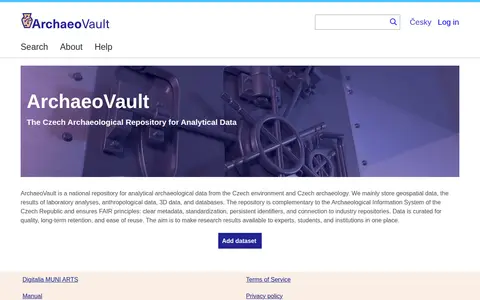
ArchaeoVault is a Czech national repository for analytical archaeological data. It stores geospatial data, laboratory analysis results, anthropological data, 3D data and databases, and complements the Archaeological Information System of the Czech Republic. Data is curated for quality, long-term retention and reuse, with metadata standards and persistent identifiers.
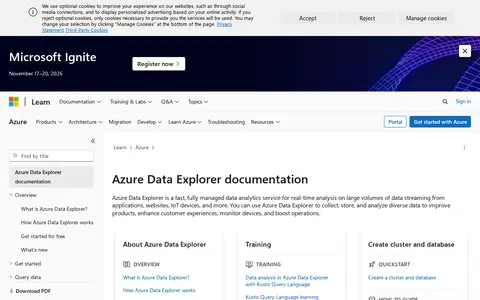
Azure Data Explorer is a fully managed cloud data analytics service for real-time analysis of large data volumes streaming from applications, websites, and IoT devices. It is used to collect, store, and analyze diverse data, and supports querying with Kusto Query Language, T-SQL, and Python.
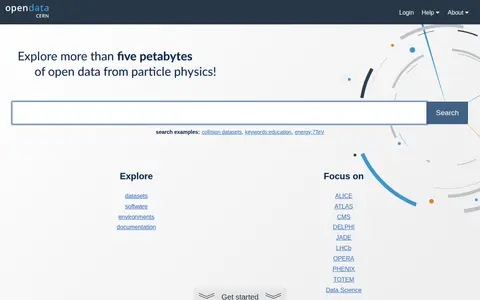
The CERN Open Data portal provides access to data produced by research at CERN, including particle physics data and accompanying software and documentation. Datasets and other material carry DOIs for citation, and the portal focuses on releasing event data from levels 2 and 3, with simplified formats used for outreach and analysis training.
The Coastal Data Information Program (CDIP) measures, analyzes, archives and disseminates coastal environment data. It specializes in wave measurement, swell modeling and forecasting, and analysis of coastal environment data. CDIP is an extensive network for monitoring waves and beaches along United States coastlines, operated by the Ocean Engineering Research Group at Scripps Institution of Oceanography. It has produced a publicly-accessible environmental data database since 1975.
The Research Data Center provides external researchers with access to economic and social science research data for non-commercial research or teaching at universities. Its data offerings include microdata on R&D activities of German companies, aggregated R&D data, higher education course catalogues and a startup monitor comparing university entrepreneurship support. The center advises on data selection, access and analysis.
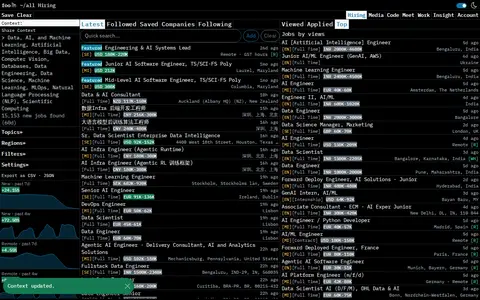
The go-to, no-nonsense, fast and lean job site in AI, ML, Data Science and Big Data.
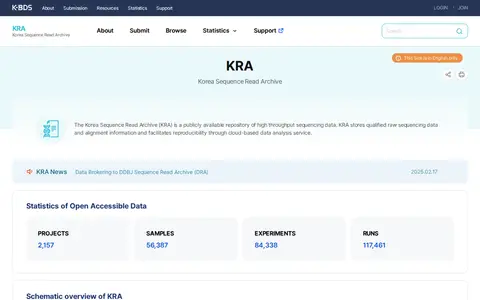
The Korea Sequence Read Archive (KRA) is a publicly available repository of high throughput sequencing data. It stores qualified raw sequencing data and alignment information and facilitates reproducibility through a cloud-based data analysis service. The site states it is in English only, and news notes restrictions on duplicate data submissions and data brokering to the DDBJ Sequence Read Archive.
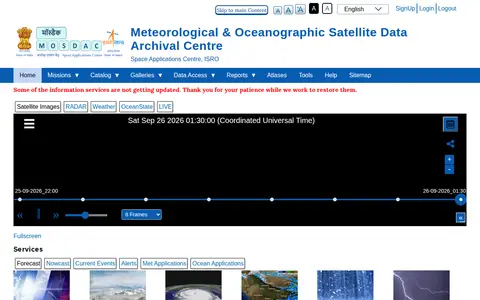
The Meteorological & Oceanographic Satellite Data Archival Centre (MOSDAC) is a data centre operated by the Space Applications Centre (SAC) of the Indian Space Research Organisation. It handles the reception, processing, analysis and dissemination of meteorological and oceanographic satellite data. The centre provides public access to satellite and in-situ datasets, weather and ocean forecasts, radar products, and data related to atmospheric conditions, soil moisture, sea surface salinity, ocean currents and other relevant geophysical parameters.
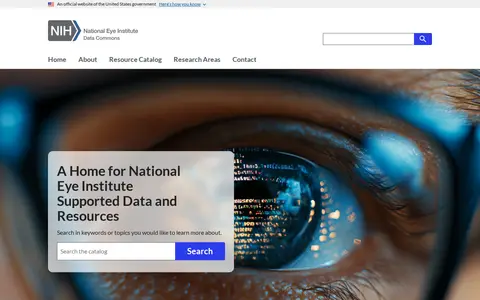
The National Eye Institute Data Commons is an official U.S. government repository for data and resources supported by the National Eye Institute. It hosts materials including next-generation sequencing data and associated tools, eyeGENE datasets and DNA samples for rare inherited eye disease research, the AMD IBI dataset, cone detection data, the Cat-Map resource, the Platform for Analysis of scEiad (PLAE), and materials related to perception, cognition and action research. Users can search the resource catalog.
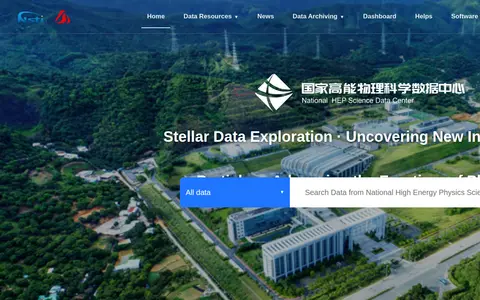
The National High Energy Physics Science Data Center is a data infrastructure built and operated by the Institute of High Energy Physics, Chinese Academy of Sciences. It provides data resources, software tools and computing capacity for high energy physics and related fields. The center offers recommended datasets, analysis tools and data monitoring, and publishes news and updates.
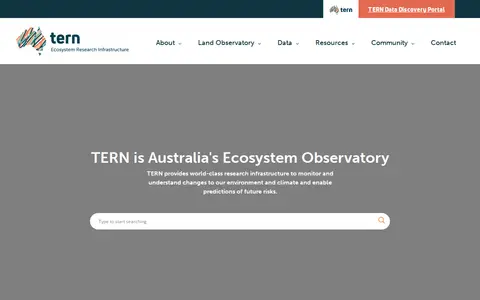
TERN is Australia's Terrestrial Ecosystem Research Network. It provides model-ready terrestrial ecosystem data for research and describes itself as Australia's Ecosystem Observatory. Its Data Discovery Portal supports discovery, access and reuse of datasets from TERN observatory measurements, including site surveys, remote sensing, model-derived and in-situ sensor data. Data infrastructure includes a cloud-based virtual desktop and tools for data submission and landscape-scale dataset analysis.
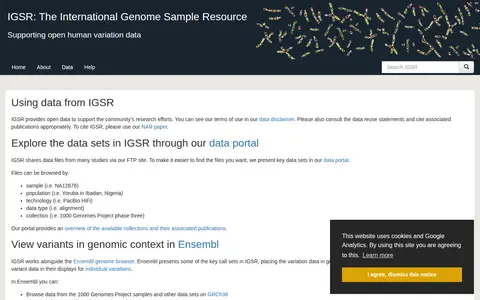
IGSR, the International Genome Sample Resource, provides open human variation data. Data files from many studies are shared via FTP, with key data sets presented in a data portal browsable by sample, population, technology, data type and collection. Ensembl presents some key call sets in genomic context. Bulk downloads are recommended via Globus, with FTP and Aspera also available.
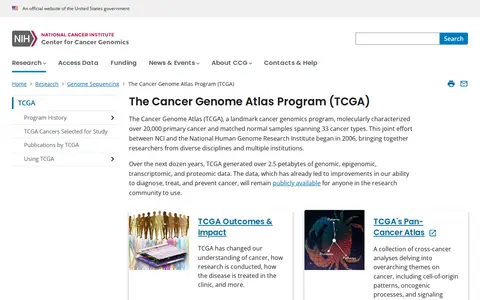
The Cancer Genome Atlas (TCGA) is an NCI and National Human Genome Research Institute program that molecularly characterized over 20,000 primary cancer and matched normal samples spanning 33 cancer types. TCGA data are publicly available and accessible through the Genomic Data Commons Data Portal, which provides web-based analysis and visualization tools.
The City of Saskatoon Open Data Site is a municipal catalogue publishing City of Saskatoon data for analysis and applications. The City states it is investigating formal open data licensing and currently offers a broad license to use published Information. It does not warrant or guarantee the accuracy or completeness of the Information, and ongoing updates may not be incorporated.
The City of Surrey Open Data Catalog is a portal for discovering, analyzing and downloading municipal data. Data can be downloaded in formats including CSV, KML, Zip, GeoJSON, GeoTIFF and PNG, and API links are provided for GeoServices, WMS and WFS. Analysis is possible through charts and thematic maps, and StoryMaps and Web Maps can be created.
Clearbit is a B2B data provider that has joined HubSpot and describes itself as the first HubSpot Native Data Provider. It enriches records for leads, contacts and accounts, scores and routes leads in real time, and reveals buying intent from anonymous website traffic. Data comes from public web data, proprietary data and LLMs.
CO Open Data is a data hub for discovering, analyzing and downloading data. Datasets can be downloaded in CSV, KML, Zip, GeoJSON, GeoTIFF or PNG, and API links are provided for GeoServices, WMS and WFS. It supports analysis with charts and thematic maps and creation of StoryMaps and Web Maps.
Data Science Weekly is a free weekly data science newsletter published by DATAYOU, LLC. It delivers curated data science news, articles, job listings, tutorials, and learning resources to subscribers every Thursday. The service also maintains an archive of past newsletter issues and offers additional data science guides and course materials on its website.
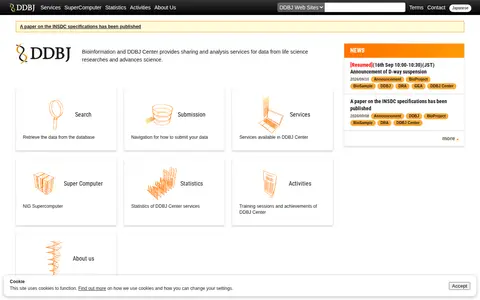
The DNA Data Bank of Japan (DDBJ) is a center that provides sharing and analysis services for life science research data, aligned with INSDC specifications. It offers search and submission functions for biological data, access to a supercomputer, training sessions, service statistics, and resources including BioProject, BioSample and DRA databases, alongside operational news and updates.
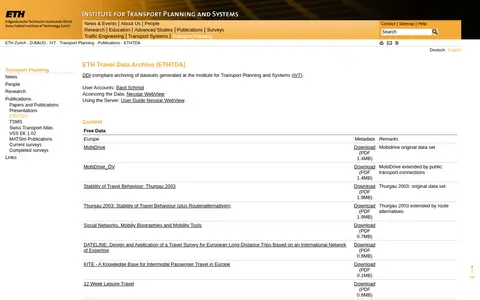
A virtual platform for travel data established in 2002 at ETH Zurich's Institute for Transport Planning and Systems. It lets end users browse archived travel data over the web and perform simple statistical analysis. The archive provides information on travel data developed or analysed at the institute, including details of the originating travel survey, and is built around the NESSTAR system.
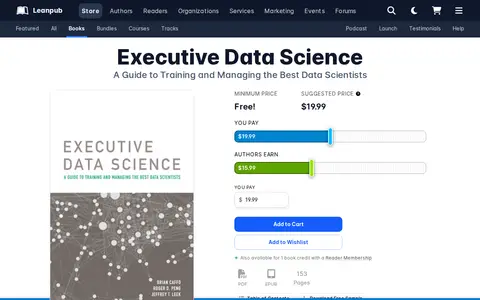
A book by Brian Caffo, Roger D. Peng and Jeffrey Leek on assembling and leading a data science enterprise, based on the Johns Hopkins Executive Data Science Specialization. It covers a crash course in data science, recruiting and evaluating a team, and the structure of the data science pipeline. Available as PDF and EPUB; printed copies are sold through Lulu.
Geochron is a database system for capturing data and metadata documenting geochronologic age estimation, enabling future reuse, recalculation and integration. Data can be ingested from data reduction programs used in geochronology and thermochronology communities, which are adapted to upload standardized data to the database. A REST search service accepts GET variables such as geographic bounds, ages, analysis method, material, rock type and laboratory.