
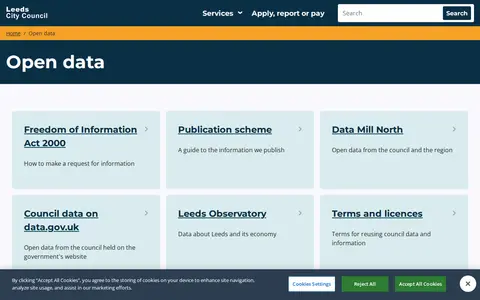

A Leeds City Council page that links to the council's open data resources, including Data Mill North, council data on data.gov.uk, and the Leeds Observatory. It also provides access to terms and licences and the EU reuse of public sector information directive.
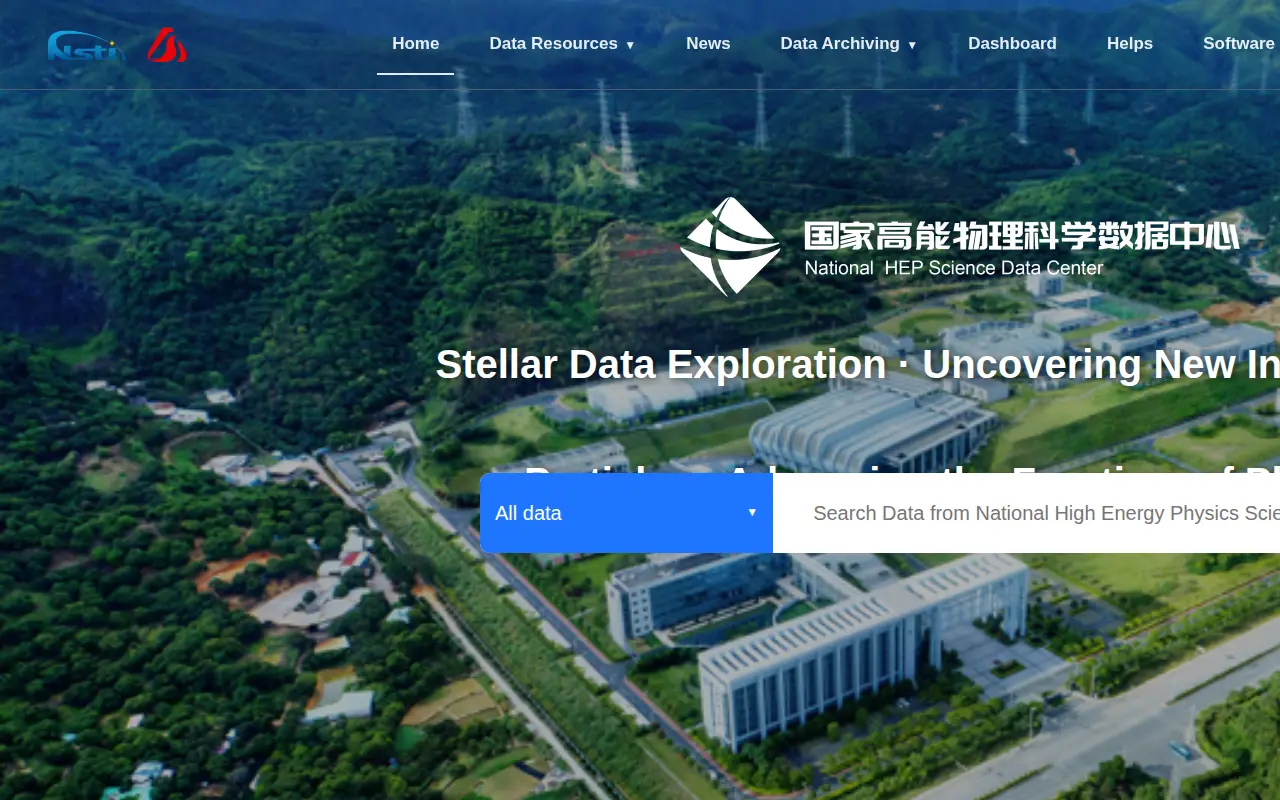
National High Energy Physics Science Data Center
The National High Energy Physics Science Data Center is a data infrastructure built and operated by the Institute of High Energy Physics, Chinese Academy of Sciences. It provides data resources, software tools and computing capacity for high energy physics and related fields. The center offers recommended datasets, analysis tools and data monitoring, and publishes news and updates.
Features
- nearly 161PB of storage space Source: www.nhepsdc.cn
Links
Tags
-
0A Leeds City Council page that links to the council's open data resources, including Data Mill North, council data on data.gov.uk, and the Leeds Observatory. It also provides access to terms and licences and the EU reuse of public sector information directive.
-
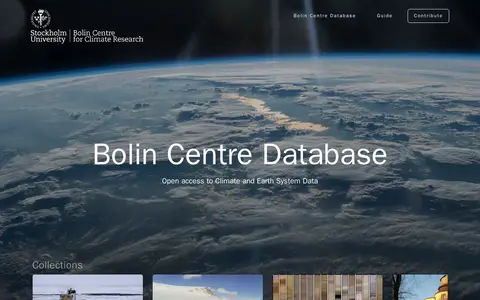
0The Bolin Centre Database provides open access to climate and Earth system data. It offers interactive datasets and collections, including Oden and Tarfala data, historical weather and land-cover records, and datasets such as Baltic Sea macrofauna and Kebnekaise meteorological data.
-
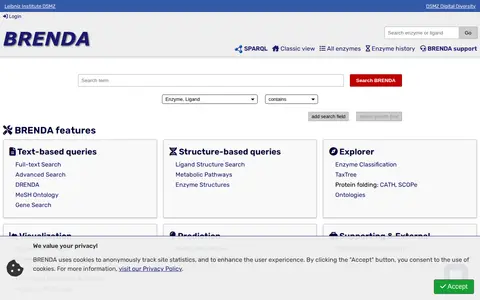
0BRENDA is a comprehensive enzyme information system offering text-based and structure-based queries, an EC explorer, visualization, and prediction tools. It includes enzyme summary pages, ligand and tissue ontology searches, taxonomy and genome browsing, and pathway maps. The online version is free under the CC BY 4.0 license.
-
0
The NF Data Portal is an open science platform to help scientists find neurofibromatosis datasets, resources, analysis, tools, and publications. It was created to help openly explore and share NF datasets, analysis tools, resources, and publications related to neurofibromatosis and schwannomatosis.
-
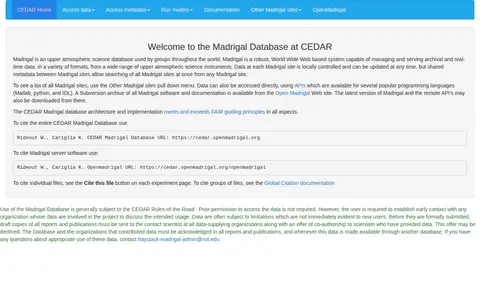
0Madrigal is a web-based upper atmospheric science database that manages and serves archival and real-time data from various instruments. Data is locally controlled at each site, while shared metadata enables searching across all Madrigal sites. APIs for Matlab, Python and IDL allow direct data access.
-
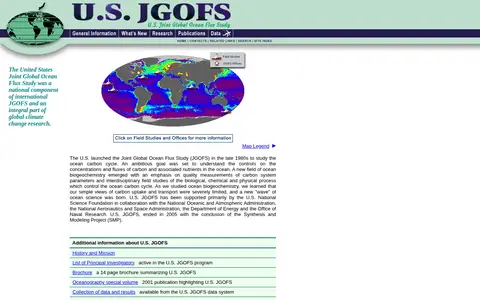
0The U.S. Joint Global Ocean Flux Study (U.S. JGOFS) was a national component of international JGOFS, launched in the late 1980s to study the ocean carbon cycle. Its goal was to understand the controls on the concentrations and fluxes of carbon and associated nutrients in the ocean. The program ended in 2005 with the conclusion of the Synthesis and Modeling Project (SMP).
Community notes
Reviews and discussion
No reviews yet
Be the first to share how this project worked for you.
Join the discussion
Sign in with a verified account to leave a review or join the discussion.
Sign in to review