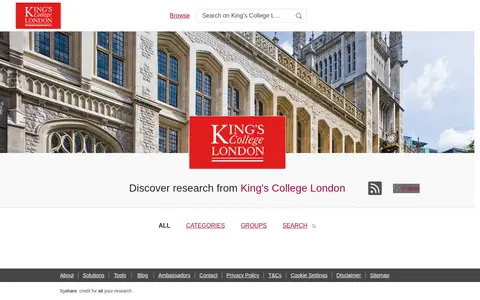
kcl.figshare.com
Browse research datasets and experimental data related to biological psychiatry.

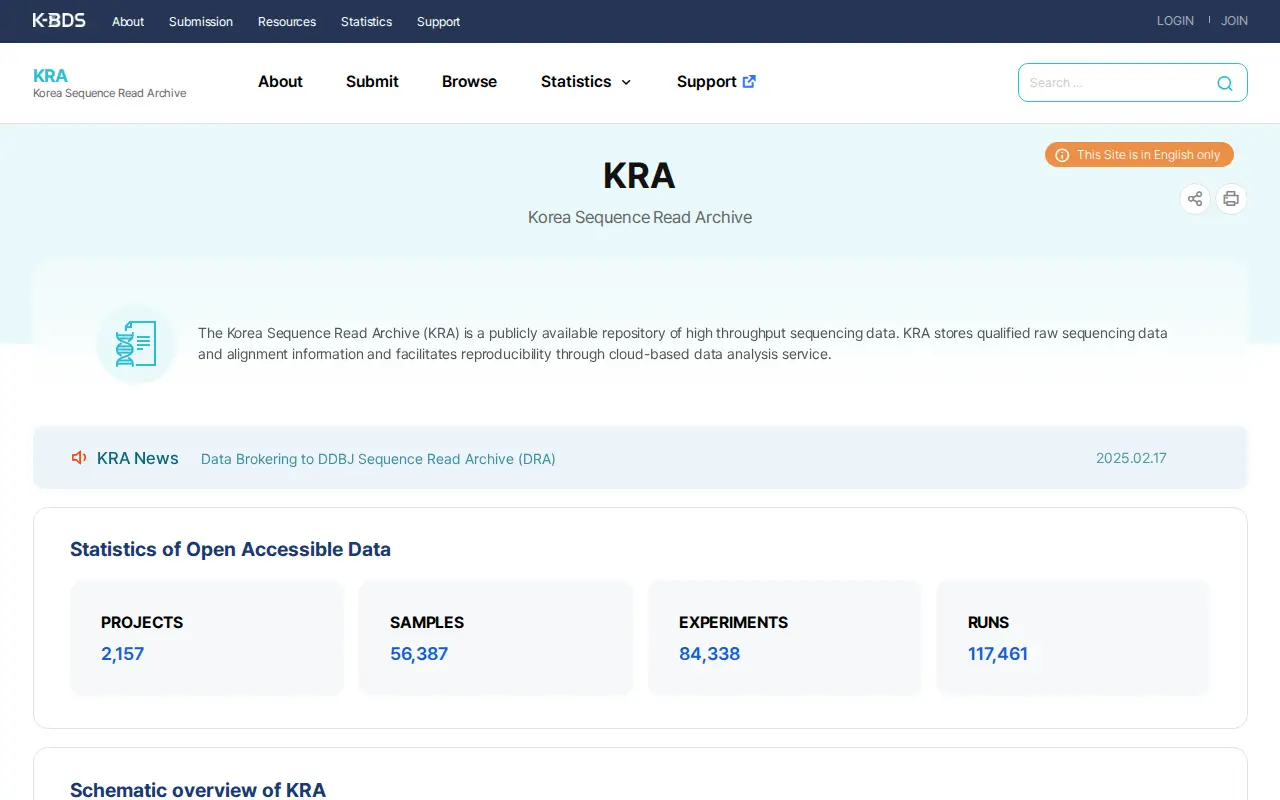
The Korea Sequence Read Archive (KRA) is a publicly available repository of high throughput sequencing data. It stores qualified raw sequencing data and alignment information and facilitates reproducibility through a cloud-based data analysis service. The site states it is in English only, and news notes restrictions on duplicate data submissions and data brokering to the DDBJ Sequence Read Archive.
Browse research datasets and experimental data related to biological psychiatry.

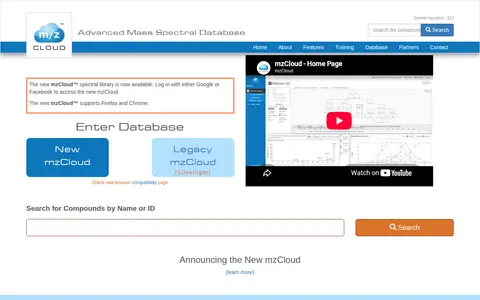
mzCloud is a curated mass spectral database of high-resolution tandem mass spectra arranged into spectral trees. It supports spectrum, tree, structure, substructure, m/z, and compound name searches, and is intended to help identify compounds, including those not present in the library. The database includes annotated fragments, molecular formulas, identifiers, and experimental metadata. It is an open consortium effort covering fields such as metabolomics and toxicology.
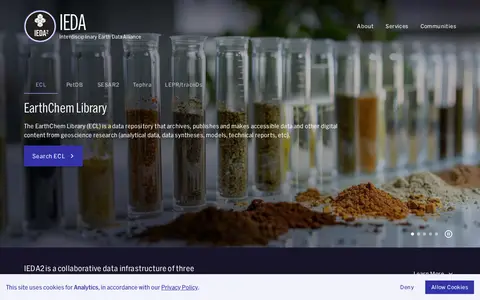
IEDA2 is a collaborative data infrastructure of three complementary data systems: EarthChem, LEPR/traceDs and SESAR. It supports geoscience researchers in sharing and accessing sample data following FAIR data principles, and its mission is open, reproducible and transparent science practices. Components include the EarthChem Library data repository and PetDB geochemical data access.
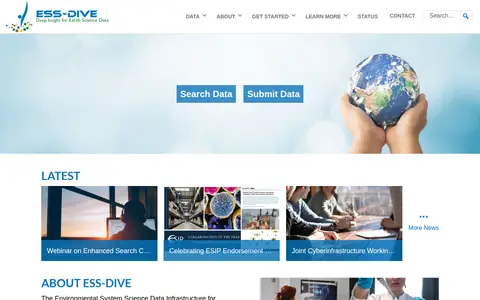
ESS-DIVE is a data repository for Earth and environmental sciences. It collects, stores, manages and shares environmental systems data from research sponsored by the U.S. Department of Energy. It offers data submission, review, publication, storage and search services, and lists support for curating FAIR and AI-ready data. It is maintained by Lawrence Berkeley National Laboratory.

SIDER is a resource on marketed medicines and their recorded adverse drug reactions, extracted from public documents and package inserts. It includes side effect frequency, drug and side effect classifications, and links to related information such as drug-target relations. The current version, SIDER 4.1, was released in 2015, and the data is stated to be out of date.
Find and access engineering research data, with indexed experimental data.
Community notes
Be the first to share how this project worked for you.
Sign in with a verified account to leave a review or join the discussion.
Sign in to reviewKeep exploring
Browse research datasets and experimental data related to biological psychiatry.
mzCloud is a curated mass spectral database of high-resolution tandem mass spectra arranged into spectral trees. It supports spectrum, tree, structure, substructure, m/z, and compound name searches, and is intended to help identify compounds, including those not present in the library. The database includes annotated fragments, molecular formulas, identifiers, and experimental metadata. It is an open consortium effort covering fields such as metabolomics and toxicology.
IEDA2 is a collaborative data infrastructure of three complementary data systems: EarthChem, LEPR/traceDs and SESAR. It supports geoscience researchers in sharing and accessing sample data following FAIR data principles, and its mission is open, reproducible and transparent science practices. Components include the EarthChem Library data repository and PetDB geochemical data access.
ESS-DIVE is a data repository for Earth and environmental sciences. It collects, stores, manages and shares environmental systems data from research sponsored by the U.S. Department of Energy. It offers data submission, review, publication, storage and search services, and lists support for curating FAIR and AI-ready data. It is maintained by Lawrence Berkeley National Laboratory.
SIDER is a resource on marketed medicines and their recorded adverse drug reactions, extracted from public documents and package inserts. It includes side effect frequency, drug and side effect classifications, and links to related information such as drug-target relations. The current version, SIDER 4.1, was released in 2015, and the data is stated to be out of date.
Find and access engineering research data, with indexed experimental data.