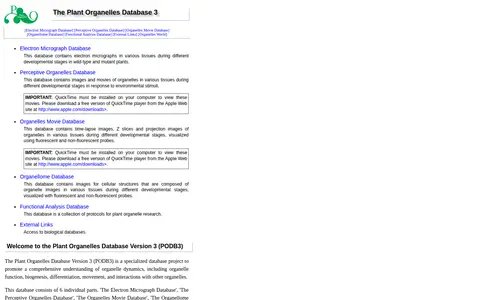
The Plant Organelles Database 3 (PODB3) is a specialized database project on organelle dynamics, function, biogenesis, differentiation, movement and interactions. It consists of six parts, including an Electron Micrograph Database, a Perceptive Organelles Database, an Organelles Movie Database, an Organellome Database, a Functional Analysis Database and external links. Data and protocols come from submissions by plant researchers. Data are free only to non-profit institutions, universities and colleges.

Directory
Search results
Published directory entries matching your search.
Airport Webcams is an X account that maintains a large database of live airport webcam feeds. The database includes over 2,600 active webcams indexed by name, type and region, alongside a special liveries database and an airport live show database.
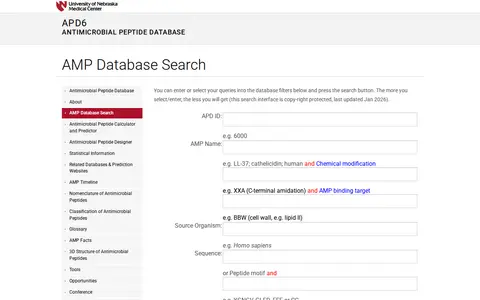
The Antimicrobial Peptide Database (APD6) is a resource focused on antimicrobial peptides. It offers a searchable interface with filtering options by attributes such as AMP ID, name, chemical modification, binding target, source organism, sequence, and peptide length. The database also includes supplementary materials including nomenclature guidance, classification systems, a glossary, 3D structure information, statistical data, related database links, and news updates.
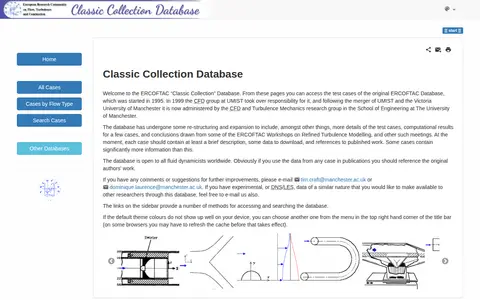
The ERCOFTAC Classic Collection Database provides access to test cases from the original ERCOFTAC Database, started in 1995. Administered by the CFD and Turbulence Mechanics research group at The University of Manchester, it offers case descriptions, downloadable data and references, and is open to fluid dynamicists worldwide.
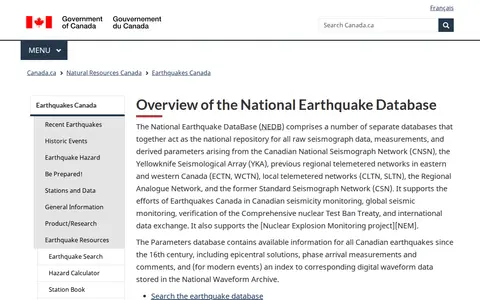
The National Earthquake DataBase (NEDB) is a set of separate databases forming the national repository for raw seismograph data, measurements and derived parameters from Canadian and other seismograph networks. Its Parameters database holds information on Canadian earthquakes since the 16th century, and its Stations database holds seismograph station data.
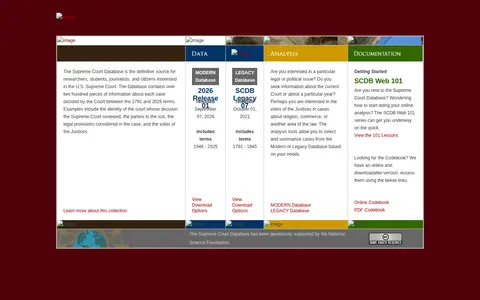
The Supreme Court Database is a dataset about U.S. Supreme Court cases, containing over two hundred pieces of information per case, including parties, legal provisions and Justice votes. It covers the 1946 to 2025 terms in the Modern Database and 1791 to 1945 in the Legacy Database, with analysis tools and codebooks for researchers, students, journalists and citizens.
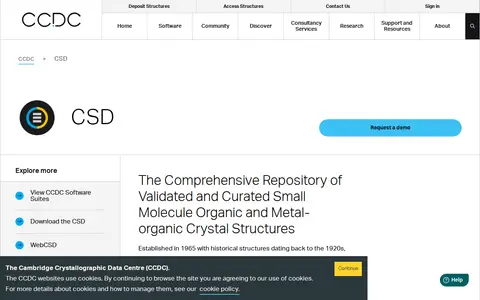
The Cambridge Structural Database (CSD), maintained by the Cambridge Crystallographic Data Centre, is the largest curated crystal structure database. It supports structural chemistry research across fields including drug discovery, solid form analysis, and functional materials design, with associated software tools for searching, analysing, and working with crystal structure data. The platform also offers community resources, training support, and data deposit services.
LGA World Database is a miscellaneous web resource for discovery, directories, archives, web culture, or useful tools.
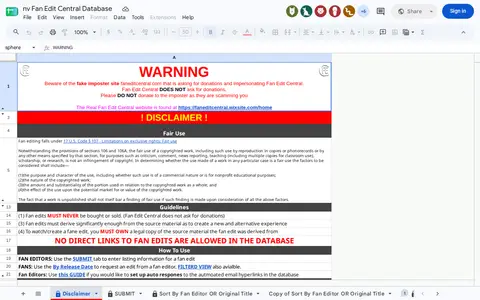
FEC Database is a video streaming or discovery resource with movie, TV, category, and watch pages.
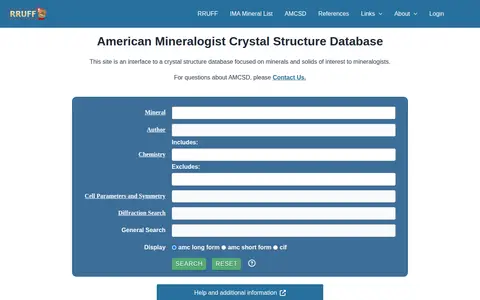
The American Mineralogist Crystal Structure Database (AMCSD) is an interface to a crystal structure database focused on minerals and solids of interest to mineralogists. Part of the RRUFF mineral data platform, it allows users to search for mineral data by chemistry, including filtering by element inclusion or exclusion, and access related mineral lists, references and supporting tools.
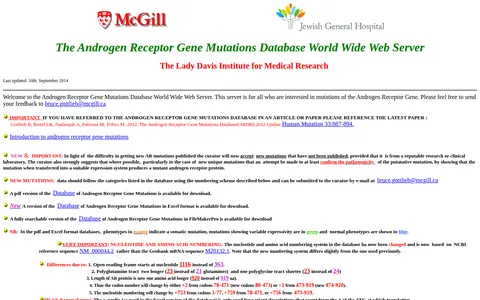
The Androgen Receptor Mutations Database is a resource hosted by The Lady Davis Institute for Medical Research that catalogs mutations of the Androgen Receptor Gene. It accepts new mutation submissions from reputable research or clinical laboratories, and users are asked to reference its 2012 update paper when citing the database.
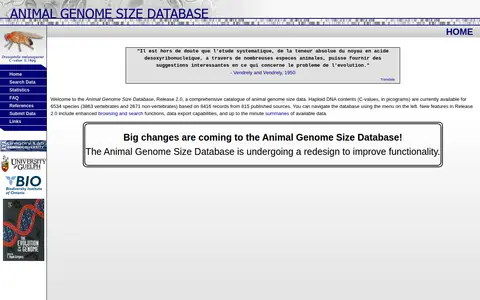
The Animal Genome Size Database is a catalogue of animal genome size data. It provides haploid DNA contents in picograms for 6534 species, with 8416 records drawn from 815 published sources. Release 2.0 adds enhanced browsing and search functions, data export capabilities, and summaries of available data. The database is for personal and academic use.
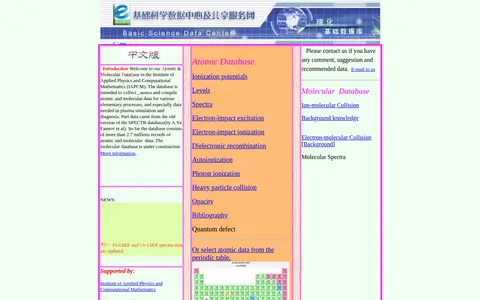
The Atomic & Molecular Database at the Institute of Applied Physics and Computational Mathematics collects, assesses and compiles atomic and molecular data for elementary processes, particularly data used in plasma simulation and diagnosis. It holds more than 2.7 million records and includes an ionization potentials and levels index and a periodic table selector. The molecular database is under construction.
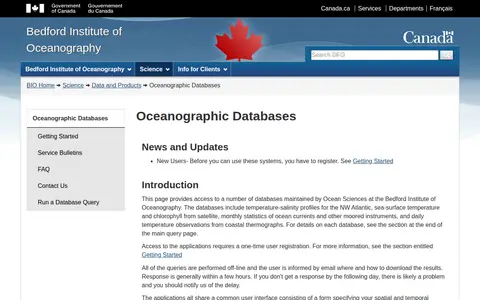
The Bedford Institute of Oceanography provides access to oceanographic databases maintained by Ocean Sciences. The databases cover temperature-salinity profiles for the NW Atlantic, satellite sea-surface temperature and chlorophyll, monthly statistics of ocean currents and moored instruments, and daily coastal thermograph observations. Access requires a one-time user registration, and queries run off-line with results sent by email.
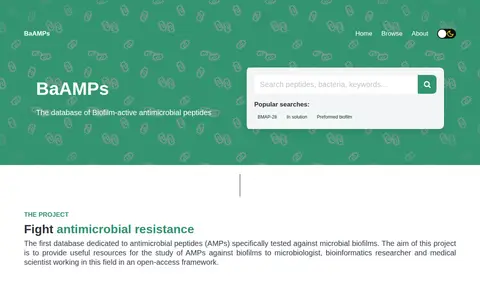
The database of Biofilm-active antimicrobial peptides is described as the first database dedicated to antimicrobial peptides tested specifically against microbial biofilms. It aims to provide open-access resources on AMPs against biofilms for microbiologists, bioinformatics researchers and medical scientists working in the field.
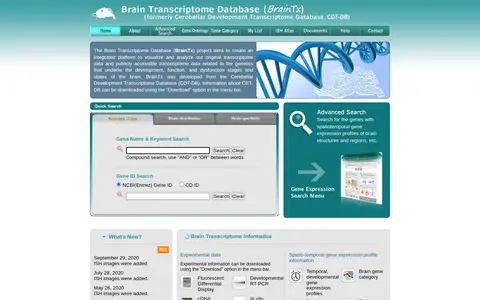
The Brain Transcriptome Database (BrainTx) is an integrated platform for visualizing and analyzing original transcriptome data and publicly accessible transcriptome data related to the genetics underlying brain development, function, and dysfunction. Developed from the Cerebellar Development Transcriptome Database, it offers gene and keyword searches and spatiotemporal gene expression profiles.
The Canadian Database of Geochemical Surveys is the public interface to a Geological Survey of Canada database that catalogues regional geochemical surveys across Canada. It provides high-level metadata for catalogued surveys and links to spreadsheets and KML maps for standardised raw data, with data presented through an index map query, periodic table search and index tables.
The Canadian Disaster Database holds detailed information on more than 1,000 natural, technological and conflict events, excluding war, since 1900 that directly affected Canadians. It records where and when events occurred, injuries, evacuations, fatalities and estimated costs. The database can be downloaded as a spreadsheet through the Open Government Portal and is updated periodically.
The Carbohydrate-Active enZYmes Database is a specialist database, online since 1998, describing families of structurally-related catalytic and carbohydrate-binding modules of enzymes that degrade, modify, or create glycosidic bonds. Data can be browsed by sequence-based families or by genome content, with new genomes added after GenBank releases. It also offers automatic annotation and human curation services for data.
The Crystallography Open Database is an open-access collection of crystal structures of organic, inorganic, metal-organic compounds and minerals, excluding biopolymers. It provides browsing and searching, including search by structural formula and JSME search, and accepts deposited data. The site reports 535015 entries. All data and the database are dedicated to the public domain under the CC0 license.
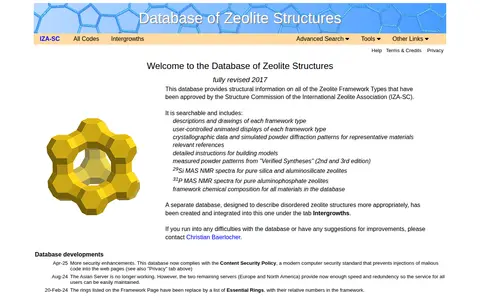
The Database of Zeolite Structures provides structural information on Zeolite Framework Types approved by the Structure Commission of the International Zeolite Association. It is searchable and includes framework descriptions and drawings, crystallographic data, simulated powder diffraction patterns, references and framework chemical compositions. A separate database describing disordered zeolite structures is integrated under the Intergrowths tab.
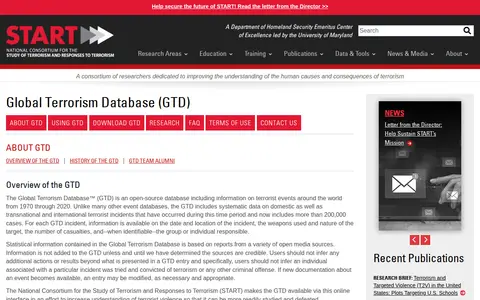
The Global Terrorism Database is an open-source database of terrorist events worldwide from 1970 through 2020, with more than 200,000 cases. Each incident entry covers the date and location, weapons used, target nature, casualties and, when identifiable, the responsible group or individual. Data is drawn from open media sources and added only after source credibility is determined.
The HMS LINCS Database is a Harvard Medical School project providing access to publicly available LINCS datasets. It includes information on experimental reagents such as small molecules, cells, antibodies and proteins, along with experimental and data analysis protocols. Datasets can be browsed or searched, and detailed protocol and results information is available for each entry.
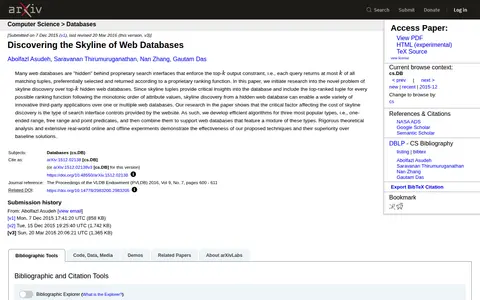
An arXiv paper on discovering skylines over hidden web databases whose search interfaces enforce a top-k output constraint. It examines how search interface controls affect discovery cost and develops algorithms for one-ended range, free range and point predicates, combined for mixed interfaces. Experiments over real-world online and offline databases are reported.