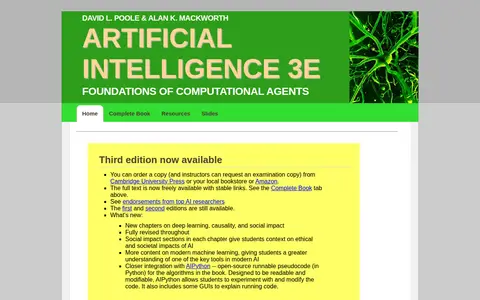
Artificial Intelligence: Foundations of Computational Agents, 2nd Edition is a textbook on artificial intelligence focused on computational agents, authored by David L. Poole and Alan K. Mackworth. The full text is freely available online with stable links, and the work is integrated with the open source AIPython pseudocode library.
Directory
Search results
Published directory entries matching your search.

hai.stanford.edu
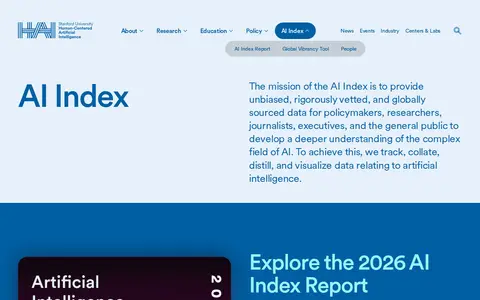
The AI Index Report 2023 is published by Stanford HAI’s Artificial Intelligence Index project, which collects, distills, and visualizes unbiased, globally sourced data about artificial intelligence. The 2023 report highlights a widening gap between advancing AI capabilities and insufficient governance frameworks.
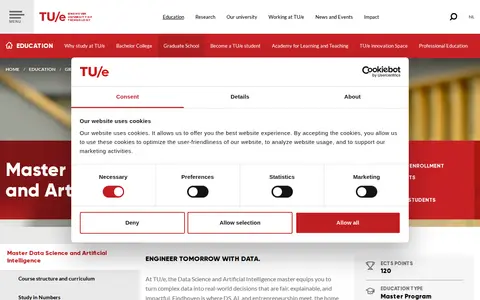
A two-year, 120 ECTS Master of Science program in Data Science and Artificial Intelligence at Eindhoven University of Technology, taught in English. Students study collecting, managing, analyzing and interpreting data, and developing AI systems, with specializations such as Process Analytics, Data Management & AI, Visual Data Science, Data Analytics, Machine Learning and Artificial Intelligence.

Artificial Intelligence at the Service of Collective Intelligence creates or edits images with generative AI and text-based controls.

Artificial intelligence technology behind ChatGPT was built in Iowa — with a lot of water creates or edits images with generative AI and text-based…
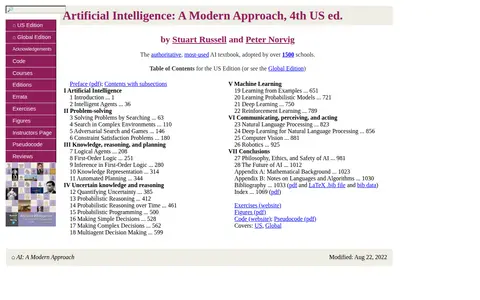

aima.cs.berkeley.edu
Artificial Intelligence: A Modern Approach is the official companion site for the 4th US edition of the AI textbook of the same name, authored by Stuart Russell and Peter Norvig. The textbook is the most widely used AI textbook, adopted by over 1500 schools. The site provides supporting resources including the book's table of contents, code, course materials, exercises, figures, and errata.
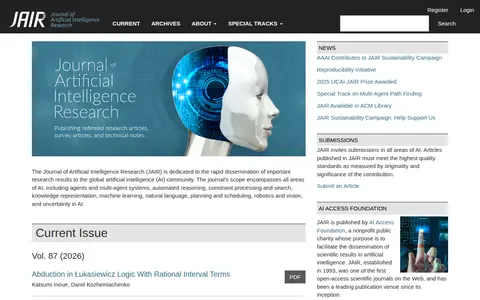

The Journal of Artificial Intelligence Research (JAIR) is a journal dedicated to the rapid dissemination of important research results to the global AI community. Its scope encompasses all areas of AI, including agents and multi-agent systems, automated reasoning, knowledge representation, machine learning, natural language, planning and scheduling, robotics and vision, and uncertainty in AI.

magic.dev
Magic.dev is an artificial intelligence company focused on developing safe artificial general intelligence (AGI) to accelerate progress on high-priority global problems. The company builds frontier code models intended to automate software engineering and AI research workflows. Its technical approach combines large-scale pre-training, domain-specific reinforcement learning, extended context windows, and increased inference-time compute. Magic.dev employs a small team of engineers and researchers working on fundamental AGI-related research problems.
Mohamed bin Zayed University of Artificial Intelligence over in Abu Dhabi, United Arab Emirates is known for Mathematics and Computer Science.


techcrunch.com
Technology publication covering startups, venture capital, software, artificial intelligence and major tech companies.

venturebeat.com
Technology publication focused on artificial intelligence, data, enterprise software, gaming and startup investment.
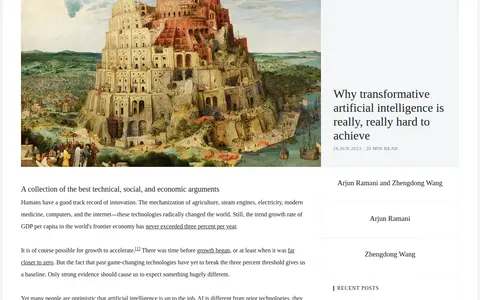

An essay by Arjun Ramani and Zhengdong Wang arguing that transformative AI is hard to achieve, assembling technical, social and economic arguments. It notes that trend growth of GDP per capita in frontier economies has never exceeded three percent per year, and that major technical hurdles remain despite rapid progress in some subfields.

zdnet.com
Technology publication covering enterprise IT, software, cybersecurity, artificial intelligence and devices.
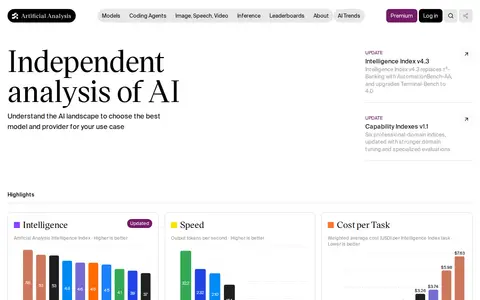

artificialanalysis.ai
Artificial Analysis provides comparison and analysis of AI models and API hosting providers. It offers independent benchmarks across performance metrics including quality, price, output speed and latency, along with an intelligence index and cost-per-task measures.

twelvelabs.io
Twelve Labs provides an enterprise video intelligence platform and API powered by multimodal artificial intelligence. The platform allows users to search, analyze, and understand video content across visual, audio, and language modalities, and can process large volumes of video data at high speed.

see.stanford.edu
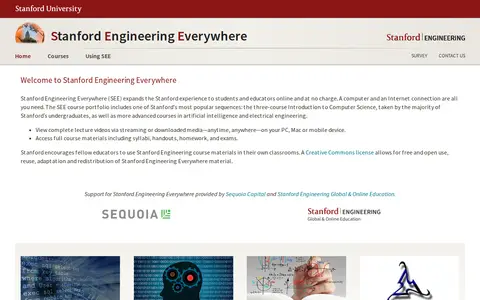
Stanford Engineering Everywhere is an online offering of Stanford engineering courses available to students and educators at no charge. Its course portfolio includes a three-course Introduction to Computer Science sequence and more advanced courses in artificial intelligence and electrical engineering. Lecture videos can be streamed or downloaded, and full course materials include syllabi, handouts, homework and exams.


stanford.edu
Stanford University is a leading global research and teaching institution. Its core mission centers on discovery and learning, fostering intellectual expansiveness, openness to new lines of thinking, and pursuit of excellence across disciplines. The university conducts cross-disciplinary research to address societal challenges, including work on human-centered artificial intelligence, and supports innovation pathways for new applications while shaping related public policies.

404media.co
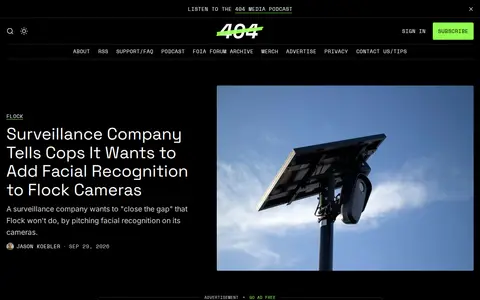
404 Media is an independent, journalist-founded digital media company that reports on how technology shapes the world. Its coverage includes hacking, cybersecurity, cybercrime, sex, artificial intelligence, consumer rights, surveillance, privacy and the democratization of the internet, through investigative reports, longform features, blogs and scoops.

github.com
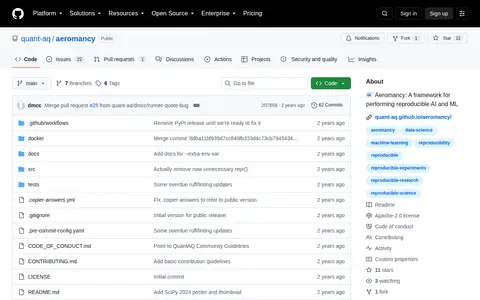
Aeromancy is an open-source GitHub repository hosted by quant-aq. It is a framework designed to support reproducible artificial intelligence and machine learning workflows. The project includes documentation, resources for common development commands, and was featured at the SciPy 2024 conference.

github.com
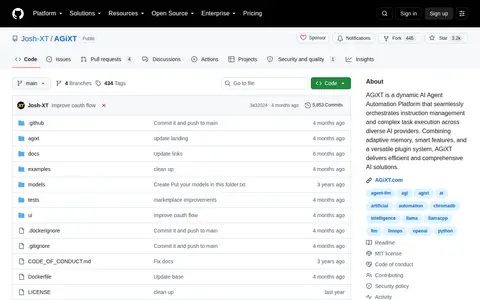
An Artificial Intelligence Automation Platform.

scaler.com
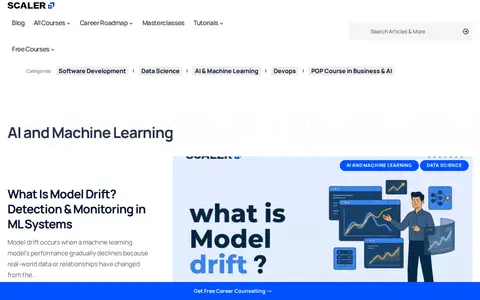
This is a Scaler blog category page collecting articles on artificial intelligence and machine learning. Posts listed include MLOps projects, becoming an AI research scientist, model drift detection and monitoring, and retrieval-augmented generation evaluation metrics. The page also links to categories such as software development and data science, and offers career counselling.

techpolicy.press
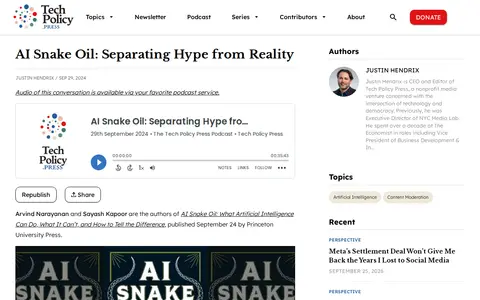
A TechPolicy.Press discussion with Arvind Narayanan and Sayash Kapoor, authors of AI Snake Oil: What Artificial Intelligence Can Do, What It Can’t, and How to Tell the Difference, published September 24 by Princeton University Press. The conversation covers AI hype and how to distinguish AI that does not work from real promise.

nhlocal.github.io
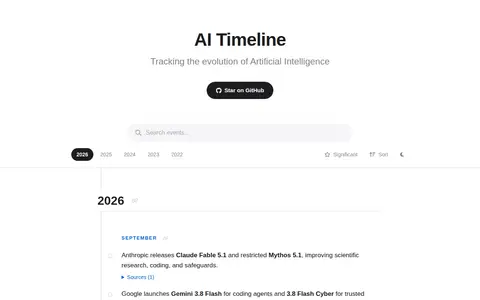
AI Timeline is a project that tracks the evolution of Artificial Intelligence by documenting significant milestones and releases from 2022 to present. It organizes entries by year, with each entry including details of the release and a linked source for the announcement.

aiweekly.co
AI Weekly is an AI news publication that ranks and explains the day's most important artificial intelligence stories. It tracks AI models, agents, funding, policy and research, with updates throughout the day, and also publishes a regular numbered issue and live alerts.