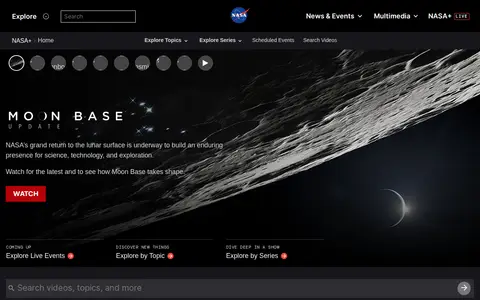
plus.nasa.gov
NASA+ preserves and presents historical films, classic productions, and moving-image collections online.
Directory
Published directory entries matching your search.
NASA+ preserves and presents historical films, classic productions, and moving-image collections online.

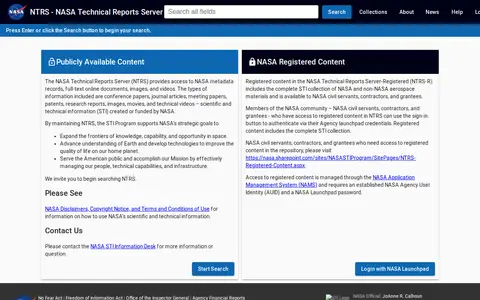
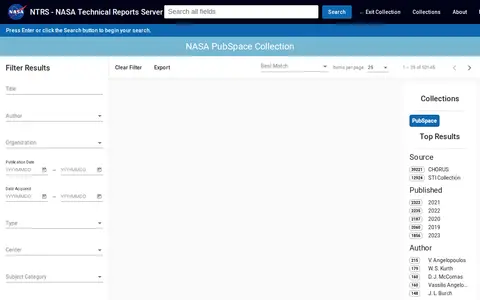
The NASA Technical Reports Server provides access to NASA metadata records, full-text online documents, images, and videos, including conference papers, journal articles, patents, research reports, and technical videos created or funded by NASA. Registered content is available to NASA civil servants, contractors, and grantees through NASA Launchpad credentials.
NASA 3D Resources helps edit, convert, generate, search, or organize images and visual assets.

NASA API is a developer tool, library, or framework for building, testing, or maintaining software.

NASA NTRS helps search books, ebooks, papers, library records, or reading archives.

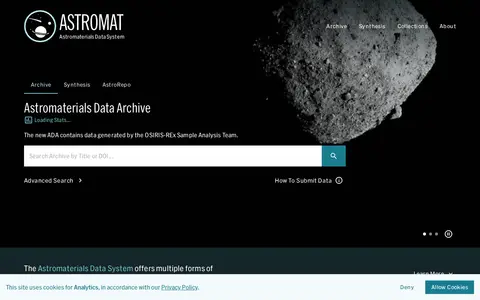
The Astromaterials Data System (Astromat) is a data infrastructure that curates, archives, and provides access to analytical data generated from astromaterials samples. It is NASA’s designated archive for laboratory analytical data acquired on samples from past, present, and future NASA missions curated by NASA’s Astromaterials Acquisition and Curation Office. The system supports end-to-end data curation and synthesis for advanced analysis and AI/ML use, and features machine- and human-actionable interfaces for the astromaterials research community.
NASA is an educational resource for documentaries, courses, books, reference material, or self-learning.

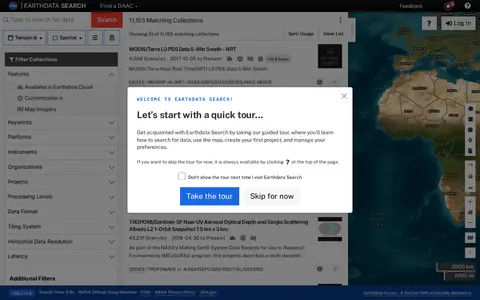
Earthdata Search is a browser-based tool for searching, discovering, visualizing, refining and accessing NASA Earth Observation data. The site requires a JavaScript-aware browser, and an upgraded browser is needed to use it. Earthdata Access is offered as a Section 508 accessible alternative.
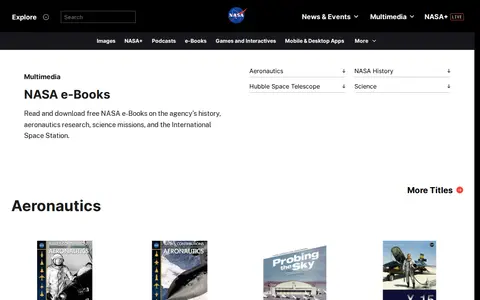
NASA Ebooks helps find books, reading material, archives, or public-domain educational texts.
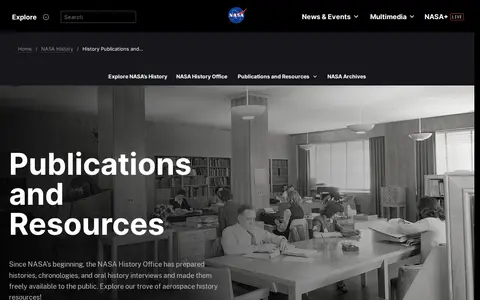
NASA History is an educational resource for learning science, history, language, geography, or general knowledge.
NASA's Eyes is an educational resource for learning science, history, language, geography, or general knowledge.

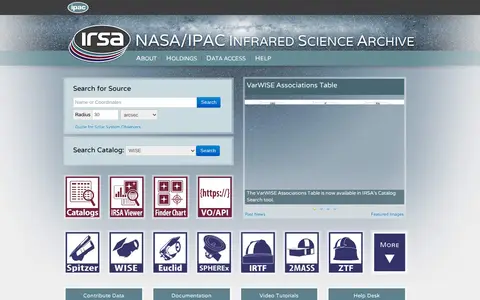
The NASA/IPAC InfraRed Science Archive (IRSA) curates and provides access to science products from NASA's infrared and submillimeter missions. It offers search functionality for source catalogs from missions including WISE, 2MASS, Spitzer, Planck, Herschel, Gaia, and others, along with contributed datasets, documentation, and user support resources including a guide for solar system observers.

NASA2Explore is an educational resource for documentaries, courses, books, reference material, or self-learning.

Nasahistory is an educational resource for learning science, history, language, geography, or general knowledge.

Nasahubble is an educational resource for documentaries, courses, books, reference material, or self-learning.

NASASpaceFlight is an educational resource for documentaries, courses, books, reference material, or self-learning.

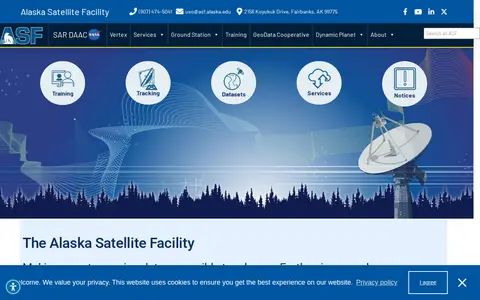
The Alaska Satellite Facility (ASF) operates the NASA archive of synthetic aperture radar (SAR) data and functions as a Distributed Active Archive Center (DAAC) supporting NASA's ESDIS project. It specializes in SAR data collection, processing, archiving, and distribution, and offers related services including ground station operations, training resources, and public access to SAR datasets such as NISAR L-Band and Sentinel-1 data.

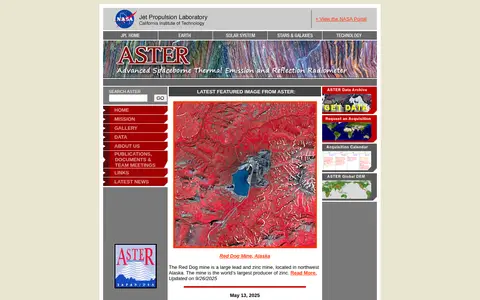
ASTER is a high resolution imaging instrument on the Terra satellite. It obtains detailed maps of land surface temperature, emissivity, reflectance and elevation. ASTER is a cooperative effort between NASA, Japan's Ministry of Economy, Trade and Industry, and Japan Space Systems. ASTER data can be accessed using NASA's Earthdata Search.
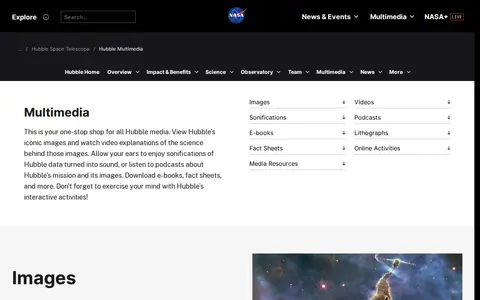
HubbleSite is NASA’s official multimedia hub for the Hubble Space Telescope. It provides free downloadable resources including e-books, images, fact sheets, and lithographs, as well as interactive games, videos, and audio sonifications focused on the Hubble mission and space science. The page also links to broader NASA news, events, and other space mission resources.
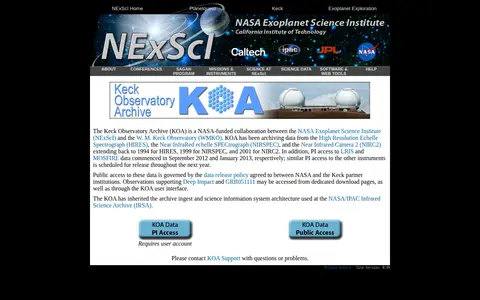
The Keck Observatory Archive is a NASA-funded collaboration between the NASA Exoplanet Science Institute and the W. M. Keck Observatory. It archives data from the HIRES, NIRSPEC and NIRC2 instruments, with records extending back to 1994 for HIRES. PI access to LRIS and MOSFIRE data began in September 2012 and January 2013. A user account is required.
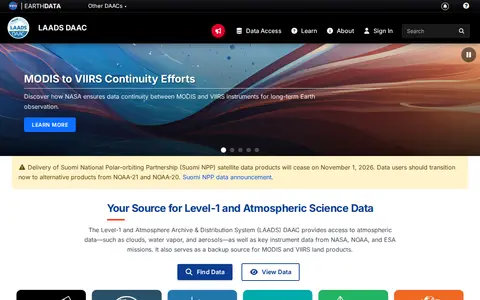
LAADS DAAC is NASA's Level-1 and Atmosphere Archive & Distribution System, providing access to atmospheric data such as clouds, water vapor and aerosols, plus instrument data from NASA, NOAA and ESA missions. It also serves as a backup source for MODIS and VIIRS land products.
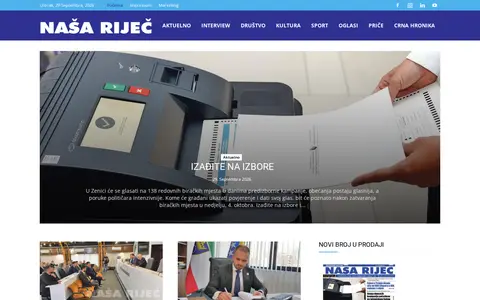
Naša riječ publishes newspaper reporting, headlines and current-affairs coverage in Bosnia and Herzegovina.

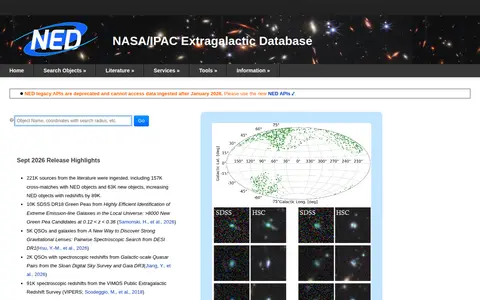
The NASA/IPAC Extragalactic Database is a database of extragalactic sources drawn from the astronomical literature. Its September 2026 release highlights note ingestion of 221K sources, including 157K cross-matches with NED objects and 63K new objects, and describe suggested data publication practices for journal articles.
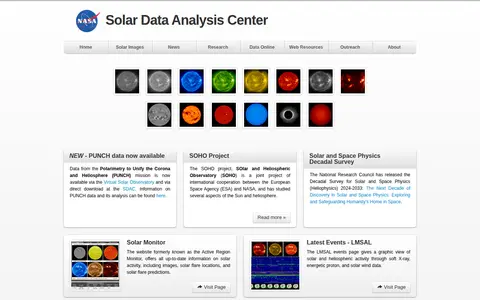
The Solar Data Analysis Center (SDAC) at NASA Goddard Space Flight Center serves solar images, solar news, solar data, and solar research. It develops and maintains scientific research infrastructure supporting NASA's Heliophysics Science Division. Data from the PUNCH mission is available via the Virtual Solar Observatory and direct download, and the site links to the SOHO project and Solar Monitor.