
domaincrawler.com
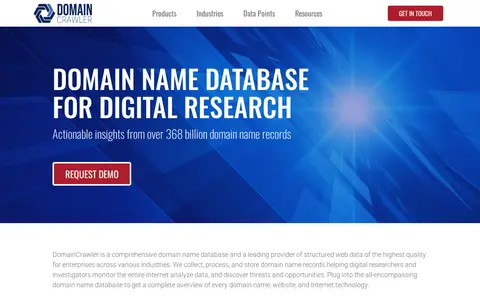
Domain Crawler is a web tool for finding, checking, or analyzing online information related to domains, networks, and digital services.
Directory
Published directory entries matching your search.
Domain Crawler is a web tool for finding, checking, or analyzing online information related to domains, networks, and digital services.

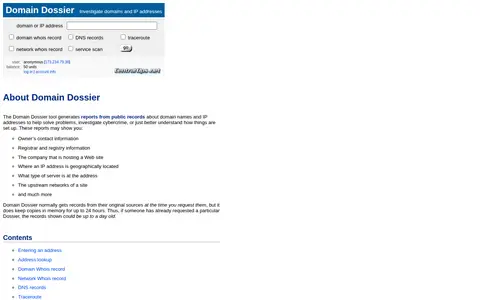
Domain Dossier is a tool that generates reports from public records about domain names and IP addresses. The reports may show owner contact information, registrar and registry details, the hosting company, IP address geographic location, server type and upstream networks. It accepts domain names and IP addresses; results are normally retrieved from original sources when requested, with copies kept in memory for up to 24 hours.
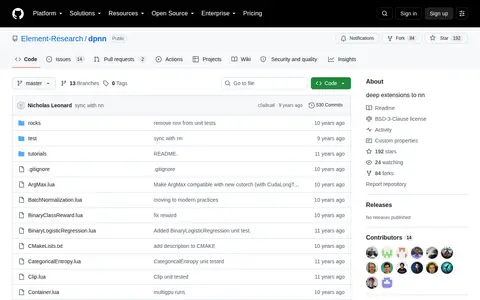
dpnn is a package of deep extensions to the nn neural network library, providing extra modules and criterions beyond the main nn package. It includes modules such as Serial, Inception, ReverseTable, SpatialUniformCrop and SpatialGlimpse, plus modules and criterions for implementing the REINFORCE algorithm.
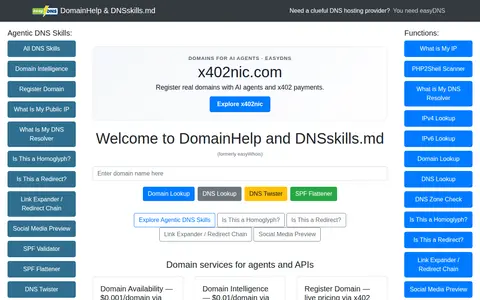
Easy whois is a web tool for finding, checking, or analyzing online information related to domains, networks, and digital services.

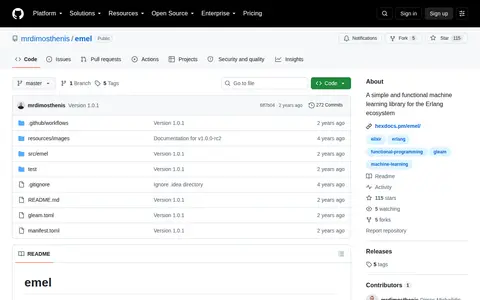
emel is a simple and functional machine learning library built for the Erlang ecosystem and implemented in Gleam. It turns data into functions and supports installing through rebar.config, mix.exs or gleam add. Implemented algorithms include linear regression, k nearest neighbors, decision tree, naive Bayes, k means, perceptron, logistic regression and neural network, along with mathematics, algebra, geometry and statistics.

Search an online collection of books, documents, media and archival records.
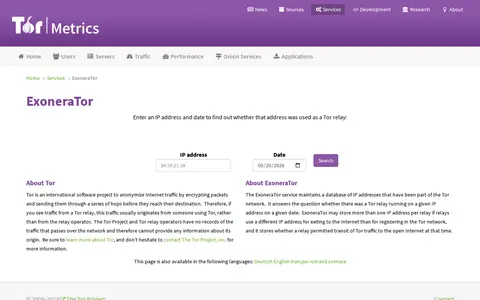
A database of IP addresses that have been part of the Tor network. It answers the question whether there was a Tor relay running on a given IP address

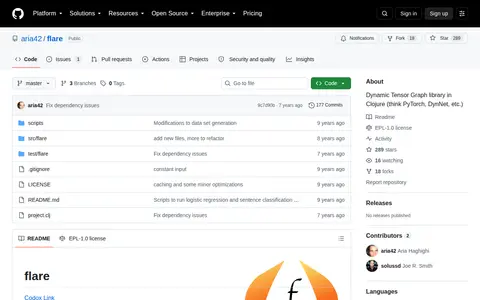
Flare is a Clojure library for building dynamic neural network graphs, described as similar to PyTorch and DynNet. It supports tensor operations, LSTM cells, one-dimensional CNNs and fixed embeddings, and uses Neanderthal as its tensor backend. The project states it is mostly for learning purposes.

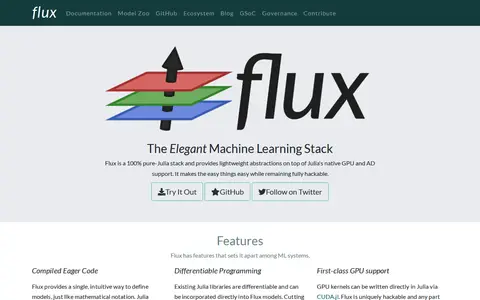
Flux is a machine learning library built as a pure-Julia stack, offering lightweight abstractions over Julia's native GPU and automatic differentiation support. It is compiled and eager, and existing Julia libraries can be incorporated into Flux models. Its ecosystem includes probabilistic programming, graph neural networks, computer vision and natural language processing packages, and it is maintained by a community team.

FOFA is a cyberspace search engine that conducts cyberspace mapping to help researchers and enterprises match network assets. Its use cases include vulnerability impact range analysis, application distribution statistics, and application popularity ranking statistics, and it is designed to support cybersecurity and attack surface management.

Follow.net is a web tool for finding, checking, or analyzing online information related to domains, networks, and digital services.

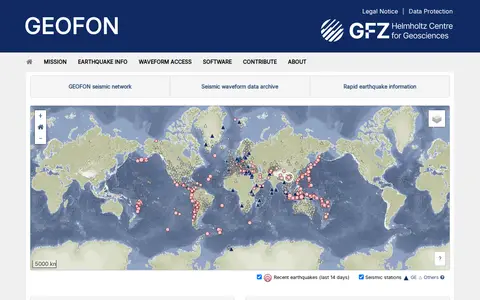
GEOFON is a seismic network and waveform data archive operated under the GEOFON Program at GFZ. The site provides rapid earthquake information on recent events and points to interactive forum and messaging services, along with information on SeisComP software.

GraphyStories is a web tool for finding, checking, or analyzing online information related to domains, networks, and digital services.

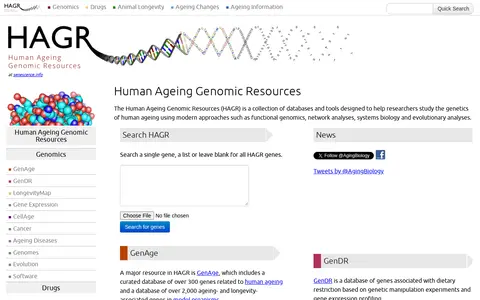
Human Ageing Genomic Resources is a collection of databases and tools for studying the genetics of human ageing through functional genomics, network analyses, systems biology and evolutionary analyses. It includes GenAge, a curated database of ageing-related genes, and AnAge, which compiles data on ageing, longevity and life history across species.

Hakai Data is the Hakai Institute's hub for sharing data-related information. It links to the institute's sensor network of meteorological stations, terrestrial sensor nodes and stream sensor nodes, plus webcams and weather stations, geospatial projects, oceanography projects and datasets published on ERDDAP. It also links to the Hakai Catalogue and a form for populating metadata records.

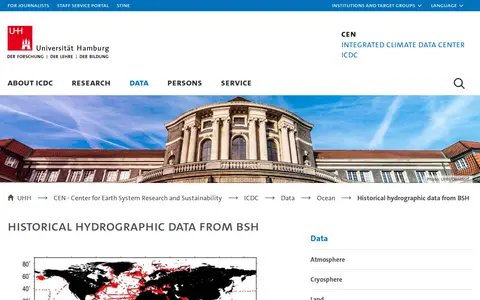
The ICDC at the University of Hamburg provides historical hydrographic data from the German Maritime and Hydrographic Agency (BSH). The dataset contains about 7391 digitized temperature and salinity profiles from Nansen casts, covering 1869 to 1969. Data are original and not validated, available via FTP unrestricted or restricted to CEN/MPI networks or external users with an account. Licensed CC-BY-4.0.
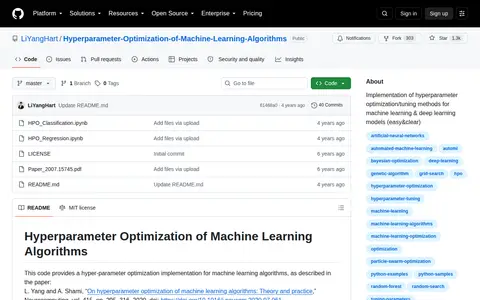
This repository provides a hyperparameter optimization implementation for machine learning algorithms, accompanying a paper on hyperparameter optimization theory and practice. It includes sample code for regression and classification problems using the Boston-Housing and MNIST datasets, covering algorithms such as random forest, SVM, KNN and artificial neural networks.

Search engineering data collections and supporting dataset from AAA.

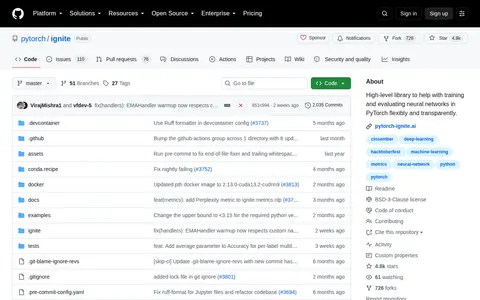
Ignite is a high-level library for training and evaluating neural networks in PyTorch. It provides a simple engine and event system, out-of-the-box metrics to evaluate models, and built-in handlers for composing training pipelines and saving artifacts. The library aims to require less code than pure PyTorch while keeping maximum control, with an extensible API for metrics and experiment managers.

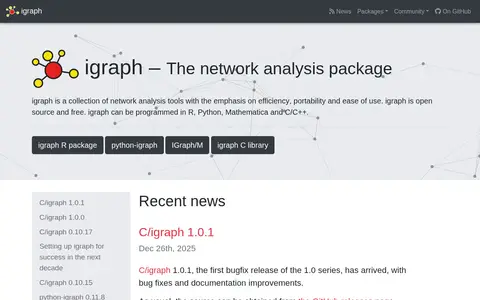
igraph is a collection of network analysis tools emphasizing efficiency, portability and ease of use. It is open source and free, and can be programmed in R, Python, Mathematica and C/C++. Implementations include the igraph R package, python-igraph, IGraph/M and the igraph C library.

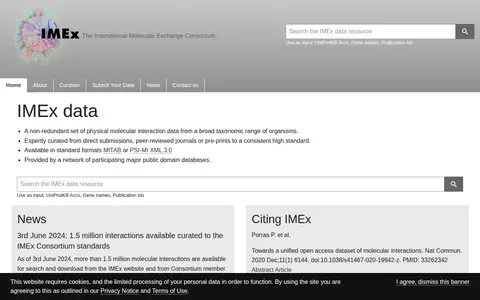
IMEx data is a non-redundant set of physical molecular interaction data curated from direct submissions, peer-reviewed journals or pre-prints. It is available in MITAB or PSI-MI XML 3.0 formats and provided by a network of participating public domain databases.

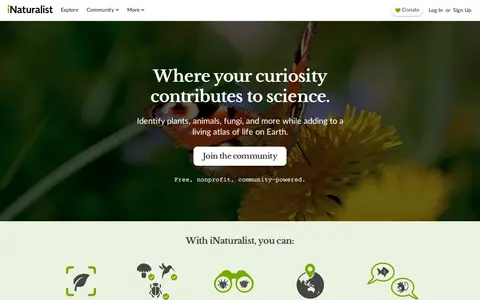
iNaturalist is a free, nonprofit social network for naturalists where users record observations of plants, animals, and fungi, share them with friends and researchers, and get identification suggestions confirmed by a global community. Observations become open data used by scientists and conservationists.

InnateDB is a publicly available database of genes, proteins, experimentally verified interactions and signaling pathways involved in the innate immune response of humans, mice and bovines to microbial infection. It integrates interactions and pathways from major public databases with manually curated data, and offers pathway, Gene Ontology and network analysis tools.
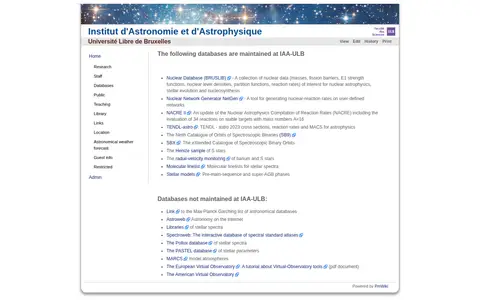
The Institut d'Astronomie et d'Astrophysique at Université Libre de Bruxelles maintains databases for nuclear and spectroscopic data relevant to astrophysics. Listed resources include BRUSLIB, a collection of nuclear data, NetGen, a tool for generating nuclear-reaction rates on user-defined networks, and an updated compilation of reaction rates. Spectroscopic databases and molecular linelists are also listed.