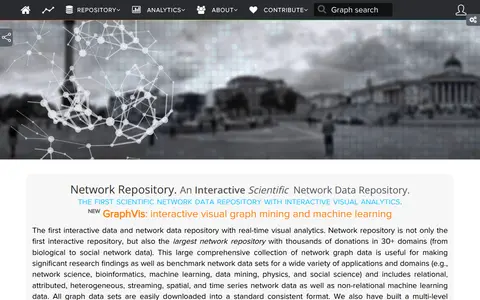

The Network Repository is the first interactive network dataset repository, offering real-time interactive graph visualization and analytics for network datasets. It hosts a wide range of network datasets organized into categories including miscellaneous networks, cheminformatics, animal social networks, social networks, power networks, labeled networks, dynamic networks, technological networks, brain networks and other specialized network types.
Directory
Search results
Published directory entries matching your search.
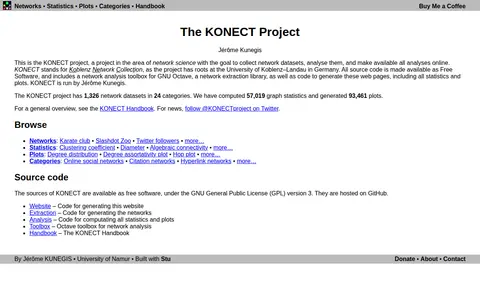
KONECT is the Koblenz Network Collection, a network science project that collects network datasets, analyses them, and publishes the analyses online. It holds 1,326 network datasets in 24 categories, with computed graph statistics and generated plots. Its source code, including an Octave network analysis toolbox and an extraction library, is available as free software under GPL version 3.
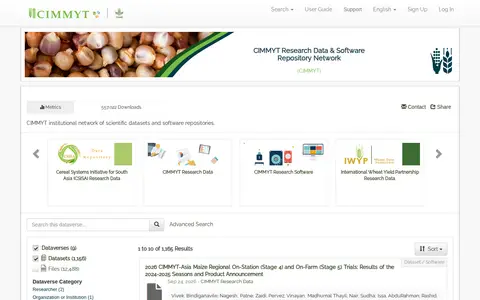
The CIMMYT Research Data & Software Repository Network is the institutional network of scientific datasets and software repositories operated by the International Maize and Wheat Improvement Center (CIMMYT). It hosts multiple data and software collections including research data from the Cereal Systems Initiative for South Asia, International Wheat Yield Partnership, Sustainable and Resilient Farming Systems Intensification in the Eastern Gangetic Plains, and Crops to End Hunger programs, as well as CIMMYT research data, research software, and Seeds of Discovery BNI-CropSustaiN research data and protocols. The network had recorded 557,560 downloads as of the snapshot.
Neural Networks and Deep Learning is a free online book by Michael Nielsen. It teaches core concepts of neural networks and deep learning, covering handwriting recognition, backpropagation, and improving how neural networks learn. The work is licensed for copying and sharing but not for selling.
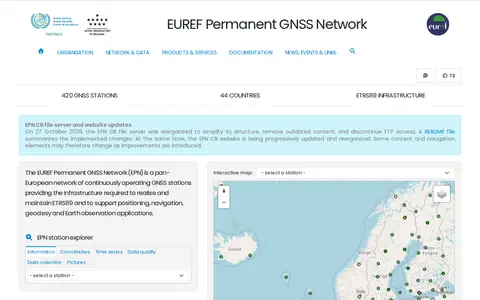
The EUREF Permanent GNSS Network is a pan-European network of continuously operating GNSS reference stations, coordinated by the EPN Central Bureau. It provides access to the European Terrestrial Reference System 89 and distributes GNSS data, station coordinates and velocities under an open-data policy. The network covers 400+ active reference stations. The EPN CB does not operate the stations; each is managed by a responsible agency or institution.
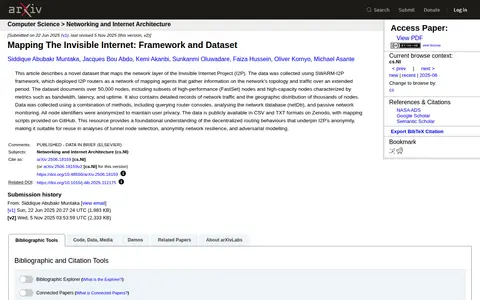
This dataset maps the network layer of the Invisible Internet Project (I2P), collected using the SWARM-I2P framework, which deployed I2P routers as mapping agents. It documents over 50,000 nodes with metrics such as bandwidth, latency, and uptime, plus network traffic records and geographic distribution. Node identifiers were anonymized. Data is available in CSV and TXT formats on Zenodo, with mapping scripts on GitHub.
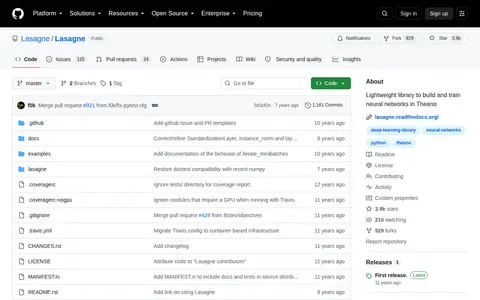
Lasagne is a lightweight library for building and training neural networks in Theano. It supports feed-forward networks such as convolutional neural networks, recurrent networks including LSTM, multiple inputs and outputs, and optimization methods including Nesterov momentum, RMSprop and ADAM. Cost functions are freely definable and gradients derive from Theano's symbolic differentiation.
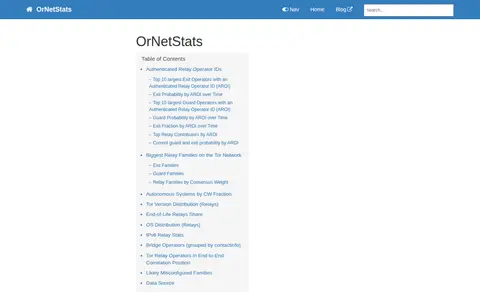
OrNetStats presents statistics and network health data about the Tor network and its relay groups. It reports on relay families, Autonomous System shares, MyFamily misconfigurations, end-of-life tor releases and potential risk to users, and displays Authenticated Relay Operator IDs in place of unverified ContactInfo strings.
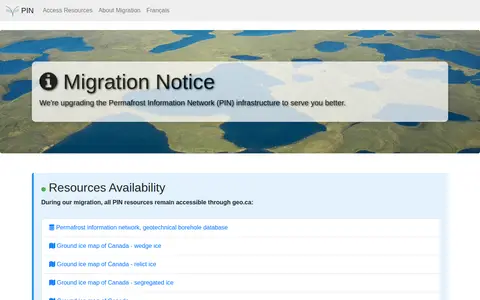
The Permafrost Information Network is an online resource covering permafrost topics. A migration notice states that the network's infrastructure is being upgraded and that its resources remain accessible through geo.ca during the migration. Listed resources include the permafrost information network, a geotechnical borehole database, and ground ice maps of Canada for wedge ice, relict ice, and segregated ice.
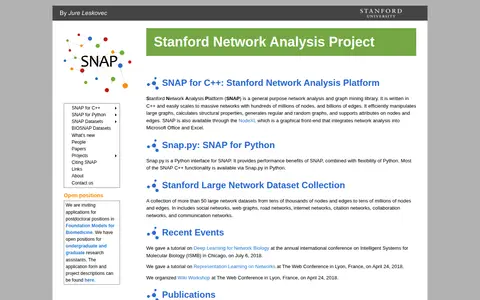
SNAP is a general purpose network analysis and graph mining library written in C++ that scales to large graphs and supports node and edge attributes. Snap.py provides a Python interface with most of the SNAP C++ functionality. The project also offers the Stanford Large Network Dataset Collection, a set of network datasets.


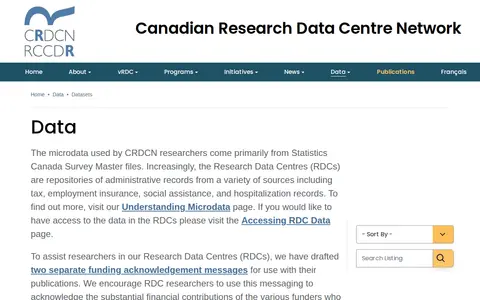
The Canadian Research Data Centre Network provides access to microdata used by CRDCN researchers, drawn primarily from Statistics Canada Survey Master files. Research Data Centres also hold administrative records from sources including tax, employment insurance, social assistance and hospitalization records. The page points readers to the network's Understanding Microdata page for more detail.

The UK Environmental Change Network is the UK's long-term ecosystem monitoring and research programme, making regular measurements of air, soil, water, animals and plants across a network of sites since 1993. It provides free access to over two decades of detailed environmental data and instrumented research sites supporting environmental research and education.
Coin Metrics State of the Network publishes crypto research, protocol updates, market analysis, and blockchain industry insights.
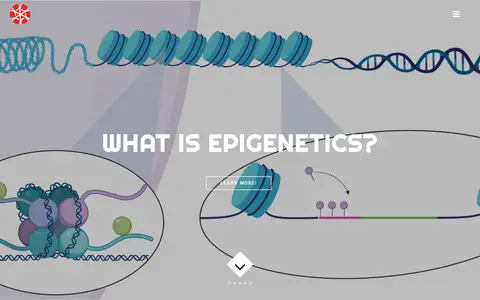
The CEEHRC Network's website explains epigenetics as additional information layered on the genetic code. It offers sections on understanding epigenetics, new articles, publications, and resources for scientists, including IHEC guidelines for reference epigenome standards and standard operating procedures for wet lab experiments and data analysis.
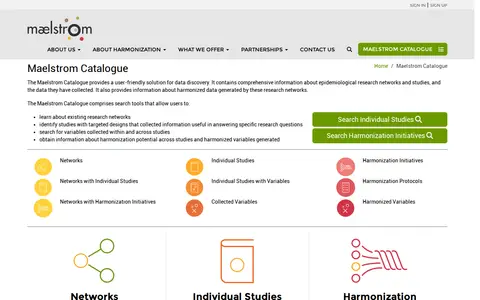
The Maelstrom Catalogue is a data discovery tool holding information about epidemiological research networks, studies, the data they collected, and harmonized data from those networks. Its search tools let users learn about networks, identify studies with targeted designs, search variables within and across studies, and find information on harmonization potential and harmonized variables.
Proton Meet is an internet utility for network checks, web research, connectivity, or online diagnostics.
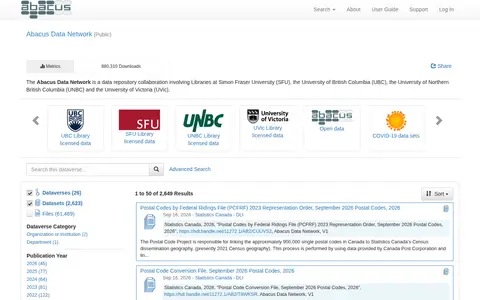
Abacus Data Network is a data repository collaboration involving the libraries of Simon Fraser University, the University of British Columbia, the University of Northern British Columbia and the University of Victoria. It hosts university-licensed data, open data and COVID-19 datasets. As of the snapshot, the network has recorded 903,854 downloads.
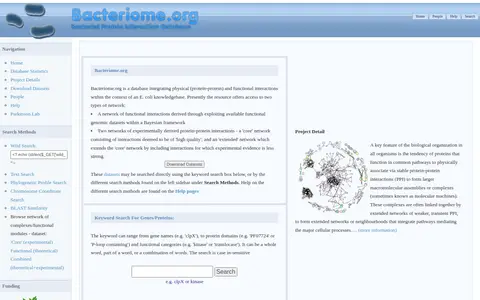
Bacteriome.org is a database integrating physical protein-protein and functional interactions within an E. coli knowledgebase. It offers a functional interaction network derived from genomic datasets using a Bayesian framework, a core network of high-quality experimentally derived protein-protein interactions, and an extended network including less strongly supported interactions. Users can search by gene name, protein domain or functional category.
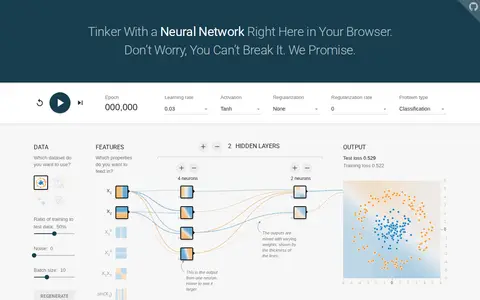
A Neural Network Playground is a browser-based educational visualization created by Daniel Smilkov and Shan Carter for experimenting with a real neural network. Users adjust controls to explore how a network learns from data. The project is open sourced on GitHub under the Apache License so its features can be tailored to a topic or lesson.
NDEx, the Network Data Exchange, is collaborative software infrastructure for storing, sharing and publishing biological network knowledge. It is developed at UC San Diego in association with Cytoscape. Users can search networks on the public server or create an account for advanced features.
Networking Toolbox is a developer resource for coding, documentation, communities, security research, or software tools.
s.id is an internet utility for network checks, web research, connectivity, or online diagnostics.
Sald is an internet utility for network checks, web research, connectivity, or online diagnostics.
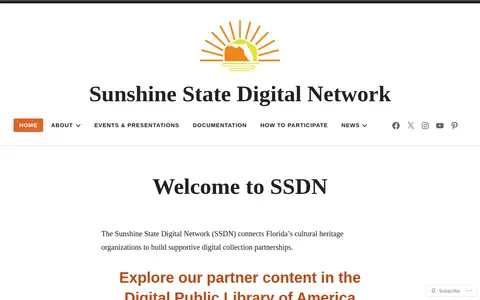
The Sunshine State Digital Network connects Florida's cultural heritage organizations to build supportive digital collection partnerships. Partner content can be explored in the Digital Public Library of America. The network publishes documentation, including metadata participation guidelines and resources for content contributors.