

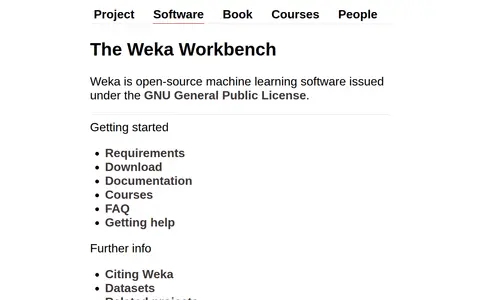
Weka is open-source machine learning software issued under the GNU General Public License. It runs in Java and is presented as a workbench for data mining, with download, documentation, courses and FAQ resources and datasets available on the project site.

igraph
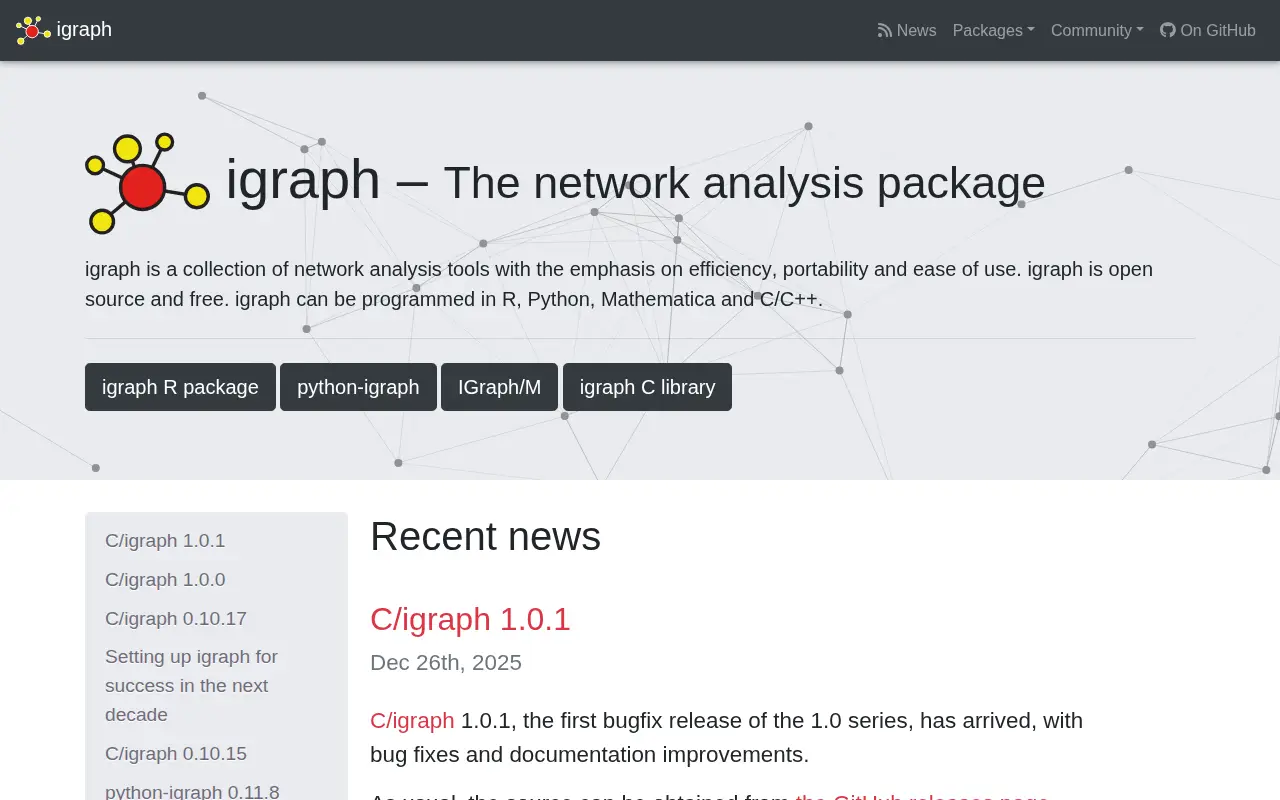
igraph is a collection of network analysis tools emphasizing efficiency, portability and ease of use. It is open source and free, and can be programmed in R, Python, Mathematica and C/C++. Implementations include the igraph R package, python-igraph, IGraph/M and the igraph C library.
Features
- igraph is open source and free Source: igraph.org
- igraph can be programmed in R, Python, Mathematica and C/C++ Source: igraph.org
Links
Tags
-
0Weka is open-source machine learning software issued under the GNU General Public License. It runs in Java and is presented as a workbench for data mining, with download, documentation, courses and FAQ resources and datasets available on the project site.
-
0Magenta is an open source research project exploring the role of machine learning as a tool in the creative process, focused on art and music. It includes Magenta Studio, a collection of music plugins for Ableton Live, and Magenta RealTime 2, an open model and real-time neural synthesis engine.
-
0
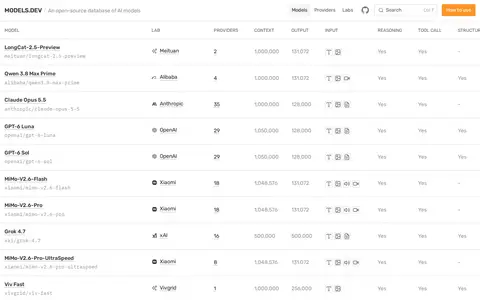
Models.dev is an open-source database that lists AI model specifications, pricing and features. It covers models from multiple providers with details such as context length, modalities and open or closed availability.
-
0Privatiser anonymizes IPs, API keys, passwords, PII and cloud identifiers before text is pasted into AI tools. It runs in the browser with local processing, preserves structure, and offers a reversible mapping to restore values in replies. It is free and open source.
-
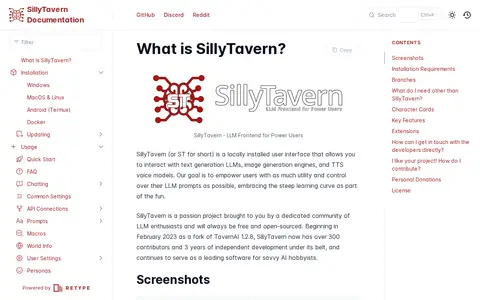
0SillyTavern is a locally installed user interface for interacting with text generation LLMs, image generation engines and TTS voice models. It began in February 2023 as a fork of TavernAI 1.2.8 and is built around character cards, collections of prompts that set the behavior of the LLM. It is free and open-sourced.
-
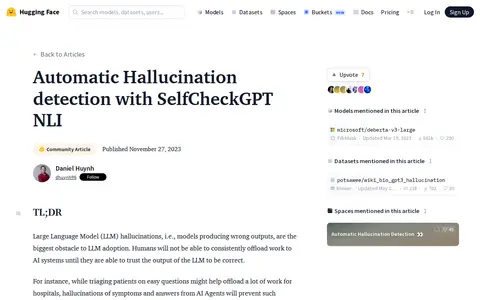
0A Hugging Face blog post by Daniel Huynh describing an experiment assessing SelfCheckGPT NLI as a measure of LLM inconsistencies for predicting hallucinated outputs. It reports that scores were highly precise after a threshold and that a score of 0.8 corresponded to close to 80% of hallucinations being identified.
Community notes
Reviews and discussion
No reviews yet
Be the first to share how this project worked for you.
Join the discussion
Sign in with a verified account to leave a review or join the discussion.
Sign in to review