
scale.com
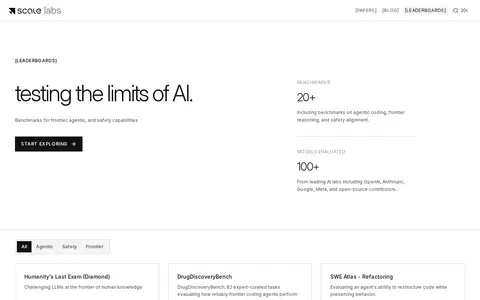
SEAL LLM Leaderboards provides machine-learning models, research, training resources, or evaluation tools.
Directory
Published directory entries matching your search.
SEAL LLM Leaderboards provides machine-learning models, research, training resources, or evaluation tools.

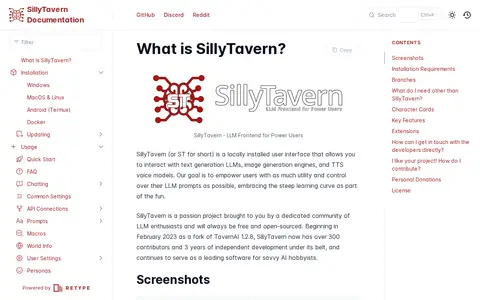
SillyTavern is a locally installed user interface for interacting with text generation LLMs, image generation engines and TTS voice models. It began in February 2023 as a fork of TavernAI 1.2.8 and is built around character cards, collections of prompts that set the behavior of the LLM. It is free and open-sourced.

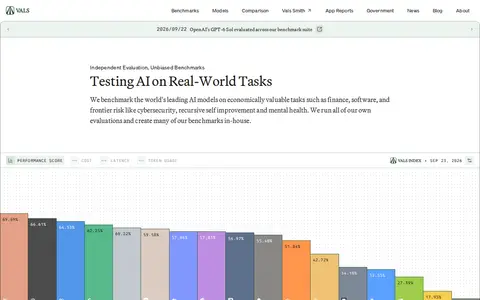
Vals AI provides machine-learning models, research, training resources, or evaluation tools.

VBench is a Hugging Face Space created by Vchitect that hosts a leaderboard for AI video generation models. Users can upload a zip file with their model's evaluation JSON files and provide details such as model name, link, team, and contact email. The application extracts the metrics and updates the benchmark leaderboard accordingly.
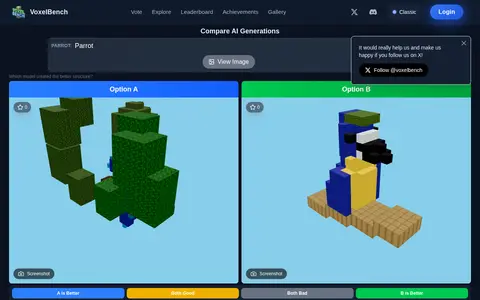
VoxelBench provides machine-learning models, research, training resources, or evaluation tools.
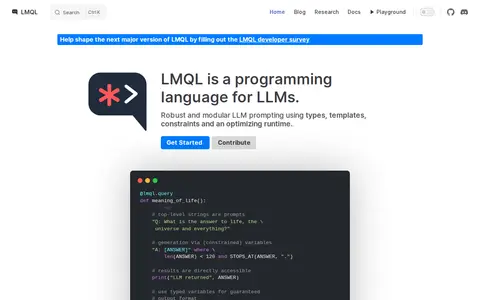
LMQL is a programming language for interacting with large language models, using types, templates, constraints and an optimizing runtime. Prompt statements have associated where clauses that specify logical constraints on output, which LMQL translates to subtoken masks enforced during generation. It works across llama.cpp, OpenAI and Transformers backends and supports nested queries.

LoLLMs, described as the Lord of Large Language and Multimodal Systems, is a local AI tool for running models. It states full local execution and hardware support for NVIDIA, AMD, Apple Silicon or CPU. It is offered for Windows, Linux and macOS.
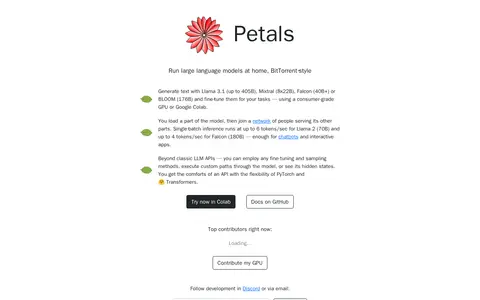
Petals is a project for running large language models at home, BitTorrent-style. Users load part of a model and join a network of people serving its other parts. It supports generating text with Llama 3.1, Mixtral, Falcon and BLOOM and fine-tuning them on a consumer-grade GPU or Google Colab.
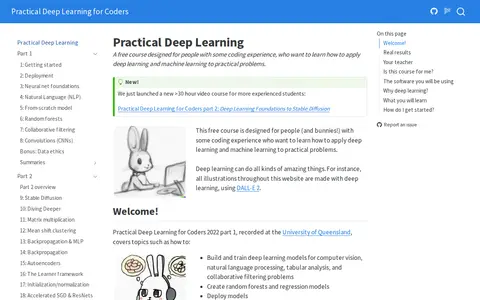
A free course for people with some coding experience who want to learn how to apply deep learning and machine learning to practical problems. It includes 9 lessons of around 90 minutes each, covering computer vision, natural language processing, tabular analysis, and collaborative filtering, plus building and training models, random forests, deployment, and use of PyTorch, fastai and Hugging Face.
This is the official project page for the ICML 2024 research paper 'Improving Factuality and Reasoning in Language Models through Multiagent Debate' by MIT and Google Brain researchers. The paper introduces a multi-round debate approach where multiple language model instances propose answers, critique each other, and debate to improve reasoning and factual accuracy while reducing hallucinations.
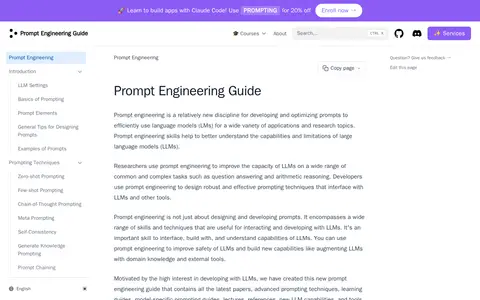
A guide to prompt engineering that collects papers, advanced prompting techniques, learning guides, model-specific guides, lectures, references, new LLM capabilities, and tools related to prompt engineering. It describes prompt engineering as a discipline for developing and optimizing prompts to use language models across applications and research topics, and offers courses on prompting and building AI agents.

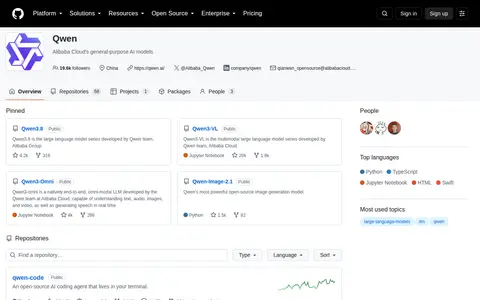
Qwen is a GitHub organization presenting Alibaba Cloud's general-purpose AI models, with 60 repositories. Public projects include Qwen3.8, a large language model series, Qwen3-VL, a multimodal large language model series, and qwen-code, an open-source AI coding agent that lives in a terminal.

Tensor Trust is a prompt injection attack and defense game that invites users to fool AI language models and climb a leaderboard. The site is part of a research project studying prompt injection vulnerabilities in AI systems, using crowdsourced submissions to help researchers build more reliable AI.

Google Speech Gen helps build, test, automate, or manage AI agents, prompts, models, and API workflows.

Creates, rewrites or summarizes written content with language models.

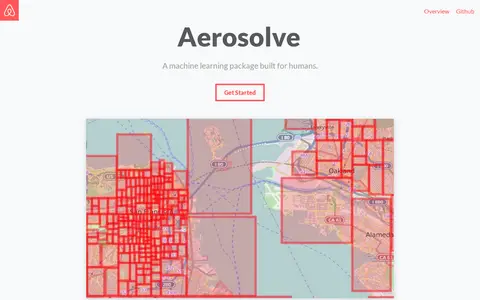
Aerosolve is a machine learning package built on the JVM. It provides features such as geo-based features, controllable quantization and feature interaction, and a feature transform language that gives developers control over features. General additive models are used. Scala handles feature training, with a lightweight Java API for run time inference.

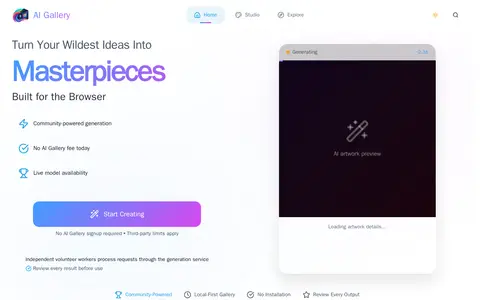
AI Gallery is a tool for creating AI artwork on volunteer GPUs. According to the site, no GPU or installation is required, and the generated gallery stays on the user's device. Help documentation covers queues, models, credits, local storage, backups and generation controls.

AI Jukebox is a Hugging Face Space that generates AI-powered music. Users can input a description of their desired music, select the clip length and preferred style or mood, and the app produces a matching audio clip directly in the web browser.

Creates, rewrites or summarizes written content with language models.

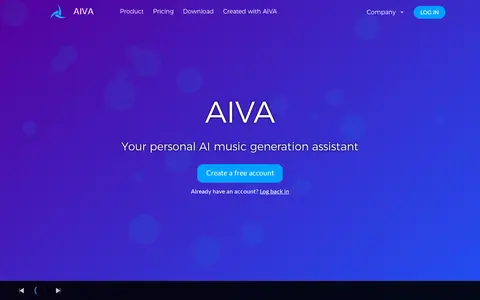
AIVA is an AI music generation assistant that creates new songs in more than 250 styles within seconds. Users can build style models, upload audio or MIDI influence, and edit generated tracks. A free plan offers non-commercial use with credit to AIVA and three downloads per month.

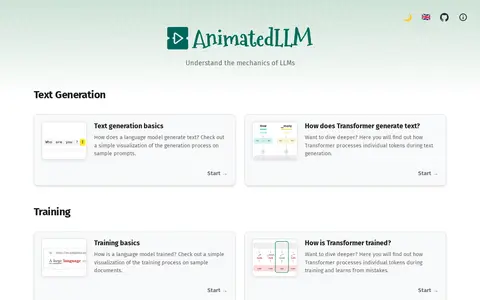
Understand how large language models work under the hood.

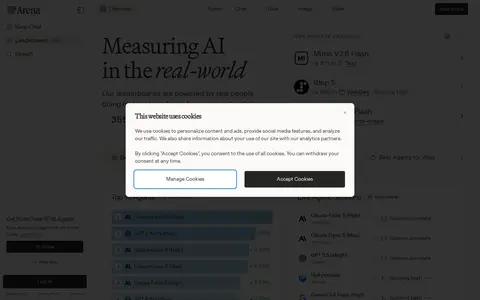
Arena is a platform that provides leaderboards to compare and benchmark leading frontier AI models across text, image, vision, and other modalities. Its rankings are powered by real user sessions from a global user base, it tracks new model releases, and offers features including live agent sessions, side-by-side model comparison, and user voting for model performance.

Arena.ai is an X account describing itself as a place where AI meets the real world. It states that it measures and advances the frontier of AI through community-driven evaluation.

Arena is a platform that allows users to interact with multiple open source and proprietary frontier AI models in a single interface for research, coding and creative tasks. It includes a model leaderboard feature, and notes that inputs are processed by third-party AI, so responses may be inaccurate.