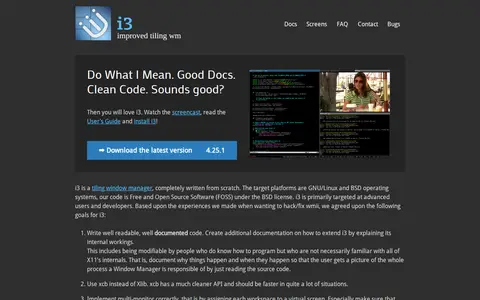
i3 is a tiling window manager written from scratch for GNU/Linux and BSD operating systems. Its source code is free and open source under the BSD license, and it is primarily targeted at advanced users and developers. The project uses libxcb instead of Xlib, supports Xinerama multi-monitor setups, and arranges windows with a tree structure. It also provides an IPC interface for other programs and documents its internal workings.

Directory
Search results
Published directory entries matching your search.
The KIT Whole-Body Human Motion Database is a large-scale database of captured whole-body human motion. Motion is normalized with the master motor map reference model, and recordings are manually annotated with tree-structured tags for searching. The data include object positions and subject–object relations.
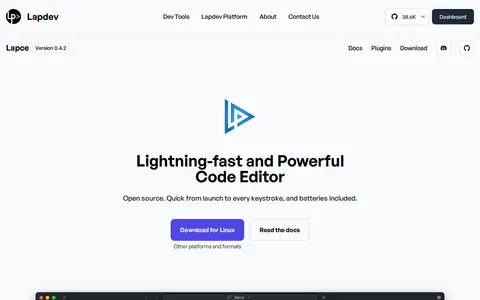
Lapce is a modern open source code editor written in Rust, featuring a native GUI with GPU acceleration in Floem. It offers remote development, built-in LSP support with Tree-sitter syntax highlighting, Vim-like modal editing and a WASI plugin system for writing plugins in languages that compile to WASI. It includes a built-in terminal.
LeveX is a centralized exchange that maintains a 1:1 reserve ratio for all user assets and regularly performs proof of reserves reports. It uses a Merkle tree to demonstrate full backing, publishing a Merkle root hash after each audit so users can verify their funds.
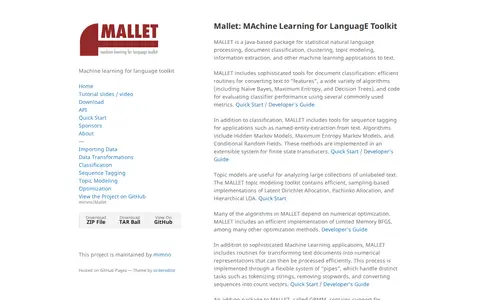
MALLET is a Java-based package for statistical natural language processing, document classification, clustering, topic modeling, information extraction, and other machine learning applications to text. It includes tools for converting text to features, classifiers such as Naïve Bayes, Maximum Entropy and Decision Trees, sequence tagging with Hidden Markov Models and Conditional Random Fields, and sampling-based topic model implementations.
A collection of anime style background painting tutorials and walkthroughs covering Photoshop, Blender3D and After Effects. Topics include clouds, trees, tree trunks, Makoto Shinkai style painting, photo paint over 3D render, blur filters, colour grading, luma masks, grass, water and lake reflections, glowing sunsets and custom brushes.
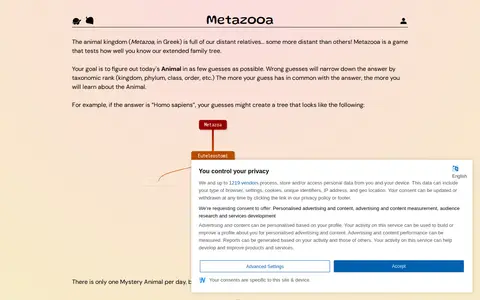
Metazooa is a daily biology game where players find a mystery animal by navigating the phylogenetic tree. Wrong guesses narrow down the answer by taxonomic rank, and there is one mystery animal per day with 20 guesses.
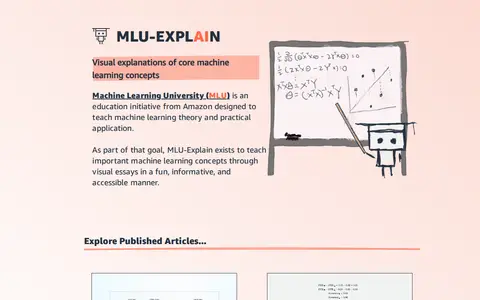
MLU-Explain is an education initiative from Amazon that teaches machine learning concepts through visual essays. It publishes interactive articles on topics such as neural networks, logistic regression, reinforcement learning, ROC and AUC, cross-validation, random forests, and decision trees.
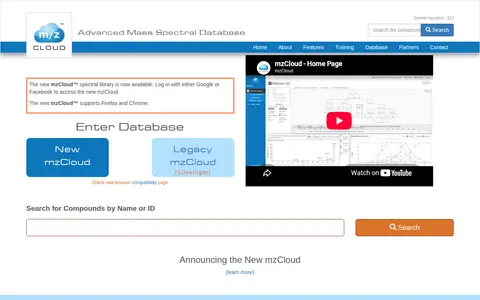
mzCloud is a curated mass spectral database of high-resolution tandem mass spectra arranged into spectral trees. It supports spectrum, tree, structure, substructure, m/z, and compound name searches, and is intended to help identify compounds, including those not present in the library. The database includes annotated fragments, molecular formulas, identifiers, and experimental metadata. It is an open consortium effort covering fields such as metabolomics and toxicology.
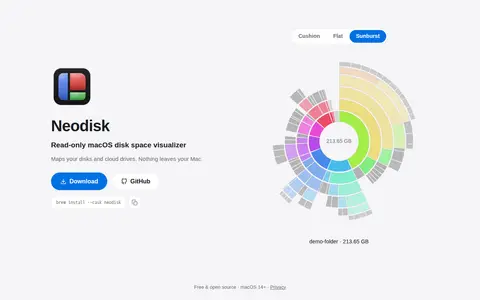
Neodisk is a free and open-source disk space analyzer that shows where disk space went using interactive treemap and sunburst views. It scans disks and cloud drives and is read-only by design, so it does not delete files. It is available natively for Apple Silicon Macs, with downloads also listed for Mac and Linux.
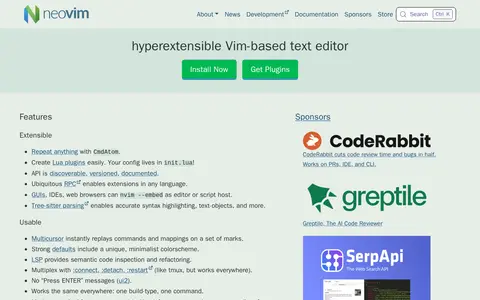
Neovim is a hyperextensible Vim-based text editor. It is a fork of Vim, maintaining compatibility with Vim's editing model and Vimscript v1 where possible, and provides features such as Lua plugins, LSP-based code inspection and refactoring, and Tree-sitter parsing. Extensions can be built in any language through RPC, and GUI and IDE frontends can embed it as an editor or script host.
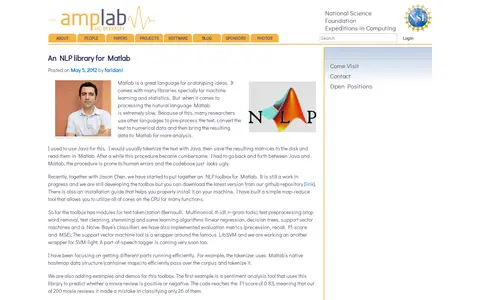
An NLP toolbox for Matlab under development by researchers at UC Berkeley's AMPLab, intended to process natural language within Matlab rather than switching to other languages. It includes modules for text tokenization, text preprocessing such as stop word removal and stemming, and learning algorithms including linear regression, decision trees, support vector machines and a Naive Bayes classifier.
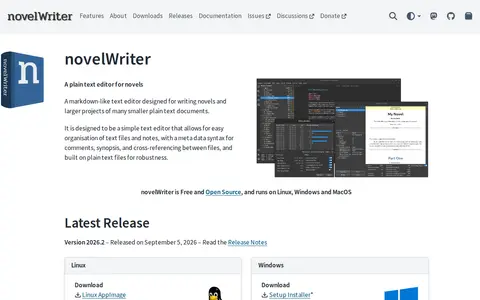
novelWriter is a free and open source plain text editor for writing novels and larger projects made of many smaller plain text documents. It uses a markdown-like syntax with meta data for comments, synopsis and cross-referencing, and stores projects as human-readable text files. It offers project tree organisation, Novel and Outline views, and a build tool exporting to several formats.
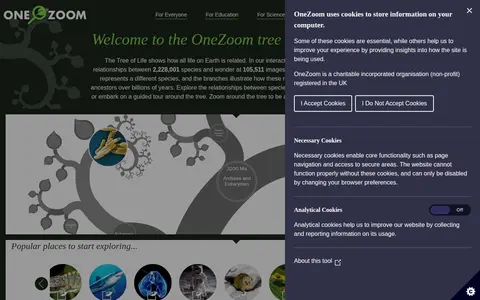
OneZoom is an interactive tree of life explorer that shows how all life on Earth is related on a single zoomable page. Each leaf represents a different species, and branches illustrate evolution from common ancestors. The site offers guided tours and is a registered non-profit in the UK with products available for free.
The OpenWrt Project is a Linux operating system targeting embedded devices. It provides a fully writable filesystem with package management rather than a single static firmware, allowing devices to be customized through packages. Current stable series is OpenWrt 25.12, with 24.10 as the old stable series. Source code is stored in a git tree.
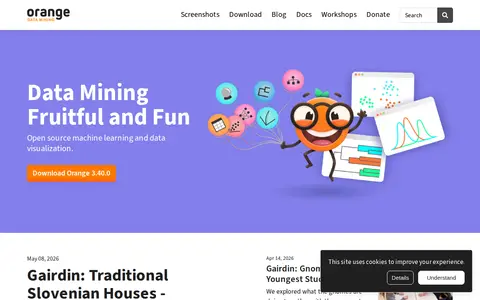
Orange is an open-source machine learning and data visualization toolbox. It offers visual programming in which widgets are placed on a canvas and connected to load datasets and analyze data. It supports interactive visualization methods including box plots, scatter plots, decision trees, hierarchical clustering, heatmaps, MDS, t-SNE and linear projections. Extensions add text mining, network analysis and other specialized capabilities.
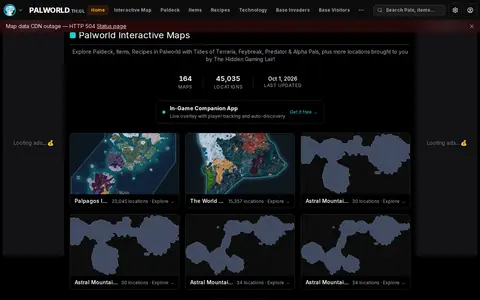
Palworld Interactive Maps & Locations is a fan-made resource for Palworld by The Hidden Gaming Lair. It offers 164 interactive maps covering locations across Palpagos Island, The World Tree and other areas, alongside a database of Pals, items, recipes and technology, plus tools including a Breeding Calculator and an IV Calculator.
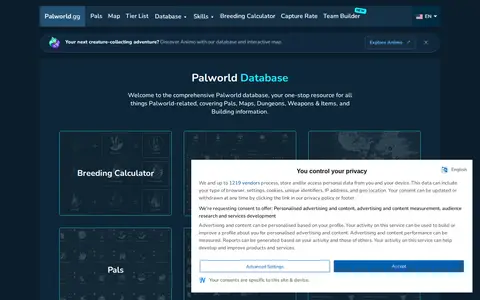
Palworld.gg is a Palworld database and wiki covering Pals, breeding, items, weapons, structures, an interactive map and building information. It also provides a breeding calculator, team builder, tier list, capture rate and technology tree.
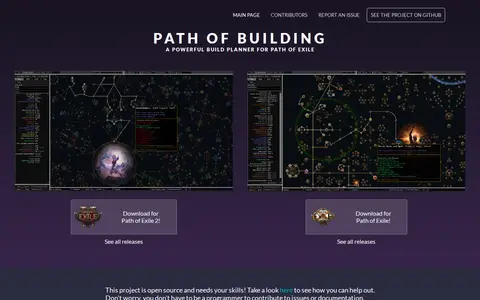
Path of Building is an open-source build planner for Path of Exile. It lets users plan skill trees, prepare skill gem links, and build and compare items, with gear sets and support for many item mods. It also includes a power report ranking passive skills and cluster jewels.
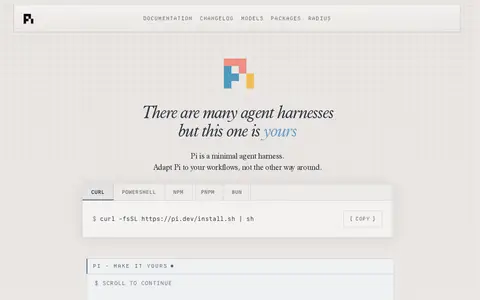
Pi is a terminal-based minimal coding agent harness built to adapt to user workflows rather than requiring users to adjust their processes. It supports 15+ providers and hundreds of models, offers tree-structured shareable interaction history, context engineering features, and four operation modes: interactive, print/JSON, RPC, and SDK. Users can customize Pi with extensions, skills, prompt templates, and themes, and share customizations as packages via npm or git. It is installable via curl, PowerShell, npm, pnpm, or bun.
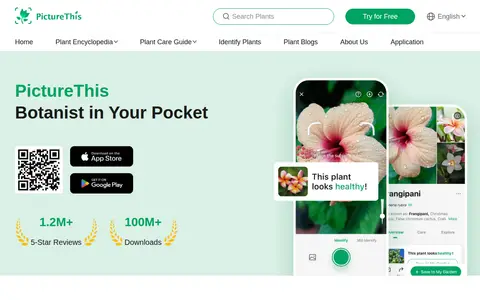
PictureThis is a plant identifier app and website that identifies flowers, leaves, trees and herbs from a photo. It provides information on disease prevention, treatment, toxicity, care, uses and symbolism, along with a plant encyclopedia and plant care guide covering houseplants, garden plants, flowers, fruits and vegetables.
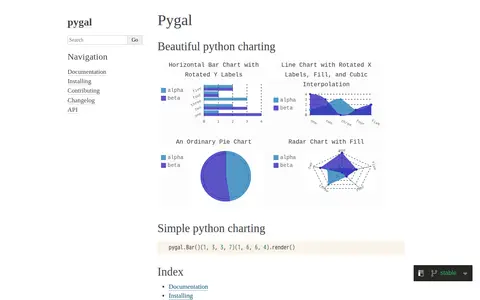
pygal is a Python charting library described as beautiful and simple python charting. Its documentation lists chart types including line, bar, histogram, XY, pie, radar, box, dot, funnel, gauge, pyramid and treemap, and output formats such as SVG, PNG and base 64 data URI.
rsync is an open source utility that provides fast incremental file transfer, freely available under the GNU General Public License and maintained by Andrew Tridgell. It uses the rsync algorithm to bring remote files into sync by sending just the differences across the link. Some features include updating whole directory trees and optionally preserving symbolic links, hard links, file ownership, permissions, devices and times.
Sabaki is a cross-platform Go/Baduk/Weiqi board and SGF editor built with web technology based on Electron. It is free and open source. It offers SGF editing tools, SGF game containers, a scoring tool with area or territory counting, a game tree, fuzzy stone placement and support for GTP engines such as GNU Go and Pachi.