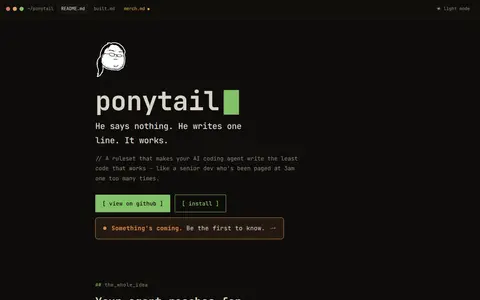
Ponytail 5 is a ruleset for AI coding agents intended to make them write the least code that works. It provides a review command and an audit command, and states tests accompany risky logic. The project reports benchmark comparisons against running without it.
Directory
Search results
Published directory entries matching your search.
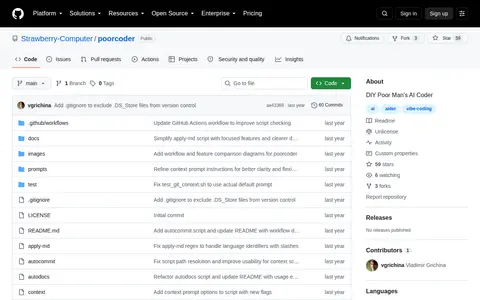
Lightweight Bash scripts that enhance your terminal coding workflow with web-based AI assistants like Claude or Grok.
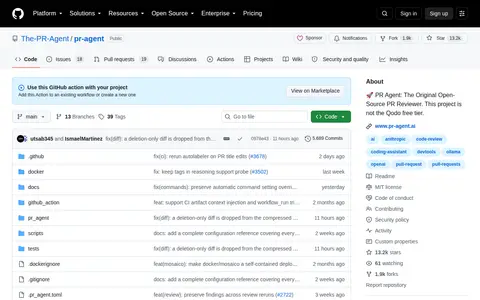
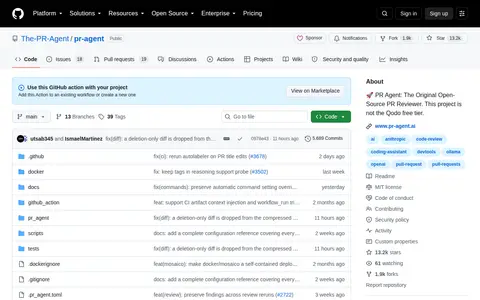
AI-powered tool for automated PR analysis, feedback, suggestions, and more.
PR-Agent is an open-source, AI-powered code review agent and a community-maintained legacy project of Qodo. It provides tools such as /review, /improve and /ask, each using a single LLM call, and can run as a GitHub Action or from the CLI. The project states it is not the Qodo free tier.
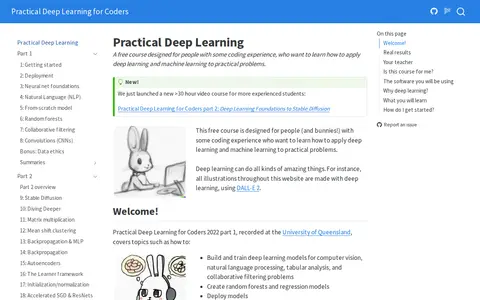
A free course for people with some coding experience who want to learn how to apply deep learning and machine learning to practical problems. It includes 9 lessons of around 90 minutes each, covering computer vision, natural language processing, tabular analysis, and collaborative filtering, plus building and training models, random forests, deployment, and use of PyTorch, fastai and Hugging Face.
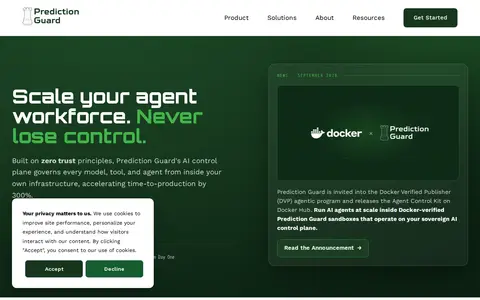
Prediction Guard is a self-hosted AI control plane described as enforcing NIST and OWASP-aligned runtime controls inside an organization's security boundary. It offers Agent Forge for creating interactive and autonomous agents, and an OpenAI, Anthropic and MCP compatible API. The site lists a Docker Verified Publisher agentic program entry and a verified Agent Control Kit on Docker Hub.
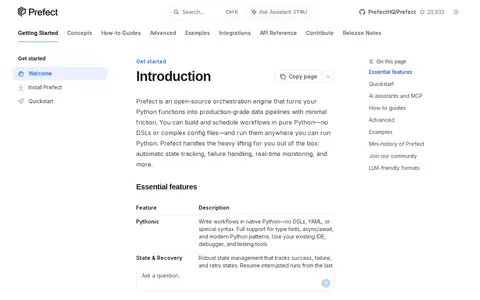
A workflow management system, designed for modern infrastructure.
This is the official project page for the ICML 2024 research paper 'Improving Factuality and Reasoning in Language Models through Multiagent Debate' by MIT and Google Brain researchers. The paper introduces a multi-round debate approach where multiple language model instances propose answers, critique each other, and debate to improve reasoning and factual accuracy while reducing hallucinations.
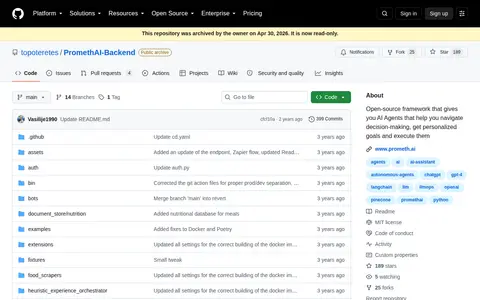
PromethAI is an open-source backend framework that provides AI agents to assist users with decision-making, setting personalized goals, and executing those goals. The project's development work has been transitioned to a new product named cognee.
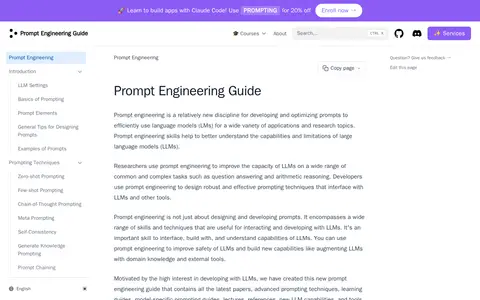
A guide to prompt engineering that collects papers, advanced prompting techniques, learning guides, model-specific guides, lectures, references, new LLM capabilities, and tools related to prompt engineering. It describes prompt engineering as a discipline for developing and optimizing prompts to use language models across applications and research topics, and offers courses on prompting and building AI agents.
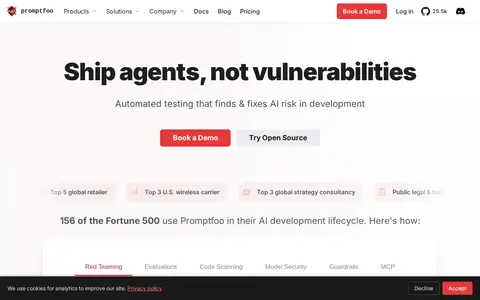
Promptfoo is an AI security testing platform that integrates into development workflows. It connects to AI apps, agents and CI/CD pipelines, generates context-aware attacks, and provides remediation guidance in pull requests. It offers red teaming, an open-source edition and integrations including GitHub Actions, GitLab CI, Jenkins and MCP.
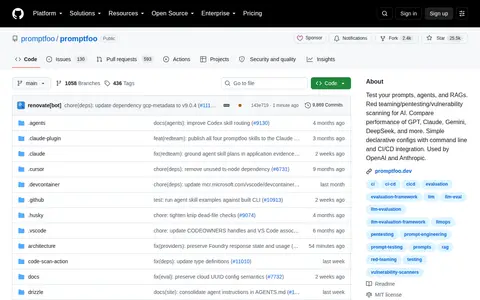
Promptfoo is a tool for testing AI prompts, agents and RAG systems. It supports red teaming, penetration testing and vulnerability scanning for AI, enables performance comparison across models including GPT, Claude, Gemini and DeepSeek, uses simple declarative configuration, and integrates with command line and CI/CD workflows.
Promptly is a no-code generative AI platform built for enterprise use. It allows users to build generative AI applications, AI agents and chatbots without coding experience, and supports features including model chaining, RAG pipeline creation, custom data integration, and multi-language translation. The platform offers pre-built templates for common use cases.
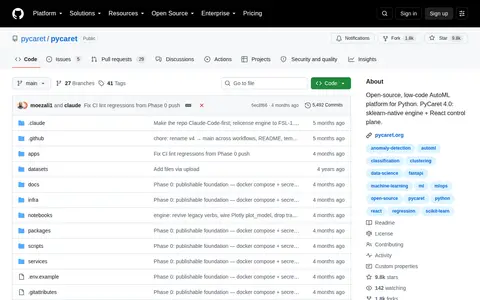
Open-source, low-code machine learning library in Python that automates machine learning workflows.
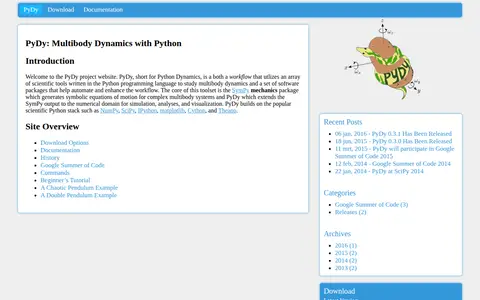
PyDy, short for Python Dynamics, is a workflow and set of software packages for studying multibody dynamics in Python. Its core is the SymPy mechanics package, which generates symbolic equations of motion for multibody systems, and PyDy extends that output to simulation, analyses, and visualization. It builds on NumPy, SciPy, IPython, matplotlib, Cython, and Theano.
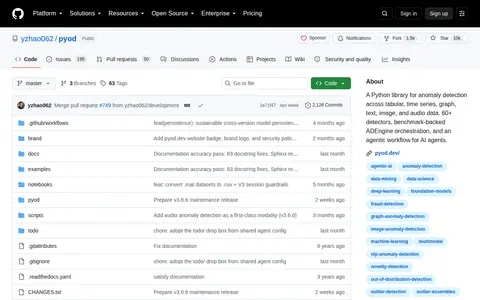
PyOD is an open-source Python library hosted on GitHub for anomaly detection across tabular, time series, graph, text, image and audio data. It includes over 60 anomaly detectors, an ADEngine orchestration tool, and supports agentic workflows for use with AI agents.
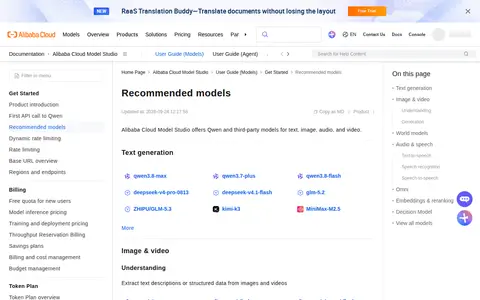
The listing qwen3.6-max-preview points to Alibaba Cloud Model Studio's supported models overview page. The page states that Alibaba Cloud Model Studio offers Qwen and third-party models for text, image, audio, and video use cases, with model categories including text generation, image and video generation, audio and speech processing, and world models, along with specific example models for each category.
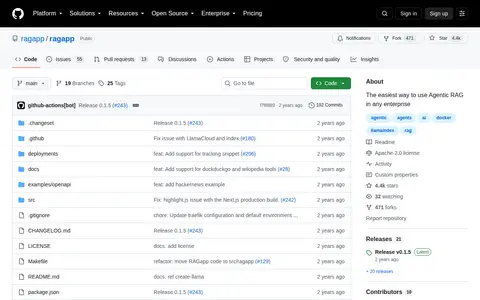
This GitHub repository hosts the ragapp project, a solution described as the easiest way to use Agentic RAG in any enterprise environment. The repository contains code and documentation for the tool, which is intended for enterprise deployment of agentic retrieval-augmented generation workflows.

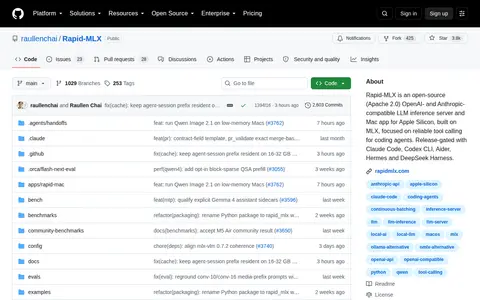
Rapid-MLX is an open-source, Apache 2.0 licensed large language model inference server and Mac application for Apple Silicon devices. It is compatible with OpenAI and Anthropic APIs, built on the MLX framework, and focused on reliable tool calling for coding agents.
Rate Display is an AI tool or resource for chat, research, automation, media generation, or model development.
ray3.run uses AI to create, edit, transform, or animate video content.
Regie.ai is an agentic sales workspace whose AI agents source, enrich, dial and email from a user's own inbox, and handle LinkedIn tasks. It includes built-in enrichment, messaging, channel orchestration and pipeline reporting in one platform. Free starts with 250 one-time credits; Pro is $41/mo billed annually, and Team is $125 per seat/mo, with credits covering AI, enrichment and calls.
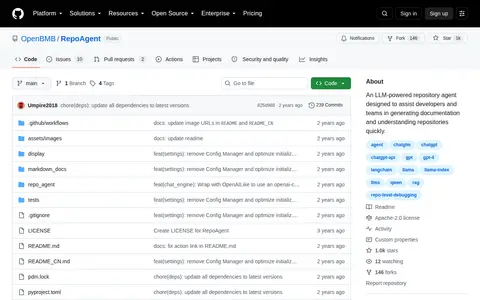
RepoAgent is an LLM-powered repository agent for generating documentation and understanding repositories. It detects changes in Git repositories, analyzes code structure through AST, and identifies bidirectional invocation relationships between objects. It supports GitHub Actions and can be installed via pip or PDM.
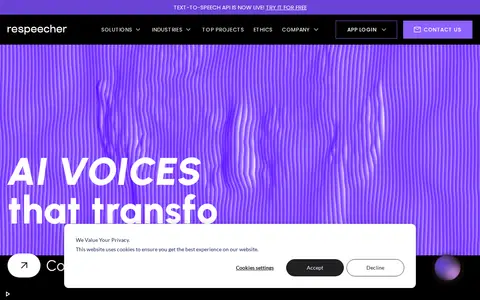
Respeecher provides an AI voice generator for professional production workflows. It offers enterprise-grade voice cloning and synthetic speech services, including a real-time text-to-speech API for voice agents. Its Voice Marketplace supplies over 40 AI voices and a plugin for Pro Tools. The company serves entertainment, film, TV, animation, games, broadcasting, sports, podcasts, audiobooks, music, and advertising sectors. Free testing and flexible integration are available.