The Canadian Database of Geochemical Surveys is the public interface to a Geological Survey of Canada database that catalogues regional geochemical surveys across Canada. It provides high-level metadata for catalogued surveys and links to spreadsheets and KML maps for standardised raw data, with data presented through an index map query, periodic table search and index tables.
Directory
Search results
Published directory entries matching your search.
The Canadian Disaster Database holds detailed information on more than 1,000 natural, technological and conflict events, excluding war, since 1900 that directly affected Canadians. It records where and when events occurred, injuries, evacuations, fatalities and estimated costs. The database can be downloaded as a spreadsheet through the Open Government Portal and is updated periodically.
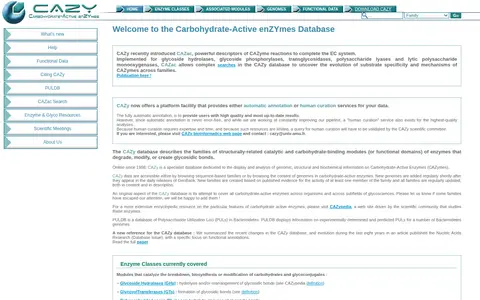
The Carbohydrate-Active enZYmes Database is a specialist database, online since 1998, describing families of structurally-related catalytic and carbohydrate-binding modules of enzymes that degrade, modify, or create glycosidic bonds. Data can be browsed by sequence-based families or by genome content, with new genomes added after GenBank releases. It also offers automatic annotation and human curation services for data.
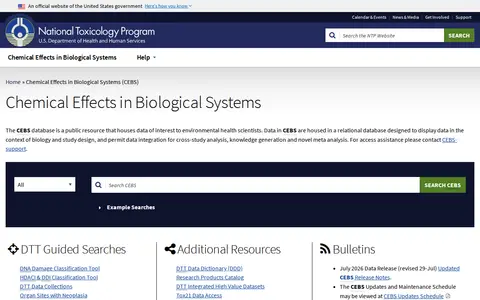
Chemical Effects in Biological Systems (CEBS) is a public database maintained by the U.S. National Institute of Environmental Health Sciences. It stores environmental health science data in a relational database organized around biological context and study design. The website is an official U.S. government resource.
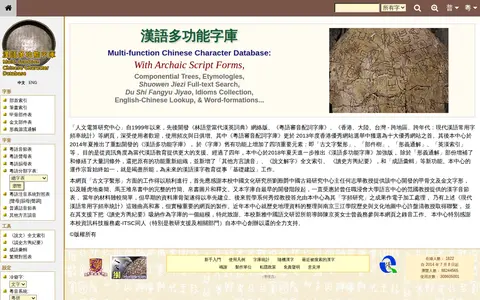
The Multi-function Chinese Character Database presents Chinese character information, including archaic script forms, componential trees, etymologies, a full-text search of Shuowen Jiezi, an idioms collection, English-Chinese lookup and word formations. Developed by the Research Centre for Humanities Computing, it received an enhanced version in summer 2018 adding other dialect readings and new modules.
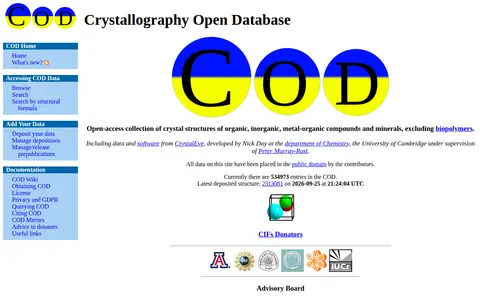
The Crystallography Open Database is an open-access collection of crystal structures of organic, inorganic, metal-organic compounds and minerals, excluding biopolymers. It provides browsing and searching, including search by structural formula and JSME search, and accepts deposited data. The site reports 535015 entries. All data and the database are dedicated to the public domain under the CC0 license.
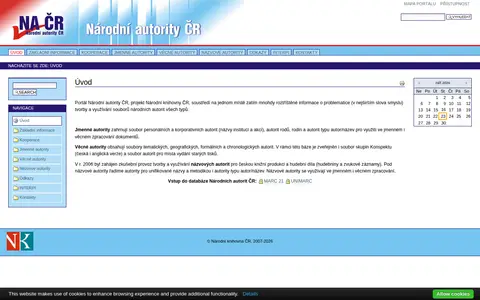
Authority Database of the National Library of the Czech Republic.
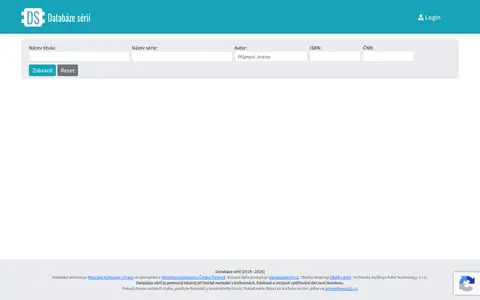
Database of book series published in Czech operated by Czech libraries.
Bibliographic database for finding publications, citations and scholarly records.
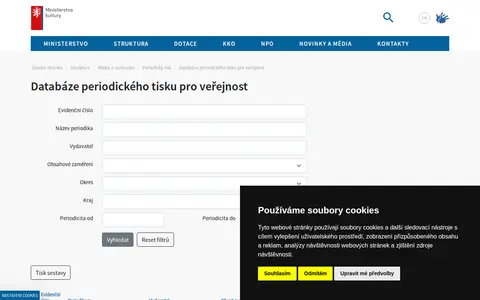
Bibliographic database of the Ministry of Culture of the Czech Republic.
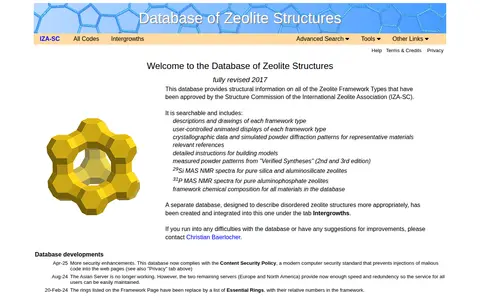
The Database of Zeolite Structures provides structural information on Zeolite Framework Types approved by the Structure Commission of the International Zeolite Association. It is searchable and includes framework descriptions and drawings, crystallographic data, simulated powder diffraction patterns, references and framework chemical compositions. A separate database describing disordered zeolite structures is integrated under the Intergrowths tab.
Game UI Database is a developer resource for coding, documentation, communities, security research, or software tools.
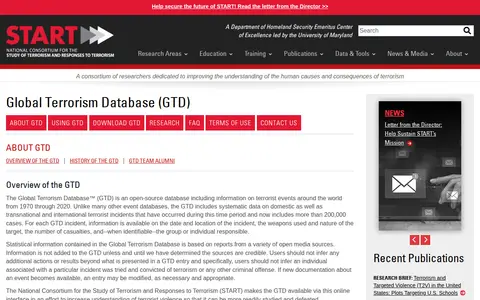
The Global Terrorism Database is an open-source database of terrorist events worldwide from 1970 through 2020, with more than 200,000 cases. Each incident entry covers the date and location, weapons used, target nature, casualties and, when identifiable, the responsible group or individual. Data is drawn from open media sources and added only after source credibility is determined.
Internet-based database of comic book information.
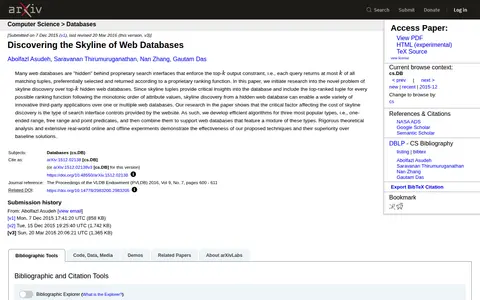
An arXiv paper on discovering skylines over hidden web databases whose search interfaces enforce a top-k output constraint. It examines how search interface controls affect discovery cost and develops algorithms for one-ended range, free range and point predicates, combined for mixed interfaces. Experiments over real-world online and offline databases are reported.
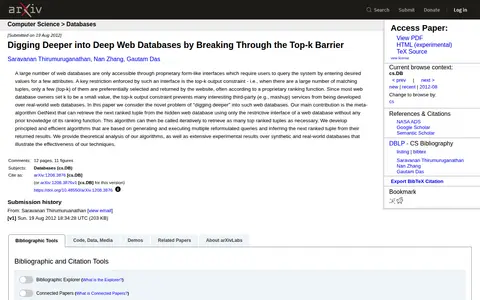
An arXiv paper on digging deeper into hidden web databases limited by the top-k output constraint. It presents the GetNext meta-algorithm, which retrieves the next ranked tuple through a restrictive interface without prior knowledge of the ranking function, and algorithms that generate and execute multiple reformulated queries. Theoretical analysis and experiments over synthetic and real-world databases are reported.
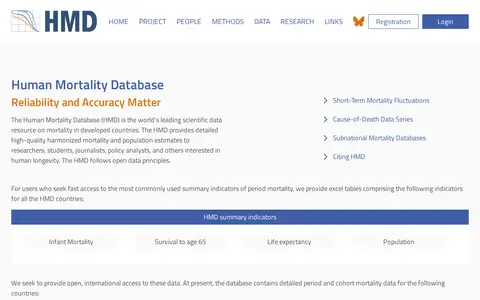
The Human Mortality Database is a scientific data resource on mortality in developed countries. It provides harmonized mortality and population estimates to researchers, students, journalists, and policy analysts. The database follows open data principles and is organized into zipped data files for rapid downloads, with summary indicators and data by country.
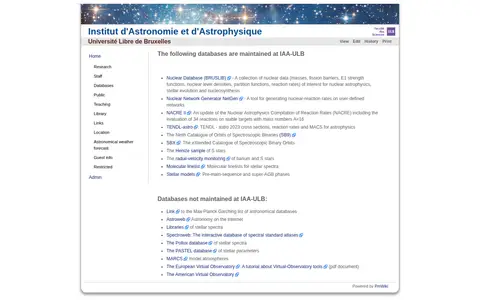
The Institut d'Astronomie et d'Astrophysique at Université Libre de Bruxelles maintains databases for nuclear and spectroscopic data relevant to astrophysics. Listed resources include BRUSLIB, a collection of nuclear data, NetGen, a tool for generating nuclear-reaction rates on user-defined networks, and an updated compilation of reaction rates. Spectroscopic databases and molecular linelists are also listed.
Research movies and television through Internet Movie Cars Database's searchable title, cast, production, and viewing information.
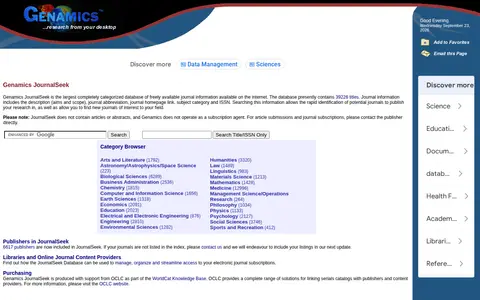
Genamics JournalSeek is a categorized database of scholarly journal information. It records journal descriptions, abbreviations, homepage links, subject categories and ISSNs, and the site states the database contains 39226 titles. Searching this information helps identify journals to publish in. The site notes that JournalSeek does not contain articles or abstracts.
The KIT Whole-Body Human Motion Database is a large-scale database of captured whole-body human motion. Motion is normalized with the master motor map reference model, and recordings are manually annotated with tree-structured tags for searching. The data include object positions and subject–object relations.
The NASA/IPAC Extragalactic Database is a database of extragalactic sources drawn from the astronomical literature. Its September 2026 release highlights note ingestion of 221K sources, including 157K cross-matches with NED objects and 63K new objects, and describe suggested data publication practices for journal articles.
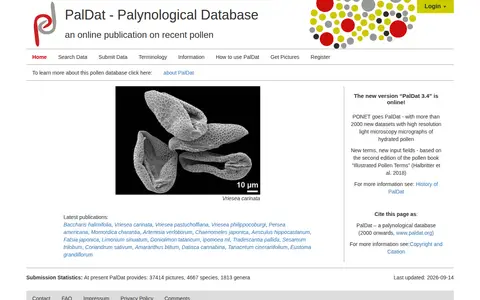
PalDat is an online publication and database on recent pollen, described as the world's largest database for palynological data. It presents pictures, species and genera records and lists latest publications. The site notes the release of version PalDat 3.4 and PONET datasets with light microscopy micrographs of hydrated pollen.
The Reptile Database is a taxonomic catalogue of lizards, snakes, tuataras, crocodiles, amphisbaenians and turtles. It provides advanced search, data downloads, publications and links, and is maintained by editors with volunteer help.