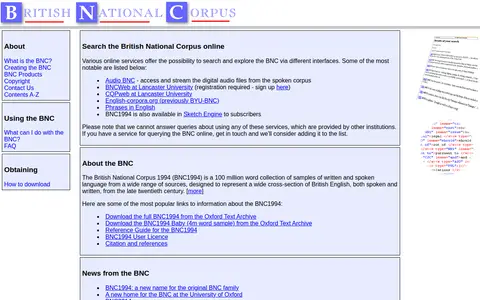
The British National Corpus is a 100 million word collection of samples of written and spoken language from a wide range of sources, designed to represent a wide cross-section of British English from the late twentieth century. The 1994 edition can be downloaded from the Oxford Text Archive, and online services such as BNCWeb at Lancaster University, which requires registration, allow users to search and explore the corpus. It was selected for use in language based research and development. The corpus is maintained by the Faculty of Linguistics, Philology and Phonetics at the University of Oxford.
Directory
Search results
Published directory entries matching your search.
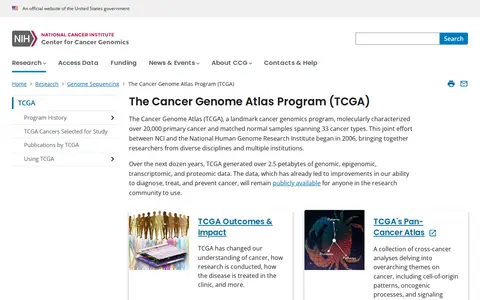
The Cancer Genome Atlas (TCGA) is an NCI and National Human Genome Research Institute program that molecularly characterized over 20,000 primary cancer and matched normal samples spanning 33 cancer types. TCGA data are publicly available and accessible through the Genomic Data Commons Data Portal, which provides web-based analysis and visualization tools.
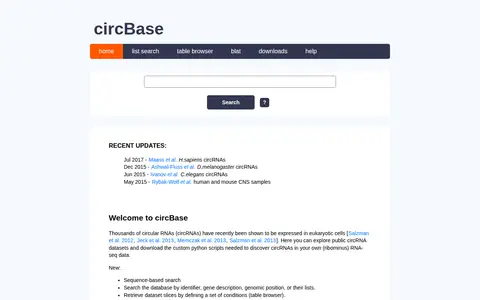
circBase is a database of public circular RNA datasets from several organisms and samples. It allows searching by identifier, gene, genomic position or sequence, retrieving dataset slices through a table browser, and downloading python scripts used to discover circRNAs in ribominus RNA-seq data.
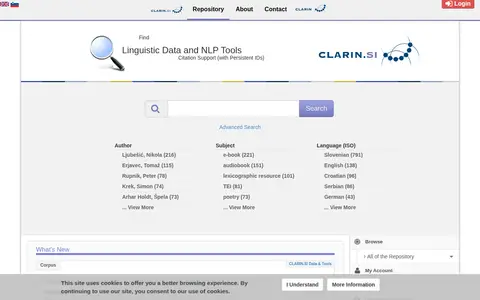
The CLARIN.SI repository holds linguistic data and NLP tools, allowing users to find, cite and deposit resources. It lists items by author, subject and language, including corpora such as ParlaMint 5.0 and samples of e-books. Open licenses are encouraged.
A Hugging Face Space by livecodebench that presents a collection of coding questions and shows how different AI models perform on each. Selecting a problem displays each model's generated code, its pass/fail rate and a color-coded correctness score.

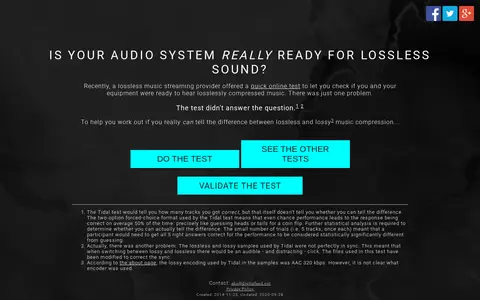
DigitalFeed hosts a browser-based ABX test that compares lossless and lossy music samples, modeled on a test by the streaming service Tidal. It asks whether users can tell the difference between lossless and lossy audio on their audio system. The test requires browser support for the Web Audio APIs, which Internet Explorer lacks.
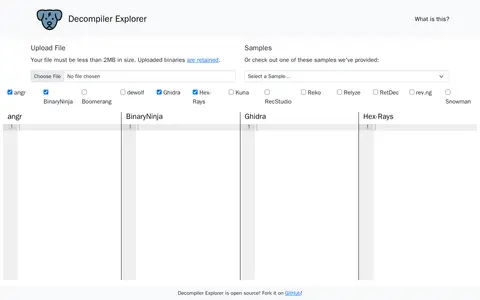
Decompiler Explorer is an interactive online decompiler that shows equivalent C-like output of decompiled programs from many popular decompilers. Users can upload a file or browse provided samples. Uploaded binaries are retained, and files must be less than 2MB in size. Supported decompilers include angr, BinaryNinja, Boomerang, Ghidra, Hex-Rays, RetDec and others.
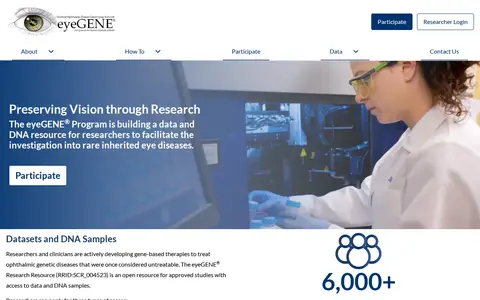
The eyeGENE Program is building a data and DNA resource for researchers to investigate rare inherited eye diseases. Approved studies can apply for access to datasets covering demographics, genetics and clinical data, or to both datasets and DNA samples. Researchers may also contact potential participants for other studies.
FontGenerator.design is an online AI font generator that produces PNG lettering designs and experimental TTF fonts. It supports English and custom Chinese characters, and provides free typography previews, copyable text, and licensed TTF font samples for users.
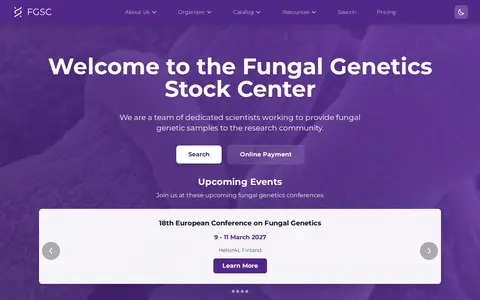
The Fungal Genetics Stock Center is a team of scientists that provides fungal genetic samples to the research community. The site offers online search and payment, and publishes pricing for fungal strains, plasmids, knock-out mutant plates, gene library pools, genomic DNA and related laboratory materials.
Git Large File Storage (Git LFS) is an open source Git extension for versioning large files. It replaces large files such as audio samples, videos, datasets, and graphics with text pointers inside Git while storing the file contents on a remote server like GitHub.com or GitHub Enterprise. Installation is available for Windows, Mac, and Linux. Tracking file types does not convert pre-existing files, which requires the git lfs migrate command.
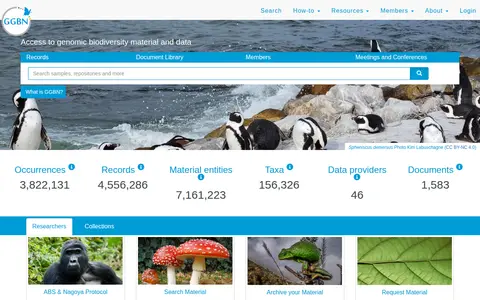
GGBN is a global network of well-managed collections of genomic samples from across the Tree of Life. It provides access to genomic biodiversity material and data, with occurrence, record, material entity and taxon counts. It also offers a document library, ABS and Nagoya Protocol resources, and facilities to search and request material.
GuitarML offers software plugins for guitar tone, with amp and pedal capture done by recording input/output samples and training machine learning models. Captures load into the Proteus plugin. Epoch Amp is an amp modelling plugin with four amp models, a mix control and built-in impulse responses.
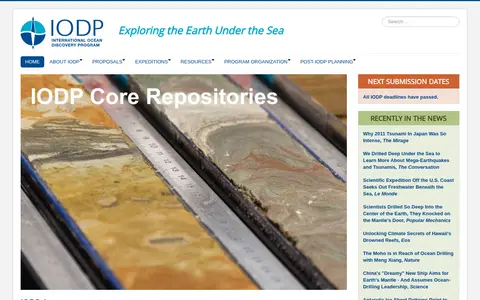
The International Ocean Discovery Program was a scientific ocean drilling program that concluded in 2024 after eleven years. It studied the subseafloor, and its platforms were operated by science operators: the JOIDES Resolution Science Operator, MarE3 within JAMSTEC, and the ECORD Science Operator using mission-specific platforms. Cores and samples may still be requested from the IODP Core Repositories.
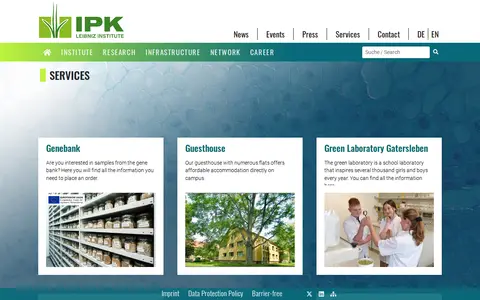
IPK Gatersleben is a Leibniz Institute offering services that include a gene bank for ordering samples, a guesthouse with flats on campus, a school laboratory, library services, and databases storing research results and information.
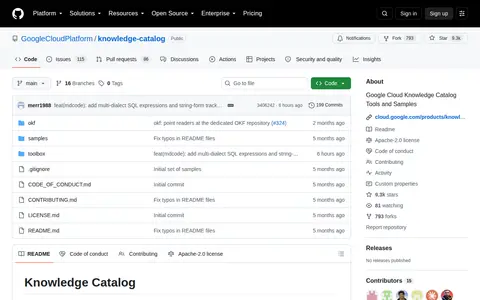
Google Cloud Knowledge Catalog Tools and Samples
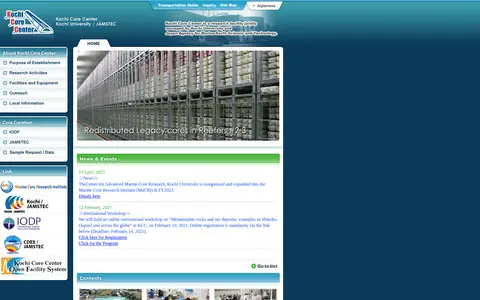
Kochi Core Center is a research facility jointly managed by Kochi University and JAMSTEC. It conducts marine core analyses and research, stores core samples, performs IODP curation services, and engages in educational and outreach activities. The center also functions as one of the three IODP core sample storage facilities.
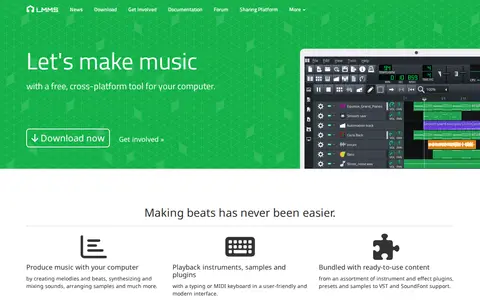
LMMS is a free, open source, multiplatform digital audio workstation for making music on a computer. It also hosts a Sharing Platform where users share projects, samples, presets, tutorials and other content.
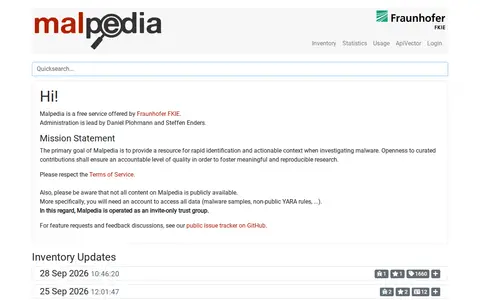
Malpedia is a free service from Fraunhofer FKIE aimed at providing a resource for rapid identification and actionable context when investigating malware. Curated contributions are intended to support accountable quality and reproducible research. Not all content is publicly available; an account is needed to access all data, such as malware samples and non-public YARA rules, and it is operated as an invite-only trust group.
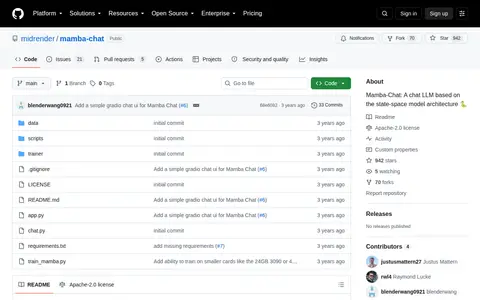
Mamba-Chat is a chat language model built on a state-space model architecture rather than a transformer. The repository provides training and fine-tuning code based on a modified Huggingface Trainer class. The model is based on Mamba-2.8B and was fine-tuned on 16,000 samples of the HuggingFaceH4/ultrachat_200k dataset. Code is provided for testing and fine-tuning, including a command-line chatbot and a Gradio app.
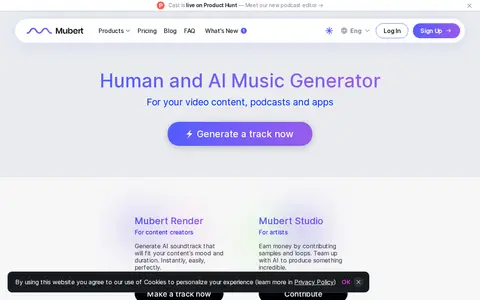
Mubert is an AI music generator offering royalty-free music from text prompts. It provides Render for content creators, Studio for contributing samples and loops, API for developers, and Play for listeners. The API supports track generation and music streaming integration.
Musicle is a music-guessing game in which players guess albums from samples of their tracks. It offers two game modes, Regular and Royale, and multiple flavors such as jazz, classical and soundtracks. Three secret albums are guessed each day, and a one-time payment unlocks ad-free play on one device.
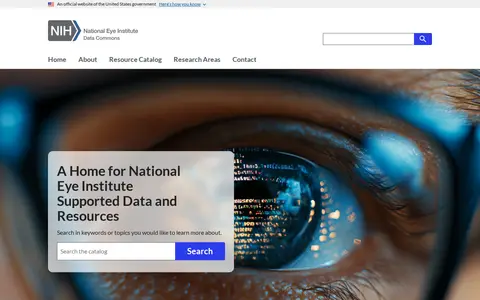
The National Eye Institute Data Commons is an official U.S. government repository for data and resources supported by the National Eye Institute. It hosts materials including next-generation sequencing data and associated tools, eyeGENE datasets and DNA samples for rare inherited eye disease research, the AMD IBI dataset, cone detection data, the Cat-Map resource, the Platform for Analysis of scEiad (PLAE), and materials related to perception, cognition and action research. Users can search the resource catalog.
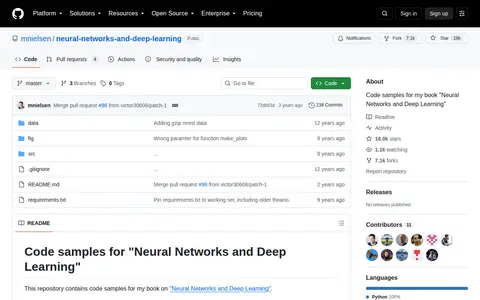
Code samples for my book "Neural Networks and Deep Learning" [DEEP LEARNING].