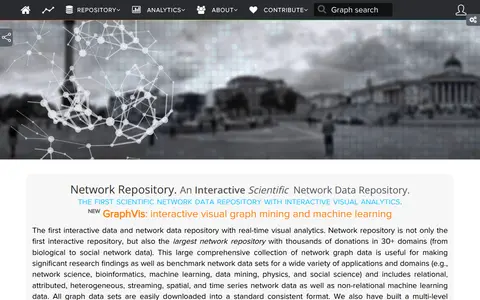

The Network Repository is the first interactive network dataset repository, offering real-time interactive graph visualization and analytics for network datasets. It hosts a wide range of network datasets organized into categories including miscellaneous networks, cheminformatics, animal social networks, social networks, power networks, labeled networks, dynamic networks, technological networks, brain networks and other specialized network types.
Directory
Search results
Published directory entries matching your search.
Analyzes structured data and helps produce queries, insights or visualizations.
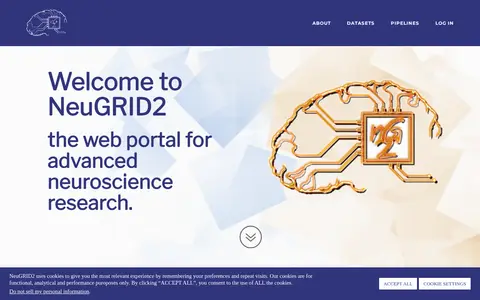
neuGRID is a web portal for advanced neuroscience research, serving users from students to senior neuroscientists focused on neurodegenerative diseases including Alzheimer's disease, Lewy body disease, frontotemporal dementia and white matter diseases. It uses high performance computing resources to enable faster visualization, analysis and interpretation of neuroimaging data than traditional lab-based workflows, and functions as a recognized data repository. It also provides datasets, pipelines, apps and neuroimaging machine learning tools.

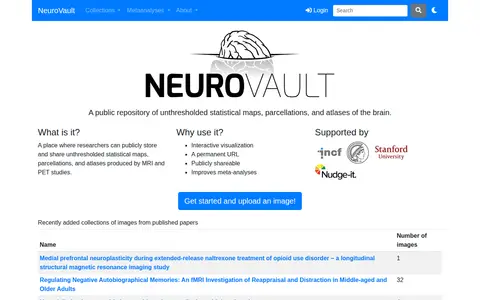
NeuroVault is a public repository where researchers can store and share unthresholded statistical maps, parcellations and atlases produced by MRI and PET studies. It offers interactive visualization, permanent URLs and publicly shareable images, and the site states it improves meta-analyses. An API provides access to atlases, collections and images.
How a Social Scientist Jumps into the World of Big Data.
New Westminster Open Data is the official open data portal for the city of New Westminster. It enables users to discover, analyze, and download municipal datasets in formats including CSV, KML, Zip, GeoJSON, GeoTIFF and PNG. The portal provides API links for GeoServices, WMS, and WFS, and supports the creation of StoryMaps and Web Maps for data visualization.
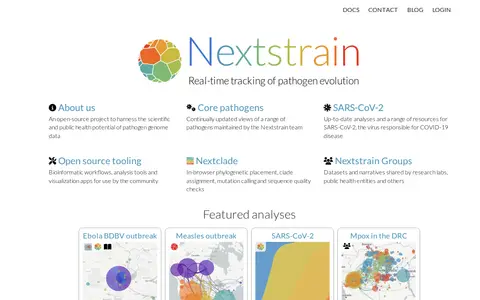
Nextstrain is an open-source project that tracks pathogen evolution in real time using pathogen genome data. It provides bioinformatic workflows, analysis tools and visualization apps, plus featured analyses of pathogens such as SARS-CoV-2, Ebola, measles and influenza. Nextclade offers in-browser phylogenetic placement, clade assignment, mutation calling and sequence quality checks.
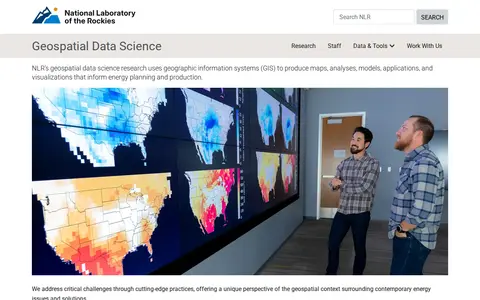
NLR's geospatial data science research uses geographic information systems (GIS) to produce maps, analyses, models, applications, and visualizations that inform energy planning and production. The work offers a geospatial perspective on contemporary energy issues and solutions.
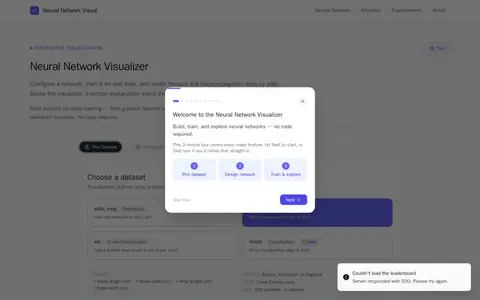
NN Visual is an interactive web-based neural network visualizer. It lets users configure hidden layers, select datasets such as auto_mpg, iris, xor, or mnist, and train a network while observing forward and backpropagation step by step. The tool displays training loss, mean absolute error, weight distributions, and node activation brightness. Written explanations accompany the visualizations to teach concepts like gradient descent, weights, biases, and activation functions without requiring code.
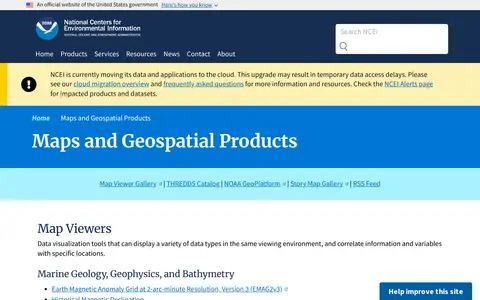
A National Centers for Environmental Information page presenting maps and geospatial products, including map viewers with data visualization tools and story maps combining maps, narrative text, images and multimedia. It also links to ArcGIS REST service directories for GIS servers with metadata and download formats for programmers and developers.
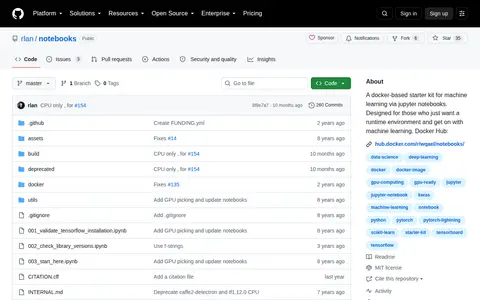
Notebooks is a Docker-based starter kit for machine learning through Jupyter notebooks, intended for users who want a ready runtime environment. Its images cover combinations of Keras, TensorFlow and PyTorch with CUDA v8 through v11, and include JupyterLab, scikit-learn, pandas and visualization, vision and NLP libraries. Python 3 only, as Python 2 is end-of-life.
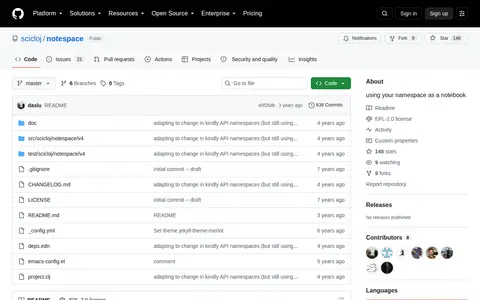
notespace is an open source project hosted as a public repository on GitHub under the scicloj/notespace project. It is designed to enable users to use their namespace as a notebook. The project invites contributions from developers.
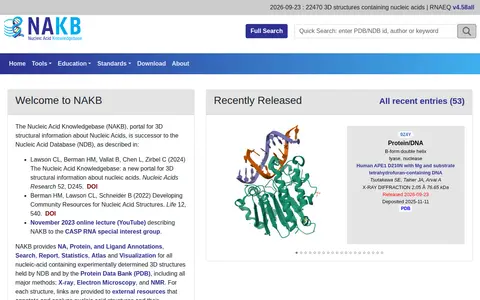
The Nucleic Acid Knowledgebase (NAKB) is a portal for 3D structural information about nucleic acids, succeeding the Nucleic Acid Database. It provides annotations, search, reports, statistics, an atlas and visualization for nucleic-acid containing structures held by the NDB and the Protein Data Bank, covering X-ray, electron microscopy and NMR methods. Each structure links to external resources annotating and analyzing nucleic acid structures and their complexes.
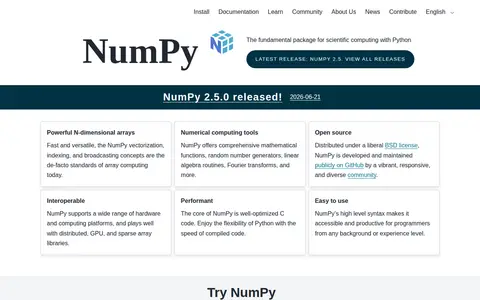
NumPy is a Python library providing a multidimensional array object and routines for fast operations on arrays, including mathematical, logical, sorting, Fourier transforms, linear algebra and random simulation. It is open source under a BSD license and is described as the fundamental package for scientific computing in Python, with core code written in optimized C.
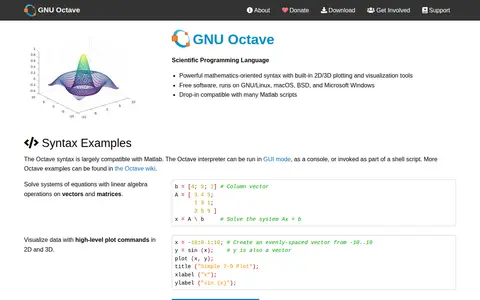
GNU Octave is a programming language for scientific computing with mathematics-oriented syntax and built-in 2D/3D plotting and visualization tools. It is free software licensed under the GNU General Public License and runs on GNU/Linux, macOS, BSD, and Microsoft Windows. Its syntax is largely compatible with Matlab, and it can be extended by packages.
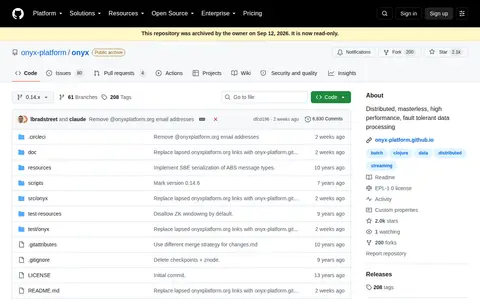
Onyx is a distributed, masterless data processing system written in pure Clojure, with a batch and stream hybrid processing model. The repository is archived and read-only. Listed uses include realtime event stream processing, extract, transform, load, and data cleaning.
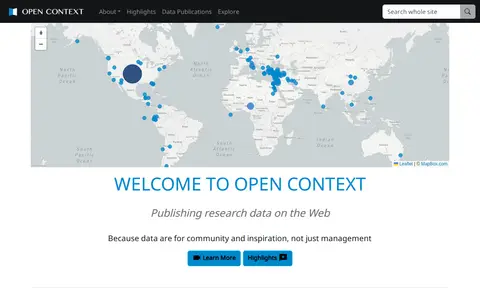
Open Context is a publishing service for archaeological and related research data, including images, maps, field notes and 3D models. It explains publishing of field documentation and data, faceted search and map-based visualization, and data download. It charges a one-time fee for publishing services, with project tiers such as a small project at $350.
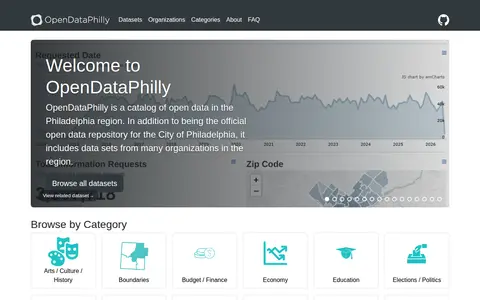
OpenDataPhilly is a catalog of open data in the Philadelphia region. It is the official open data repository for the City of Philadelphia and also includes data sets from many organizations in the region. The catalog covers categories such as arts, culture and history, boundaries, budget and finance, economy, education, elections and politics, environment, food, health and human services, parks and recreation, planning and zoning, public safety, real estate and land records, and transportation.
Open Data Platform: India Smart Cities is a portal under India's Smart Cities Mission, operated by the Ministry of Housing & Urban Affairs. It serves as a single-point access to open format resources published by Indian government ministries, departments and organizations, and hosts datasets, visualizations, blogs and infographics. The portal supports the DataSmart Cities Strategy to help urban areas address complex challenges with data.
Open Government Data of Kerala is a portal associated with the Open Government Data (OGD) Platform India. The OGD Platform India serves as a single-point access to open format resources published by Indian government ministries, departments and organizations, and provides details of open data events, visualizations, blogs and infographics.
Open SDG Data Hub is an ArcGIS Hub platform focused on dataset discovery and access. It allows users to discover, analyze and download data in formats including CSV, KML, Zip, GeoJSON, GeoTIFF and PNG. The platform provides API links for GeoServices, WMS and WFS, and supports the creation of StoryMaps and Web Maps for data visualization.
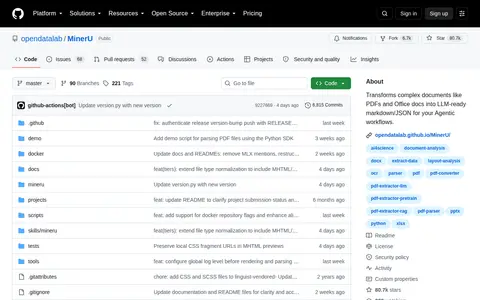
MinerU is a tool that transforms complex documents such as PDFs and Office documents into LLM-ready markdown or JSON for agentic workflows. It supports multiple input formats including PDF, images, DOC/DOCX, PPT/PPTX, XLS/XLSX, RTF, ODT/ODS/ODP, EPUB, OFD, HTML/MHTML and CSV/TSV. Version 4.0 offers four parsing tiers and a document library with search and citation locators, and documents are not automatically uploaded to the official service; remote parsing requires explicit configuration.
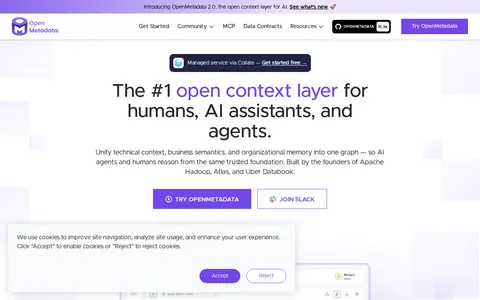
OpenMetadata is an open-source AI context layer powered by metadata, semantics, and memory that provides a shared, rich understanding of data for people and AI. It was built by the founders of Apache Hadoop, Apache Atlas, and Uber Databook. The unified platform supports data cataloging, discovery, quality, observability, governance, lineage, and collaboration.
Bring multiple data streams into one dashboard.