
An article by Benedict Evans discussing generative AI, Large Language Models and ChatGPT as a generational change in software automation, and considering what this means for employment and jobs. It compares the current wave with 200 years of past automation and asks whether new jobs will replace those displaced.
Directory
Search results
Published directory entries matching your search.
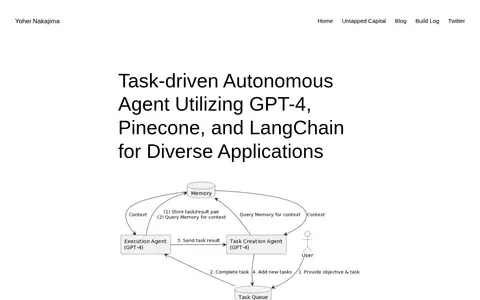
This is a blog post by Yohei Nakajima describing a proposed task-driven autonomous agent that leverages OpenAI's GPT-4 language model, Pinecone vector search, and the LangChain framework to perform tasks across diverse domains. The system can complete assigned tasks, generate new tasks based on completed results, and prioritize tasks in real time. The post outlines potential future improvements including integration of a security/safety agent, expanded functionality, generation of interim milestones, and real-time priority updates.
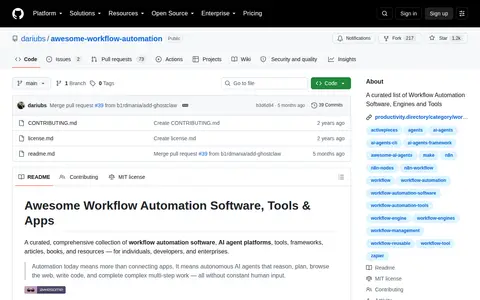
Curated List of Workflow Automation Apps And Tools.
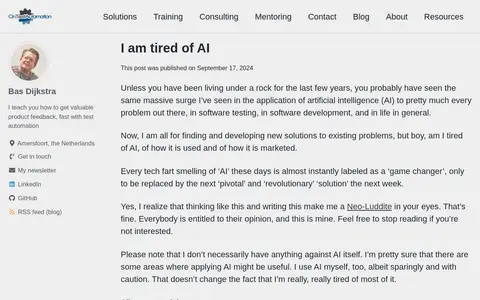
A blog post published September 17, 2024, on On Test Automation, in which author Bas Dijkstra expresses fatigue with how artificial intelligence is applied and marketed in software testing, software development and life generally. The author states no necessary opposition to AI itself, saying he uses it sparingly and with caution.
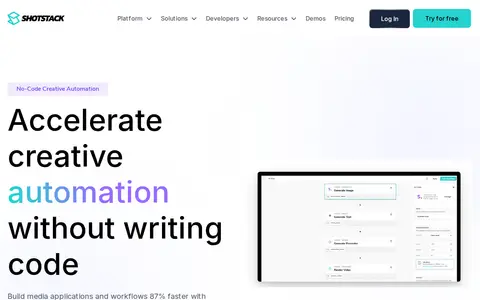
Shotstack Workflows is a visual, no-code media automation workflow platform for creating videos and images with generative AI and third party media and marketing tools. The page states that it is aimed at accelerating creative automation without writing code.
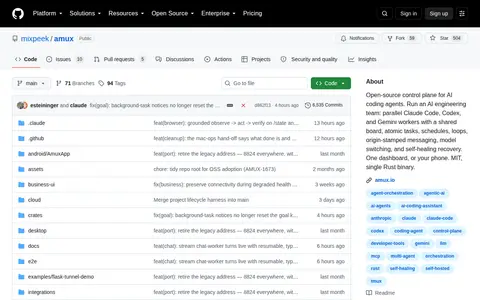
amux is an open-source control plane for AI coding agents, hosted on GitHub by mixpeek. It enables management of parallel AI coding workers including Claude Code, Codex, and Gemini, with features such as a shared task board, atomic task assignment, scheduling, origin-stamped messaging, model switching, self-healing recovery, and access via a dashboard or mobile interface. It is MIT licensed and distributed as a single Rust binary.
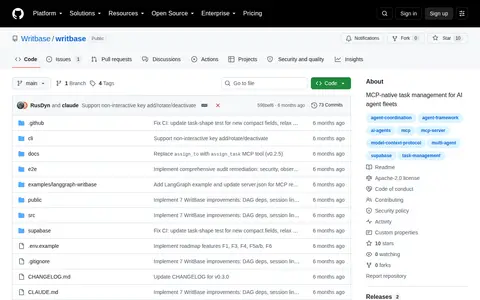
WritBase is an MCP-native task management system for AI agent fleets. It provides a control plane for AI agents and human supervisors, with a persistent task registry stored in Postgres, scoped permissions, inter-agent delegation, and full provenance. Agents connect via the Model Context Protocol, and setup can use npx commands with Supabase.
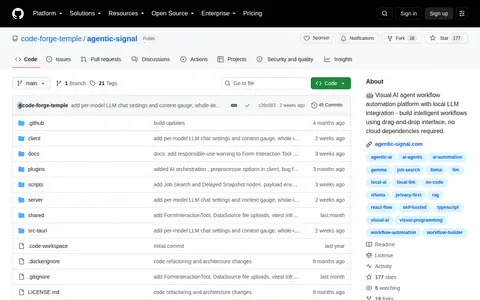
Agentic Signal is an open source visual AI agent workflow automation platform with local large language model (LLM) integration. It lets users build intelligent workflows via a drag-and-drop interface without requiring cloud dependencies. The repository includes a demo video, feature list, and visual workflow builder documentation.
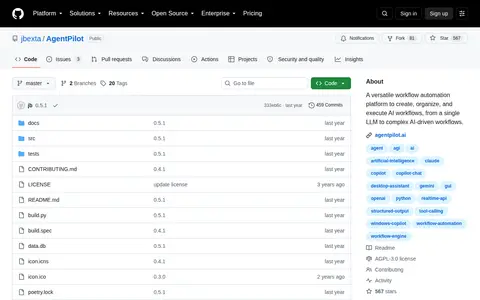
AgentPilot is a workflow automation platform for creating, organizing and executing AI workflows, ranging from a single LLM to complex AI-driven workflows. It offers an interface for designing workflows and chatting with them in real time, with branching chats and graph workflows supporting parallel execution. Workflows can be scheduled using natural language expressions of time.
Enable your revenue team to deliver an exceptional buyer experience with account based sales and ABM automation powered by AI agent technology.
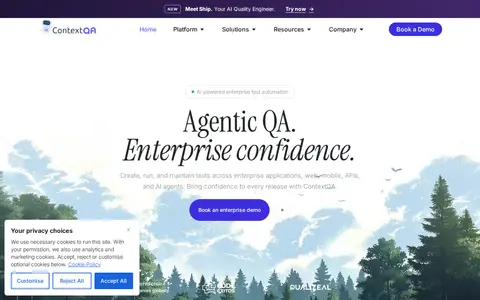
ContextQA is an AI test automation platform for enterprise applications and AI agents. It generates test cases, repairs broken selectors automatically, and supports web, API, cross-browser, and cross-device testing. It also offers MCP integration with Cursor and Claude Code.
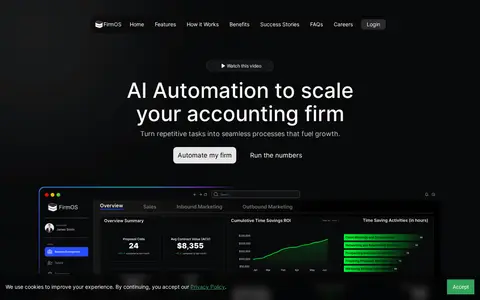
AI-Powered Automation for Accounting Firms.
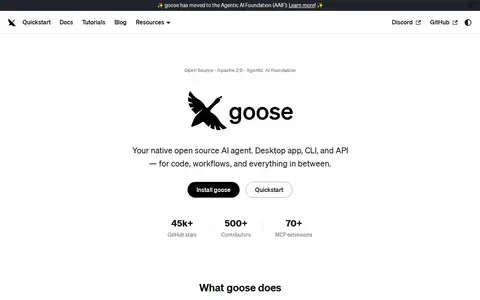
goose is an open source AI agent that runs on the user's machine. It is available as a desktop app for macOS, Linux and Windows, a CLI, and an API built in Rust. The agent is general-purpose, covering code, workflows, research, writing and automation. It connects to 70+ extensions via the Model Context Protocol and works with 15+ LLM providers, including API keys or existing subscriptions.
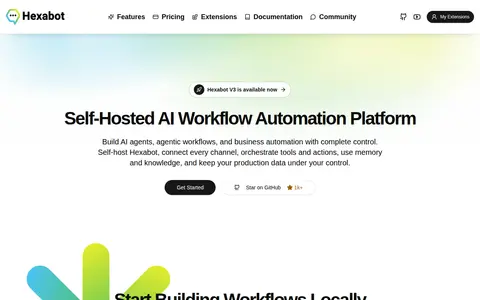
Hexabot is a self-hostable AI workflow automation platform. It is used to build AI agents and workflows that interact across channels, using MCP tools, memory and data control. Projects can be started locally with the official CLI, and the platform is source-available under the FCL-1.0-ALv2 licence.
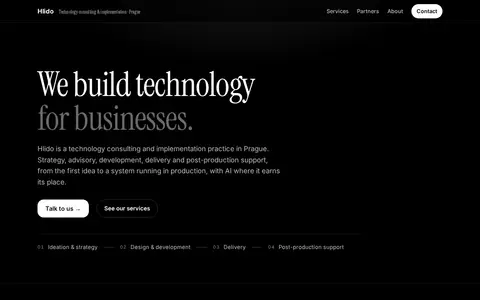
Hlido is a technology consulting and implementation practice in Prague working across the EU and with India. It advises on strategy and technology, develops and delivers projects from ideation to production, and provides post-production support. Cybersecurity is delivered with channel partner IrisInfosec, and automation with AutomationEdge.
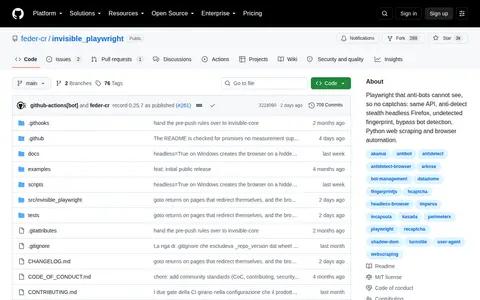
invisible_playwright is a Python package providing Playwright-compatible browser automation on an anti-detect Firefox patched at the C++ source level. It humanizes clicks, hover and drag actions in the driver. Supported platforms are Windows x86_64 and Linux x86_64/arm64; tracing, HAR, CDP and the API request context are out of scope.
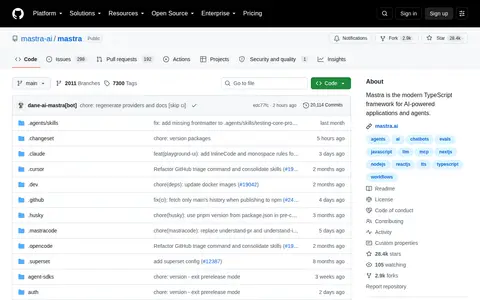
TypeScript-native AI agent framework for web developers. Workflow automation with typed tools and integrations. MIT.
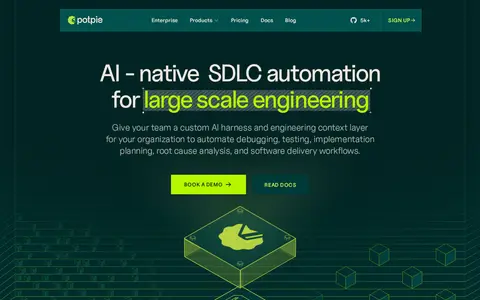
Potpie is an AI-native SDLC automation platform. It maps how systems work into a context graph and runs AI agents on it inside the user's own VPC, according to the page. The documentation page describes creating and updating documentation from connected product knowledge.
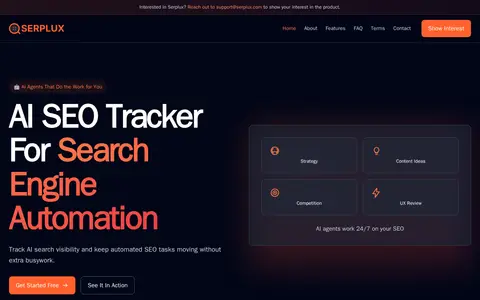
Serplux is an AI SEO tracker for search engine automation. It offers AI agents for SEO strategy, content ideas, competition analysis, keyword position tracking and UX review. The page states a free forever plan with no credit card and access to all AI agents.
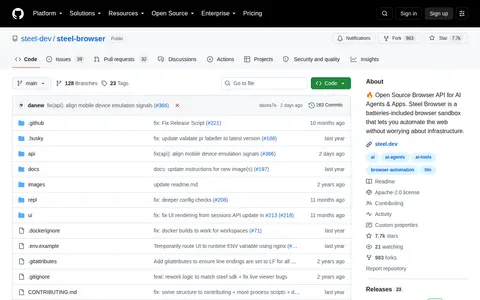
Steel Browser is an open source browser API built for AI agents and applications. It functions as a batteries-included browser sandbox that enables web automation without requiring users to manage underlying infrastructure. The project is hosted on GitHub under the steel-dev organization.
↗ external - Open-source agent that operates a real browser.
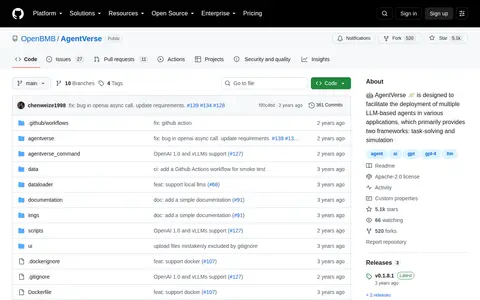
AgentVerse is designed to facilitate deployment of multiple LLM-based agents in various applications. It provides two frameworks: task-solving, which assembles multiple agents as an automatic multi-agent system to collaboratively accomplish tasks, and simulation, which lets users set up custom environments to observe or interact with multiple agents.
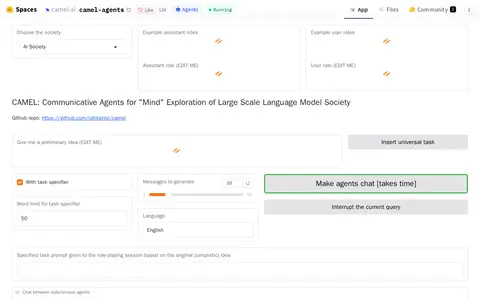
Camel Agents is a Hugging Face Space developed by camel-ai that launches an AI agent system capable of concurrent task processing. Users must provide an API key and specify the number of tasks to run at the same time to use the system.
A blog post summarizing a University of Illinois study on solo performance prompting (SPP), a prompt engineering method in which an LLM summons multiple personas that collaborate on a task. The post describes the SPP prompt structure and reports on three experiments: Trivia Creative Writing, Codenames Collaborative, and Logic Grid Puzzle.