
aomni.com
Enable your revenue team to deliver an exceptional buyer experience with account based sales and ABM automation powered by AI agent technology.

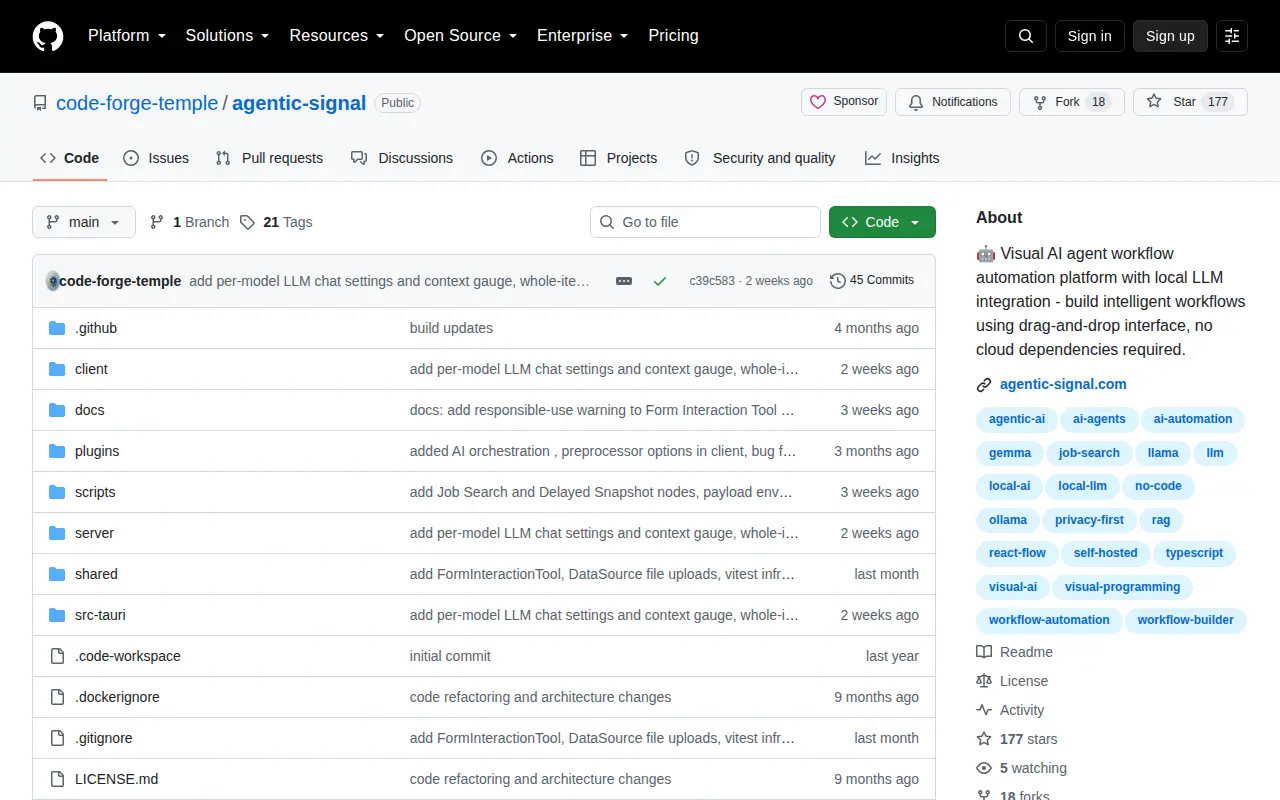
Agentic Signal is an open source visual AI agent workflow automation platform with local large language model (LLM) integration. It lets users build intelligent workflows via a drag-and-drop interface without requiring cloud dependencies. The repository includes a demo video, feature list, and visual workflow builder documentation.
Enable your revenue team to deliver an exceptional buyer experience with account based sales and ABM automation powered by AI agent technology.

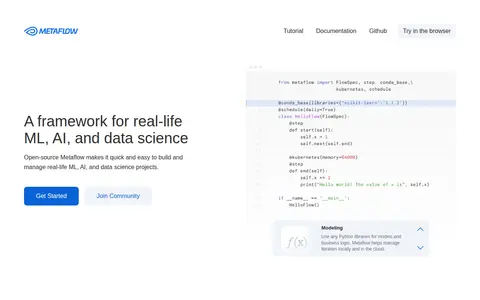
Metaflow is an open-source framework for building and managing ML, AI, and data science projects. It supports using Python libraries, orchestration workflows in Python, versioning, and scaling compute to the cloud, including GPUs. It was originally developed at Netflix and open-sourced in 2019.

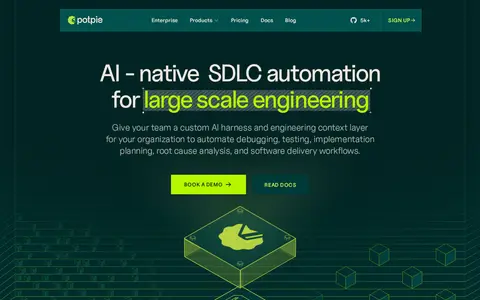
Potpie is an AI-native SDLC automation platform. It maps how systems work into a context graph and runs AI agents on it inside the user's own VPC, according to the page. The documentation page describes creating and updating documentation from connected product knowledge.

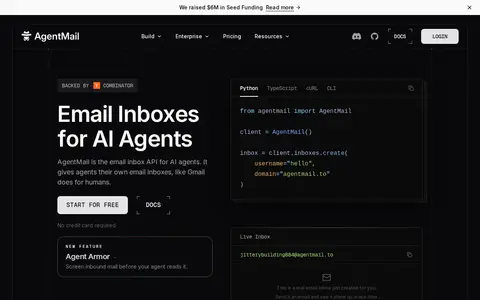
AgentMail is an email provider built for AI agents. It offers real inboxes through an API, allowing users to create, send, receive, and search email messages via a REST API, intended for autonomous agents and agentic workflows. A free tier is available without a credit card.

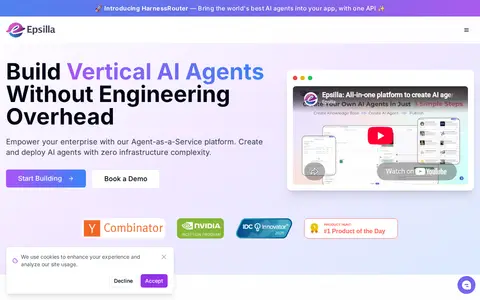
Epsilla is an agent-as-a-service platform for enterprises to build, deploy and manage custom AI agents without coding. It offers a no-code agent builder, RAG as a service, multi-tenancy, analytics and A/B testing, with SaaS, on-premise or private cloud deployment. The site also describes HarnessRouter, a unified Agent API for running multiple agent harnesses.
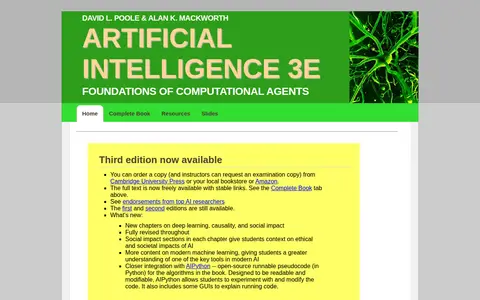
Artificial Intelligence: Foundations of Computational Agents, 2nd Edition is a textbook on artificial intelligence focused on computational agents, authored by David L. Poole and Alan K. Mackworth. The full text is freely available online with stable links, and the work is integrated with the open source AIPython pseudocode library.
Community notes
Be the first to share how this project worked for you.
Sign in with a verified account to leave a review or join the discussion.
Sign in to reviewKeep exploring
Enable your revenue team to deliver an exceptional buyer experience with account based sales and ABM automation powered by AI agent technology.
Metaflow is an open-source framework for building and managing ML, AI, and data science projects. It supports using Python libraries, orchestration workflows in Python, versioning, and scaling compute to the cloud, including GPUs. It was originally developed at Netflix and open-sourced in 2019.
Potpie is an AI-native SDLC automation platform. It maps how systems work into a context graph and runs AI agents on it inside the user's own VPC, according to the page. The documentation page describes creating and updating documentation from connected product knowledge.
AgentMail is an email provider built for AI agents. It offers real inboxes through an API, allowing users to create, send, receive, and search email messages via a REST API, intended for autonomous agents and agentic workflows. A free tier is available without a credit card.
Epsilla is an agent-as-a-service platform for enterprises to build, deploy and manage custom AI agents without coding. It offers a no-code agent builder, RAG as a service, multi-tenancy, analytics and A/B testing, with SaaS, on-premise or private cloud deployment. The site also describes HarnessRouter, a unified Agent API for running multiple agent harnesses.
Artificial Intelligence: Foundations of Computational Agents, 2nd Edition is a textbook on artificial intelligence focused on computational agents, authored by David L. Poole and Alan K. Mackworth. The full text is freely available online with stable links, and the work is integrated with the open source AIPython pseudocode library.