idtheftcenter.org
Identity Theft Resource Center database documenting publicly reported US data compromises.
Directory
Published directory entries matching your search.
Identity Theft Resource Center database documenting publicly reported US data compromises.
Generates fictional identities with names and details for testing and creative use.
Provides fictional US identity number generators for testing forms and software applications.

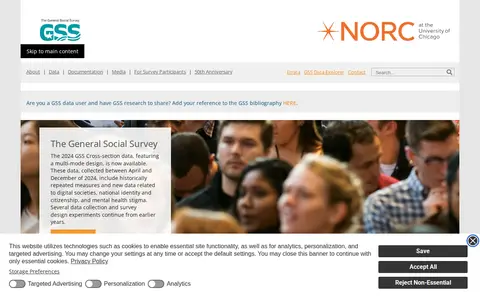
The General Social Survey is a survey project whose 2024 cross-section data is available with a multi-mode design. The data, collected between April and December 2024, include historically repeated measures and new data on digital societies, national identity and citizenship, and mental health stigma.

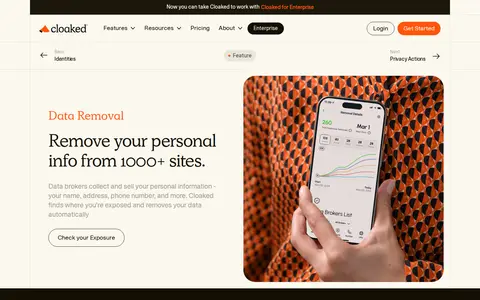
Cloaked's data removal feature finds where personal information is exposed on data broker and people-search sites and sends opt-out and removal requests on the user's behalf. It continuously monitors and re-removes data that brokers re-list over time. The page states the feature is included in every Cloaked plan.

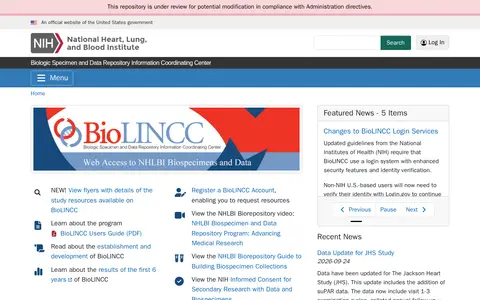
BioLINCC is a clinical specimen database operated by the National Heart, Lung, and Blood Institute. It allows users to search for study datasets and biospecimens, including open specimen collections, and to submit requests for them. Accounts are required to request resources, and users must verify their identity through Login.gov or ID.me depending on location.

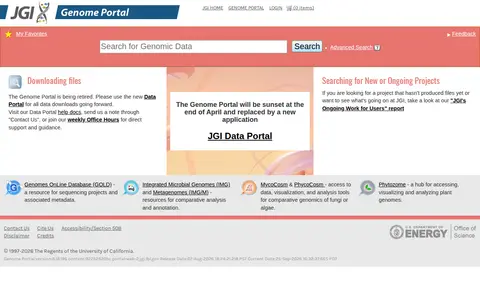
The JGI Genome Portal is a search and discovery interface for JGI projects, with filters for funding program, program year, taxonomy, project status and product type. It provides project identity, sequencing, analysis and contact information. The portal is being retired and will be sunset at the end of April, replaced by the JGI Data Portal, which users are directed to for downloads.

A generator that produces random, fictional identities including names, addresses, phone numbers, emails, usernames and passwords, described for software testing, sample data and writing. It is free and needs no account; signing in allows saving identities, bulk orders and API use. An API returns identities as JSON repeatable with a seed.

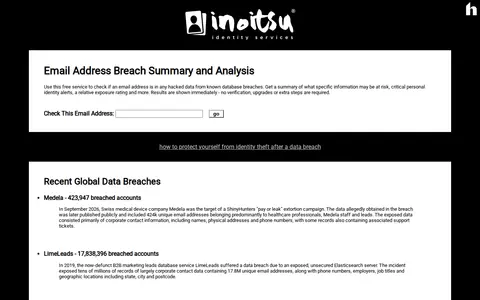
Email Breach Analysis is a free service that checks whether an email address appears in hacked data from known database breaches. It returns a summary of information that may be at risk, critical identity alerts, and a relative exposure rating.
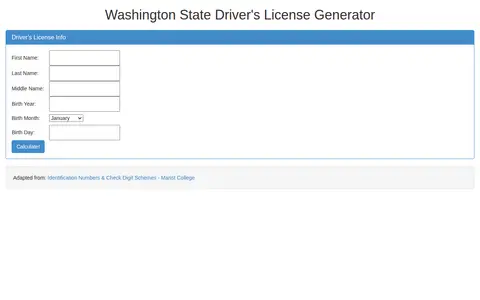
Creates sample Washington driver license data for mockups, testing, and development examples.

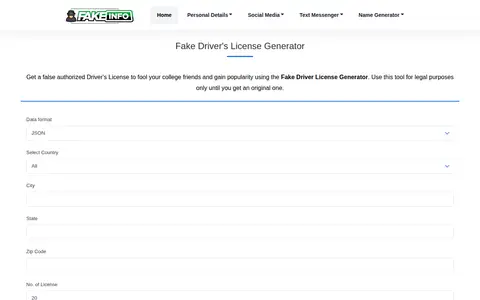
Generates fictional driver license details for demonstrations, testing, and creative projects.

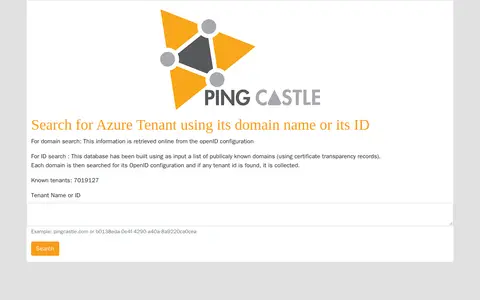
PingCastle Cloud provides a search page for Azure tenants by domain name or tenant ID. Domain searches use online OpenID configuration data, while ID searches rely on a database built from publicly known domains from certificate transparency records, with each domain checked for OpenID configuration and collected tenant IDs. It lists known tenants.

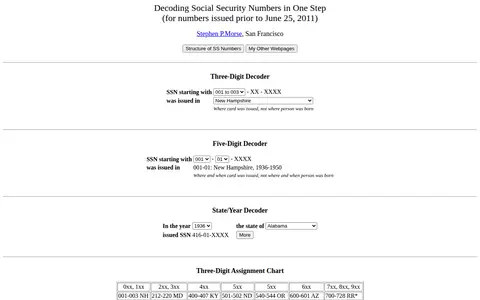
A one-step page for decoding Social Security Numbers issued prior to June 25, 2011. It points to an article on the structure of Social Security Numbers and to the Social Security Administration website for later number assignments. It also points to the Internal Revenue Service website for the structure of Individual Taxpayer Identification Numbers. The page was automatically updated monthly through June 2011 and has been static since.

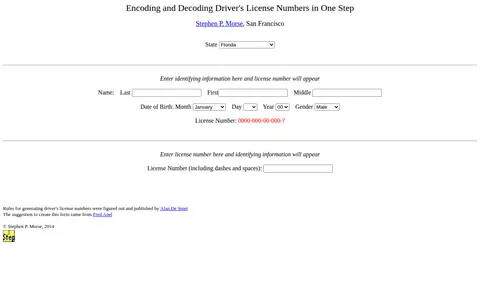
A page by Stephen P. Morse offering a form to encode and decode driver's license numbers. It states that the rules for generating the numbers were figured out and published by Alan De Smet, and credits Fred Apel with suggesting the form.
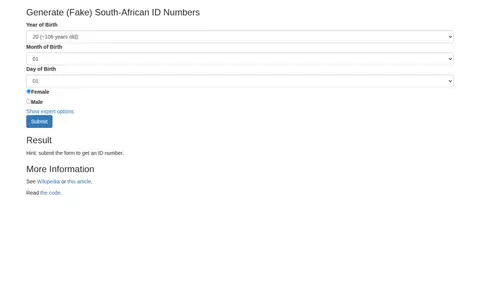
A browser-based tool that generates South African ID numbers, labeled as fake on the page. A form is submitted to obtain a generated number, and the page links to Wikipedia, an article and the source code for further information.

A page that checks the format and prefix rules of UK National Insurance numbers and provides sample NI numbers for testing forms. It explains how a NINO is built and states that NINOs have no check digit, so a correctly formatted number may never have been issued.

A page for checking Canadian social insurance numbers, verifying the first digit and Luhn check digit, showing the step-by-step check, and offering sample SINs for testing forms. It also lists what the first digit means and includes PHP and JavaScript check code.

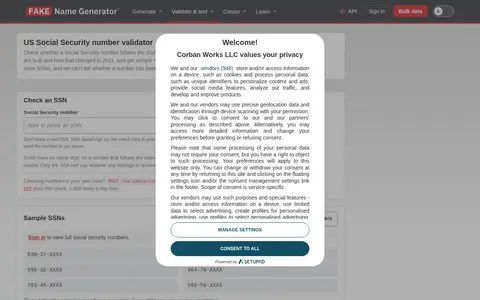
A page from the Fake Name Generator that checks whether a US Social Security number follows Social Security Administration numbering rules. It explains how SSNs are built and how numbering changed in 2011, and provides sample SSNs for testing forms. The page notes that numbers following the rules may still never have been issued.