


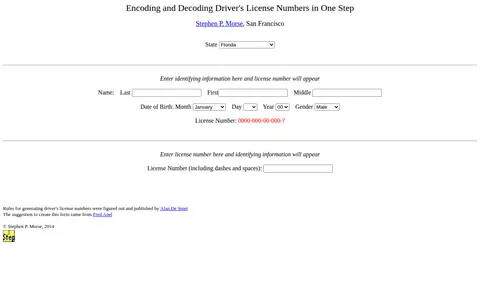
A page by Stephen P. Morse offering a form to encode and decode driver's license numbers. It states that the rules for generating the numbers were figured out and published by Alan De Smet, and credits Fred Apel with suggesting the form.
Decoding Social Security Numbers
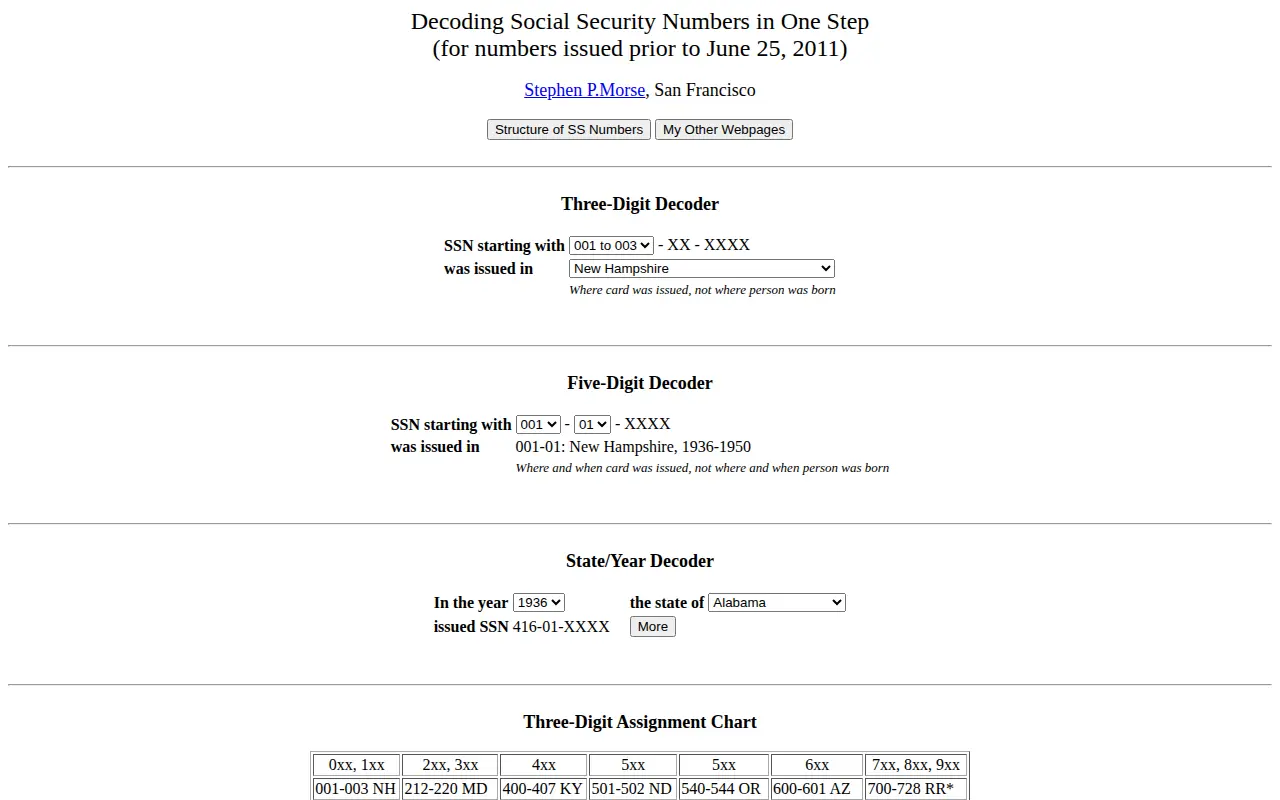
A one-step page for decoding Social Security Numbers issued prior to June 25, 2011. It points to an article on the structure of Social Security Numbers and to the Social Security Administration website for later number assignments. It also points to the Internal Revenue Service website for the structure of Individual Taxpayer Identification Numbers. The page was automatically updated monthly through June 2011 and has been static since.
Features
- for numbers issued prior to June 25, 2011 Source: stevemorse.org
Links
Tags
-
0A page by Stephen P. Morse offering a form to encode and decode driver's license numbers. It states that the rules for generating the numbers were figured out and published by Alan De Smet, and credits Fred Apel with suggesting the form.

-
0A page from the Fake Name Generator that checks a credit card number's network, length and Luhn check digit. It explains the Luhn check step by step and offers sample made-up numbers for testing forms. The page notes the sample numbers are not accounts and are declined by payment gateways.
-
0An online generator that writes dating profiles from a few quick answers and user-supplied keywords, intended to help fill the free text field on online dating sites. The site also offers an opening message generator, an excuse generator and a love calculator, and forms part of the Masterpiece Generator set of text tools.
-
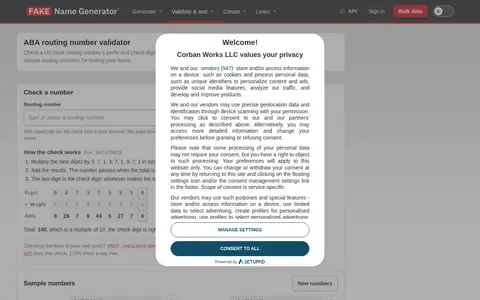
0A page from the Fake Name Generator that validates US bank ABA routing numbers, checking the prefix and check digit. It explains the 3-7-1 check step by step and provides sample routing numbers for testing forms. The samples pass the tests but are otherwise random.
-
0
Creates fictional rental listings using generated examples for browsing and creative inspiration.
-
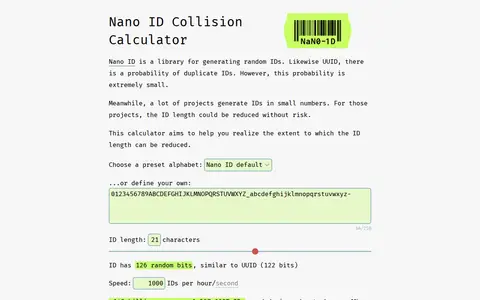
0Nano ID CC is a collision calculator for Nano ID, a library for generating random IDs. It helps estimate how much an ID length can be reduced, given a chosen alphabet, ID length and generation speed, to keep the probability of at least one duplicate low.
Community notes
Reviews and discussion
No reviews yet
Be the first to share how this project worked for you.
Join the discussion
Sign in with a verified account to leave a review or join the discussion.
Sign in to review