
nationalacademies.org
National Academies chapter explaining deep-web content, discovery limits and information retrieval.
Directory
Published directory entries matching your search.
National Academies chapter explaining deep-web content, discovery limits and information retrieval.
Research movies and television through DeepSearch's searchable title, cast, production, and viewing information.

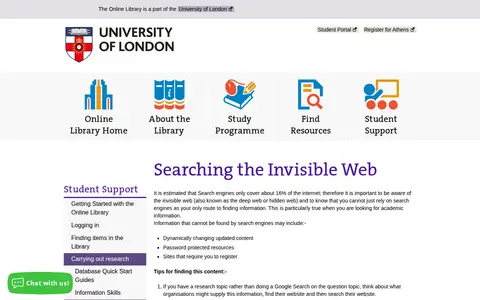
A library support page explaining the invisible web, also called the deep web or hidden web. It states that search engines cover about 16% of the internet and advises against relying on them alone, especially for academic information. It lists content search engines cannot find, such as dynamically changing content, password protected resources and sites requiring registration, and suggests web directories and asking a librarian.

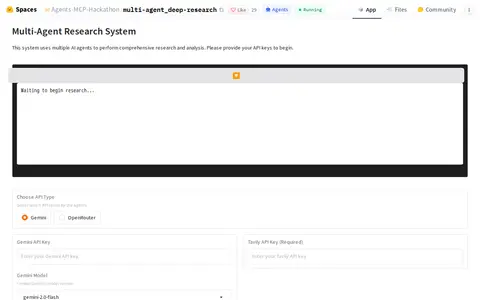
Multi-agent Deep-research System is a Hugging Face Space created by Agents-MCP-Hackathon. The system uses AI agents to perform web searches and analyze information, generating detailed research reports in response to user-provided research questions. Users must supply API keys for web search functionality. The space is currently running.

DARPA Memex is a program seeking to develop next-generation search technologies for discovering, organizing and presenting domain-specific content. It aims to extend search beyond a centralized model to the deep web and nontraditional content. The program initially plans to address fighting human trafficking. It is specifically not interested in deanonymizing servers, attributing identity to IP addresses, or accessing non-public information.

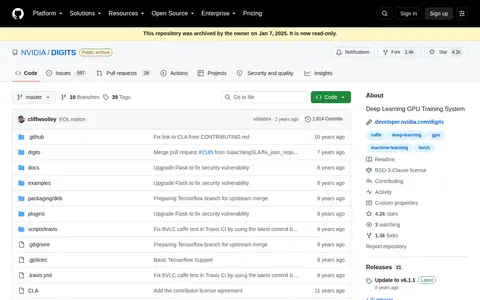
DIGITS, the Deep Learning GPU Training System, is a webapp for training deep learning models. The repository was archived by its owner on Jan 7, 2025 and is now read-only. NVIDIA states it is no longer adding features, fixing bugs, or supporting the software. Users can continue to use it if it meets their needs.

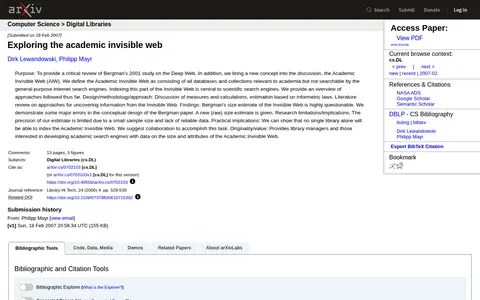
This arXiv paper by Dirk Lewandowski and Philipp Mayr provides a critical review of Bergman's 2001 study on the Deep Web. It introduces the concept of the Academic Invisible Web, defined as databases and collections relevant to academia but not searchable by general-purpose internet search engines, and reviews approaches for indexing it. The authors question Bergman's size estimate and suggest collaboration.

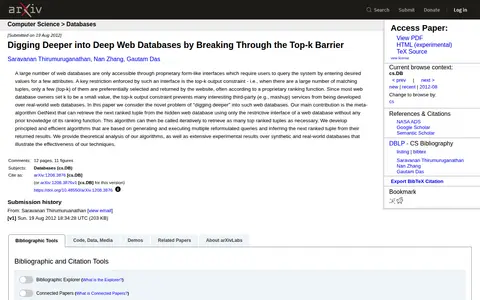
An arXiv paper on digging deeper into hidden web databases limited by the top-k output constraint. It presents the GetNext meta-algorithm, which retrieves the next ranked tuple through a restrictive interface without prior knowledge of the ranking function, and algorithms that generate and execute multiple reformulated queries. Theoretical analysis and experiments over synthetic and real-world databases are reported.

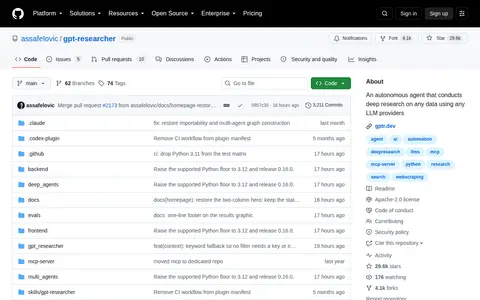
GPT Researcher is an open deep research agent for web and local research. Its sources describe planner and execution agents that break tasks into research questions, with findings aggregated into cited research reports.

AI literature search, document translation, and deep-research workspace for researchers.

Phind is an AI-powered search engine built specifically for developers. It delivers instant coding answers, debugging support, and real-time solutions by combining live web search with deep code understanding, and no login is required to use it.

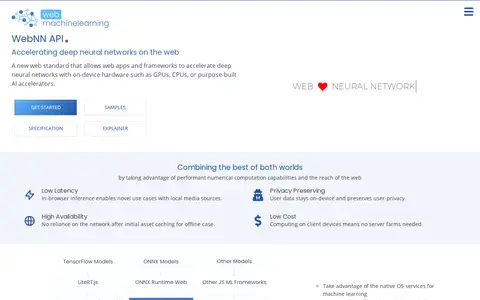
WebNN is a web standard that lets web apps and frameworks accelerate deep neural networks using on-device hardware such as GPUs, CPUs, or purpose-built AI accelerators. The introduction states that in-browser inference supports local media sources, keeps user data on-device, and needs no network after initial asset caching.

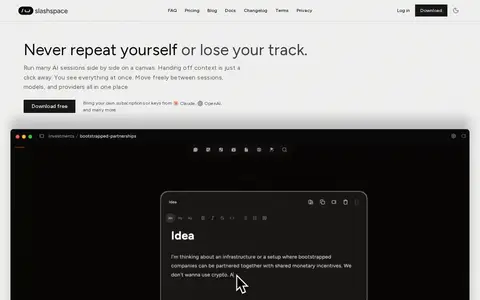
RabbitHoles AI, now operating as Slashspace, is an AI-native infinite canvas platform for deep work, research, and learning. It supports multi-step research tasks, allows users to branch AI responses to maintain context, supports integrating PDFs, web pages, YouTube videos and notes as context, and includes an orchestrator mode for automated work planning. The platform works with Claude, ChatGPT, user-provided API keys, and local AI models, and offers a 3-day free trial.

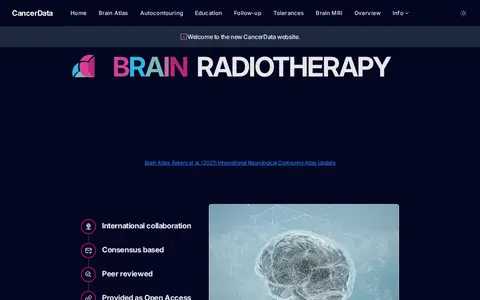
CancerData is a website promoting free and open-source resource sharing for cancer care. It offers a collection of resources including a brain radiotherapy atlas and contouring instructions, and highlights a deep learning model for contouring guidelines for organs at risk in neuro-oncology.

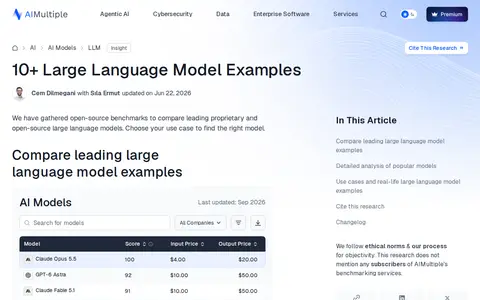
This webpage provides a curated list of large language model examples, alongside insights on business adoption, language model training, and influential models. It includes comparative analysis of leading LLMs such as OpenAI’s GPT-5, Claude 4.6, Gemini, DeepSeek-R1, Qwen, Llama 4, and xAI Grok-4 and Grok-4.1.

Machine Learning Mastery is a website that provides educational content such as tutorials, quick start guides, and eBooks to help developers learn and apply machine learning concepts and algorithms. It covers topics like deep learning, computer vision, natural language processing, and specific libraries including TensorFlow, PyTorch, and scikit-learn.

Netron is a visualizer for neural network, deep learning, and machine learning models. It allows users to view model architectures and graphs. The tool is available as a web application at netron.app.

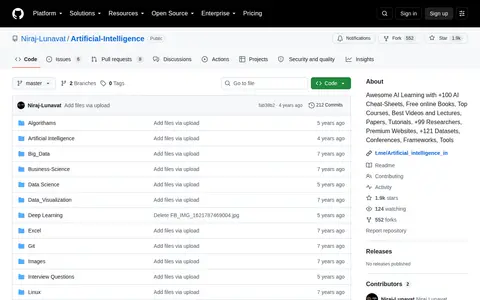
A GitHub repository collecting AI learning resources, including over 100 cheat-sheets, free online books, courses, videos and lectures, papers, tutorials, researchers, websites, datasets, conferences, frameworks and tools. Topics include machine learning, deep learning, big data, data science and Python.

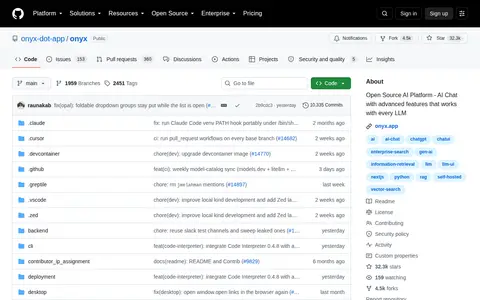
Onyx is an open-source AI platform that connects to applications to index and surface knowledge, with self-hosted deployment options. It provides agentic RAG search, deep research reports, custom agents, web search, a secure sandbox for code execution, artifacts, and voice mode. It works with major LLMs.

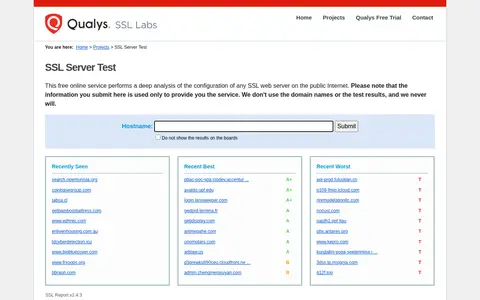
SSL Server Test is a free online service from Qualys SSL Labs that performs a deep analysis of the configuration of any SSL web server on the public Internet. The site states that submitted information is used only to provide the service.

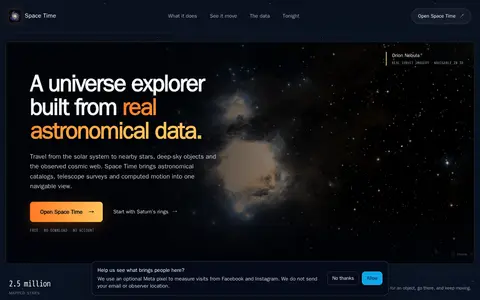
Space Time is a browser-based 3D universe explorer built from astronomical catalogs, telescope surveys and computed motion. It covers the solar system, stars, deep-sky objects and the observed cosmic web in one continuous view, with no account required. It is free and requires no download.
Federated search portal querying science databases and repositories across many countries.