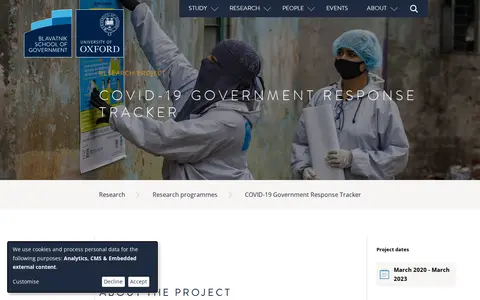
The Coronavirus Government Response Tracker, formally the Oxford Covid-19 Government Response Tracker (OxCGRT), is a project run by the University of Oxford Blavatnik School of Government. It tracked and compared COVID-19 policy responses across the globe consistently over 2020, 2021, and 2022, and released the collected policy data for free public use. The project team continues to research the impacts and determinants of pandemic policy, and collaborates with partners to develop fast-deployment data collection methods for use in future pandemics.
Directory
Search results
Published directory entries matching your search.
Johns Hopkins COVID-19 map visualizes cases, deaths, trends, and outbreak data by location.
FAPESP COVID-19 Data Sharing/BR is an open repository of COVID-19 datasets, initiated by FAPESP with the University of São Paulo and other health institutions. It provides pseudonymized demographic, clinical and laboratory exam data, plus hospitalization and outcome information when available. Datasets are downloadable at no charge under a CC-BY license, and the repository is updated periodically.
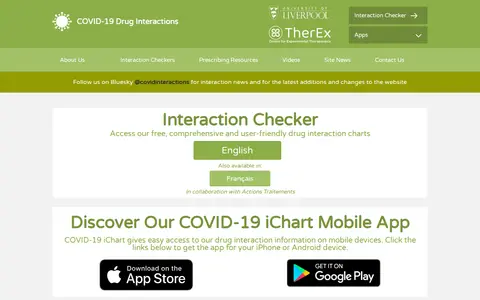
Liverpool COVID-19 Interactions is a drug-drug interaction resource for COVID-19 treatments. It offers an interaction checker, interaction charts, printable prescribing resources, and a mobile app, and is freely available to healthcare workers, patients and researchers.
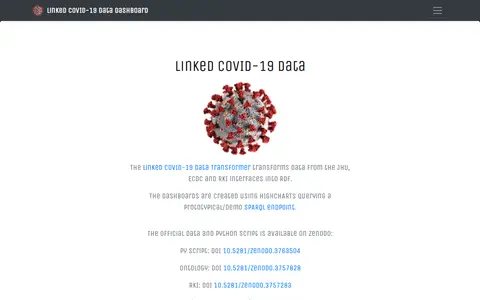
Linked COVID-19 Data transforms data from the JHU, ECDC and RKI interfaces into RDF. Dashboards query a prototypical demo SPARQL endpoint using Highcharts. The official data and Python script are available on Zenodo.
2020 Game is a game that lets players progress through major events from the year 2020. Covered events include the Australia wildfires, COVID-19, stock market crash, quarantine, the rise of TikTok, and the 2020 USA elections.
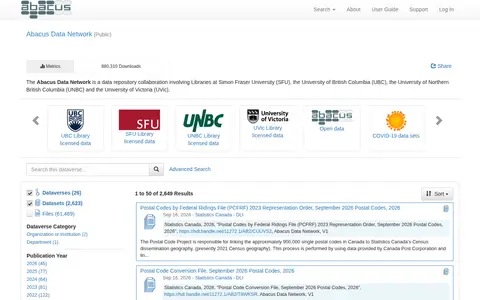
Abacus Data Network is a data repository collaboration involving the libraries of Simon Fraser University, the University of British Columbia, the University of Northern British Columbia and the University of Victoria. It hosts university-licensed data, open data and COVID-19 datasets. As of the snapshot, the network has recorded 903,854 downloads.
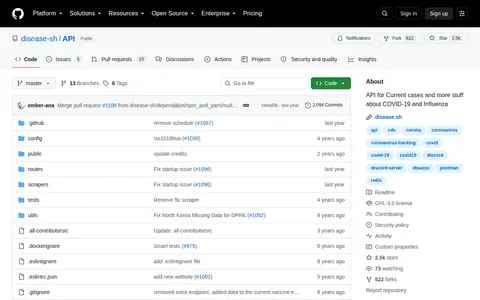
API for Current cases and more stuff about COVID-19 and Influenza
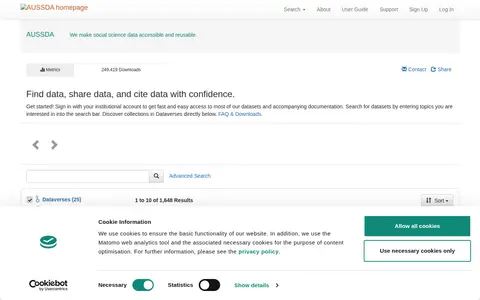
The Austrian Social Science Data Archive (AUSSDA) makes social science data accessible and reusable for researchers. It hosts a wide range of datasets, including collections focused on AUTNES, Statistik Austria, qualitative data, COVID-19 pandemic research, and teaching and learning. Users can search for datasets by topic, and institutional account sign-in provides access to most datasets and accompanying documentation. The archive operates on the Dataverse platform.
Computer Vision Art Gallery is a site for the CVPR 2021 art gallery, held virtually due to COVID-19. It lists a winner, shortlisted works and all accepted works, each credited to artists with titles and years.
Research data portal for exploring biology records, including datasets.
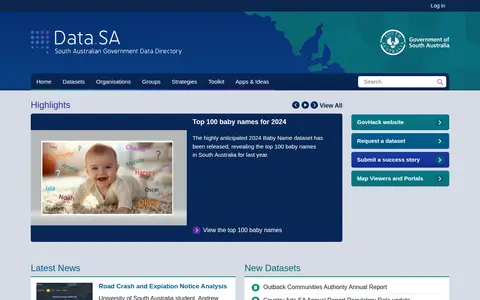
Data.SA is a South Australian government portal that presents open datasets such as the top 100 baby names and COVID-19 information. It also offers dataset requests, success stories, and map viewers, and notes that Land Services SA provides land titling, valuation, and cadastral data access.
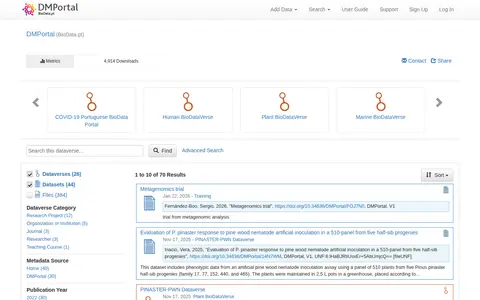
DMPortal BioData.pt is a data portal for the BioData.pt initiative. It hosts multiple themed dataverses including the COVID-19 Portuguese BioData Portal, Human BioDataVerse, Plant BioDataVerse, Marine BioDataVerse, Microbial BioDataVerse and Protein Dataverse. The portal provides search functionality for dataverses, datasets and files, supports adding new dataverses and datasets, and offers user guides, support, sign-up and log-in features, alongside metrics such as download counts.
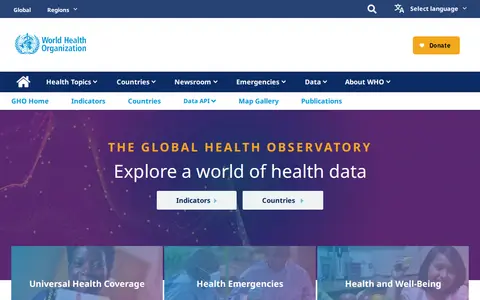
The Global Health Observatory data repository is the World Health Organization's gateway to health-related statistics for its 194 Member States, providing access to over 1000 health topic indicators through indicators, countries, a data API and a map gallery. COVID-19 data is not currently provided by the GHO APIs.
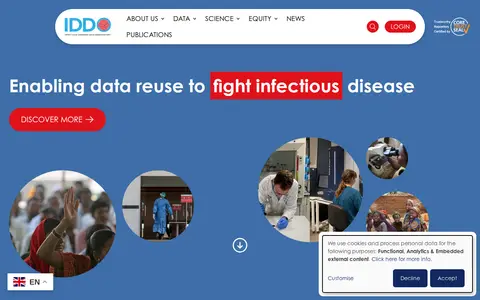
Infectious Diseases Data Observatory (IDDO) is an organisation that enables reuse of infectious disease data to support disease control efforts. It pools and standardises data, applies strict privacy controls to pseudo-anonymise data, shares data responsibly and maintains gold standard data repositories for a range of infectious diseases including malaria, COVID-19, Ebola and antimicrobial resistance. It also provides data access guidelines and related resources for users.
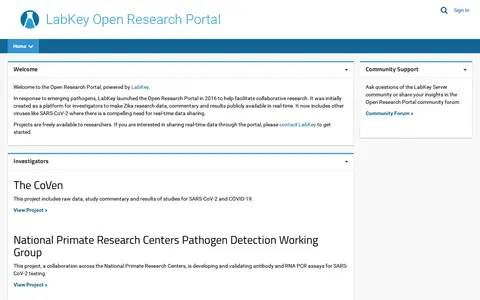
The Open Research Portal is a LabKey-powered platform launched in response to emerging pathogens to facilitate collaborative research. It hosts projects with raw data, study commentary and results for viruses including SARS-CoV-2, COVID-19 and Zika, along with a community forum. Projects are freely available to researchers, and those interested in sharing real-time data can contact LabKey.
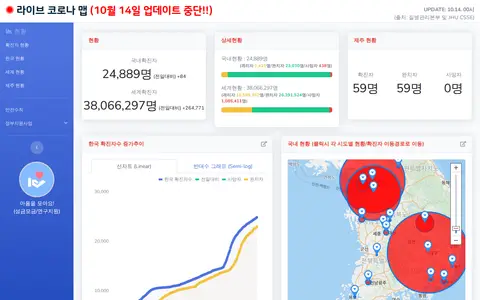
Korean COVID-19 map and dashboard for tracking outbreak data, cases, and local updates.
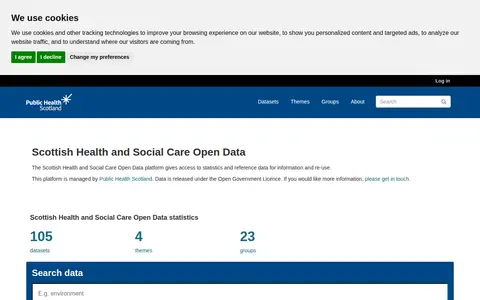
The Scottish Health and Social Care Open Data platform provides access to statistics and reference data for information and reuse. It is managed by Public Health Scotland and releases data under the Open Government Licence. The portal lists 105 datasets across 4 themes and 23 groups, including recently updated monthly emergency department waiting times and COVID-19 statistical data.
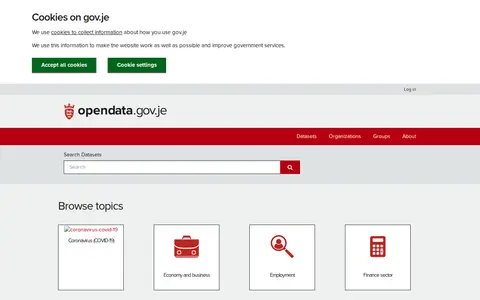
opendata.gov.je is the official open data portal of the Government of Jersey. It provides public access to government datasets, which users can search or browse by topic. Available topic categories include coronavirus (COVID-19), economy and business, employment, finance sector, health statistics, housing, income and earnings, and population and society. The portal also includes information about datasets, publishing organizations and user groups.
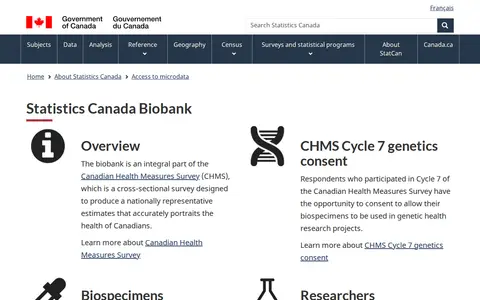
The Statistics Canada Biobank is part of the Canadian Health Measures Survey, a cross-sectional survey producing nationally representative estimates of Canadians' health. It stores whole blood, plasma, serum, buffy coat, urine and DNA from consenting Canadians aged 3 to 79. Samples come from surveys including the CHMS and the Canadian COVID-19 Antibody and Health Survey and are stored for future health studies.
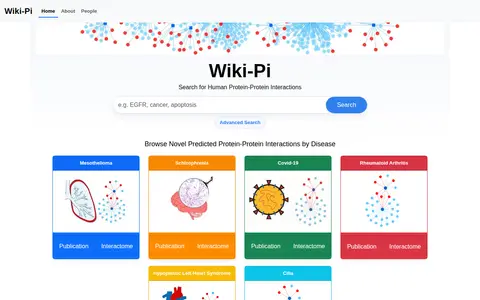
Wiki-Pi is a wiki resource centered on human protein-protein interactions. It provides search functionality for human protein-protein interactions and allows users to browse novel predicted protein-protein interactions associated with diseases including mesothelioma, schizophrenia, Covid-19, rheumatoid arthritis, hypoplastic left-heart syndrome, and cilia-related conditions.