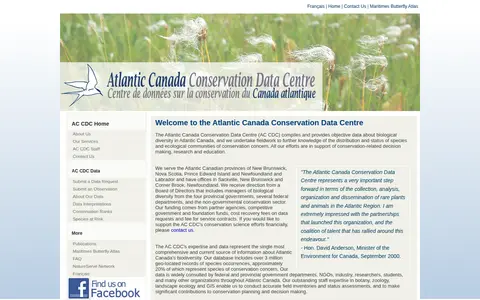
The Atlantic Canada Conservation Data Centre compiles and provides data about biological diversity in Atlantic Canada and conducts fieldwork on the distribution and status of species and ecological communities of conservation concern. It serves New Brunswick, Nova Scotia, Prince Edward Island and Newfoundland and Labrador, with offices in Sackville, New Brunswick and Corner Brook, Newfoundland.
Directory
Search results
Published directory entries matching your search.
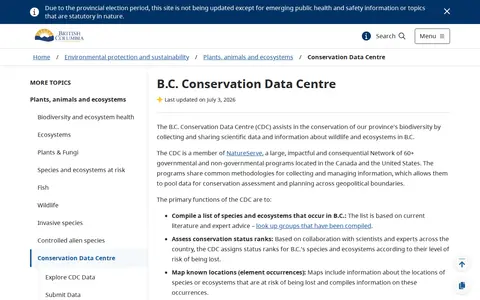
The B.C. Conservation Data Centre collects and shares scientific data about wildlife and ecosystems in British Columbia that are at risk. It compiles species and ecosystem lists, assigns conservation status ranks, maps known locations, and disseminates data. The centre is a member of the NatureServe network and offers online tools for exploring data.
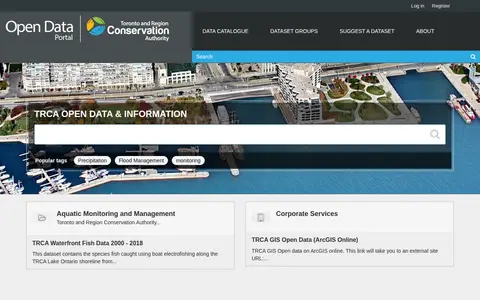
Toronto and Region Conservation Authority Open Data is the open data portal operated by the Toronto and Region Conservation Authority (TRCA). It hosts public datasets related to topics including aquatic monitoring and management, waterfront fish data and GIS data, and provides contact information for the TRCA open data team.
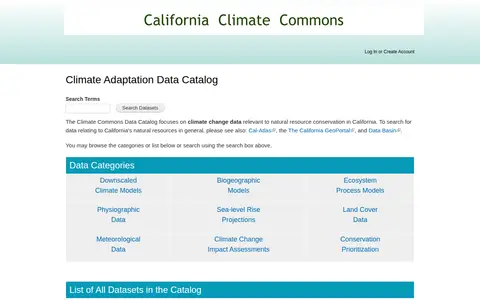
The Climate Commons Data Catalog is a browsable and searchable catalog focused on climate change data relevant to natural resource conservation in California. It organizes datasets into categories and lists raster and other data with subjects, coverage and resolution, including downscaled climate models, sea-level rise projections and conservation prioritization.
The IUCN Red List of Threatened Species is a source of information on the global conservation status of animal, fungi and plant species used to inform biodiversity conservation and policy. The extract states the list divides species into nine categories, including Not Evaluated and Data Deficient.
Environmental newsroom reporting on forests, biodiversity, wildlife, conservation and communities worldwide.
Independent environmental publication covering wildlife, extinction, conservation and climate policy.
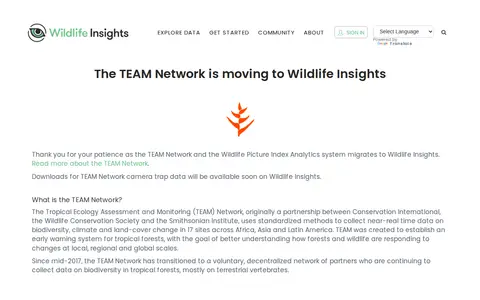
The Tropical Ecology Assessment and Monitoring (TEAM) Network, originally a partnership of Conservation International, the Wildlife Conservation Society, and the Smithsonian Institution, uses standardized methods to collect near-real-time data on biodiversity, climate, and land-cover change at 17 sites across Africa, Asia, and Latin America. It aims to establish an early warning system. The network is migrating to Wildlife Insights.
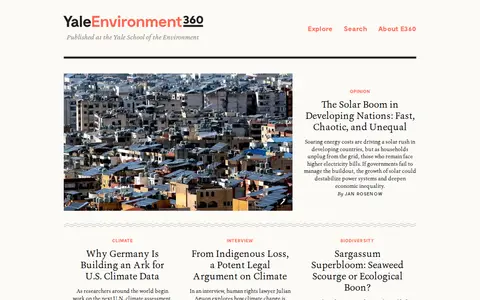
Yale Environment 360 is an environmental news and analysis publication. It publishes articles, opinion pieces, interviews, and a digest on topics such as biodiversity, climate change, and conservation, alongside a film contest.
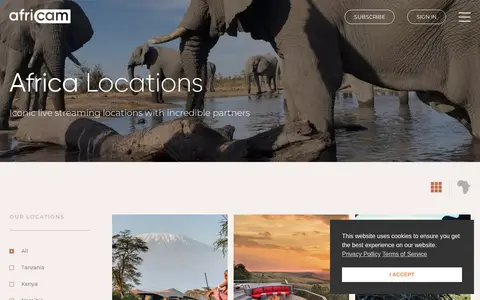
Africam is a platform that provides live HD wildlife streams from cameras located across South Africa, Kenya, Tanzania, Namibia, Zimbabwe and Botswana. It partners with conservation organizations and runs citizen science initiatives to support wildlife research.
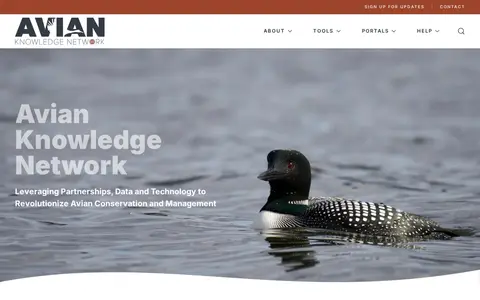
The Avian Knowledge Network is a partnership of federal and state agencies and non-governmental organizations with shared informatics needs for biodiversity conservation and management. It is a cloud computing system that agencies, NGOs and others use to enter, manage, analyze and share avian observation data, and it offers tools for collecting, entering, uploading, managing, accessing and summarizing bird monitoring data.
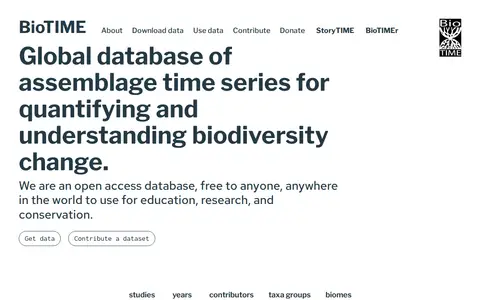
BioTIME is a global database of assemblage time series for quantifying and understanding biodiversity change. It is open access and free to anyone, anywhere in the world to use for education, research, and conservation. The project is hosted at the University of St Andrews and offers options to download data, use data, and contribute a dataset.
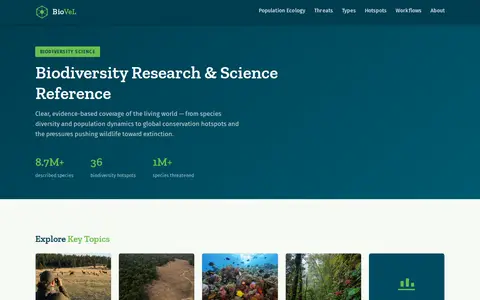
BioVeL is an evidence-based biodiversity science reference resource. It provides clear coverage of key topics including population ecology, types of biodiversity, 36 global conservation hotspots, threats to wildlife and associated research workflows. The reference includes information on over 8.7 million described species and more than 1 million threatened species.
The Canadian Biodiversity Information Facility (CBIF) is a program operated by Agriculture and Agri-Food Canada. It supports the Global Biodiversity Information Facility by developing methods to improve the organization, exchange, correlation, and accessibility of primary biological species data relevant to Canadians. The facility’s work supports a wide range of social and economic decision-making, including biodiversity conservation efforts.
Searchable repository for finding agriculture, forestry and veterinary medicine datasets and datasets.
Browse research datasets and datasets related to agriculture, forestry and veterinary medicine.
Search geosciences data collections and supporting dataset from CAN.
CO Open Data is a data hub for discovering, analyzing and downloading data. Datasets can be downloaded in CSV, KML, Zip, GeoJSON, GeoTIFF or PNG, and API links are provided for GeoServices, WMS and WFS. It supports analysis with charts and thematic maps and creation of StoryMaps and Web Maps.
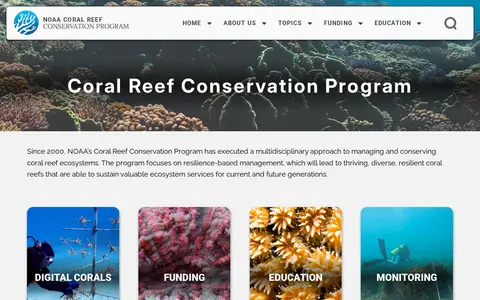
NOAA's Coral Reef Conservation Program takes a multidisciplinary approach to managing and conserving coral reef ecosystems. It focuses on resilience-based management and covers topics such as land-based sources of pollution, disease and disturbance response, changing ocean conditions, sustainable fisheries, coral restoration, monitoring and social science.
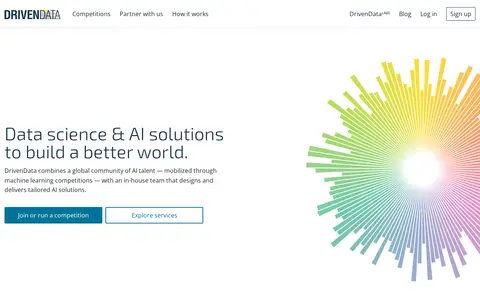
DrivenData hosts online machine learning competitions with social impact and works with mission-driven organizations on data science and engineering projects. It also maintains open-source projects for the data science community and shares prize-winning solutions from past competitions on GitHub. Areas of work include public health, conservation and international development.
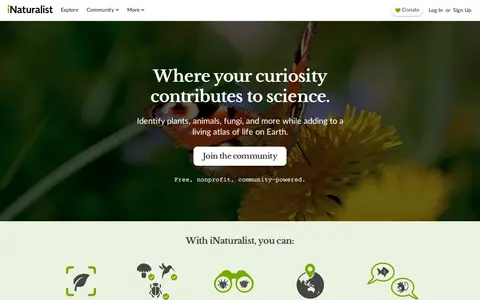
iNaturalist is a free, nonprofit social network for naturalists where users record observations of plants, animals, and fungi, share them with friends and researchers, and get identification suggestions confirmed by a global community. Observations become open data used by scientists and conservationists.
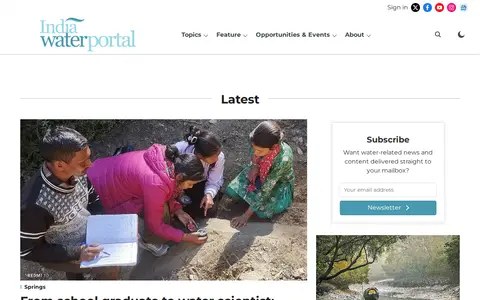
India Water Portal is a website covering water conservation, management, and sustainability in India. It publishes articles and FAQs on topics including water quality and pollution, disasters, governance and policy, agriculture, climate, rivers and lakes, ecology, and people and culture. The site also offers a Hindi portal and a data section.
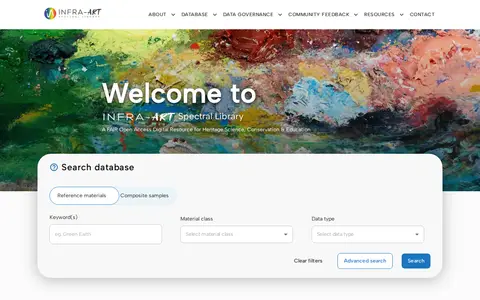
The INFRA-ART Spectral Library is a searchable dataset of reference materials and composite samples with associated spectra. It supports material identification, heritage science research and conservation decision-making, and offers keyword, material class and data type filtering across its samples and spectra.
NatureServe is described as an authoritative source for biodiversity data throughout North America. It works with network organizations and conservation scientists to collect, analyze, and deliver biodiversity knowledge. It offers a tool called InSite by NatureServe that provides site-level biodiversity intelligence for any location in the lower 48 United States.