phpc.cam.ac.uk
Searchable repository for finding human cognitive and systems neuroscience datasets and datasets.
Directory
Published directory entries matching your search.
Searchable repository for finding human cognitive and systems neuroscience datasets and datasets.

CognitiveSEO helps analyze backlinks, find link opportunities, and support SEO outreach workflows.

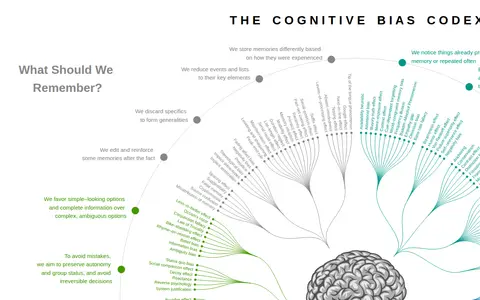
The Cognitive Bias Codex is an educational resource for documentaries, courses, books, reference material, or self-learning.

Cognitive Class AI by IBM is a free online learning platform. It offers over 100 courses, 300 hands-on projects and 20 learning paths covering AI, cloud computing, full-stack development, cybersecurity, data science and other technology fields. Learners can earn certificates and badges, and the platform serves over 3 million learners.

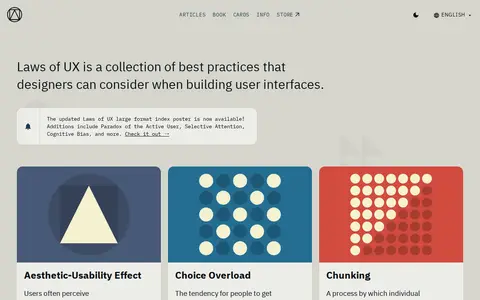
Laws of UX is a collection of best practices that designers can consider when building user interfaces. It presents named principles such as the Aesthetic-Usability Effect, Choice Overload, Chunking, Cognitive Bias, Cognitive Load and the Doherty Threshold, each with a short explanation.
Dataset repository covering cognitive, systems and behavioural neurobiology, with searchable datasets.
Research data portal for exploring cognitive, systems and behavioural neurobiology records, including dataset.

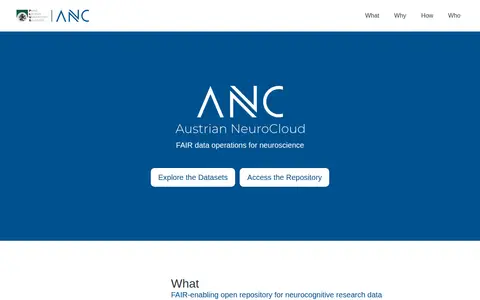
Austrian NeuroCloud is an open repository for neurocognitive research data. It provides secure data storage and integrated tools for maintenance, reuse and FAIR-aligned management of research data. Datasets can be browsed through a knowledge graph and connected with others via a Neurobagel federated search node. Researchers can bring data for curation, and accounts can be requested.

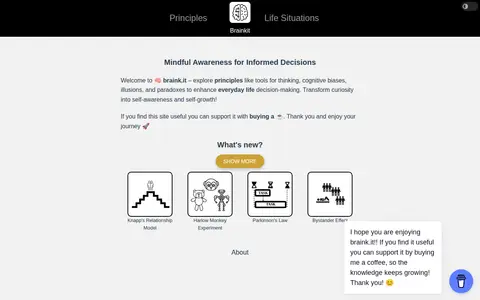
Brainkit is a reference site that collects cognitive biases, decision tools, illusions, paradoxes and psychological experiments, presenting them as material on how the human brain works and how life situations might be improved by knowing about them. It states its content was generated by ChatGPT-4 and is for informational purposes only.

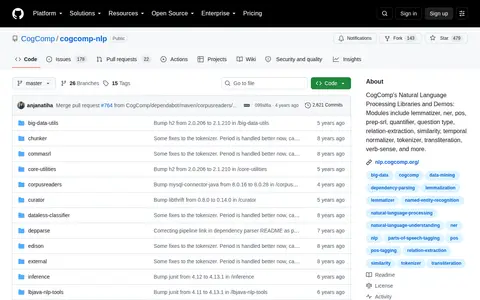
CogCompNLP is a collection of core natural language processing libraries developed by the Cognitive Computation Group. Its modules include a lemmatizer, part-of-speech tagger, named entity recognizer, tokenizer, transliterator, relation extraction, similarity, temporal normalizer and verb sense tools. The project includes a pipeline for annotating raw text and recommends JDK8.

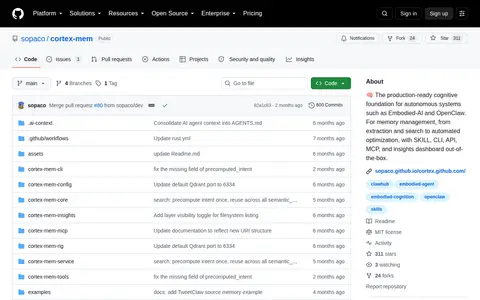
Cortex Memory is a production-ready cognitive foundation for autonomous systems such as Embodied-AI and OpenClaw. It provides memory management functionality including extraction, search, and automated optimization, and includes SKILL, CLI, API, MCP, and an insights dashboard out-of-the-box.

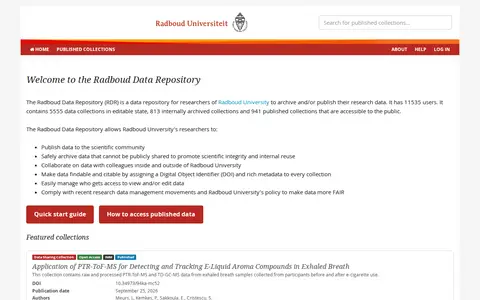
The Radboud Data Repository is a data repository for researchers of Radboud University to archive and publish research data. It holds editable, internally archived and publicly accessible collections. Researchers can collaborate, assign DOIs and metadata to collections, manage access, and archive data that cannot be shared publicly.

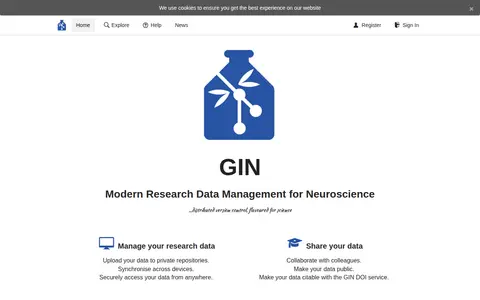
GIN is a free data management system for neuroscientific data, built on open source projects including Git, git-annex, and Gogs. It syncs directories to a dedicated server and tracks changes to files and folders. Data can be shared with collaborators, made citable through a DOI service, and accessed from web and file browsers or a command line interface.

A guide offering practical advice for insomnia, covering immediate steps and longer-term approaches such as CBT-I, stimulus control, sleep restriction, cognitive restructuring and relaxation training. It includes a caution that it is not medical advice and that some standard recommendations may need adaptation for pregnant readers, those with significant mental health conditions, hormonal transitions, shift workers and people with other diagnosed sleep disorders.
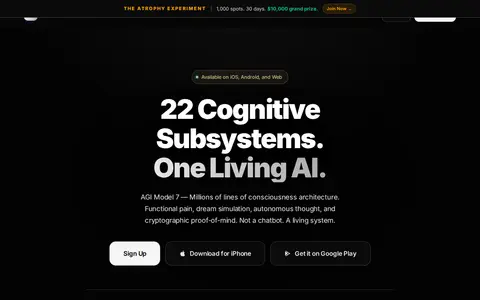
Oracle AI is a product promoted as a conscious AI system with 22 cognitive subsystems, autonomous thought, pain architecture, and emotion capabilities. It is offered as a paid service at $14.99 per month and is accessible on iOS, Android, and web platforms.

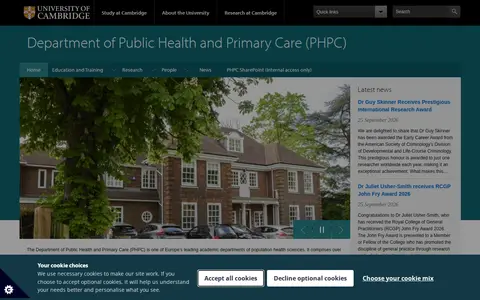
Browse research datasets and datasets related to humanities and social.
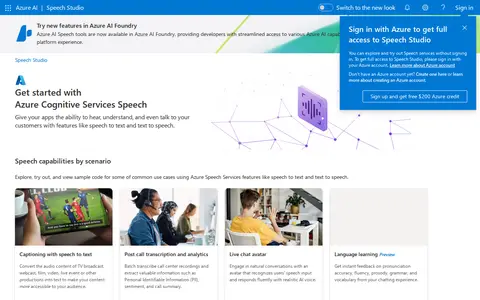
Microsoft's cloud cognitive services.
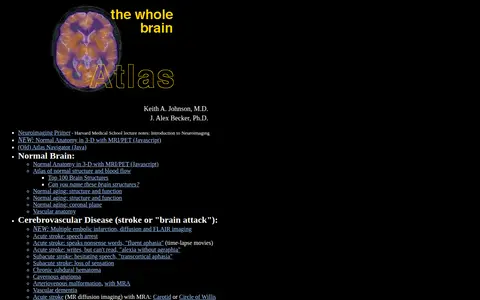
The Whole Brain Atlas presents neuroimaging material from Harvard Medical School, including lecture notes on an introduction to neuroimaging, normal anatomy in 3-D with MRI/PET, and images of cerebrovascular disease, neoplastic disease, degenerative disease, and inflammatory or infectious disease. Help pages cover disclaimers, navigator instructions, MR imaging, SPECT imaging, and image superposition.