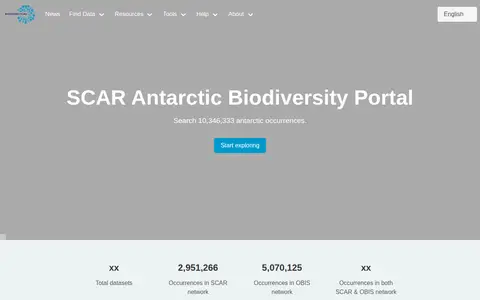
biodiversity.aq is the SCAR Antarctic Biodiversity Portal. It enables searching for Antarctic biodiversity occurrence records, aggregates data from SCAR and OBIS networks, and provides access to online tools, resources including identification keys, and news related to Antarctic biodiversity and climate observation initiatives.
Directory
Search results
Published directory entries matching your search.
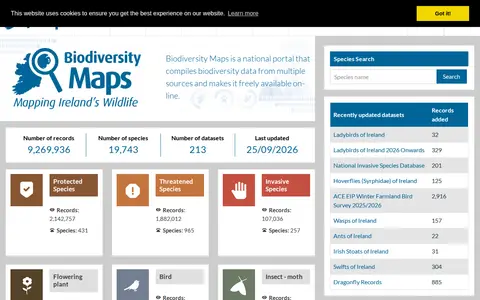
Biodiversity Maps is the National Biodiversity Data Centre's mapping system, integrating terrestrial and marine observational data. It serves as a portal for geographic presentation of Ireland's biological data and compiles biodiversity records from multiple sources, making them freely available online.
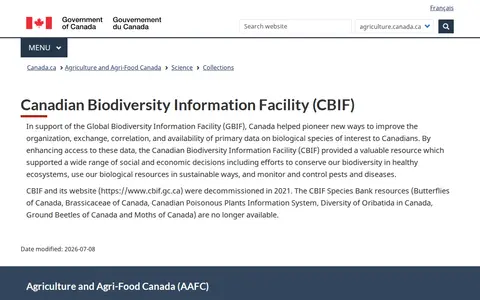
The Canadian Biodiversity Information Facility (CBIF) is a program operated by Agriculture and Agri-Food Canada. It supports the Global Biodiversity Information Facility by developing methods to improve the organization, exchange, correlation, and accessibility of primary biological species data relevant to Canadians. The facility’s work supports a wide range of social and economic decision-making, including biodiversity conservation efforts.
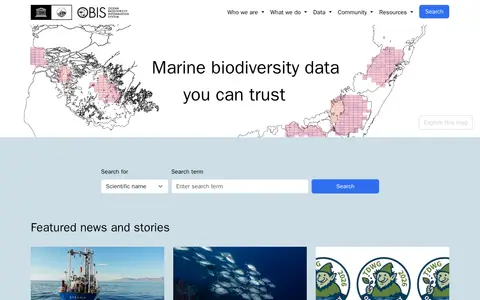
The Ocean Biodiversity Information System (OBIS) is a platform focused on marine biodiversity data. It provides tools including a data mapper, API, and community resources for accessing, contributing to, and quality-controlling datasets. OBIS coordinates global collection, aggregation, and sharing of marine biodiversity data, and shares data with global biogeographic information systems.
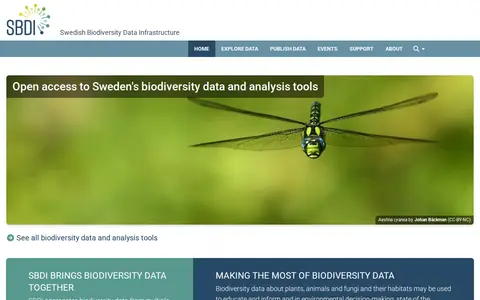
The Swedish Biodiversity Data Infrastructure (SBDI) is a national initiative that aggregates biodiversity data from multiple sources and makes it available and usable online. It also provides analysis tools and hosts events for researchers working with biodiversity data.
Biodiversity Heritage Library helps find books, reading material, archives, or public-domain educational texts.
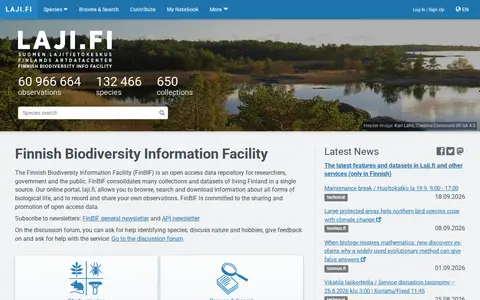
The Finnish Biodiversity Information Facility (FinBIF) is an open access data repository serving researchers, government bodies and the general public. It consolidates numerous collections and datasets related to living organisms in Finland into a single centralized source. Its online portal laji.fi enables users to browse, search, and download information on all forms of biological life, as well as record and share their own biological observations. FinBIF is committed to promoting and sharing open access biodiversity data.
Marine Biodiversity is an educational resource for documentaries, courses, books, reference material, or self-learning.
NatureServe is described as an authoritative source for biodiversity data throughout North America. It works with network organizations and conservation scientists to collect, analyze, and deliver biodiversity knowledge. It offers a tool called InSite by NatureServe that provides site-level biodiversity intelligence for any location in the lower 48 United States.

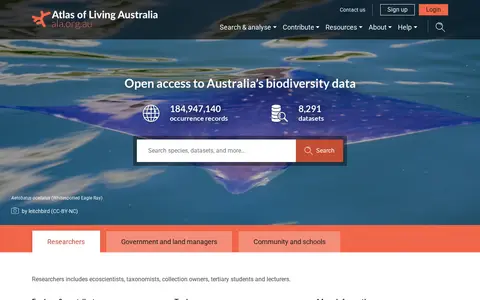
The Atlas of Living Australia is a biodiversity data platform offering open access to Australian biodiversity data. It holds occurrence records and datasets and lets users search and download records by species, taxon, dataset, region, date or location. It provides tools including an R and Python package, a spatial portal and BioCollect for surveys and field data.
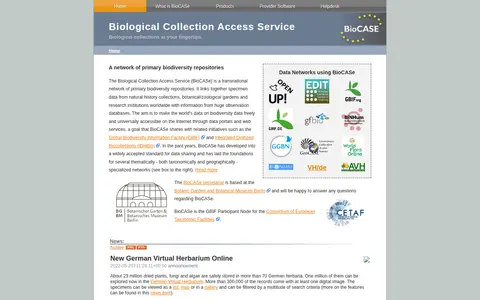
BioCASe is a transnational network of primary biodiversity repositories. It links specimen data from natural history collections, botanical and zoological gardens and research institutions worldwide with observation databases. The aim is to make biodiversity data freely accessible on the Internet through data portals and web services.
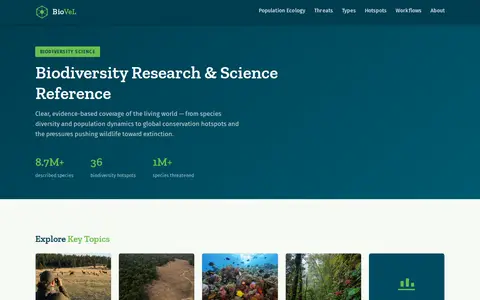
BioVeL is an evidence-based biodiversity science reference resource. It provides clear coverage of key topics including population ecology, types of biodiversity, 36 global conservation hotspots, threats to wildlife and associated research workflows. The reference includes information on over 8.7 million described species and more than 1 million threatened species.
Independent environmental newsroom covering climate, water, biodiversity and development across Asia and the world.
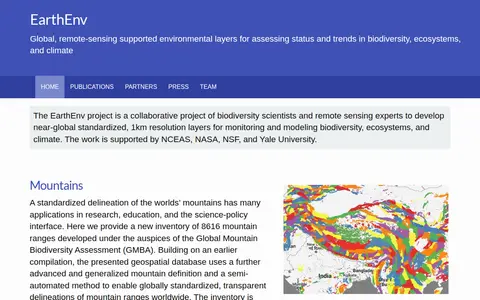
EarthEnv is a collaborative project of biodiversity scientists and remote sensing experts that develops near-global standardized 1km resolution layers for monitoring and modeling biodiversity, ecosystems, and climate. It presents datasets including mountain delineations, tropical cloud forests, precipitation, topography, habitat heterogeneity, land cover, cloud cover climatology, a digital elevation model and freshwater environmental variables.
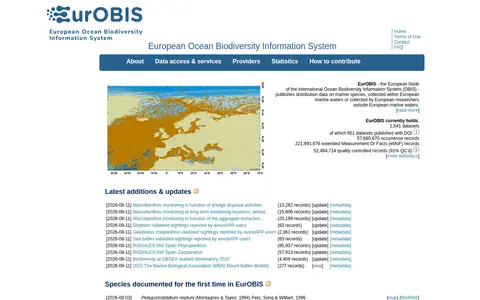
EurOBIS is the European node of the Ocean Biodiversity Information System (OBIS). It publishes distribution data on marine species collected within European marine waters or by European researchers outside them. The site also lists datasets, occurrence records and recent additions.
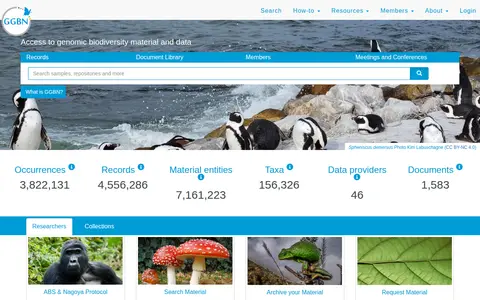
GGBN is a global network of well-managed collections of genomic samples from across the Tree of Life. It provides access to genomic biodiversity material and data, with occurrence, record, material entity and taxon counts. It also offers a document library, ABS and Nagoya Protocol resources, and facilities to search and request material.
Environmental newsroom reporting on forests, biodiversity, wildlife, conservation and communities worldwide.
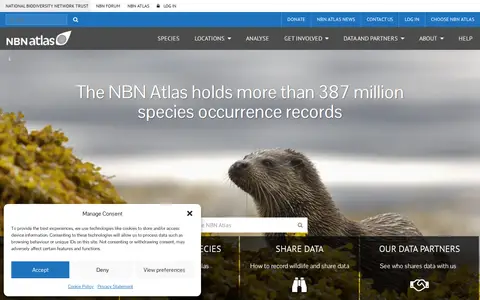
The NBN Atlas is a free online tool hosting the UK's largest collection of biodiversity information, enabling data to be shared, analysed and researched. It holds more than 387 million species occurrence records, covers marine and terrestrial species, and allows users to interrogate species records and download distribution maps.
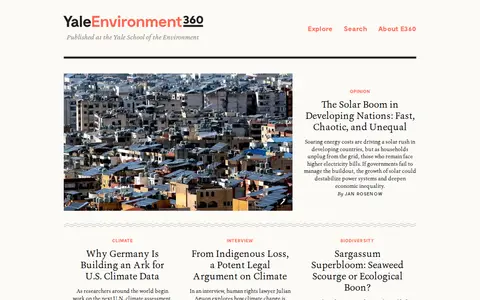
Yale Environment 360 is an environmental news and analysis publication. It publishes articles, opinion pieces, interviews, and a digest on topics such as biodiversity, climate change, and conservation, alongside a film contest.
Browse research datasets and dataset related to biology.
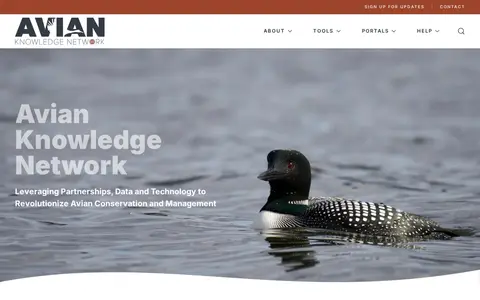
The Avian Knowledge Network is a partnership of federal and state agencies and non-governmental organizations with shared informatics needs for biodiversity conservation and management. It is a cloud computing system that agencies, NGOs and others use to enter, manage, analyze and share avian observation data, and it offers tools for collecting, entering, uploading, managing, accessing and summarizing bird monitoring data.
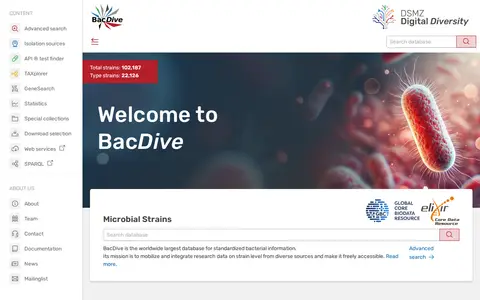
BacDive is a database of standardized strain-linked information on bacterial and archaeal biodiversity. It aggregates research data on strain level from diverse sources and makes it freely accessible, with tools including advanced search, isolation sources, an API, TAXplorer, GeneSearch, statistics and special collections.
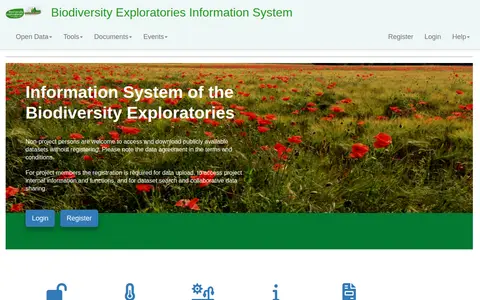
Find and access agriculture, forestry and veterinary medicine research data, with indexed aggregated data.
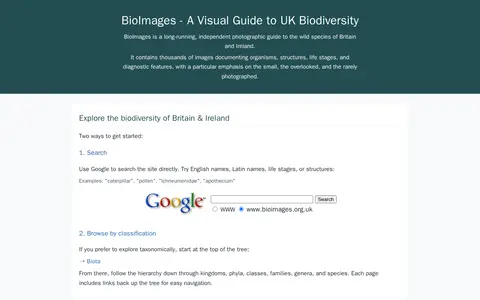
BioImages is a personal photographic guide to the biodiversity of Britain and Ireland. Users can search the site through Google or browse a taxonomic hierarchy from biota down to species. It covers most major organism groups except birds and other vertebrates, with images showing multiple angles, life stages and diagnostic features. Images are hosted by DiscoverLife and are intended as visual support for identification.