A Tor Project page that summarizes resources the project provides for research on improving Tor design, monitoring the Tor network, and studying attacks and defenses for anonymous communication systems. It points researchers to data collection, analysis guidance and measurement and attack tools.
Directory
Search results
Published directory entries matching your search.
The Core torch7 demos repository is an open-source GitHub project that provides demos and tutorials for the Torch7 machine learning framework. It includes installation guides, Torch7 tutorials, and tutorials for third-party Torch7 packages.
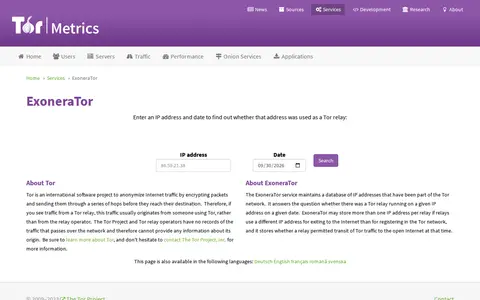
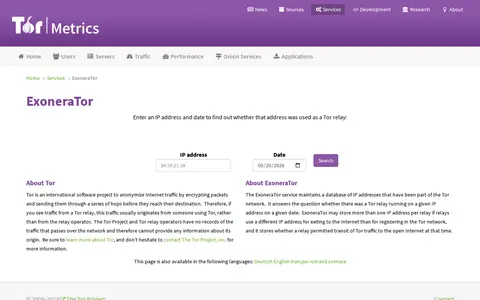
ExoneraTor is a Tor Metrics service that maintains a database of IP addresses that have been part of the Tor network. It answers whether a Tor relay was running on a given IP address on a given date. It may store more than one IP address per relay and records whether a relay permitted transit of Tor traffic to the open Internet at that time.
Tor Stack Exchange is a question-and-answer site for researchers, developers, and users of Tor. Questions cover topics such as onion services, exit relays, Tails, the Tor Browser Bundle, anonymity, and configuration.
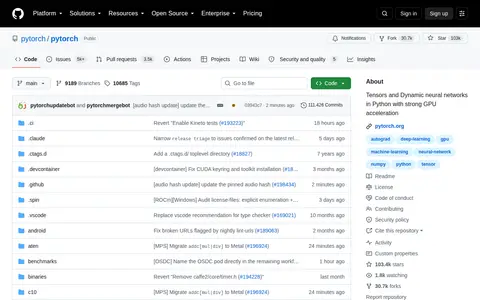
PyTorch is a Python package providing tensor computation with strong GPU acceleration and deep neural networks built on a tape-based autograd system. It includes components such as torch, torch.autograd, torch.nn, and torch.utils, and can be used as a NumPy replacement or a deep learning research platform.
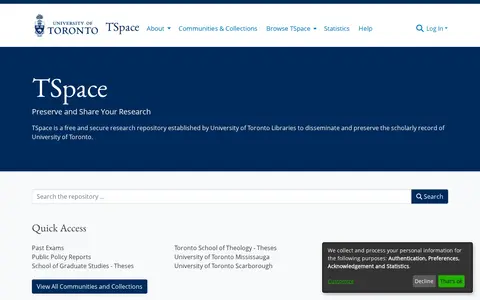
TSpace is a research repository established by University of Toronto Libraries for disseminating and preserving the scholarly record of the University of Toronto. It provides quick access to past exams, public policy reports, graduate theses and other recent submissions.
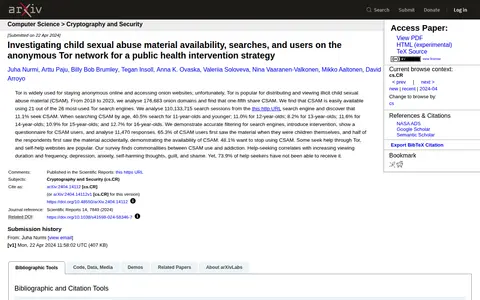
Public-health research measuring harmful-content availability and searches on the Tor network.
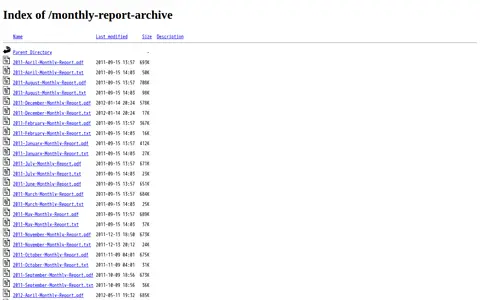
Archive of Tor Project monthly reports documenting development, research and community activity.
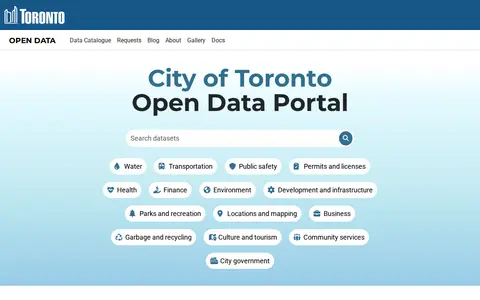
The City of Toronto Open Data Portal is a catalogue where users can browse and find open datasets published by the City of Toronto. It also offers ways to connect with the team, request new datasets, submit projects, and view events and blog posts.
A database of IP addresses that have been part of the Tor network. It answers the question whether there was a Tor relay running on a given IP address
GameDev Torch is a developer resource for coding, documentation, communities, security research, or software tools.

A Calomel.org page of research notes on rTorrent, covering security modifications and usability hacks. It describes building rTorrent from source to allow customization, such as changing the upload ratio reported to trackers and the client's reported identity. The page states Aria2 became the preferred client over rTorrent because of slow development, open bugs and incompatibility with FreeBSD's clang compiler.

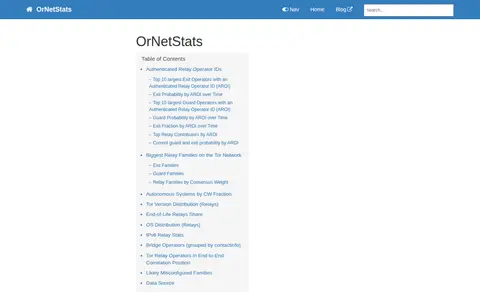
OrNetStats presents statistics and network health data about the Tor network and its relay groups. It reports on relay families, Autonomous System shares, MyFamily misconfigurations, end-of-life tor releases and potential risk to users, and displays Authenticated Relay Operator IDs in place of unverified ContactInfo strings.
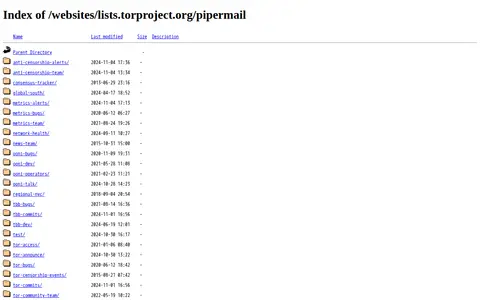
Historical public mailing-list messages documenting Tor development, research and relay operations.
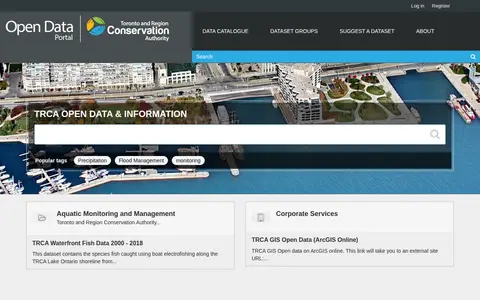
Toronto and Region Conservation Authority Open Data is the open data portal operated by the Toronto and Region Conservation Authority (TRCA). It hosts public datasets related to topics including aquatic monitoring and management, waterfront fish data and GIS data, and provides contact information for the TRCA open data team.
Official Tor archive providing recent and historical network descriptors for reproducible research.
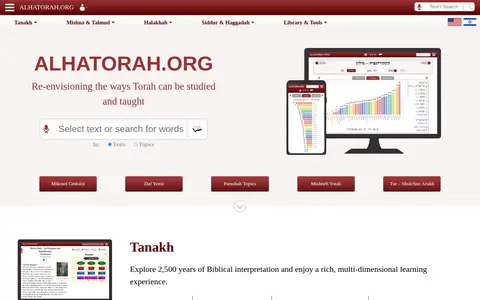
ALHATORAH.ORG is a digital project re-envisioning the study and teaching of Jewish Torah texts. It provides free access to Tanakh, Mishna, Talmud, Halakhic works, siddurim and haggadot, alongside learning tools including Mikraot Gedolot, Daf Yomi, customizable text displays, power search, a concordance, and a commentators timeline. Its resources are also featured on Hatanakh.com, OU Torah, and YUTorah, and the project accepts volunteer contributions for content writing, editing and translation.
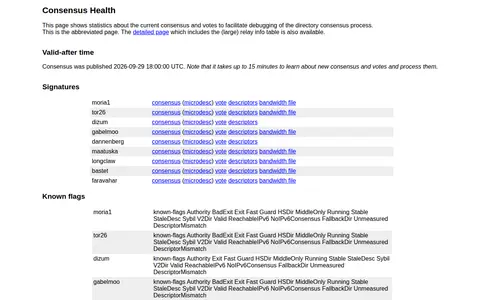
A page publishing statistics about the current Tor directory consensus and authority votes, including valid-after time, signatures, known flags, flag thresholds, the number of relays voted about, IPv6 statistics, consensus methods, recommended versions and consensus parameters. The page states that it is abbreviated and a detailed version with a relay info table is available.
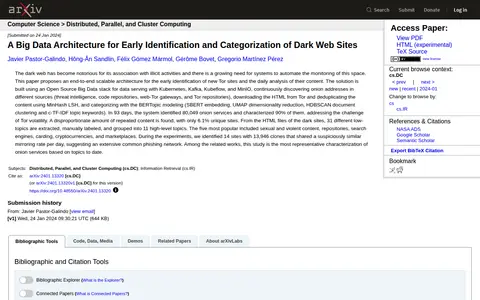
This arXiv paper proposes an end-to-end scalable architecture for early identification of new Tor sites and daily analysis of their content. It is built on an open source big data stack including Kubernetes, Kafka, Kubeflow and MinIO, discovering onion addresses across several sources, downloading HTML from Tor, deduplicating with MinHash LSH and categorizing with BERTopic modeling. In 93 days it identified 80,049 onion services and characterized 90% of them.
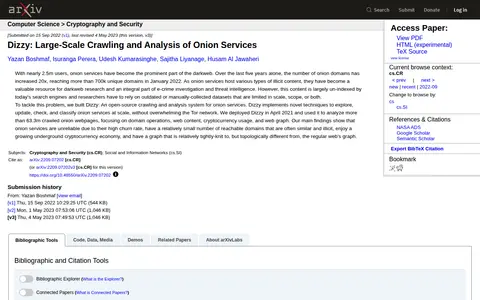
Dizzy is an open-source crawling and analysis system for onion services. It implements techniques to explore, update, check, and classify onion services at scale without overwhelming the Tor network. It was deployed in April 2021 and used to analyze more than 63.3 million crawled onion webpages, focusing on domain operations, web content, cryptocurrency usage, and web graph.
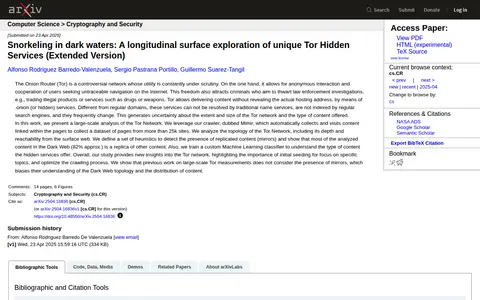
An arXiv paper presenting a large-scale analysis of the Tor network using a crawler called Mimir, which collects and visits linked content. The authors report a dataset of pages from more than 25k sites and examine network topology, replicated content and content types.
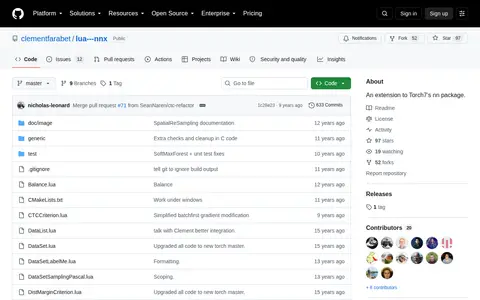
nnx is an open source GitHub repository that acts as an extension to Torch7's nn neural network package. It provides additional experimental components for use with the Torch7 nn library.
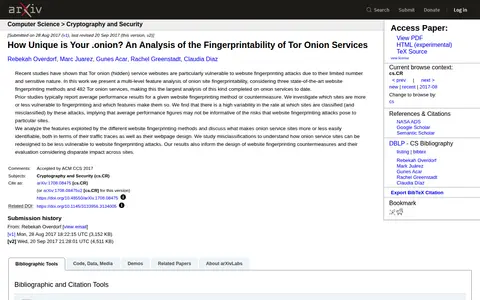
Study of whether website fingerprinting can distinguish and identify Tor onion-service traffic.
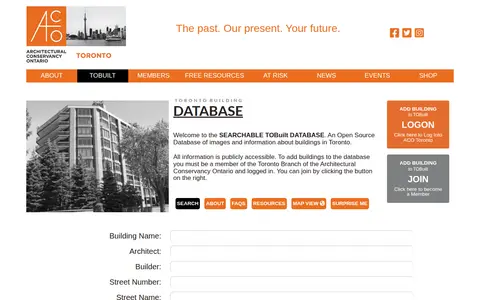
TOBuilt is an open source searchable database of images and information about buildings in Toronto. All information is publicly accessible. Adding buildings to the database requires membership in the Toronto Branch of the Architectural Conservancy Ontario and being logged in.