






This arXiv paper proposes an end-to-end scalable architecture for early identification of new Tor sites and daily analysis of their content. It is built on an open source big data stack including Kubernetes, Kafka, Kubeflow and MinIO, discovering onion addresses across several sources, downloading HTML from Tor, deduplicating with MinHash LSH and categorizing with BERTopic modeling. In 93 days it identified 80,049 onion services and characterized 90% of them.
Dizzy
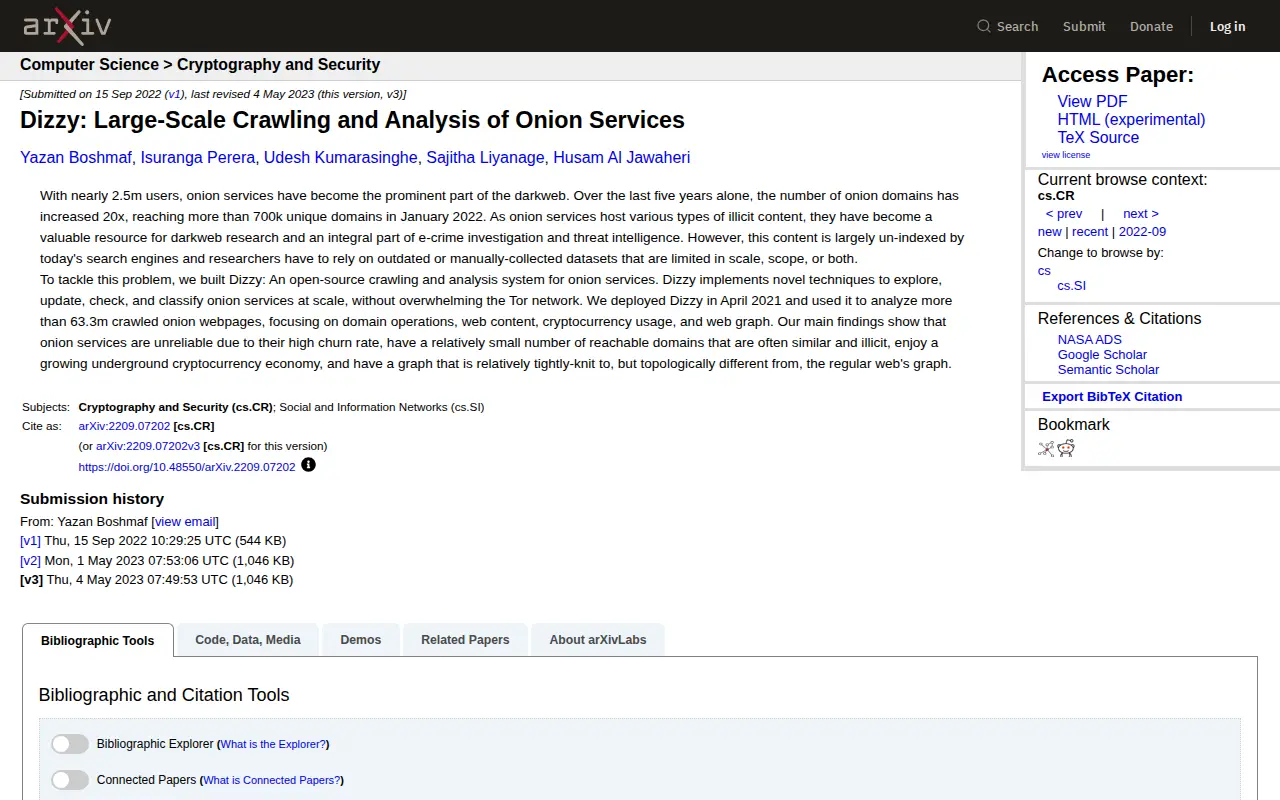
Dizzy is an open-source crawling and analysis system for onion services. It implements techniques to explore, update, check, and classify onion services at scale without overwhelming the Tor network. It was deployed in April 2021 and used to analyze more than 63.3 million crawled onion webpages, focusing on domain operations, web content, cryptocurrency usage, and web graph.
Features
- open-source crawling and analysis system for onion services Source: arxiv.org
Links
Tags
-
0This arXiv paper proposes an end-to-end scalable architecture for early identification of new Tor sites and daily analysis of their content. It is built on an open source big data stack including Kubernetes, Kafka, Kubeflow and MinIO, discovering onion addresses across several sources, downloading HTML from Tor, deduplicating with MinHash LSH and categorizing with BERTopic modeling. In 93 days it identified 80,049 onion services and characterized 90% of them.
-
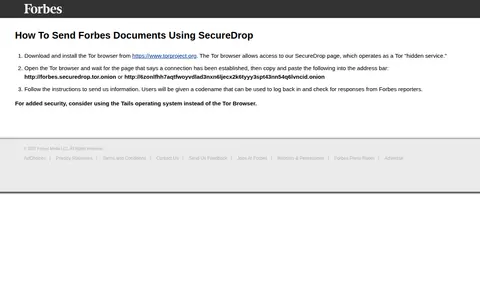
0Forbes SecureDrop is an open-source whistleblower submission system that media organizations such as Forbes use to securely accept documents from and communicate with anonymous sources. Users access the SecureDrop page through the Tor browser and follow instructions to send information. Users receive a codename to log back in and check for responses from Forbes reporters.
-
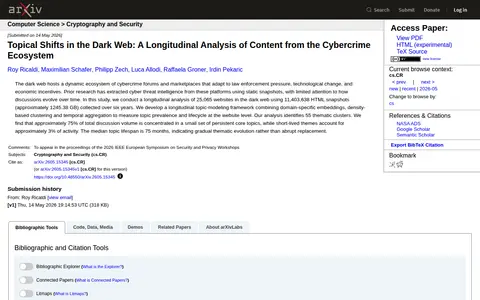
0An arXiv paper presenting a longitudinal analysis of the dark web cybercrime ecosystem. The authors analyze 25,065 websites using 11,403,638 HTML snapshots collected over six years, applying a topic-modeling framework with domain-specific embeddings, density-based clustering and temporal aggregation. The analysis identifies 55 thematic clusters and measures topic prevalence and lifecycle at the website level.
-
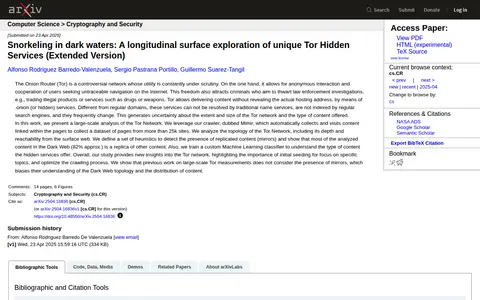
0An arXiv paper presenting a large-scale analysis of the Tor network using a crawler called Mimir, which collects and visits linked content. The authors report a dataset of pages from more than 25k sites and examine network topology, replicated content and content types.
-
0A working paper by John Schriner that focuses on how researchers monitor the Dark Web. It defines onion services and Tor and discusses tools for monitoring and securing onion services.
-
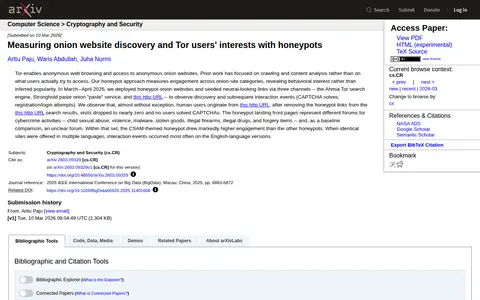
0An arXiv paper measuring onion website discovery and Tor users' interests with honeypots. The authors deployed honeypot onion websites in March–April 2025 and seeded links via three channels to observe interaction events. They report that human users almost without exception originated from Ahmia.fi, and that the CSAM-themed honeypot drew markedly higher engagement than the others.
Community notes
Reviews and discussion
No reviews yet
Be the first to share how this project worked for you.
Join the discussion
Sign in with a verified account to leave a review or join the discussion.
Sign in to review