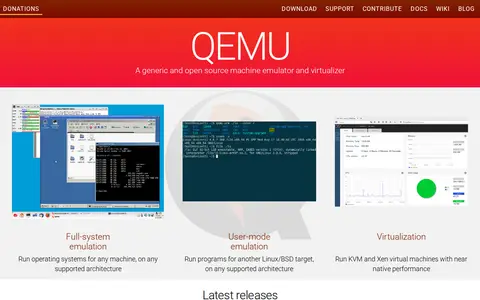

QEMU is a generic and open source machine emulator and virtualizer. It provides full-system emulation, running operating systems for any machine on any supported architecture, and user-mode emulation for running programs for another Linux/BSD target. It also runs KVM and Xen virtual machines with near native performance.
Directory
Search results
Published directory entries matching your search.
Qemu is a system utility for Windows, hardware checks, cleanup, process control, or desktop customization.
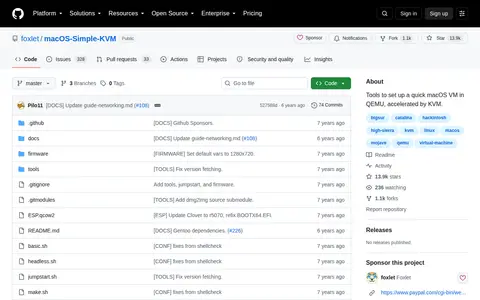
macOS-Simple-KVM provides tools to set up a quick macOS virtual machine in QEMU, accelerated by KVM. It requires a Linux system with qemu 3.1 or later, python3, pip and the KVM modules enabled; a Mac is not required. Installation media is downloaded by running jumpstart.sh, with Catalina as the default version and options for High Sierra, Mojave or Catalina, and basic.sh starts the machine.
E-Maculation is a site dedicated to emulation of the classic Macintosh computer on macOS, Windows and Linux, using emulators such as SheepShaver, Basilisk II, Mini vMac, Qemu and PearPC. It hosts a wiki with information about the emulators and setup guides, plus discussion and support forums.
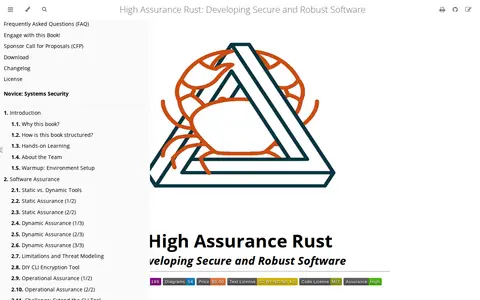
High Assurance Rust is a book about developing secure and robust software. It presents a project-based approach to systems programming and low-level software security, teaching Rust by re-implementing a major dynamic collection from its standard library. It discusses using open-source software assurance tools, including rustc, libFuzzer, rr, qemu, differential fuzzing and deductive verification.
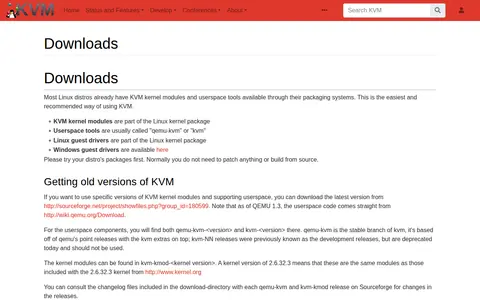
The KVM downloads page explains how to obtain KVM kernel modules and userspace tools, noting that most Linux distributions already provide them through their packaging systems, which the page calls the easiest and recommended way to use KVM. It also describes downloading older versions from Sourceforge, including qemu-kvm and kvm-kmod releases.
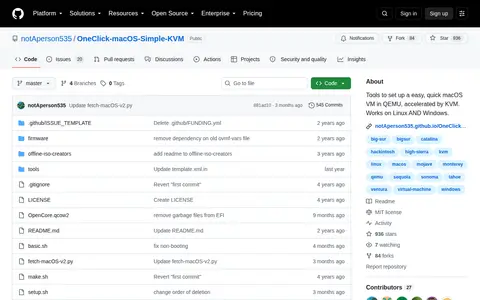
OneClick-macOS is an open-source toolset hosted on GitHub for setting up a streamlined, KVM-accelerated macOS virtual machine via QEMU. The tools are compatible with both Linux and Windows operating systems, and development is open to GitHub contributors.
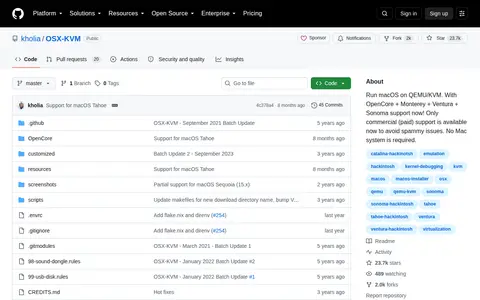
OSX-KVM is a tool that enables running macOS on QEMU/KVM. It supports OpenCore and macOS Monterey, Ventura, and Sonoma, requires no Mac system, and currently offers only commercial paid support.
UTM is virtualization software for Mac that runs Windows and Linux and emulates other operating systems. It uses QEMU and Apple's Virtualization framework and emulates processors including ARM32, MIPS, PPC and RISC-V. macOS virtual machines are limited to Apple Silicon Macs running macOS Monterey or later. GPU emulation and 3D acceleration are not supported.
UTM is a free and open source app that runs virtual machines on iOS. It supports over 30 processors emulated by QEMU and can run operating systems such as Windows and Linux. It works on iPhone and iPad with iOS 11 and later, without jailbreak for iOS 11-13, and offers a native UI, console mode, sharing, and external input support.
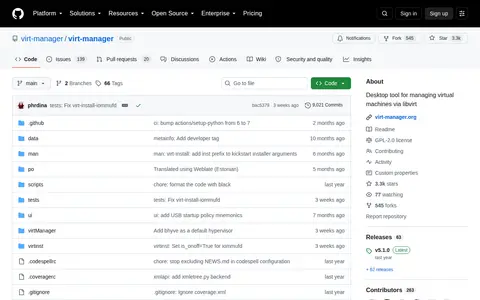
Virtual Machine Manager (virt-manager) is a graphical tool for managing virtual machines via libvirt, mainly QEMU/KVM virtual machines, with Xen and libvirt LXC containers supported. It also provides command line tools: virt-install to create virtual machines, virt-clone to duplicate them and virt-xml to edit them or manipulate libvirt XML.
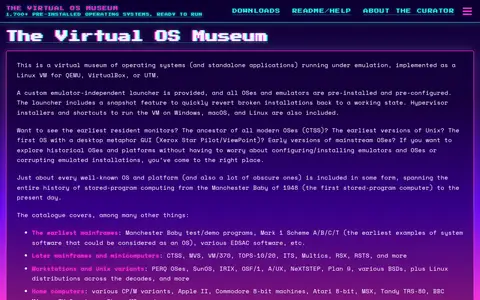
A virtual museum of operating systems and standalone applications running under emulation, delivered as a single Linux VM for QEMU, VirtualBox, or UTM. It states that over 1,700 operating systems and applications are pre-installed and pre-configured, with bundled emulators, a custom emulator-independent launcher, and one-click launch scripts for Windows and Linux. A snapshot feature can revert broken installations.