petersalomonsen.com
Music Experiment is an audio or music resource for streaming, discovery, editing, production, or library management.
Directory
Published directory entries matching your search.
Music Experiment is an audio or music resource for streaming, discovery, editing, production, or library management.

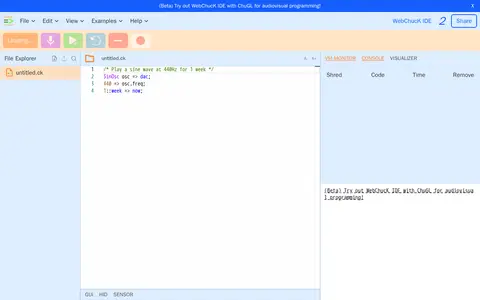
WebChucK IDE is a web-based integrated development environment for ChucK, a programming language for real-time sound synthesis and music creation. It is presented as accessible for building, experimenting with and sharing audio synthesis and analysis programs and real-time interactive music. The interface includes a file explorer, find-in-files, code editor, output and shred controls.

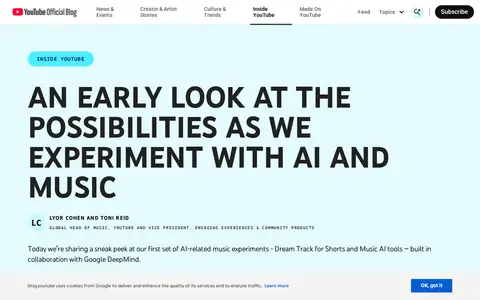
A YouTube Blog post announcing an early look at the company's first AI-related music experiments: Dream Track for Shorts and Music AI tools, built in collaboration with Google DeepMind. Dream Track is powered by the Lyria music generation model and initially lets a small group of select US creators create soundtracks of up to 30 seconds for Shorts.

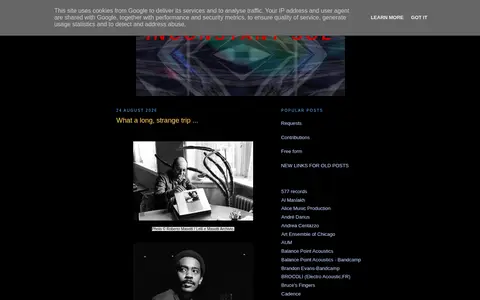
A blog in its 20th year that focuses on posting out of print material, with emphasis on the free, improvised and experimental side of jazz plus excursions into contemporary and classical music. It uses a moderator system for comments and has sections for contributions, requests and free form posts.

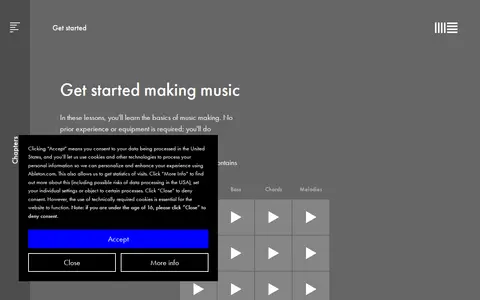
An interactive website from Ableton for exploring music fundamentals. Users experiment with beats, melody, harmony, basslines, and song structure in a web browser. The lessons cover music-making basics and require no prior experience or equipment.

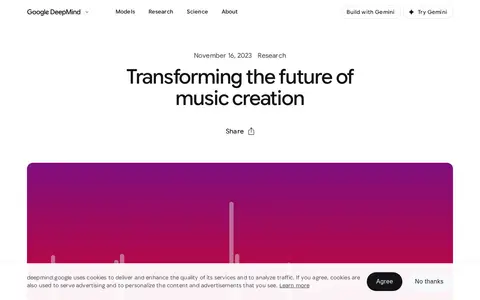
Lyria by Google DeepMind is a music generation model developed by Google DeepMind, positioned as the organization's most advanced system for AI-powered music creation. It is designed to support creative music production alongside related AI experiments, as part of Google DeepMind's broader portfolio of specialized AI models for generating high-fidelity music and audio.

The page is an alphabetical list of links to archives of Foobar2000 components collected by The Audio File. It states the list includes developmental, experimental, problematic, untested and unsupported components, many developed for older Foobar versions, and that using old or unsupported components is not recommended for normal use.

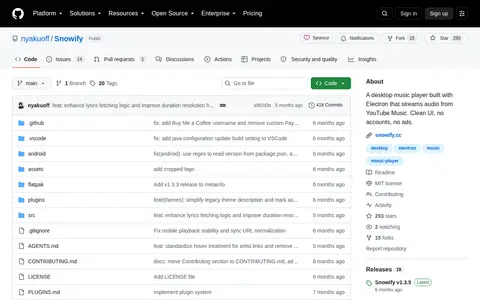
Snowify is a desktop music player built with Electron that streams audio from YouTube Music, with a clean UI and no accounts or ads. It requires Node.js (v18+) and yt-dlp installed on the system. The README warns the app is still being worked on and may contain bugs or experimental features.

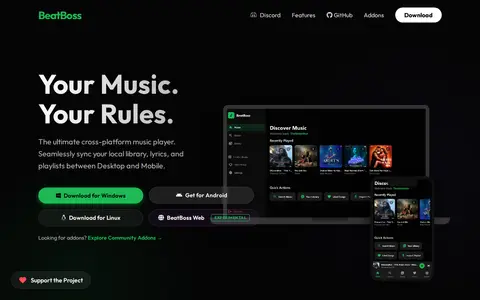
BeatBoss is a cross-platform music player described as allowing users to sync local libraries, lyrics, and playlists between Desktop and Mobile. It offers high-res audio, offline mode, easy import from Spotify and YouTube Music, synced lyrics, and is lightweight. Downloads are listed for Windows, Android, and Linux, including Debian Package and AppImage formats, with a BeatBoss Web Experimental option.

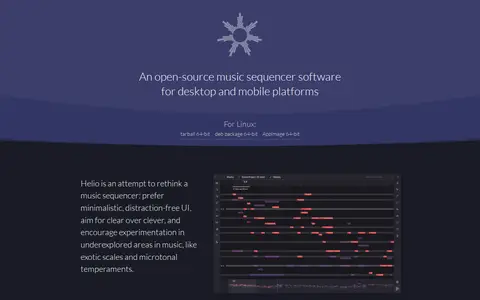
Helio is an open-source music sequencer for desktop and mobile platforms. Its documentation covers hotkeys, refactoring options and arpeggiators. The project aims to rethink the music sequencer with a minimalistic, distraction-free interface and an emphasis on clear design over cleverness, encouraging experimentation in areas such as exotic scales and microtonal temperaments.

The audio visual generator page creates music using experimental technology. Users click in a rectangle to generate points; the vertical position of each point determines the pitch of its note. The resulting sound can be sweet or aggressive depending on the user's machine.

Google Labs FX is the official hub for AI experiments from Google. As of the listing snapshot, its primary featured project is Project Genie, a tool for creating and exploring infinitely diverse worlds. It also notes that related Google Flow and Google Flow Music products are hosted at separate dedicated sites.
Search art history, music, theatre and media studies data collections and supporting experimental data from GBR.

NSynth Super is an open source experimental instrument that lets musicians play sounds generated by the NSynth algorithm. The NSynth algorithm uses a deep neural network to learn sound characteristics and synthesize new sounds from four source sounds. The interface can be played via any MIDI source, such as a DAW, sequencer or keyboard.
Search art history, music, theatre and media studies data collections and supporting experimental data from AUS.