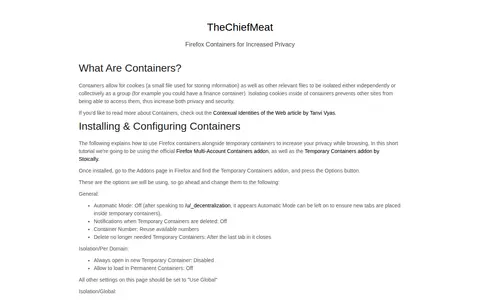

A guide explaining what Firefox containers are and how to use the Firefox Multi-Account Containers addon with the Temporary Containers addon to increase browsing privacy. It covers installation and configuration steps and describes assigning frequently visited sites to their own containers.
Directory
Search results
Published directory entries matching your search.
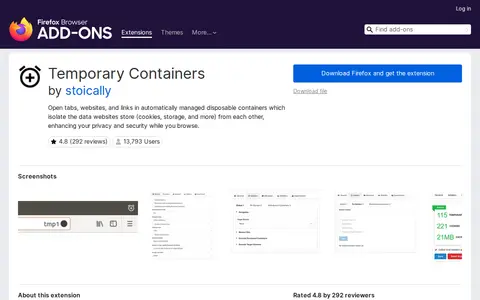
Temporary Containers is a Firefox browser extension that opens tabs, websites, and links in automatically managed disposable containers. These containers isolate website-stored data including cookies and local storage from each other to enhance user privacy and security while browsing. It supports fully automatic operation based on navigation targets, configuration for specific websites, activation via configured mouse clicks or the toolbar icon, and automatic deletion of history, cookies, and scripts after use. The extension is free and open source.
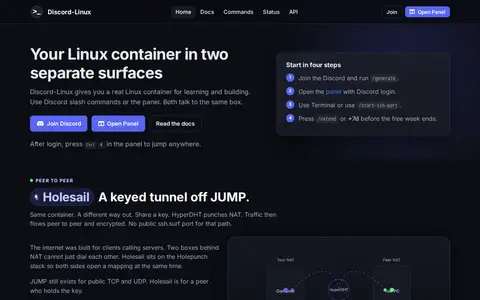
Discord-Linux provides free Linux containers tied to a Discord account, generated with Discord slash commands or the panel. Containers run Ubuntu by default, with other distributions selectable, and are reachable through a browser terminal, SFTP or SSH. Free containers expire after seven days and can be extended.
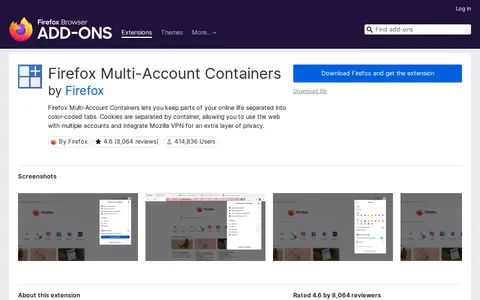
Firefox Multi-Account Containers is a Firefox extension that separates users' online activities into color-coded tabs. Cookies are isolated by container, allowing use of multiple accounts on the web, and it can integrate with Mozilla VPN for an extra layer of privacy.
Distrobox is a tool that uses podman, docker or lilipod to create containers running the Linux distribution of the user's choice inside the terminal. The created containers are tightly integrated with the host, sharing the HOME directory, external storage, external USB devices, graphical apps and audio.
Podman Desktop is an open source graphical tool for developing on containers and Kubernetes. Available on Linux, macOS and Windows, it lists, searches, runs and stops containers, builds and pulls images, and starts pods. It supports OCI and Compose standards and can spin up local Kind or Minikube clusters.
Docker installation documentation for setting up containers on supported systems.
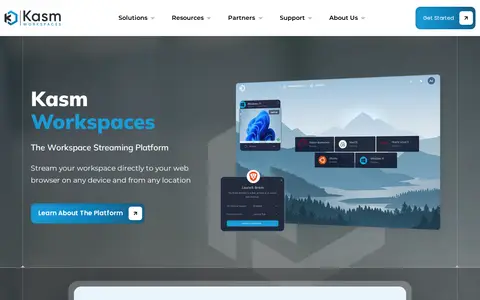
Browser-isolated workspace platform for running apps, desktops, and disposable sessions in containers.

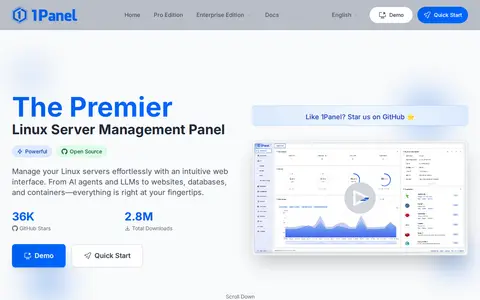
An open-source Linux server management panel with a web interface for managing Docker, websites, databases, and containers. It also provides AI management features and an app store for one-click deployment of open-source applications.

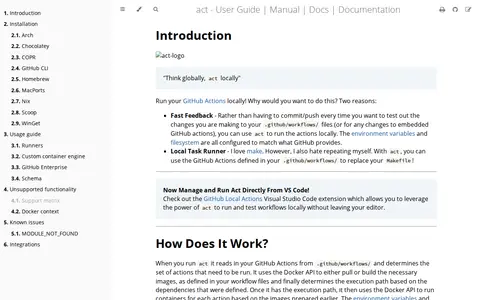
act runs GitHub Actions locally, reading workflows from .github/workflows/ and determining which actions to execute. It uses the Docker API to pull or build the necessary images and run containers for each action, with environment variables and filesystem configured to match GitHub.
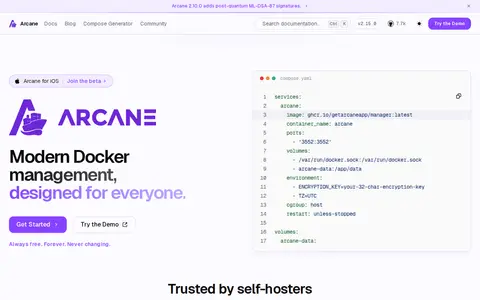
Arcane is a free, open-source Docker management UI covering containers, images, volumes, networks, Compose projects, and remote hosts. It runs as a single container that manages Docker on the same host through the Docker socket and can be installed with Docker Compose or a Linux install script. Documentation also covers agents for managing other Docker hosts.
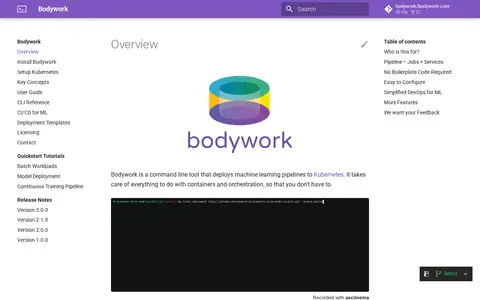
Bodywork is a command line tool that deploys machine learning pipelines to Kubernetes, handling containers and orchestration. Any pipeline stage runs either a batch job or a long-running process. It is presented as a lightweight alternative to Kubeflow or building a platform around workflow tools such as Apache Airflow, Argo Workflows or Dagster. Stages are defined as Python modules or Jupyter notebooks and configured in a single bodywork.yaml file.
BreachLab is an offensive security training platform organized into tracks of live levels. Levels are real targets on infrastructure such as SSH boxes and containers, and each solved breach earns points toward a global leaderboard and operative levels. Tracks are in early access, and flags, points and levels may change during integrity audits and patches.
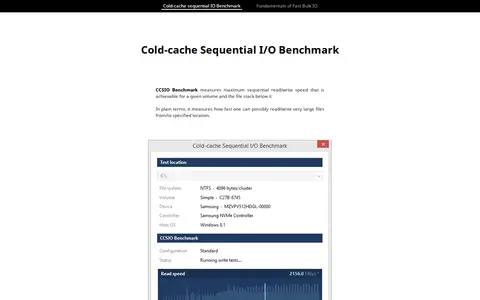
CCSIO Benchmark is a Windows tool that measures the maximum sequential read/write speed achievable for a volume and the file stack beneath it. It cycles through combinations of IO buffer count, buffer size and caching mode to find the combination delivering the highest throughput. It can assess local drives, remote network shares and virtual devices such as RAM disks and encrypted file containers.
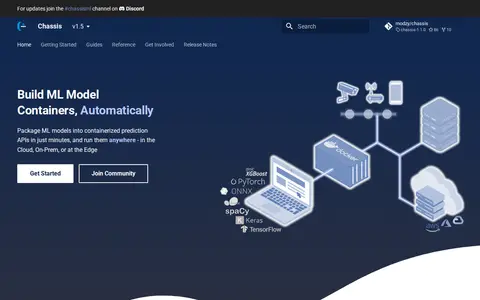
Turns models into ML-friendly containers that run just about anywhere.
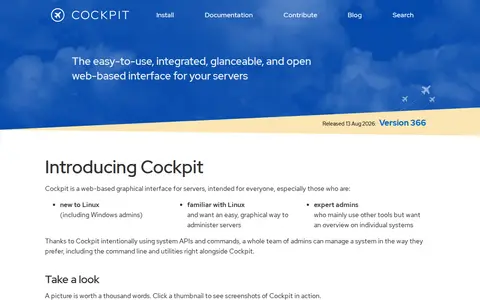
Cockpit is a web-based graphical interface for administering Linux servers through a browser. It uses existing system APIs and commands, defaults to normal user logins and privileges, and runs on demand via systemd socket activation. Tasks include managing storage, configuring networks and firewalls, running containers, and managing virtual machines and user accounts.
Reddit link is a Reddit community or thread with discussion, guides, updates, or shared resources.
Cog is an open-source tool that packages machine learning models in standard, production-ready containers. Users define the environment in a configuration file, and it generates a Docker image with Nvidia base images and dependency caching. Model inputs and outputs are defined in Python, from which Cog generates an OpenAPI schema and an HTTP inference server. Models can be deployed to own infrastructure or Replicate.
Track-trace's container tracking page lets users track containers for 169 companies. It uses the first four letters of container numbers to automatically send requests to the correct company, with manual selection possible after tracking.
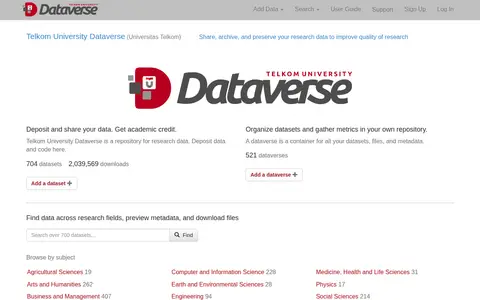
Telkom University Dataverse is a repository for research data where members deposit and share datasets and code. It provides dataverses as containers for datasets, files and metadata, supports browsing by subject, and displays dataset and download metrics.
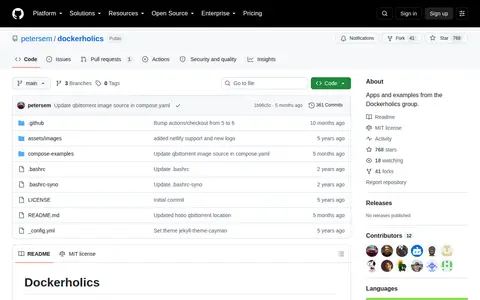
Dockerholics is a GitHub repository with apps and examples from the Dockerholics group. It includes Docker Compose examples and a list of free applications that can be hosted locally in Docker containers, described as images the group experts have tried out and verified. The repository is MIT licensed.
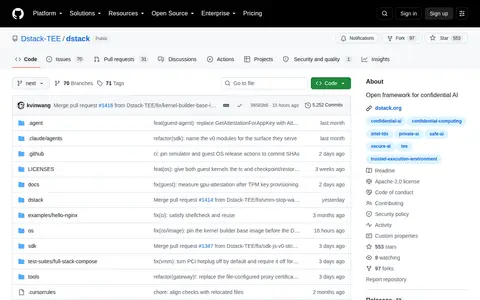
dstack is an open framework for confidential AI that runs containers inside confidential VMs with Intel TDX, using existing Docker Compose files. It supports attested workload identities and native NVIDIA Confidential Computing on H100 and Blackwell GPUs, with options for self-hosted TDX machines or Phala Cloud.
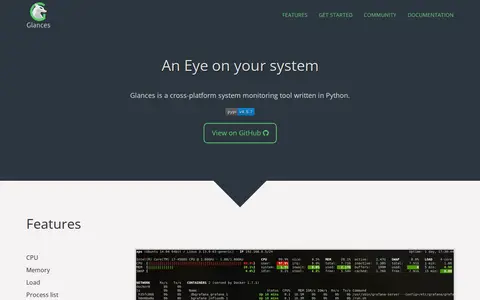
Glances is a cross-platform, curses-based system monitoring tool written in Python. It reports on CPU, memory, load, process list, network interfaces, disk I/O, sensors, filesystems and containers, and includes a web interface, an XML-RPC server and a RESTful JSON API. It can export statistics to formats and services including CSV, InfluxDB and ElasticSearch.
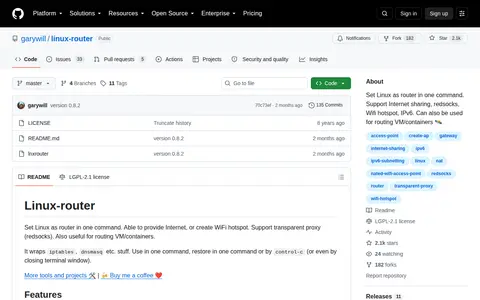
Linux-router is a script that sets Linux as a router in one command. It provides Internet sharing or creates a WiFi hotspot, supports transparent proxy via redsocks, and can be used for routing VM/containers. It wraps iptables, dnsmasq and similar tools and restores with one command or control-c.