
islam.zmo.de
Open access digital database on Islam and Muslims in West Africa.
Directory
Published directory entries matching your search.
Open access digital database on Islam and Muslims in West Africa.

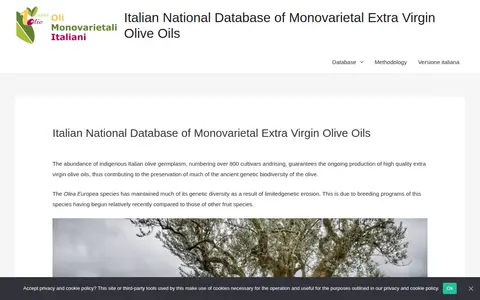
A national database of monovarietal extra virgin olive oils from Italy. It covers the country's olive germplasm, numbering over 800 cultivars, and describes how genotype affects the chemical and sensory characteristics of the oils and their link to production areas.
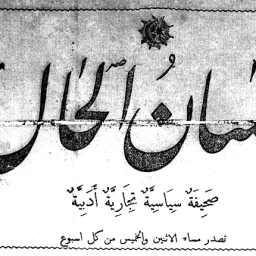
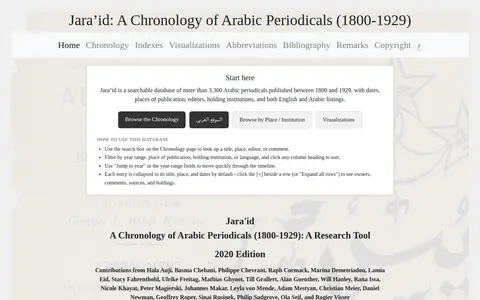
Jara'id is a searchable database of over 3,300 Arabic periodicals published between 1800 and 1929. Entries include dates, places of publication, editors and holding institutions, with English and Arabic listings. Users can search by title, place, editor or comment, filter by year range, place, institution or language, and sort by column headings.
Bibliographic database of books about Korea in English; produced by the US Library of Congress.

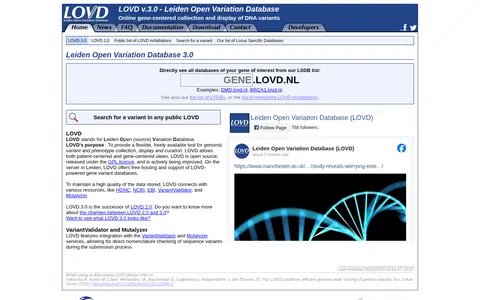
The Leiden Open Variation Database (LOVD) is an open source, GPL-licensed system for the collection, display and curation of genomic variant and phenotype data. LOVD 3.0 supports both patient-centered and gene-centered views of DNA variants. The project maintains a public list of LOVD installations and locus-specific databases, and the central Leiden server offers free hosting and support for LOVD-powered gene variant databases. The system is actively under development.
Bibliographic database for finding publications, citations and scholarly records.

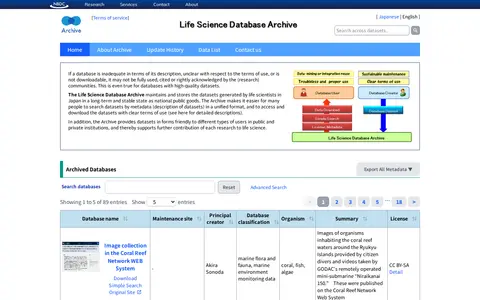
The Life Science Database Archive maintains and stores datasets generated by life scientists in Japan for the long term. It lets users search datasets by metadata in a unified format and access and download them under clear terms of use. It also provides datasets in forms suited to different users in public and private institutions.

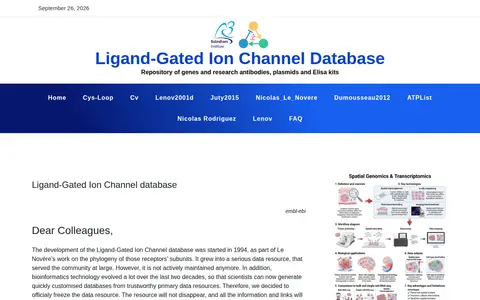
The Ligand-Gated Ion Channel Database holds nucleic and proteic sequences of ligand-gated ion channel subunits, one entry per gene, manually constructed and checked. It offers multiple sequence alignments, some phylogenetic studies, and atomic coordinates when available. Development began in 1994 and the resource is now officially frozen; the data and links remain but it is not actively maintained or considered up to date.

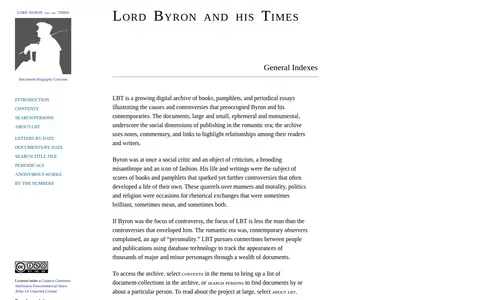
Lord Byron and his Times is a growing digital archive of books, pamphlets and periodical essays illustrating the causes and controversies surrounding Byron and his contemporaries. It uses notes, commentary and links to show relationships among readers and writers, and database technology to track personages across documents. Documents are made available under a Creative Commons license for free circulation and reuse with acknowledgement of the source.

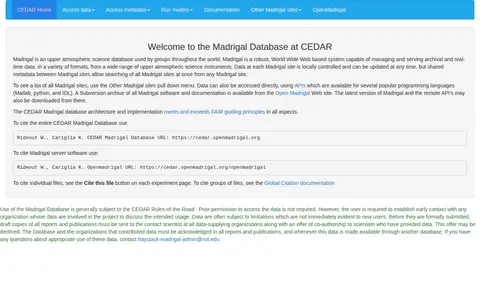
Madrigal is a web-based upper atmospheric science database that manages and serves archival and real-time data from various instruments. Data is locally controlled at each site, while shared metadata enables searching across all Madrigal sites. APIs for Matlab, Python and IDL allow direct data access.
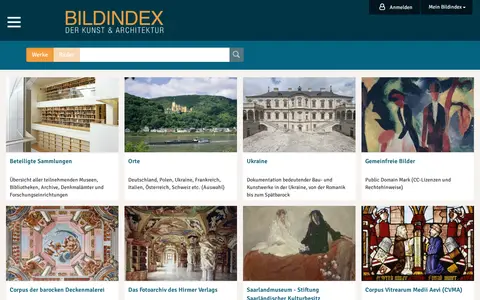
Collaborative database for image and data holdings on art and architecture of around 80 cultural and scientific institutions.

Database of the marine natural products literature.
Bibliographic database for finding publications, citations and scholarly records.

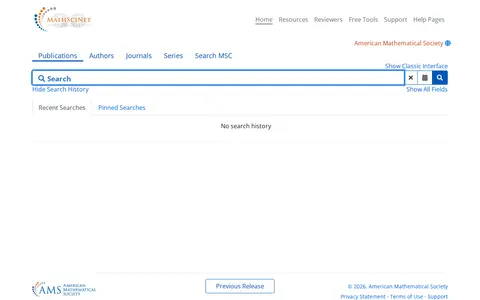
Bibliographic database of the Mathematical Reviews journal.

The MCHF/MCDHF Database is a NIST collection of transition data from relativistic theories computed by different computational methods. The Landé gJ factor is provided for a few collections. Data is accessed by selecting an element from the periodic table, then a spectrum, a reference number, and a property. Atomic structure codes used in the calculations, including HFFortran95, ATSP, ATSP2K and GRASP2K, are available for download.

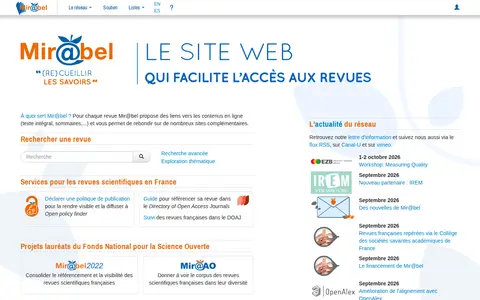
Database and online access to journals.

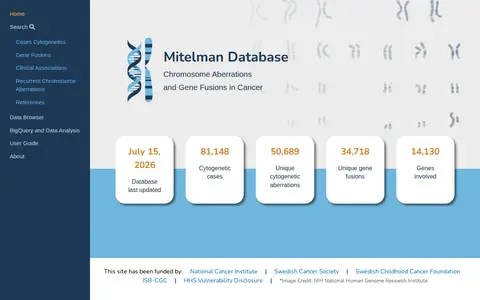
The Mitelman Database of Chromosome Aberrations and Gene Fusions in Cancer relates cytogenetic changes and their genomic consequences, particularly gene fusions, to tumor characteristics. It contains individual cases and associations. The site is optimized for Google Chrome or Mozilla Firefox desktop browsers.

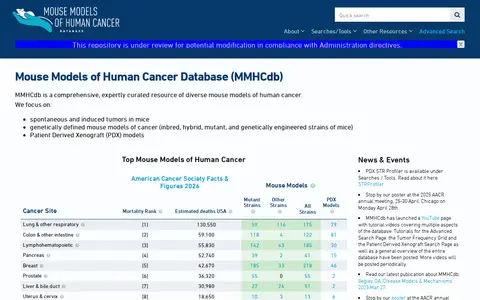
The Mouse Models of Human Cancer Database (MMHCdb) is a curated resource of mouse models of human cancer. It covers spontaneous and induced mouse tumors, genetically defined models such as inbred, hybrid, mutant and genetically engineered strains, and patient-derived xenograft models. It is intended to help researchers choose experimental models and review mutation patterns in specific cancers.

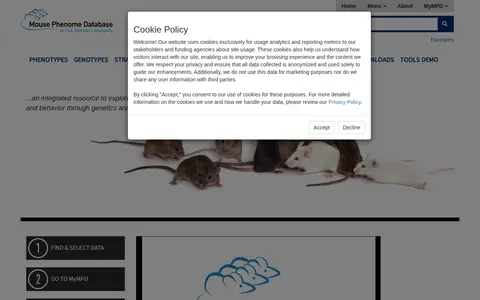
The Mouse Phenome Database is a resource for exploring physiology and behavior through genetics and genomics. It provides phenotypes, genotypes, strains, panels, QTL, studies and protocols, with search by strain, procedure, treatment, investigator, project, measure, PubMed number, ontology term, gene or genomic region.

The MPPDA Digital Archive is a database of extant General Correspondence records of the Motion Picture Producers and Distributors of America, covering 1922 to 1939 under chairman Will H. Hays. Designed and compiled by Richard Maltby and Ruth Vasey at Flinders University, it documents the industry trade association, including policy, public relations, distributor-exhibitor relations, censorship and self-regulation.
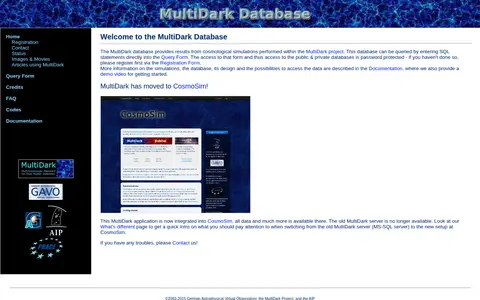
The MultiDark Database provided results from cosmological simulations performed within the MultiDark project. It could be queried by entering SQL statements directly into a Query Form, and access to the public and private databases was password protected, requiring registration. The site notes that MultiDark has moved to CosmoSim, where its application is integrated, and the old server is no longer available.

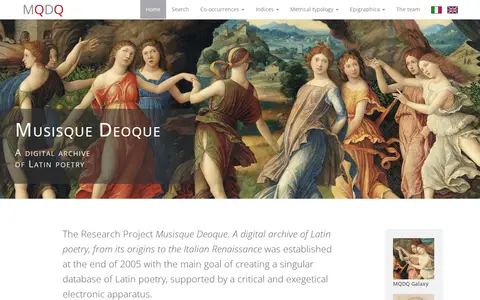
Musisque Deoque is a digital archive of Latin poetry from its origins to the Italian Renaissance, begun in late 2005 to create a single database with electronic critical apparatus. It lets users find not only forms in the reference edition but also variants recorded in the apparatus, selected by a digital editor.

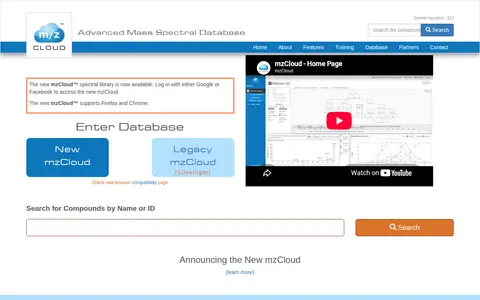
mzCloud is a curated mass spectral database of high-resolution tandem mass spectra arranged into spectral trees. It supports spectrum, tree, structure, substructure, m/z, and compound name searches, and is intended to help identify compounds, including those not present in the library. The database includes annotated fragments, molecular formulas, identifiers, and experimental metadata. It is an open consortium effort covering fields such as metabolomics and toxicology.

The National Forestry Database is a Canadian resource that collects and compiles national forest data and forest management statistics. Its topics include forestry highlights, wood supply, forest fires, forest insects, harvest, regeneration, revenues, pest control, and provincial and territorial profiles. It is available in English and French.