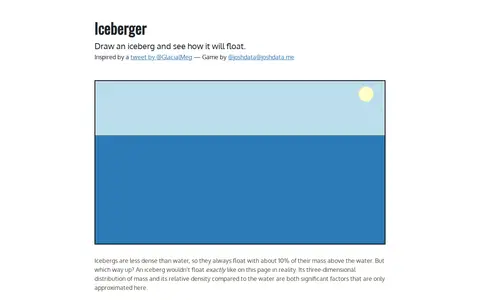
Iceberger is an interactive web tool that allows users to draw an iceberg to visualize how it will float. It notes that icebergs are less dense than water, so approximately 10% of their mass sits above the water surface. The tool approximates flotation behavior, as real-world iceberg floating is also influenced by three-dimensional mass distribution and relative density to water. The project was inspired by a 2021 tweet from @GlacialMeg advocating for scientists to draw icebergs in their stable orientations.
Directory
Search results
Published directory entries matching your search.
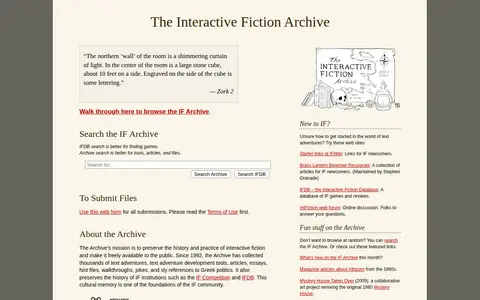
The Interactive Fiction Archive is a project preserving the history of interactive fiction and making it freely available to the public. Since 1992 it has collected text adventures, development tools, articles, essays, hint files, walkthroughs and other materials, and it also preserves the history of IF institutions such as the IF Competition and IFDB. It is managed by the Interactive Fiction Technology Foundation and founded by Volker Blasius.
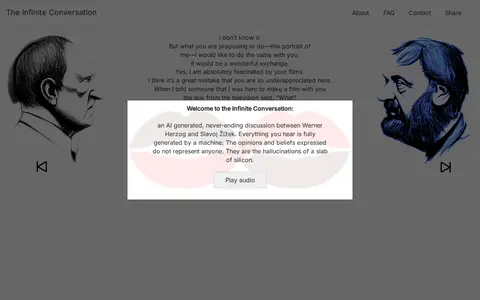
An AI-generated, never-ending discussion between Werner Herzog and Slavoj Žižek. Everything heard is fully generated by a machine, and the stated opinions do not represent anyone. The project aims to raise awareness about the ease of using tools for synthesizing a real voice.
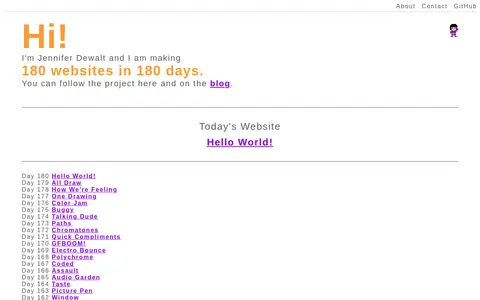
Jennifer Dewalt made 180 websites in 180 days, from April 1st to September 27th, 2013, as a learn-to-code project. The site lists each day's website and links to the blog and public code on GitHub.
Just For Fun is a showcase of creative coding projects. The page lists entries including a Windows 95 parody, the Tixy.land minimalist coding environment, CSS3D clouds, Vim running on a 3D cube, a 1940s New York street view, and PEmbroider for creating embroidery with Processing.
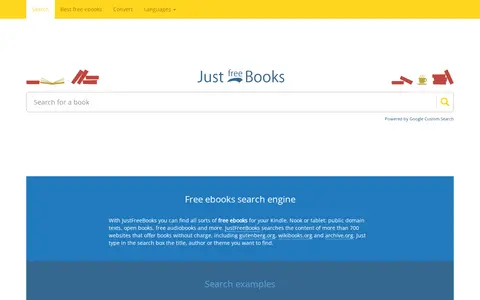
A search engine that indexes the content of more than 700 websites offering free ebooks, including Project Gutenberg, Wikibooks and the Internet Archive. Users can search by title, author or theme to find free ebooks and audiobooks for Kindle, Nook, Kobo and tablets.
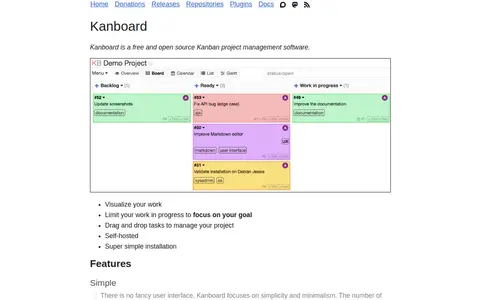
Kanboard is a free and open source Kanban project management software. It provides a visual board for managing tasks, with drag-and-drop columns, work-in-progress limits, and task search and filtering. It is self-hosted and available under the MIT License.
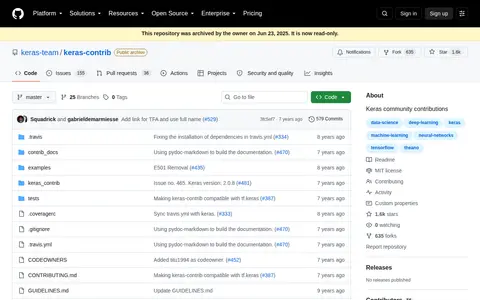
Keras-contrib is the official extension repository for the Keras deep learning library, with additional layers, activations, loss functions and optimizers not yet in Keras. It is deprecated and archived; the project migrated to TensorFlow Addons. The repository is read-only.
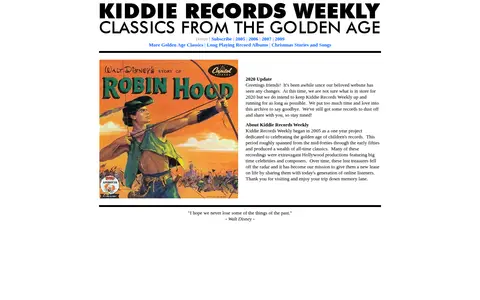
Kiddie Records Weekly is an archive that began in 2005 as a one-year project dedicated to celebrating the golden age of children's records, a period spanning roughly the mid-forties through the early fifties. It shares these recordings with online listeners and states an intention to keep the site running as long as possible.
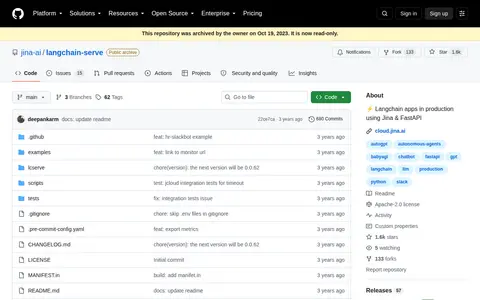
An archived, read-only repository that provided a way to deploy LangChain apps using Jina and FastAPI, wrapping apps as services on Jina AI Cloud. The README notes the project is no longer maintained and that it could deploy apps on a user's own infrastructure.
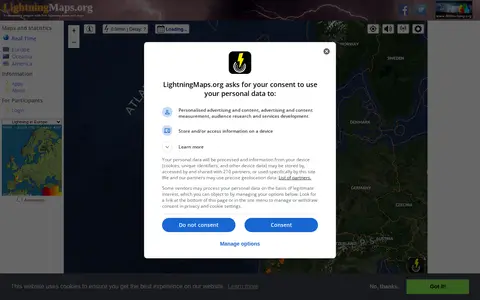
A community project providing free real-time lightning maps and apps, with lightning data supplied by Blitzortung.org and contributors. It lets users see lightning strikes in real time across the planet and access maps of former thunderstorms, with regional views for Europe, Germany, USA and Oceania.
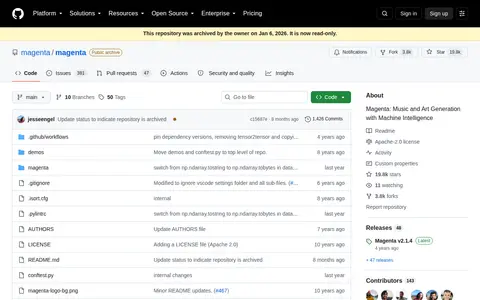
Magenta is a research project exploring machine learning in art and music creation, developing deep learning and reinforcement learning algorithms for generating songs, images, and drawings. It also explores tools letting artists and musicians extend their processes with these models. The repository is archived and read-only.
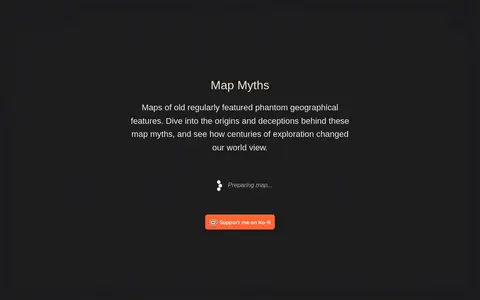
An interactive map that explores the tales behind cartographic myths, blunders and imaginations that shaped views of the world. The site offers projections including Arctic, Antarctic, Mercator, Pacific, Robinson and Mollweide.
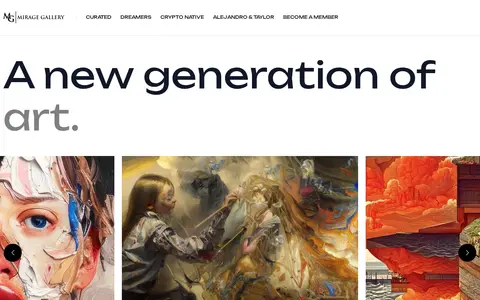
Mirage Gallery is an art gallery that showcases AI-generated and AI-enhanced artworks. It features curated artists, projects such as Crypto-Native art that evolves on secondary sales, and Dreamers collaborations. The gallery also offers memberships with early access to drops.
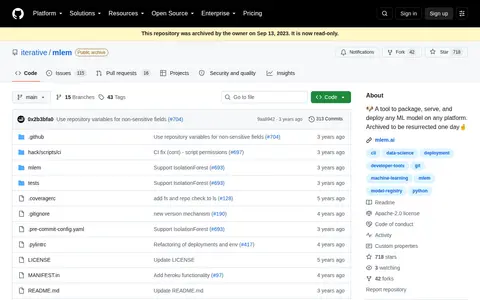
MLEM is an open source tool designed to package, serve, and deploy machine learning models on any platform. The project's primary repository is currently archived, with maintainers noting plans to resurrect it in the future.
A collection of MS Word cover page templates that can be downloaded, personalized and printed. The site describes a cover page as the first page of a book, thesis, research paper, project, assignment or proposal, and lists many template categories for documents such as reports, proposals and assignments.
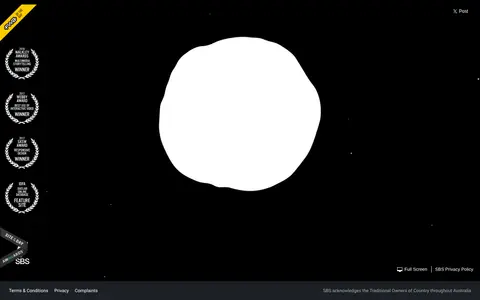
My Grandmother’s Lingo is a voice-activated interactive animation published by SBS that tells the story of a young Aboriginal woman fighting to preserve the critically endangered Marra Indigenous language. The experience lasts roughly 10 minutes, with each Marra word a user learns unlocking a new chapter of the narrative. Full functionality requires microphone access and is optimized for desktop use on Chrome or Firefox browsers. The project notes a language is lost globally every two weeks, and over 90% of Australia’s Indigenous languages are critically endangered.
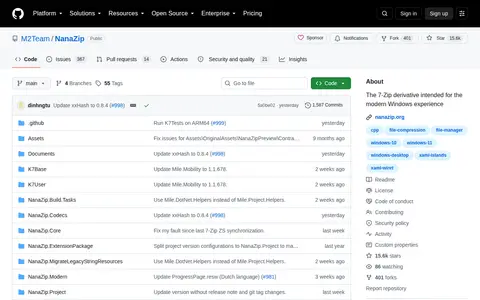
Nana Zip is an open source file archiver derived from 7-Zip, built for the modern Windows user experience. The project is hosted on GitHub under the M2Team/NanaZip repository, with documentation covering its features, differences from NanaZip Classic and system requirements.
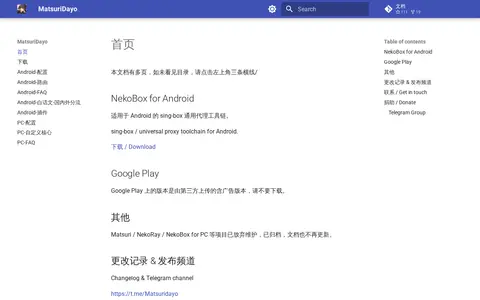
NekoBox for Android is a universal proxy toolchain based on sing-box for Android. The project's documentation notes that Matsuri, NekoRay and NekoBox for PC are no longer maintained, are archived, and their documentation is no longer updated. Feedback is directed to the GitHub issue area.
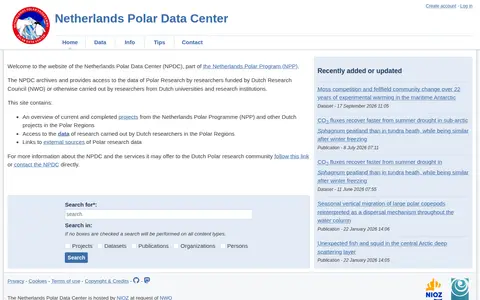
The Netherlands Polar Data Center is part of the Netherlands Polar Program. It archives and provides access to data from polar research by researchers funded by the Dutch Research Council or working at Dutch universities and research institutions. The site lists current and completed projects, offers access to research data, and links to external polar data sources.

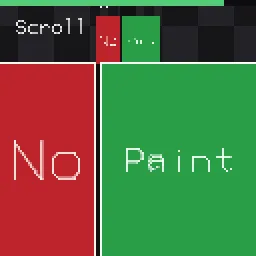
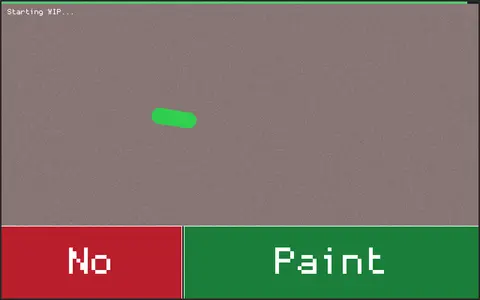
No Paint is a browser-based creative computing platform part of the Aesthetic Computer project. It enables users to create art, games, and tools using JavaScript and KidLisp, navigating via typed commands in a prompt. Users can accept or discard proposed creative outputs by pressing Paint or No. Documentation, source code, and program pieces are available via linked external repositories.
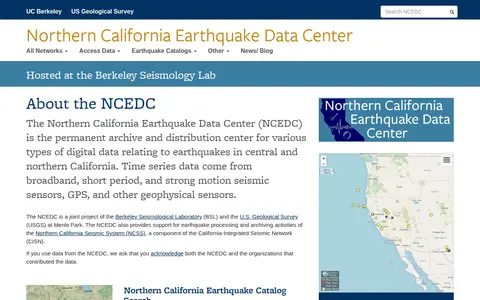
The Northern California Earthquake Data Center is a joint project of the Berkeley Seismological Laboratory and the U.S. Geological Survey. It serves as a permanent archive and distribution center for digital data on earthquakes in central and northern California, including time series data from seismic, GPS and other geophysical sensors. Online catalogs and web services support data queries.
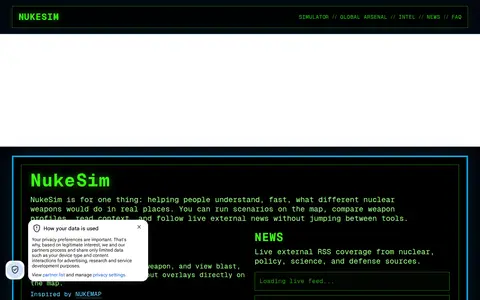
NukeSim is an educational nuclear explosion simulator with effects modeling. It lets users run scenarios on a map, compare weapon profiles, view blast, thermal, radiation and fallout overlays, browse a global arsenal database, read articles and follow external nuclear news. The project states it is inspired by NUKEMAP.
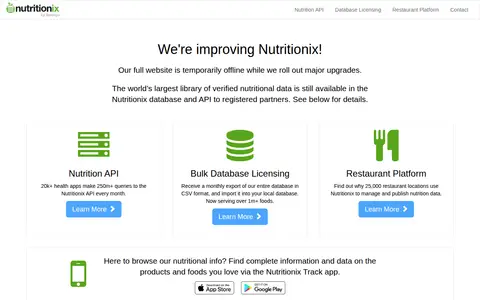
Nutritionix maintains a database of verified nutritional data. The full website is temporarily offline for upgrades, while the database and API remain available to registered partners. The project also offers a restaurant platform for publishing nutrition data and an app for browsing nutritional information.