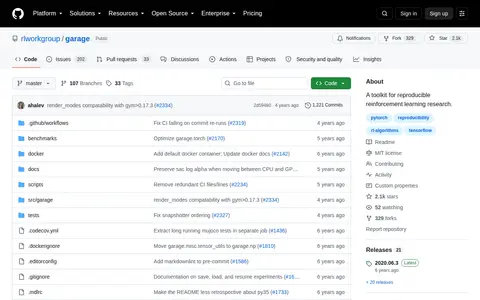

Garage is a toolkit for developing and evaluating reinforcement learning algorithms, with an accompanying library of implementations built using it. The toolkit offers modular tools including composable neural network models, replay buffers, high-performance samplers, an experiment definition interface, reproducibility tools, logging including TensorBoard, checkpointing and resuming, and environment interfaces.
Directory
Search results
Published directory entries matching your search.
Gestell studies PTX, SASS, compiler lowering, and GPU execution behavior.
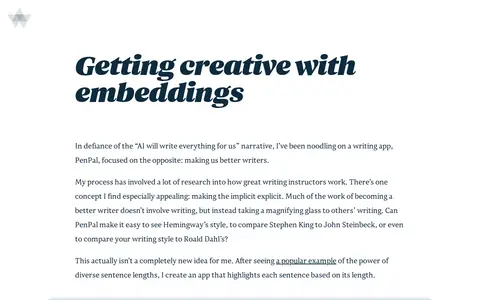
This is an article by Amelia Wattenberger exploring creative uses of embeddings, including her development of the PenPal writing app and a sentence length highlighting tool for analyzing writing style.
A page of content on TensorFlow, including academic papers and links to related topics.
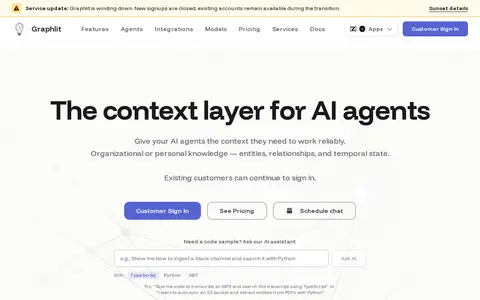
Graphlit is a context layer for AI agents. It provides real-time synchronization across services including Slack, GitHub, and Jira, operates via a single API with no operations overhead, and includes built-in semantic search.
Explore any niche. Discover pain points, content opportunities, and what solutions people are eager to pay for.
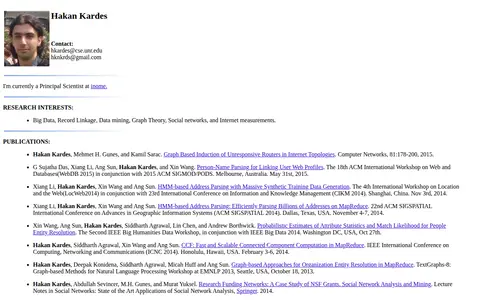
Personal page of Hakan Kardes, a principal scientist whose listed research interests include big data, record linkage, data mining, graph theory, social networks and Internet measurements. The page lists publications on topics such as connected component computation in MapReduce, address parsing and organization entity resolution.
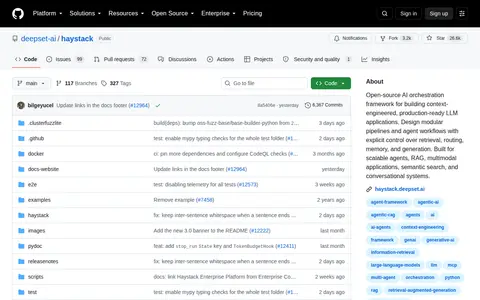
Haystack is an open-source AI orchestration framework for building production-ready LLM applications in Python. It provides modular pipelines and agent workflows with explicit control over retrieval, routing, memory and generation, and is intended for RAG systems, multimodal applications, semantic search, question answering and autonomous agents. Installation is available via pip.
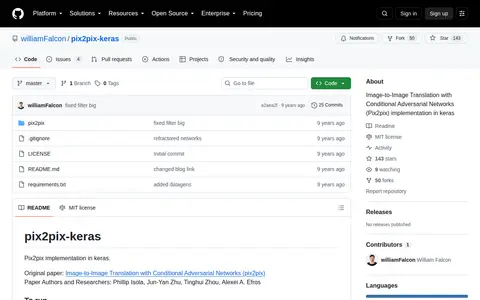
Pix2pix implementation in keras. The repository provides code to download the facades dataset, install requirements, and start training, and it references the original Image-to-Image Translation with Conditional Adversarial Networks paper.
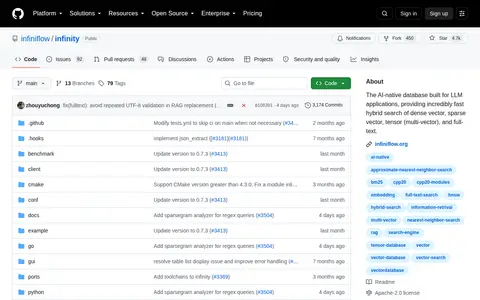
AI-native database built for LLM applications, providing incredibly fast vector and full-text search.
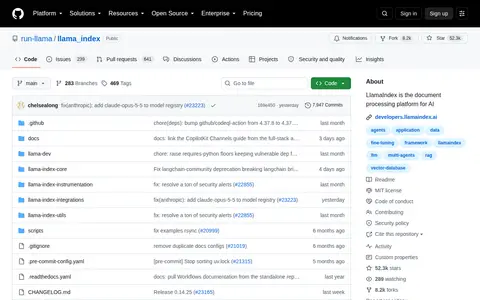
A project to make it easier to use large external knowledge bases with LLMs.
A collaborative AI workspace, built on your company context. Build and orchestrate agents right alongside your team.
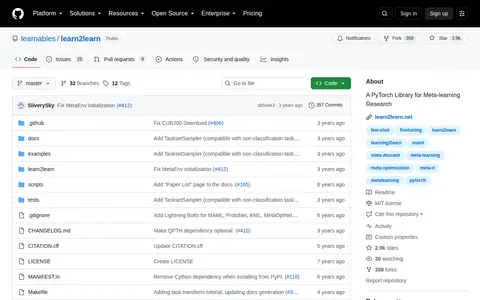
PyTorch Meta-learning Framework for Researchers.
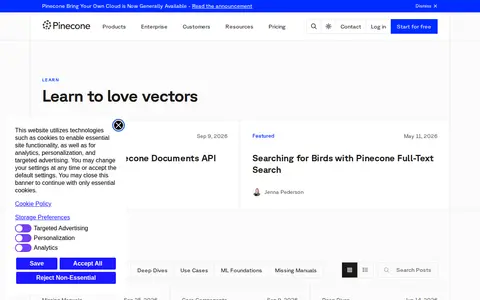
The Pinecone Learning Center is a resource section of the Pinecone website offering educational content related to Pinecone's AI knowledge platform. Available materials include articles, whitepapers, and guides covering topics such as vector database architecture, hybrid search, and retrieval-augmented generation workflows.
Limitless describes personalized AI powered by what a user has seen, said, and heard. The company states it has been acquired by Meta. Existing Pendant customers are to be supported throughout 2026 and receive the unlimited plan for free, while non-Pendant functionality such as Rewind is being sunset.
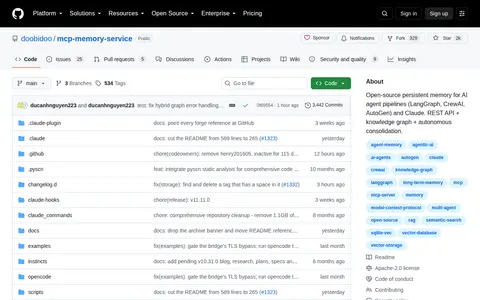
MCP Memory Service is an open-source tool that provides persistent memory for AI agent pipelines including LangGraph, CrewAI, AutoGen and Claude, with a REST API, knowledge graph and autonomous consolidation functionality.
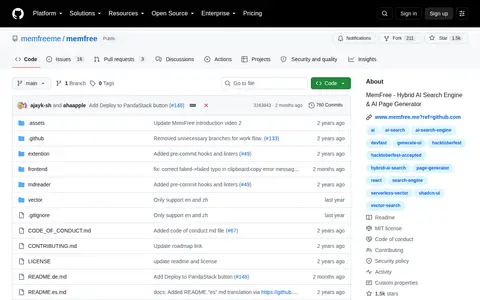
MemFree is a hybrid AI search engine and AI page generator. It provides accurate answers sourced from the internet and a user's personal knowledge base. It supports multiple AI models, search engines, and input formats including text, images, and local files. It can generate production-ready user interface pages from text or image inputs in seconds.

MetaReview is a free, open-source online meta-analysis tool that combines PubMed literature search, AI screening and data extraction, effect-size calculation for OR/RR/HR/MD/SMD, forest and funnel plots, subgroup and sensitivity analysis, PRISMA flow diagrams and report export. It runs in the browser without R, Stata or RevMan. A comparison page states the tool is free.
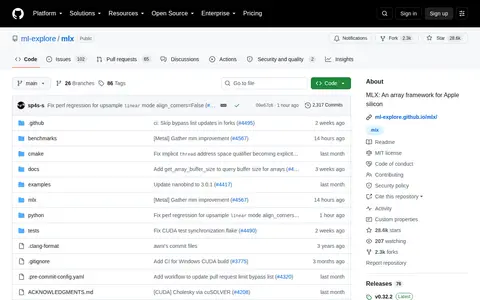
MLX is an array framework developed for use on Apple silicon hardware. The project includes example code, quickstart guides, installation instructions, and contribution guidelines. It is hosted as an open source repository on GitHub.
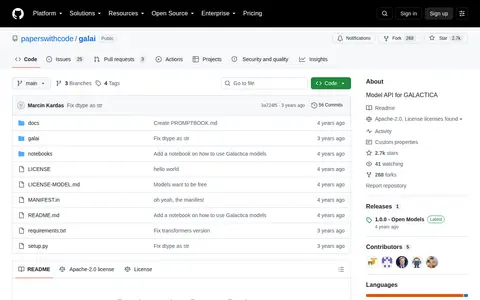
GALACTICA is a general-purpose scientific language model trained on scientific text and data. This repository provides a Model API for GALACTICA, installable from pip or the repository, with five model sizes. The models can be used with the transformers library. It is a stand-alone model that is not instruction tuned, so correct prompts are needed for good results.
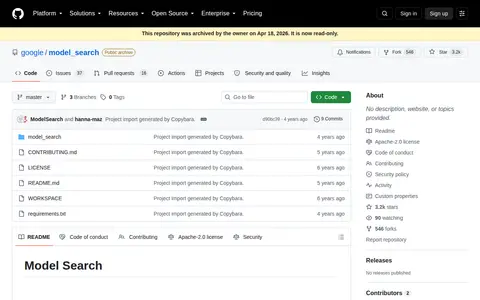
Framework that implements AutoML algorithms for model architecture search at scale.
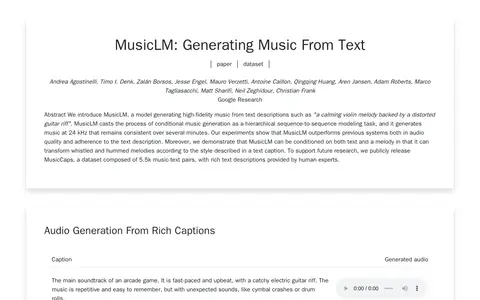
MusicLM is a model that generates high-fidelity music from text descriptions. It frames conditional music generation as hierarchical sequence-to-sequence modeling and produces audio at 24 kHz consistent over several minutes. It can also be conditioned on text and a melody, transforming whistled or hummed melodies according to a text caption. The project released MusicCaps, a dataset of 5.5k music-text pairs with descriptions by human experts.
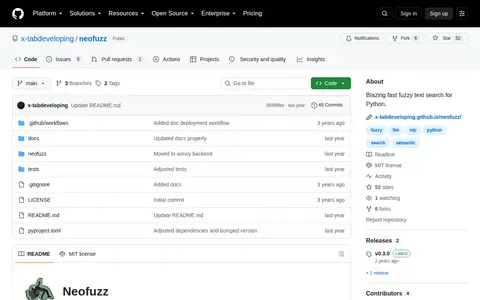
Neofuzz is an open-source Python library that provides high-speed fuzzy text search functionality. It is hosted on GitHub under the x-tabdeveloping repository and is available for community use and contribution.
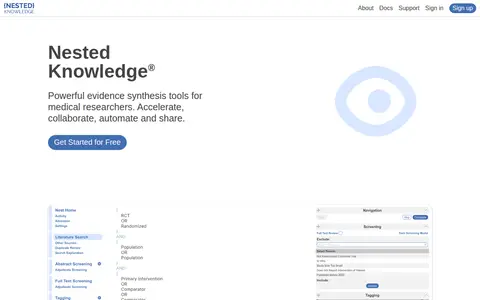
Bringing Systematic Review to Life.