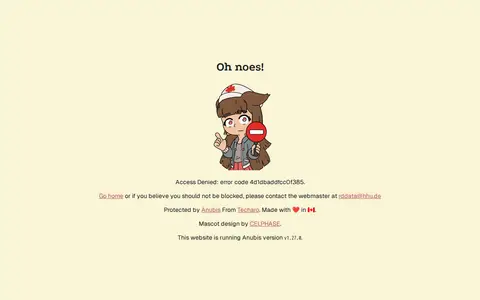
The HHU ResearchData website displays an Anubis bot verification page that uses a proof-of-work challenge to block automated scraping. This placeholder solution, set up by the site administrator to protect server resources from aggressive scraping while more permanent detection methods are developed, can cause temporary downtime that renders the site's resources inaccessible for all users.
Directory
Search results
Published directory entries matching your search.
Search computer data collections and supporting datasets from EEC.
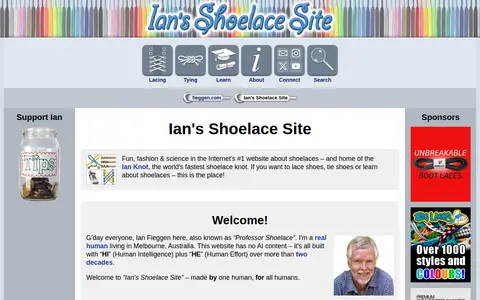
Ian's Shoelace Site is a website about shoelaces, covering shoe lacing methods, shoelace knots and shoelace construction. It includes step-by-step lacing tutorials, an interactive lacing designer and pages on lengths and tips.
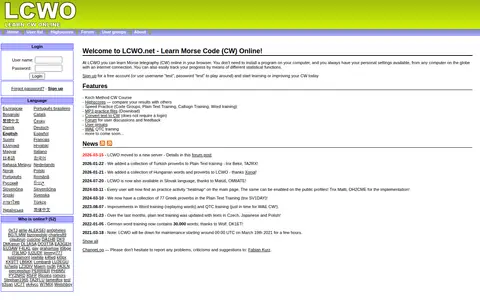
LCWO (Learn CW Online) is a free web app for learning Morse code in a browser, without installing a program. It offers a Koch Method course, speed practice with code groups and text, MP3 practice files, and text-to-CW conversion. Accounts allow users to track progress through statistical functions.
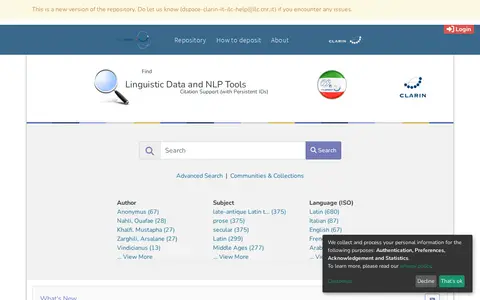
ILC-CNR for CLARIN-IT repository is a platform for linguistic data and NLP tools. It allows free and safe deposit with choice of license, encouraging open licenses. The repository supports discovery and citation, and hosts resources such as lexical databases.
STAR Voting describes a voting method in which voters score candidates from 0 up to 5 stars. The two highest scoring candidates become finalists, and an automatic runoff gives each ballot's full vote to the preferred finalist, with the finalist receiving the most votes winning. The page presents the approach and its stated rationale.
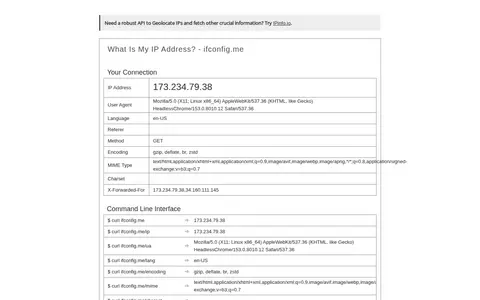
IP Lookup at ifconfig.me displays the visitor's IP address along with connection details such as user agent, language, referer, method, encoding, MIME type, charset and X-Forwarded-For. It also offers a command line interface for retrieving this information via curl.
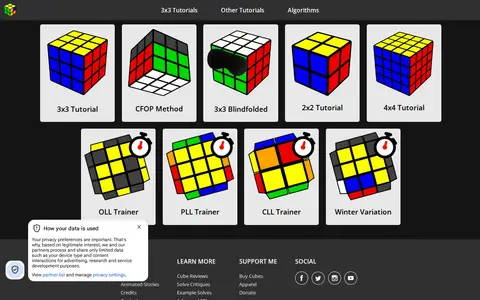
J Perm is a speedcubing tutorial site offering guides for solving 3x3, 2x2 and 4x4 cubes, including the CFOP method, blindfolded solving and one-handed techniques. It also provides algorithm trainers and sections on cube reviews, example solves and F2L algorithms.
OSINT blog and resource site covering investigative methods, tools, privacy, and research workflows.
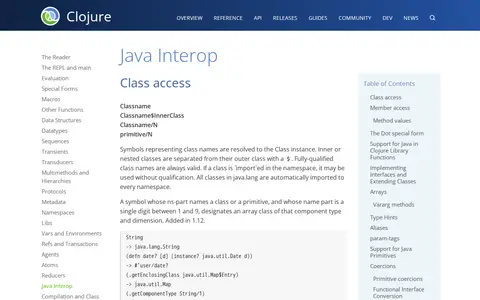
A reference page in the Clojure documentation covering Java interop, including class access, member access, the dot special form, implementing interfaces and extending classes, arrays, vararg methods and type hints.
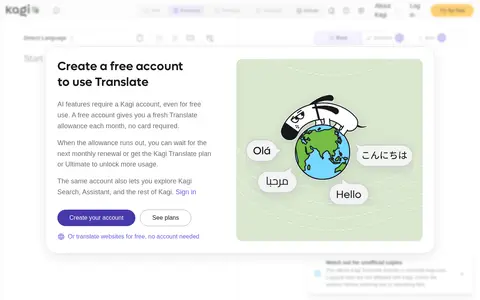
AI-powered translation and proofreading tool that is part of Kagi Translate. Free Kagi accounts receive a monthly translation allowance with no payment method required, while website translation is available for free without an account. The service is connected to Kagi Search, Assistant, and other Kagi platform features.
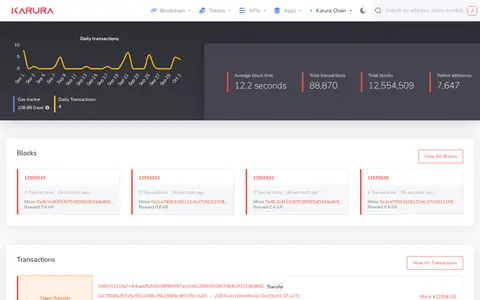
Karura Chain Explorer is a BlockScout instance providing analytics data, API and smart contract tools for the Karura Chain. It displays blocks, transactions, a gas tracker, daily transactions, average block time, total transactions and blocks, and wallet addresses. API documentation covers Etherscan-compatible account, log, token, stats, block, contract and transaction modules, and a separate Ethereum RPC API supports some methods.
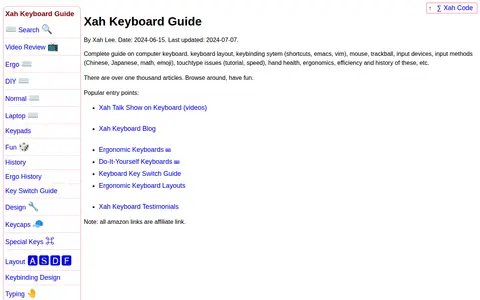
A collection of articles on computer keyboards, including keyboard layouts, keybinding systems, input devices and input methods. The page describes itself as a complete guide with over one thousand articles and lists popular entry points such as ergonomic keyboards and a key switch guide.
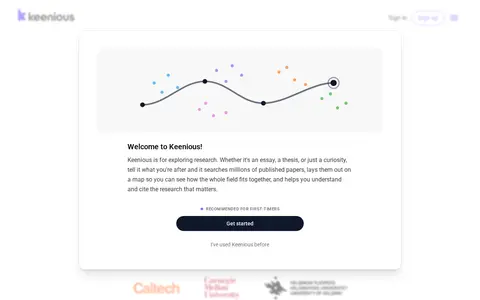
Keenious is an AI-assisted tool for exploring published academic research. It searches about 177M publications, groups results into research areas on a map, and explains unfamiliar terms, methods, and statistics beside the paper. It also translates studies published in other languages. The source states it does not write essays, paragraphs, or assignment outlines.
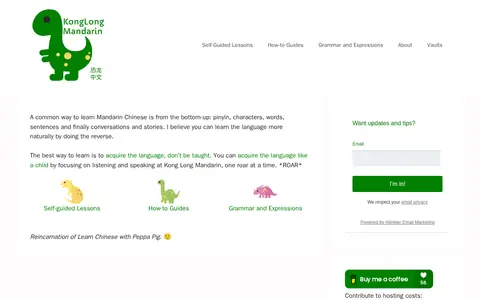
Kong Long Mandarin offers a method for learning Mandarin Chinese by focusing on listening and speaking, acquiring the language naturally like a child. The site provides self-guided lessons, how-to guides, and grammar and expressions.
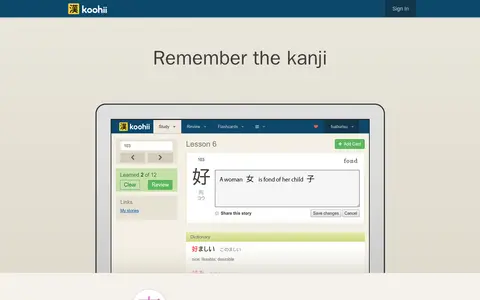
Kanji Koohii is a free website for studying Japanese characters with James Heisig's "Remembering the Kanji" method. It offers kanji mnemonics, a dictionary that highlights words using only learned kanji, and built-in flashcards with spaced repetition, reviewable on desktop and mobile.
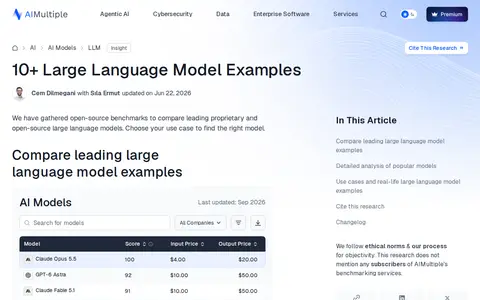
This webpage provides a curated list of large language model examples, alongside insights on business adoption, language model training, and influential models. It includes comparative analysis of leading LLMs such as OpenAI’s GPT-5, Claude 4.6, Gemini, DeepSeek-R1, Qwen, Llama 4, and xAI Grok-4 and Grok-4.1.
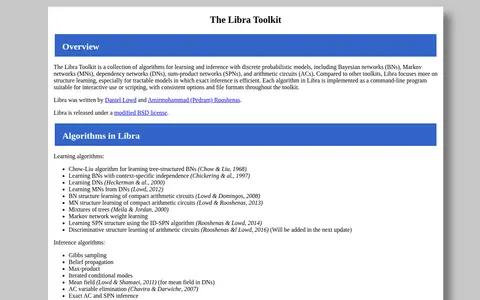
The Libra Toolkit is a collection of algorithms for learning and inference with discrete probabilistic models, including Bayesian networks, Markov networks, dependency networks, sum-product networks and arithmetic circuits. Each algorithm is implemented as a command-line program with consistent options and file formats, and all methods are written in OCaml.
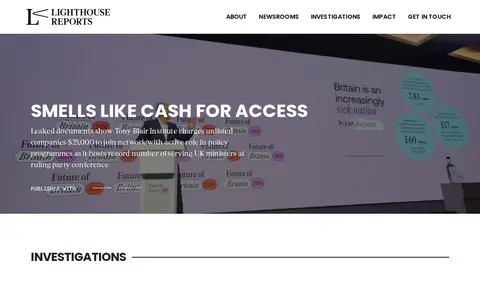
Lighthouse Reports is a non-profit based in the Netherlands that leads complex transnational investigations. It blends traditional investigative journalism methods such as freedom of information requests with emerging techniques like open source investigation and data science, and works with media partners to publish public interest journalism.
Searches Telegram channels and public posts, with a blog covering Telegram discovery methods.
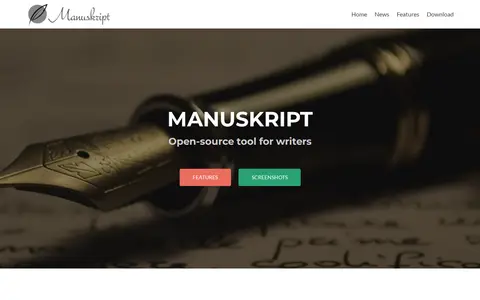
Manuskript is an open-source writing tool for writers. It offers an outliner for organizing thoughts hierarchically, a distraction-free mode with word-count or time goals, and a novel assistant that uses the snowflake method. It includes tools for characters, plots and world-building. The page states the software is still in development and in need of extensive testing.

The MCHF/MCDHF Database is a NIST collection of transition data from relativistic theories computed by different computational methods. The Landé gJ factor is provided for a few collections. Data is accessed by selecting an element from the periodic table, then a spectrum, a reference number, and a property. Atomic structure codes used in the calculations, including HFFortran95, ATSP, ATSP2K and GRASP2K, are available for download.
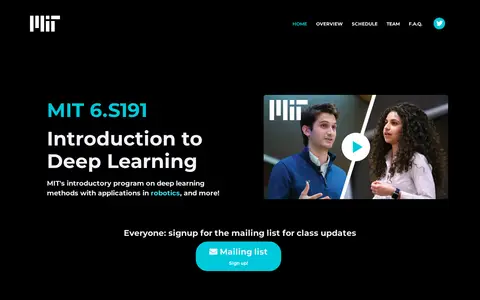

MIT 6.S191 is MIT's introductory program on deep learning methods, with applications in vision, robotics, medicine, language, game play, art and more. It is described as a high-intensity bootcamp teaching deep learning fundamentals, with lectures, software labs and a final project proposal competition. Prerequisites assume calculus and linear algebra.
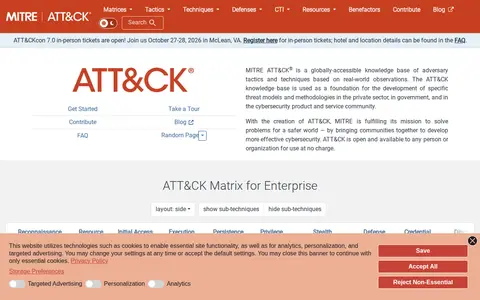
MITRE ATT&CK is a knowledge base of adversary tactics and techniques based on real-world observations. It is used as a foundation for threat models and methodologies in the private sector, government and cybersecurity community, and is available for use at no charge.