
llm-stats.com
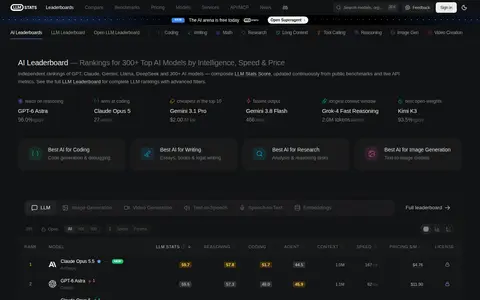
LLM Stats is an AI leaderboard that ranks GPT, Claude, Gemini, Llama, DeepSeek and more than 300 AI models by intelligence, speed and price. Scores are computed from public benchmarks and live API metrics.
Directory
Published directory entries matching your search.
LLM Stats is an AI leaderboard that ranks GPT, Claude, Gemini, Llama, DeepSeek and more than 300 AI models by intelligence, speed and price. Scores are computed from public benchmarks and live API metrics.
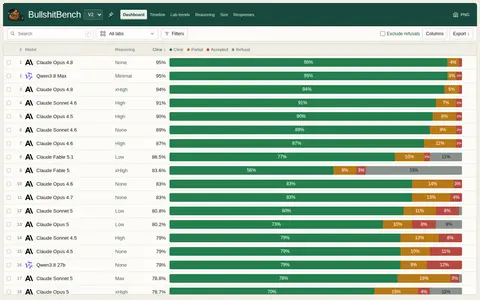
LLMs Bullshit Benchmark provides machine-learning models, research, training resources, or evaluation tools.

Locally Uncensored provides machine-learning models, research, training resources, or evaluation tools.

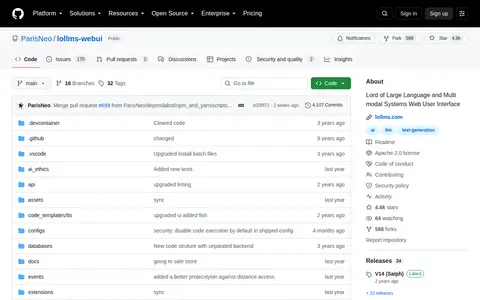
LoLLMs WebUI is a web user interface for large language and multimodal systems. The repository describes it as a local, single-user webui with multi models and modal support, providing an interface to access and utilize various LLM and other AI models.

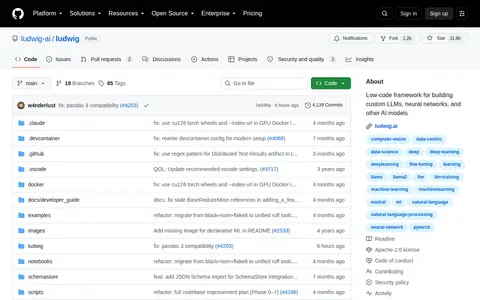
Ludwig is a low-code framework for building custom large language models, neural networks, and other AI models. The project's repository includes introductory documentation, release notes for version 0.16, installation guides, quick start materials, and resources for instruction fine-tuning of LLMs.

Meituan Long Cat provides machine-learning models, research, training resources, or evaluation tools.

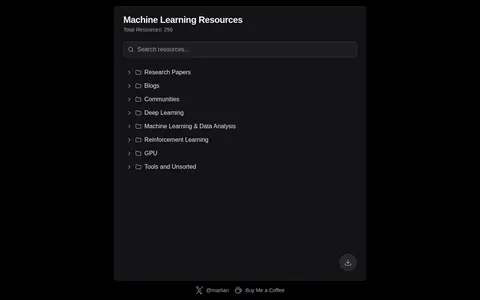
ML Resources supports machine learning models, deployment, inspection, datasets, or AI development workflows.

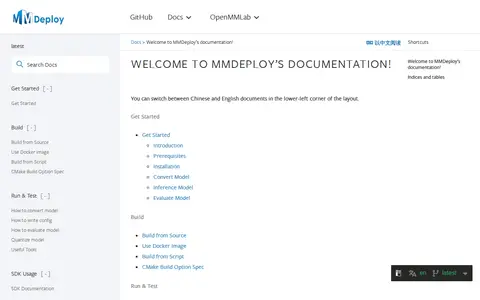
MMDeploy is documented at version 1.3.1 and covers getting started, converting, running, evaluating and quantizing models, building from source or Docker image, and SDK usage. Its backend support pages describe ncnn, ONNX Runtime, OpenVINO, PPLNN, SNPE, TensorRT, TorchScript, RKNN, TVM and Core ML, and its codebase support covers several OpenMMLab projects.

NuExtract 2.0 is a document information extraction model developed by NuMind. NuMind builds frontier multimodal large language models that convert documents into structured JSON and clean Markdown, available via SaaS or private enterprise deployment. The models are specialized for document extraction and deployed in industries including insurance, banking, and healthcare; for example, AXA increased its extraction accuracy from 30% to 97% after switching to NuExtract.

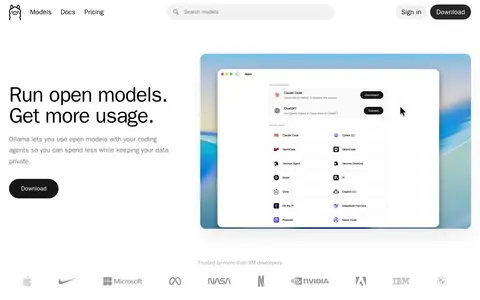
Ollama is a tool for running and building with open AI models locally or in the cloud on macOS, Windows and Linux. Its pricing page lists Free, Pro, Max, Team and Enterprise subscription plans, with paid plans including usage credits and cloud model access. The Free plan includes running models locally and starter usage credits.

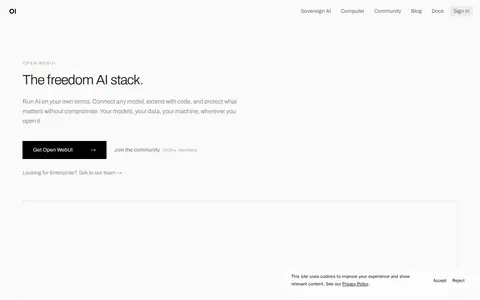
Open WebUI is a self-hosted AI interface for running AI on the user's own hardware. It connects to local or cloud models including Ollama, OpenAI, Anthropic, or compatible services, and can be extended with Python. The project offers community-shared prompts, models, tools, and functions, and lists deployment options including on-premises or air-gapped setups. Installation can be done with a pip command.

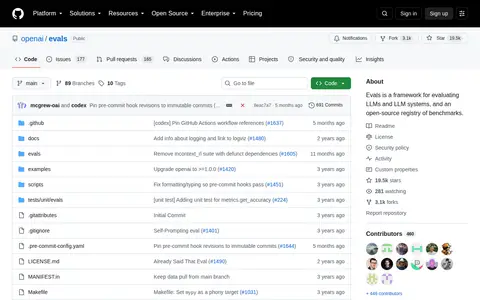
Evals is a framework for evaluating large language models and systems built using LLMs. It offers an existing registry of evals to test different dimensions of OpenAI models and the ability to write custom evals. It is available as an open-source registry of benchmarks. Evals require an OpenAI API key.

OpenML supports machine learning models, deployment, inspection, datasets, or AI development workflows.

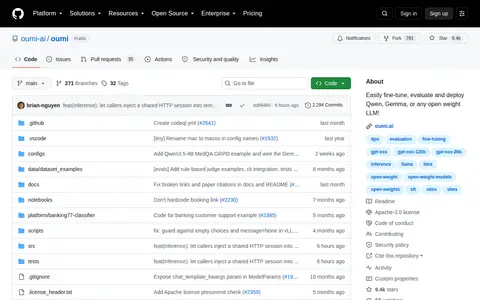
oumi-ai/oumi is a publicly available GitHub repository that provides tools and workflows for fine-tuning, evaluating, and deploying open-weight large language models, with support for models such as Qwen and Gemma.

Poolside AI provides machine-learning models, research, training resources, or evaluation tools.

Qwen is an AI project whose site lists models including Qwen3Guard, a safety guardrail model built on Qwen3 foundation models for detecting risk in prompts and responses. It also lists Qwen-Image-Edit, an image editing version of a 20B Qwen-Image model, and Qwen-MT, a translation model via Qwen API supporting 92 languages.
Sarvam provides machine-learning models, research, training resources, or evaluation tools.

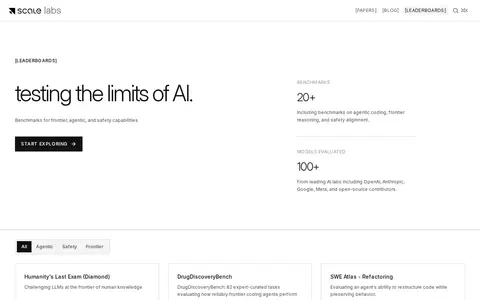
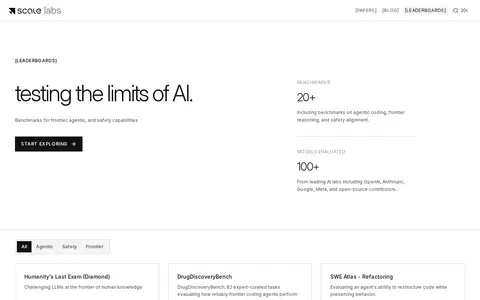
The SEAL LLM Leaderboard is a resource from Scale Labs that provides expert-driven benchmarks and updated rankings for large language models. It evaluates capabilities including agentic coding, frontier reasoning, and safety alignment, with over 20 benchmarks and assessments of more than 100 models from leading AI labs and open-source contributors.

SEAL LLM Leaderboards provides machine-learning models, research, training resources, or evaluation tools.

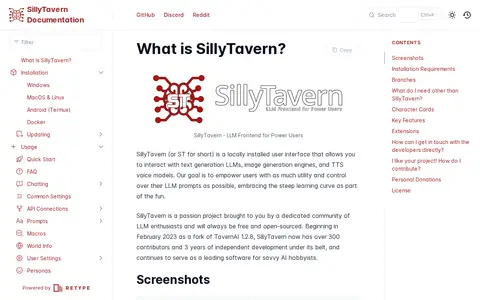
SillyTavern is a locally installed user interface for interacting with text generation LLMs, image generation engines and TTS voice models. It began in February 2023 as a fork of TavernAI 1.2.8 and is built around character cards, collections of prompts that set the behavior of the LLM. It is free and open-sourced.

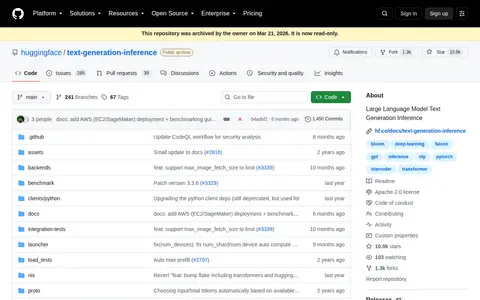
Text Generation Inference is a toolkit for deploying and serving large language models, implemented as a Rust, Python and gRPC server. It supports models including Llama, Falcon, StarCoder, BLOOM and GPT-NeoX, with features such as token streaming, continuous batching and quantization. The repository is archived, read-only, and in maintenance mode, with pull requests limited to minor bug fixes and maintenance.

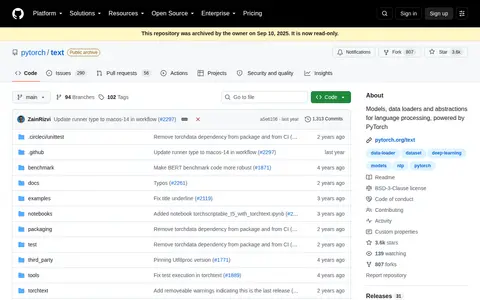
TorchText provides models, data loaders and abstractions for language processing, powered by PyTorch. The library includes dataset iterators, basic NLP building blocks, text-processing transformations, pre-trained models and vocabulary classes. The repository was archived by its owner on Sep 10, 2025, and is now read-only; development is stopped with 0.18 the last stable release.

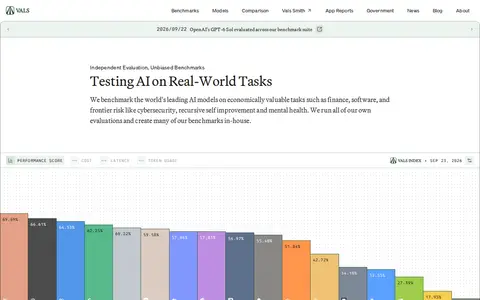
Vals AI provides machine-learning models, research, training resources, or evaluation tools.

VBench is a Hugging Face Space created by Vchitect that hosts a leaderboard for AI video generation models. Users can upload a zip file with their model's evaluation JSON files and provide details such as model name, link, team, and contact email. The application extracts the metrics and updates the benchmark leaderboard accordingly.