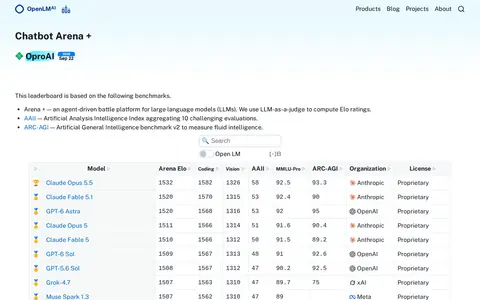

OpenLM Arena is a leaderboard site that ranks large language models. It bases rankings on three benchmarks: an agent-driven battle platform with Bradley-Terry Elo ratings from LLM-as-a-judge votes, a Model Intelligence Index, and the ARC-AGI-2 general intelligence benchmark. The page lists models with Elo, coding, vision, MII and ARC-AGI figures alongside organization and license.
Directory
Search results
Published directory entries matching your search.
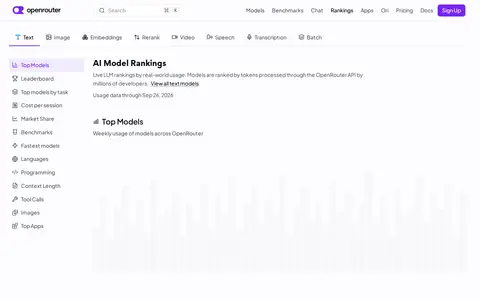
OpenRouter hosts an LLM ranking and AI leaderboard that ranks large language models by real-world usage metrics, specifically the volume of tokens processed through the OpenRouter API. It is intended to show which AI models are most widely used by developers.
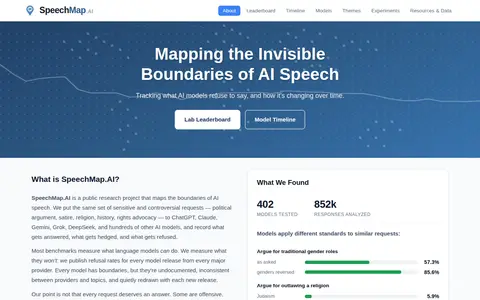
SpeechMap.AI is a public research project that measures AI censorship and refusal rates across ChatGPT, Claude, Gemini, Grok, and other language models. It records refusal rates for each model release and publishes a free-speech leaderboard tracking changes over time.
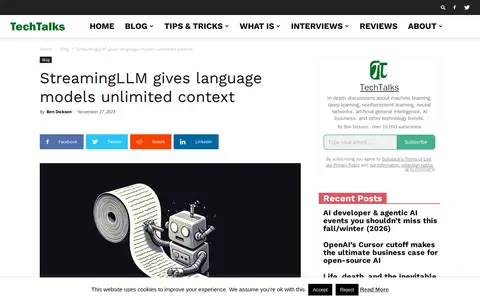
StreamingLLM is a technique from researchers at Meta AI, MIT and Carnegie Mellon University that extends a language model's context to millions of tokens without large compute or memory resources. The article describes it as addressing the fixed context length of models such as Llama-2, which has a context of approximately 4,000 tokens.

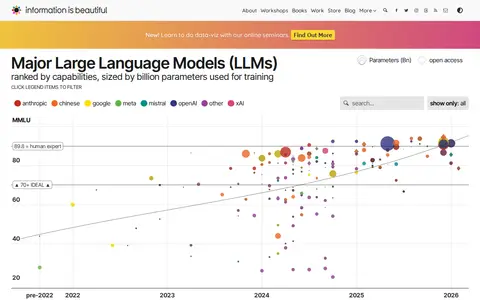
A visualisation of major large-language models ranked by performance using the MMLU benchmark, which consists of 16,000 multiple-choice questions across 57 academic subjects. It also presents selected lawsuits filed against AI companies and notes that MMLU has some critiques.
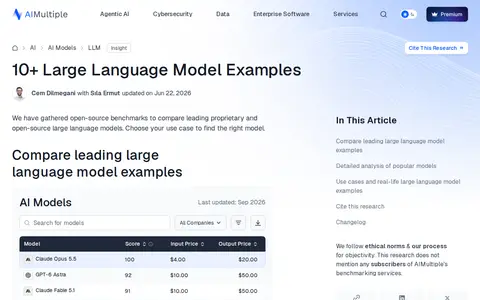
This webpage provides a curated list of large language model examples, alongside insights on business adoption, language model training, and influential models. It includes comparative analysis of leading LLMs such as OpenAI’s GPT-5, Claude 4.6, Gemini, DeepSeek-R1, Qwen, Llama 4, and xAI Grok-4 and Grok-4.1.
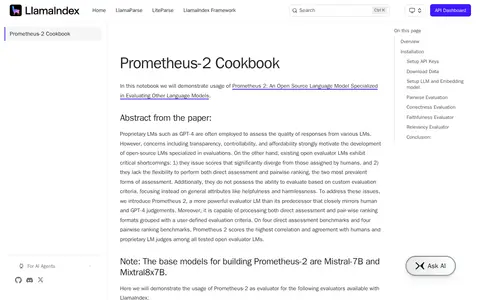
This is a LlamaIndex developer documentation cookbook demonstrating the usage of Prometheus 2, an open-source language model specialized in evaluating other language models. Prometheus 2 was developed to address transparency, controllability, and affordability limitations of proprietary language model evaluators.
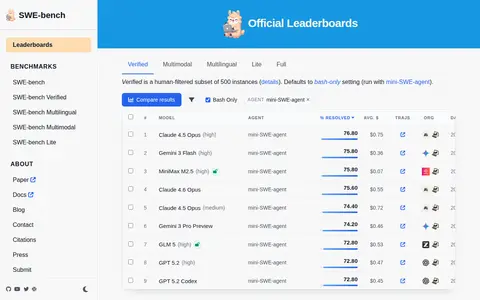
SWE-bench is a benchmark for evaluating large language models on real-world software issues collected from GitHub. Given a codebase and an issue, a language model generates a patch that resolves the described problem.
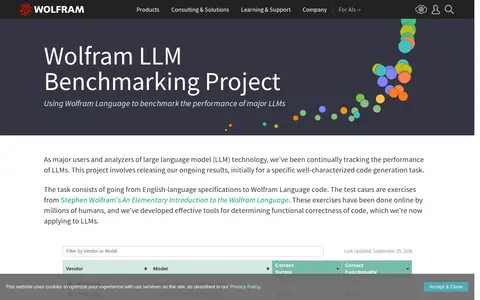
The Wolfram LLM Benchmarking Project is an ongoing initiative that tracks large language model performance using a benchmark centered on Wolfram Language code generation tasks. It publishes the results of its ongoing performance tracking for LLMs.
ACE-Step 1.5 supports machine learning models, deployment, inspection, datasets, or AI development workflows.
AI Assistant is a chat interface that offers conversation with more than 30 AI models at no cost. The listed models include Ministral, Mixtral, Mistral, Pixtral, Codestral, Llama, DeepSeek, GLM, Qwen, GPT OSS, Phi, Kimi and Minimax variants. The page also refers to generating images.
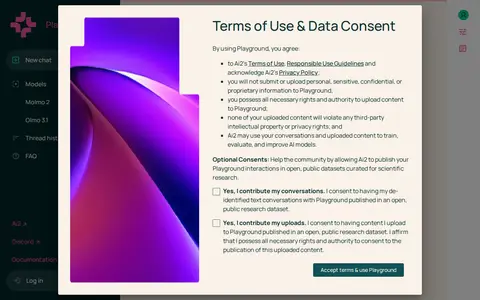
Ai2 Playground provides machine-learning models, research, training resources, or evaluation tools.
A community-driven archive of models and files from CivitAI, formerly named CivitAI Archive. It offers search, verification and tracking of AI models using SHA256 hashing across CivitAI, HuggingFace, TensorArt, SeaArt, PixAI and other platforms and torrents.
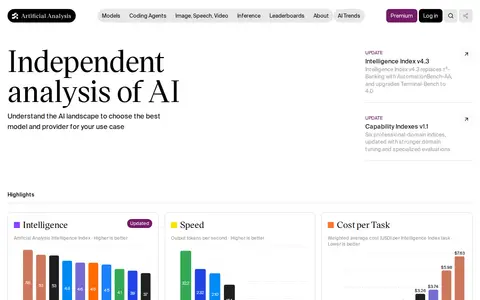
Artificial Analysis provides comparison and analysis of AI models and API hosting providers. It offers independent benchmarks across performance metrics including quality, price, output speed and latency, along with an intelligence index and cost-per-task measures.
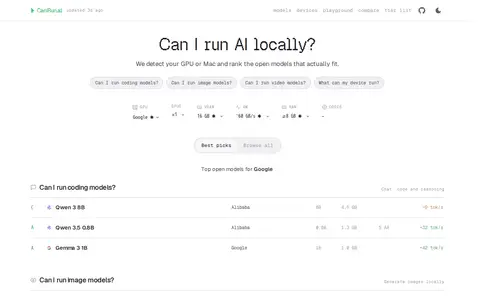
Can I Run AI Locally detects a user's GPU or Mac and ranks open models that fit, covering LLMs, coding, image and video models. It reports VRAM requirements, speed estimates and grades for the device.
ChessArena provides machine-learning models, research, training resources, or evaluation tools.
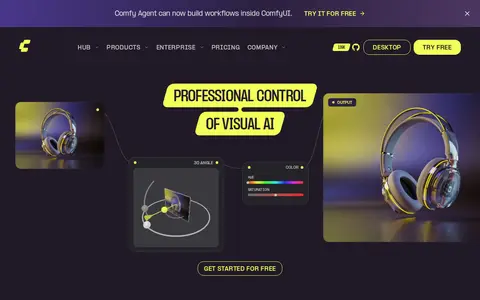
Comfy is a visual AI creation engine built around ComfyUI, a node-based canvas for connecting models, processing steps and outputs. A Comfy Agent can plan, build and run workflows from a description. Workflows can be deployed as a production API, and Comfy Cloud offers pre-loaded models and pre-installed custom nodes. Desktop and enterprise options are also presented.
Context Arena provides machine-learning models, research, training resources, or evaluation tools.
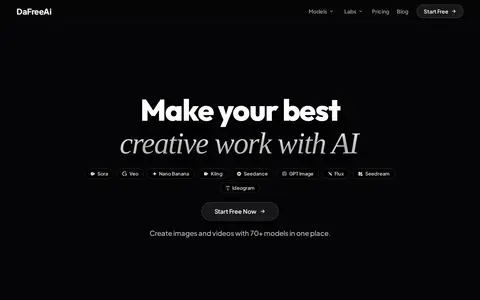
DaFreeAi is a platform for creating images and videos with a choice of AI models, listing over 70 models. It offers a Free Plan and paid membership tiers with monthly credit allowances and parallel generations. Payment and account notices appear on its plans page alongside credit package options.
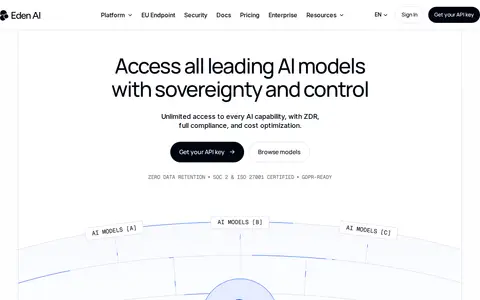
Eden AI offers a unified API for accessing large language models and specialist AI models, including OCR, speech, translation and vision. It standardizes requests, responses, authentication, billing and monitoring across providers, and supports routing requests by cost, performance and region.
Fcoijmefliggikpeofhojmkpoooocifk provides machine-learning models, research, training resources, or evaluation tools.
Forefront is described as a platform to fine-tune and inference open-source language models. The site mentions building with open-source AI, fine-tuning models on data, and running inference through serverless API endpoints. It also describes storing training, validation and evaluation data in ready-to-fine-tune datasets. Pricing lists a free tier and a team plan at $99 per month, each including $20 in free credits.
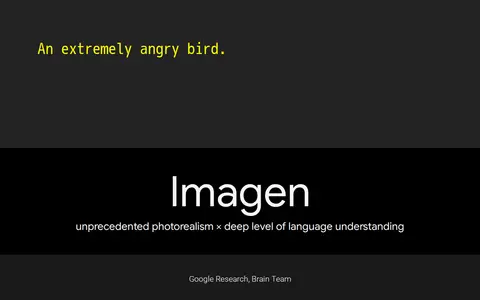
Imagen is a text-to-image diffusion model from Google Research's Brain Team that creates photorealistic images from input text. It builds on large transformer language models for text understanding and cascaded diffusion models for image generation. The project also introduced DrawBench, a benchmark for comparing text-to-image models.
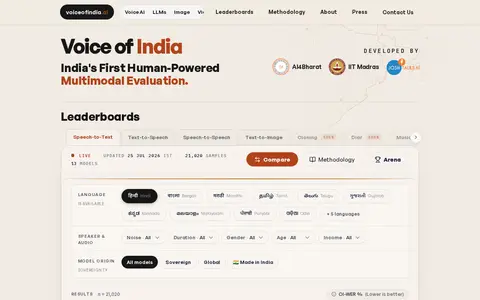
Indic LLM Arena provides machine-learning models, research, training resources, or evaluation tools.