
Hypotenuse AI is an AI-first Product Experience Management platform for ecommerce that enriches and governs product information, generates on-brand content, and perfects catalog images. It offers AI auto-enrichment of product attributes, bulk generation of product descriptions, and AI enhancement of catalog images. It also provides AI agents for product content tasks and an AI product attribute mapping tool.
Directory
Search results
Published directory entries matching your search.
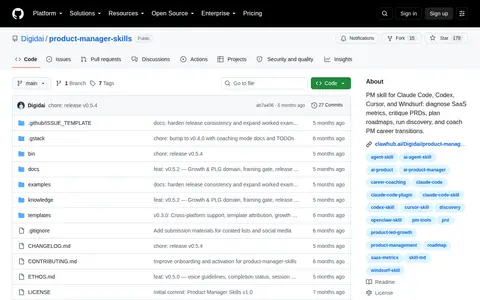
Product Manager Skills is an open-source resource hosted on GitHub, created for use with AI coding tools including Claude Code, Codex, Cursor, and Windsurf. It provides support for product management tasks such as diagnosing SaaS metrics, critiquing product requirement documents, planning product roadmaps, running discovery work, and coaching product managers through career transitions.
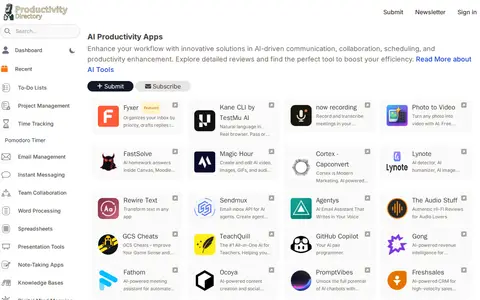
AI for Productivity is a directory that catalogs and reviews 42 AI-powered productivity tools and software for 2024. It covers categories including project management, time tracking, email management, team collaboration, note-taking, workflow automation, and AI agents, to help users find tools that improve their workflow efficiency.
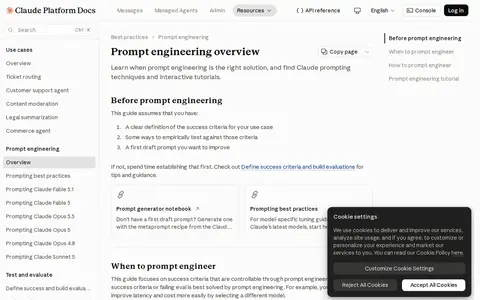
Anthropic Prompt Engineering documentation on the Claude Platform provides an overview of prompt engineering. It explains when prompt engineering is appropriate, presents Claude prompting techniques, and includes interactive tutorials for developers.
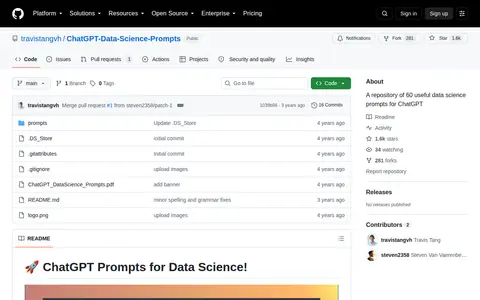
ChatGPT Prompts for Data Science is a GitHub repository containing 60 useful prompts for data science tasks. It includes prompts for writing Python code, automatic machine learning, and other data science workflows.
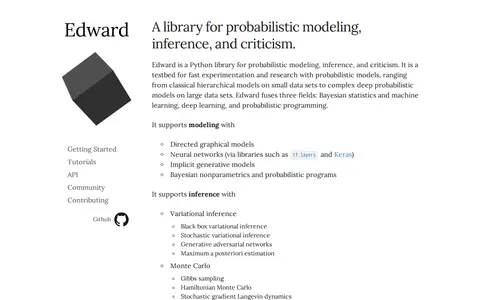
Edward is a Python library for probabilistic modeling, inference, and criticism. It is a testbed for experimentation and research with probabilistic models, from hierarchical models on small data sets to deep probabilistic models on large data sets. It fuses Bayesian statistics and machine learning, deep learning, and probabilistic programming, and is built on TensorFlow.
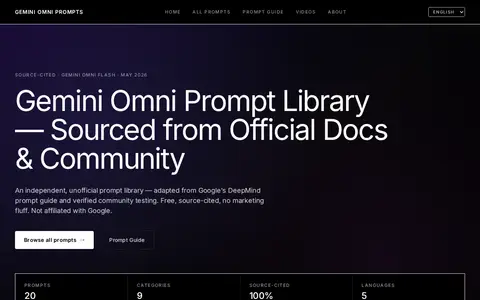
Gemini Omni Prompts is an independent, unofficial library of prompts for Gemini Omni, a multimodal generative model launched at Google I/O 2026. Prompts are adapted from official documentation and community testing, with cited sources and live video tests; the site states it is not affiliated with Google.
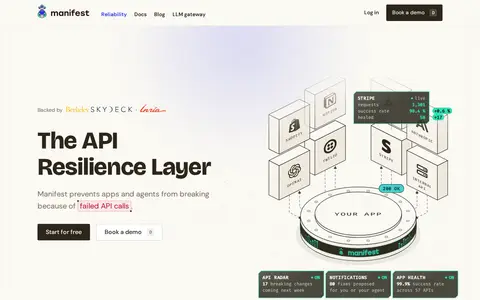
manifest.build is an open source LLM router for AI agents and related tools. It connects AI agents and harnesses to any provider in seconds, supporting subscription, pay-per-token, local model and custom provider options. The tool offers features including model fallbacks, full request logging, autofix for broken provider calls, an LLM gateway for centralized provider management, and observability tools for tracking usage, reliability and costs. The software is open source, allowing users to self-host it or contribute to its development.
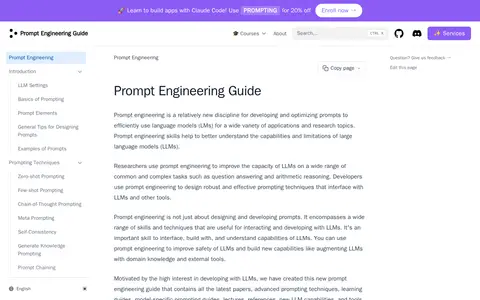
A guide to prompt engineering that collects papers, advanced prompting techniques, learning guides, model-specific guides, lectures, references, new LLM capabilities, and tools related to prompt engineering. It describes prompt engineering as a discipline for developing and optimizing prompts to use language models across applications and research topics, and offers courses on prompting and building AI agents.
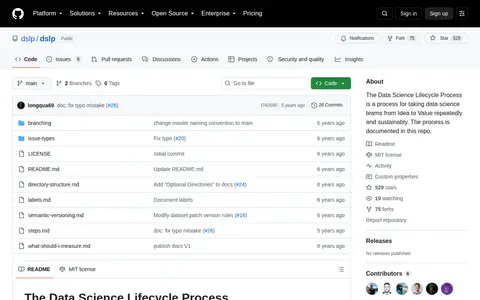
The Data Science Lifecycle Process is a repeatable, sustainable process for guiding data science teams from initial idea to delivered value. The process is fully documented in the public GitHub repository dslp/dslp.
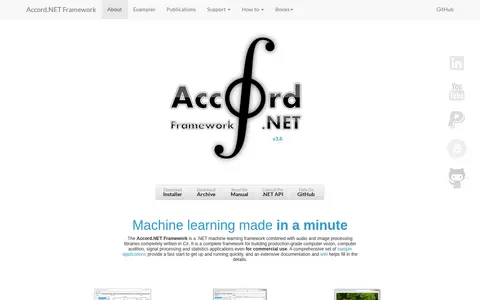
Accord.NET is a .NET machine learning framework combined with audio and image processing libraries written in C#. It covers classification, regression, clustering, distributions, hypothesis tests and kernel methods, with imaging and signal processing components. The framework is intended for building computer vision, audition, signal processing and statistics applications, including commercial use. It offers sample applications, documentation and a wiki.
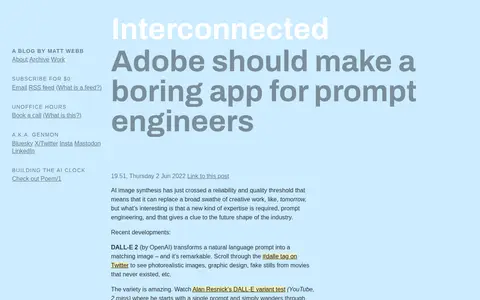
A blog post by Matt Webb arguing that Adobe should make a boring app for prompt engineers. It discusses AI image synthesis tools like DALL-E 2, Imagen, and Midjourney, noting that prompt engineering is a new kind of expertise. The post describes Midjourney's Discord-only interface during its beta.
Aider is an AI pair programming tool that runs in the terminal and works with cloud and local LLMs. It maps the codebase, supports more than 100 code languages, and integrates with Git to automatically commit changes. It can also run in an IDE and accept voice-to-code instructions.
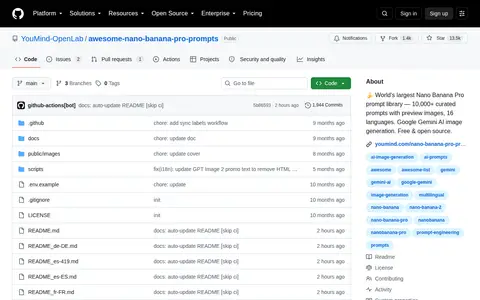
Awesome Nano Banana Pro Prompts is a free, open source GitHub repository maintained by YouMind-OpenLab. It hosts over 10,000 curated Nano Banana Pro prompts paired with preview images, supports 16 languages, and is designed for use with Google Gemini AI image generation.
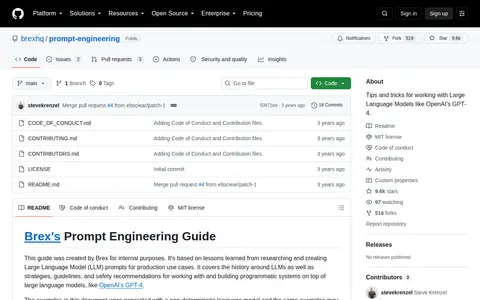
brexhq/prompt-engineering is a GitHub repository containing Brex's Prompt Engineering Guide. It provides tips and tricks for working with Large Language Models such as OpenAI's GPT-4, with content covering the definition of large language models, an incomplete history of language models, and the concept of prompts.
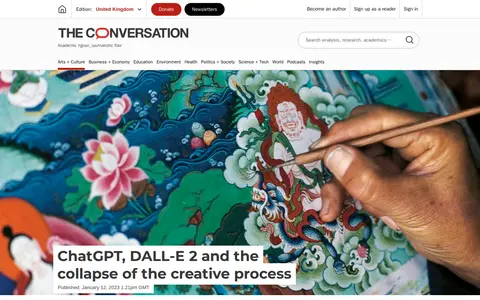
This is an academic analysis article published on The Conversation titled 'ChatGPT, DALL-E 2 and the collapse of the creative process'. It argues that the focus of these AI tools on the framing of artistic tasks fetishizes the creative moment and devalues the work required to develop an idea into a finished creative work.
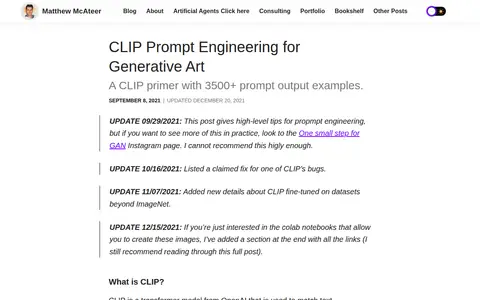
A blog post explaining CLIP, a transformer model from OpenAI that matches text embeddings with image embeddings. It offers high-level prompt engineering tips for generative art and includes over 3500 prompt output examples, along with a section of Colab notebook links.
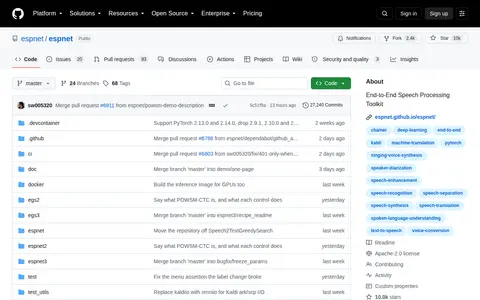
EspNet is an end-to-end speech processing toolkit hosted on GitHub. It is open-source software designed for speech processing tasks, with repository documentation covering installation steps, quick start guidance, and details of supported processing tasks. Contributors can participate in its development via the GitHub platform.
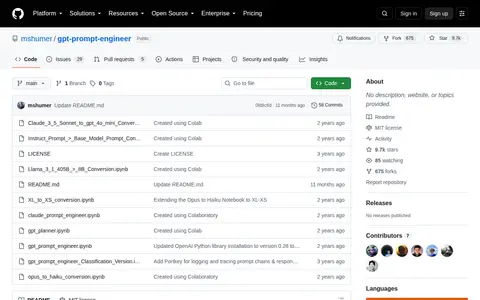
GPT Prompt Engineer is an open-source tool hosted on the mshumer GitHub repository. It includes versions optimized for different language models such as Claude 3 Opus and a Claude 3 Opus to Haiku conversion version, and offers features for prompt engineering tasks.
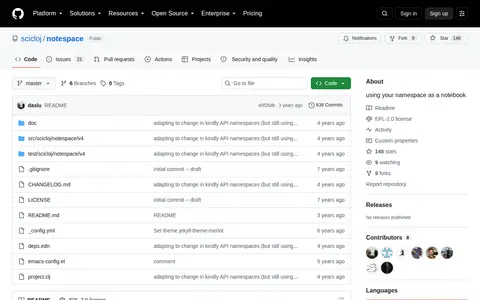
notespace is an open source project hosted as a public repository on GitHub under the scicloj/notespace project. It is designed to enable users to use their namespace as a notebook. The project invites contributions from developers.
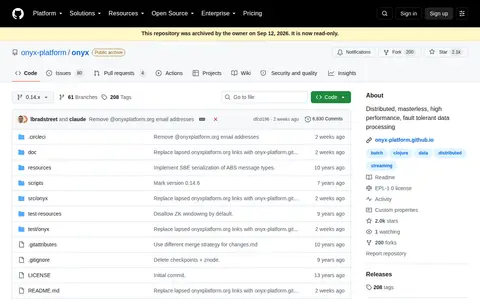
Onyx is a distributed, masterless data processing system written in pure Clojure, with a batch and stream hybrid processing model. The repository is archived and read-only. Listed uses include realtime event stream processing, extract, transform, load, and data cleaning.
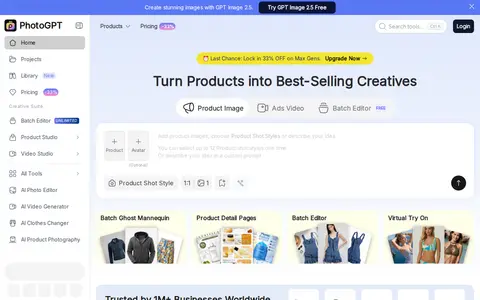

PhotoGPT creates ecommerce images, product ads and marketing visuals with AI, generating lifestyle shots, AI models and listing assets. Tools include AI product photography, ad clone, product detail pages and virtual try on. The Starter plan is listed at $10 per month billed annually at $96 per year with 500 credits per month.
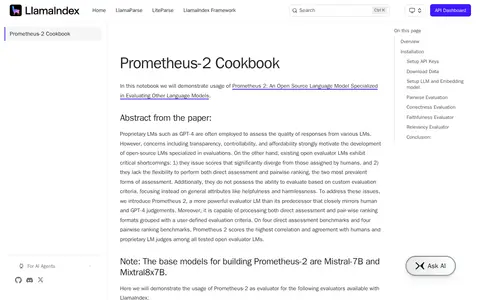
This is a LlamaIndex developer documentation cookbook demonstrating the usage of Prometheus 2, an open-source language model specialized in evaluating other language models. Prometheus 2 was developed to address transparency, controllability, and affordability limitations of proprietary language model evaluators.
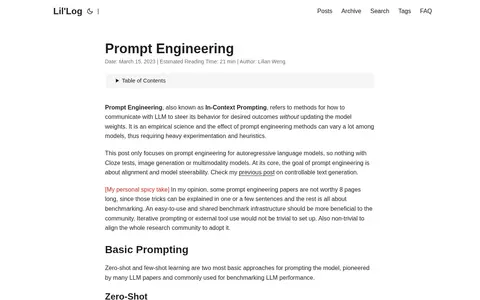
Prompt Engineering Lil'Log is a blog post focused on prompt engineering for autoregressive language models. It covers methods to steer large language model behavior without updating model weights, including zero-shot prompting, few-shot prompting, and chain-of-thought prompting.