

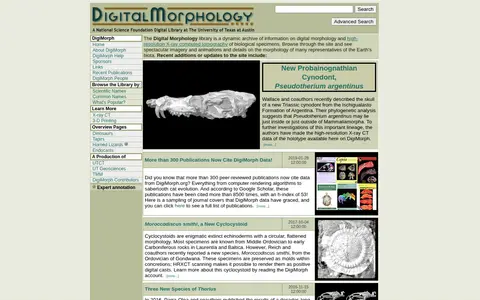
DigiMorph is a digital library at the University of Texas focused on the skull and skeleton, from fossils to embryos and adults of living species. It provides slice-by-slice animations, animated volumetric and 3D surface renderings, references and archival museum data for each specimen, and it serves as an archive of high-resolution X-ray computed tomography of biological specimens.
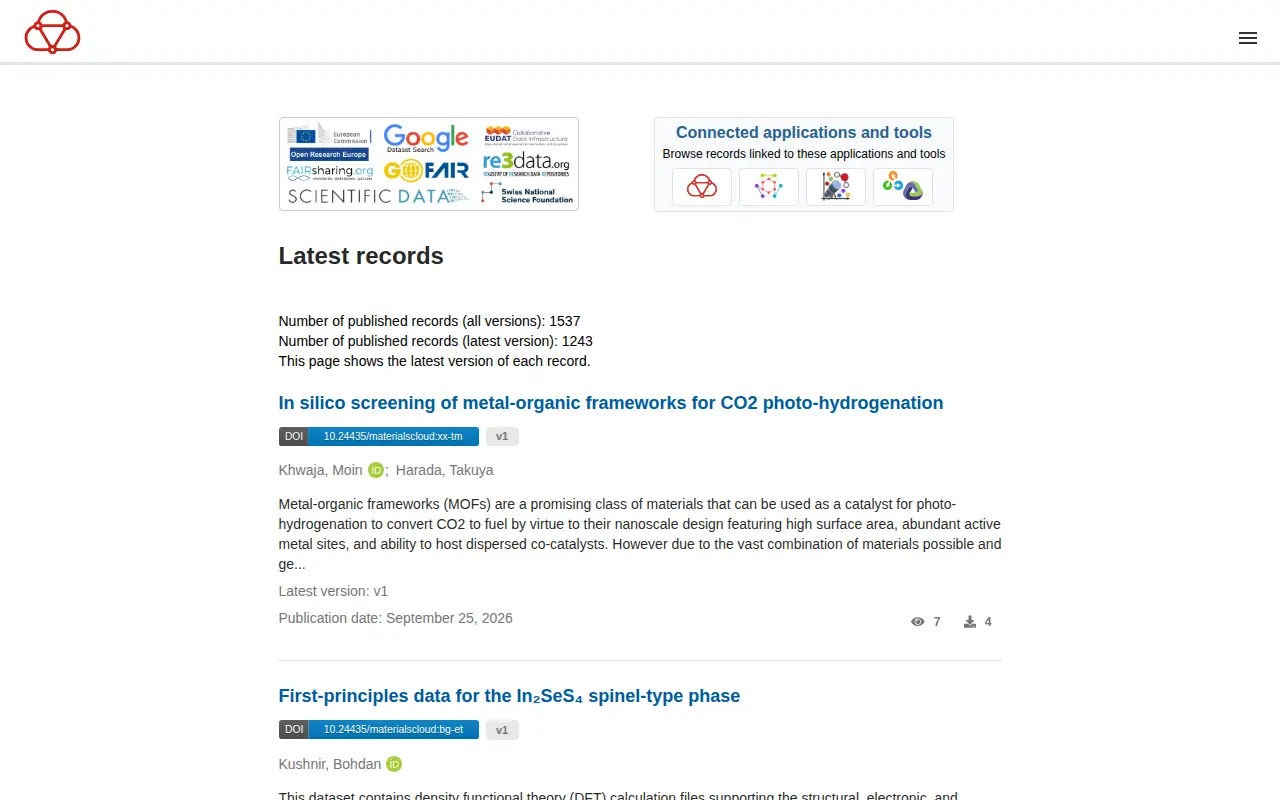
Materials Cloud Archive
Materials Cloud Archive is a moderated repository. Submitted records are reviewed by Materials Cloud moderators before publication. Registered users get a personal work area for storing and tracking submitted records, creating new versions and changing references and keywords. DOIs are registered when a record is created and become active when the record is published.
Limitations
- total size of files per record is 5 GB Source: archive.materialscloud.org
- 50 GB for AiiDA databases Source: archive.materialscloud.org
Links
Tags
-
0DigiMorph is a digital library at the University of Texas focused on the skull and skeleton, from fossils to embryos and adults of living species. It provides slice-by-slice animations, animated volumetric and 3D surface renderings, references and archival museum data for each specimen, and it serves as an archive of high-resolution X-ray computed tomography of biological specimens.
-
0The Climate Analysis Section Data Catalog was a resource for climate data from the Climate Analysis Section. The catalog has been archived in favor of the Climate Data Guide, which now serves as the place to view its datasets.
-
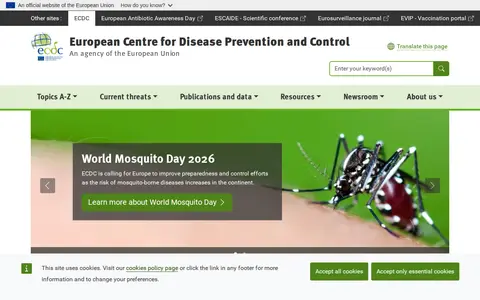
0ECDC collects, analyses and shares data on over 50 infectious disease topics. Its experts assess risks to Europe and give guidance to help countries prevent and respond to outbreaks and public health threats. The site publishes updates, surveillance reports and assessments.
-
0
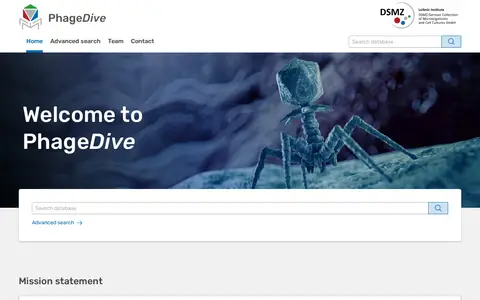
PhageDive is a database for bacteriophages and archaeal viruses, built on the BacDive model. It gathers and links experimental data and metadata for viruses held in culture collections, covering taxonomy, host strain, phage morphology, life cycle, origin and genomic data. An Advanced search supports queries such as finding phages that infect a given strain.
-
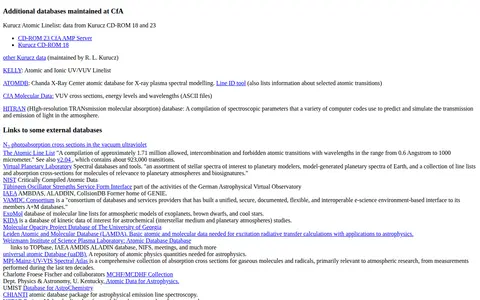
0The R. L. Kurucz atomic linelist is hosted among databases maintained at the CfA. The source describes it as data from Kurucz CD-ROM 18 and 23, with links to CD-ROM 23, the CfA AMP Server and CD-ROM 18. Other Kurucz data are maintained separately by R. L. Kurucz.
-
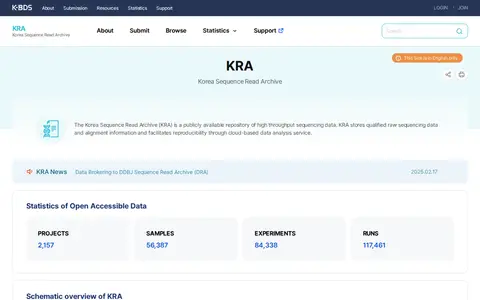
0The Korea Sequence Read Archive (KRA) is a publicly available repository of high throughput sequencing data. It stores qualified raw sequencing data and alignment information and facilitates reproducibility through a cloud-based data analysis service. The site states it is in English only, and news notes restrictions on duplicate data submissions and data brokering to the DDBJ Sequence Read Archive.
Community notes
Reviews and discussion
No reviews yet
Be the first to share how this project worked for you.
Join the discussion
Sign in with a verified account to leave a review or join the discussion.
Sign in to review