


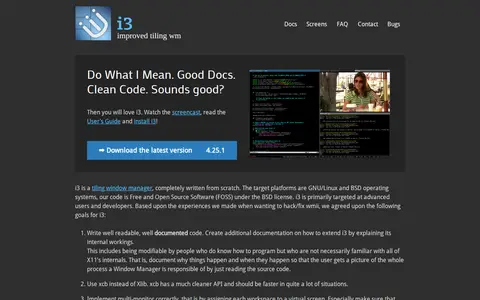
i3 is a tiling window manager written from scratch for GNU/Linux and BSD operating systems. Its source code is free and open source under the BSD license, and it is primarily targeted at advanced users and developers. The project uses libxcb instead of Xlib, supports Xinerama multi-monitor setups, and arranges windows with a tree structure. It also provides an IPC interface for other programs and documents its internal workings.
Awesome
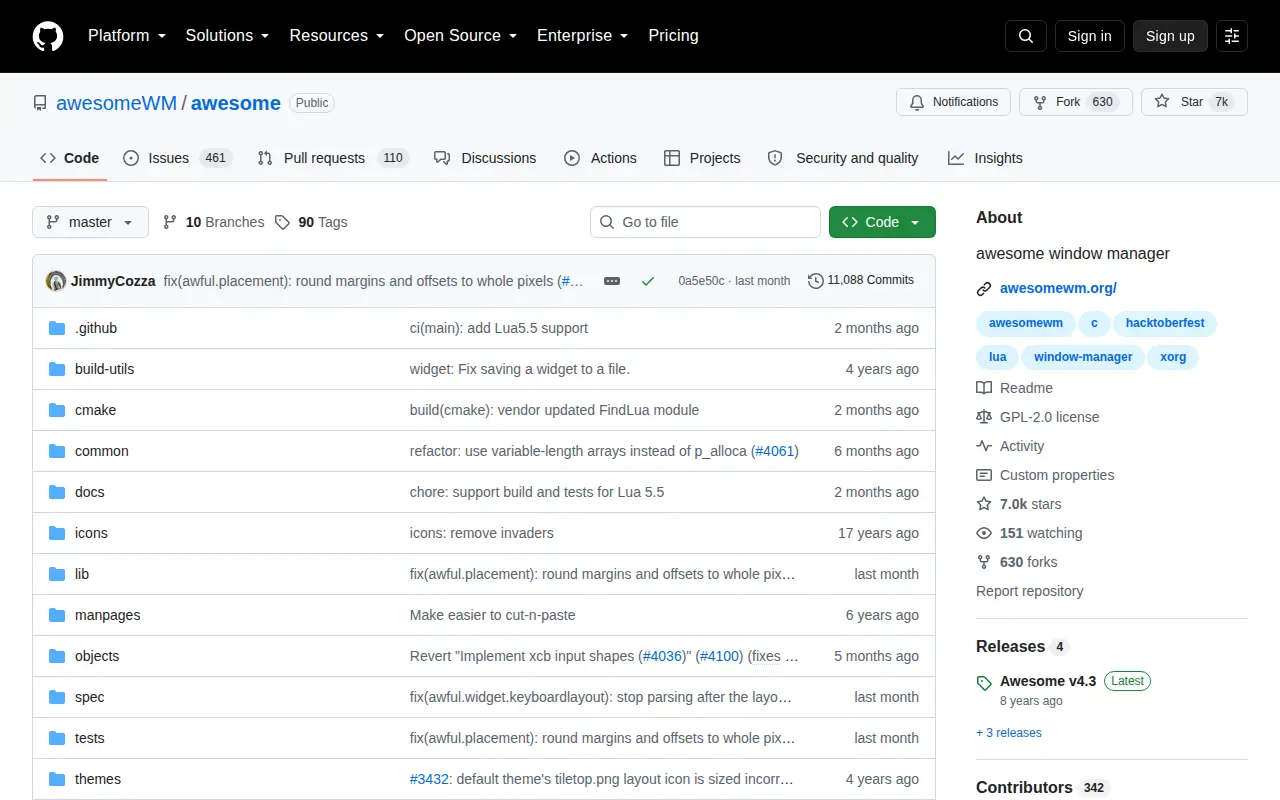
Awesome is a highly configurable window manager framework for X. It is configured through a Lua file, typically ~/.config/awesome/rc.lua, and an example configuration is provided in the source. It is built with make and installed to /usr/local by default, and can also be packaged as .deb or .rpm. The project is licensed under GPL-2.0.
Features
- highly configurable, next generation framework window manager for X Source: github.com
Platforms
- window manager for X Source: github.com
Links
Tags
-
0i3 is a tiling window manager written from scratch for GNU/Linux and BSD operating systems. Its source code is free and open source under the BSD license, and it is primarily targeted at advanced users and developers. The project uses libxcb instead of Xlib, supports Xinerama multi-monitor setups, and arranges windows with a tree structure. It also provides an IPC interface for other programs and documents its internal workings.
-
0
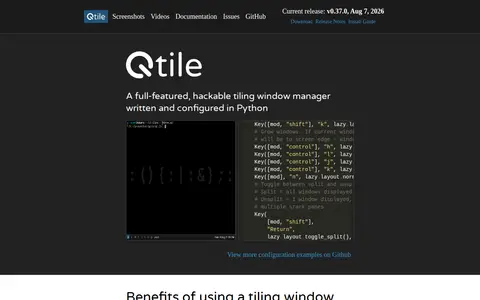
Qtile is a full-featured, hackable tiling window manager written and configured in Python. It defines key bindings, groups, layouts and widgets such as a bar and prompt in its configuration, and supports switching virtual terminals on Wayland.
-
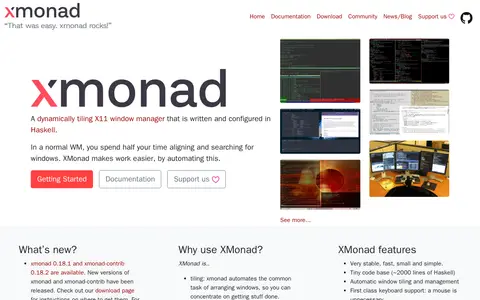
0xmonad is a dynamically tiling X11 window manager written and configured in Haskell. It automates arranging windows and provides keyboard-focused window management. The project offers an extension library, documentation, and support channels for configuration.
-
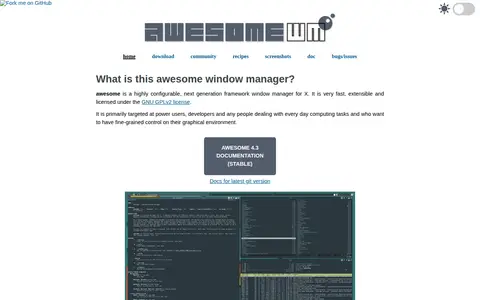
0awesome is a framework window manager for X, licensed under the GNU GPLv2 and targeted at power users and developers who want fine-grained control over their graphical environment. It is extensible using the Lua programming language and provides a documented API for configuring behavior. Features include keyboard-only operation and multihead support with per-screen tags.
-
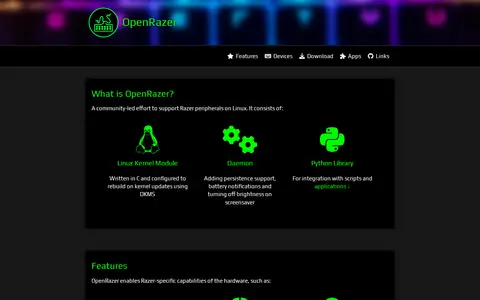
0OpenRazer is a community-led effort to support Razer peripherals on Linux, consisting of a Linux kernel module, a daemon and a Python library. It exposes hardware effects, device functions such as brightness and DPI, and addressable RGB lighting, and the driver is compatible with 232 Razer peripherals.
-
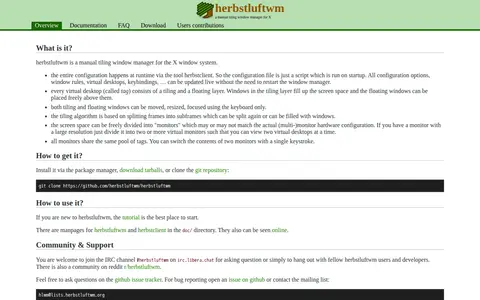
0herbstluftwm is a manual tiling window manager for the X window system. Configuration happens at runtime via the herbstclient tool, and settings, window rules, virtual desktops and keybindings can be updated live without restarting the window manager. Each virtual desktop, called a tag, consists of a tiling and a floating layer.
Community notes
Reviews and discussion
No reviews yet
Be the first to share how this project worked for you.
Join the discussion
Sign in with a verified account to leave a review or join the discussion.
Sign in to review