medium.datadriveninvestor.com
Post by Travis Tang from DataDrivenInvestor.
Directory
Published directory entries matching your search.
Post by Travis Tang from DataDrivenInvestor.

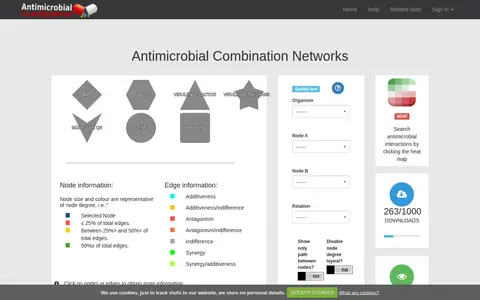
Antimicrobial Combination Networks is a database that catalogs experimentally tested antimicrobial combinations. It includes 1556 combinations among antimicrobial peptides and other antimicrobial agents tested against organisms including Pseudomonas aeruginosa, Staphylococcus aureus, and Listeria monocytogenes, and allows users to search for combinations by organism, antimicrobial agent, or between two antimicrobial components.

An open source, mobile friendly web gallery that serves private media while keeping the existing file and folder structure, with AI powered image discovery. It is a pet project started in 2019, requiring CLI/terminal interactions; Linux/Debian is the most tested platform, and Mac or Windows runs are barely tested.

Anyword is a generative AI content platform and performance API for go-to-market teams. It adds A/B-tested data and brand context to prompts and works with any AI model or application. The platform includes a data-driven editor, content intelligence, brand voice features, and integrations with marketing channels such as Google Ads, Meta, and LinkedIn.

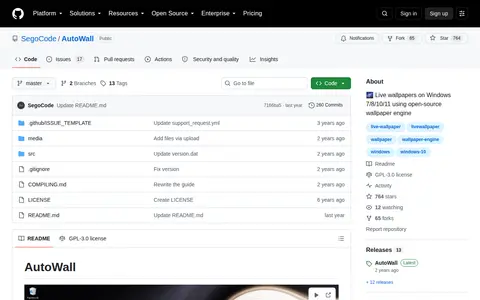
AutoWall is a tool that turns videos, gifs and web pages into live Windows wallpapers, described as a simple Weebp implementation in AutoIt. The repository notes the software has only been tested on Windows 10 and may not be fully compatible with other versions. It lists features such as a portable build, a reset button and support for multiple screens in alpha.

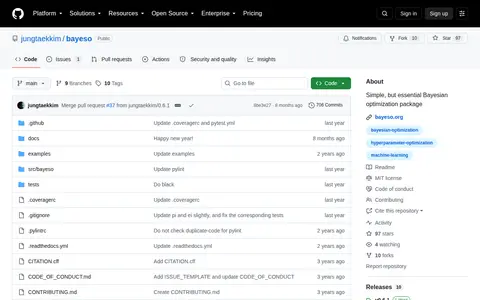
BayesO is a Python framework for Bayesian optimization, described as a simple but essential Bayesian optimization package. It is installed via pip and is tested on Python 3.8 through 3.12. The repository includes documentation, examples and tests, and is released under the MIT License.
The database of Biofilm-active antimicrobial peptides is described as the first database dedicated to antimicrobial peptides tested specifically against microbial biofilms. It aims to provide open-access resources on AMPs against biofilms for microbiologists, bioinformatics researchers and medical scientists working in the field.

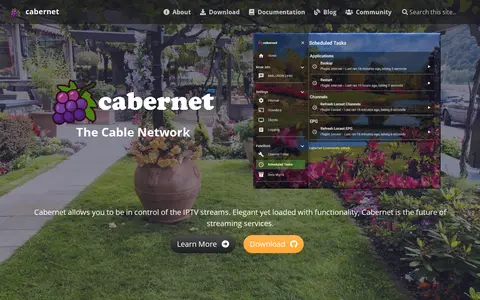
Cabernet is a modular appliance that cleans, organizes and repackages IPTV streams for media clients. It merges M3U and XMLTV data, manages channels, and supports M3U8 streaming through FFMPEG or internally. It offers M3U and HDHomeRun interfaces and was tested with TVheadend, Emby, Jellyfin, Plex and VLC. Deployment uses Python 3.7 or greater.

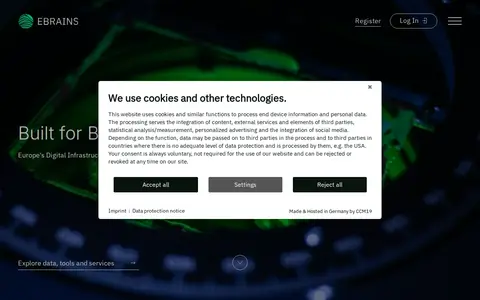
EBRAINS is an open research infrastructure providing data, tools and services for brain-related research from molecular and cellular levels to the whole organ. It includes brain atlases, modelling and simulation, data and knowledge services, a collaborative platform and computing infrastructure. A Collaboratory provides cloud workspaces with version-controlled storage and JupyterLab; the EBRAINS Software Distribution offers over 70 tools tested for interoperability.

Equalizer APO is a parametric and graphic equalizer for Windows, implemented as an Audio Processing Object for the system effect infrastructure introduced with Windows Vista. Tested on Windows 7 through 11, it requires x64, x86 or ARM64 architecture, and applications must not bypass the system effect infrastructure. It can read Room EQ Wizard filter text files.
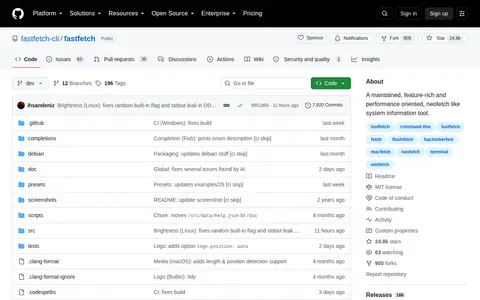
Fastfetch is a neofetch-like command-line tool that fetches system information and displays it in a visually appealing way. It is written mainly in C, with a focus on performance and customizability, and uses JSONC configuration. It supports Linux, macOS, Windows 8.1+, Android, FreeBSD, OpenBSD, NetBSD, DragonFly, Haiku and SunOS, though it is only actively tested on x86-64 and aarch64 platforms.

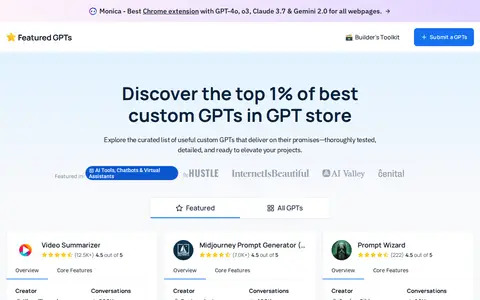
Featured GPTs is a curated directory of custom GPTs for use with ChatGPT. It lists the top 1% of hand-picked, tested custom GPTs from the official GPT store, with content updated daily. Example listed GPTs include Video Summarizer and Midjourney Prompt Generator.
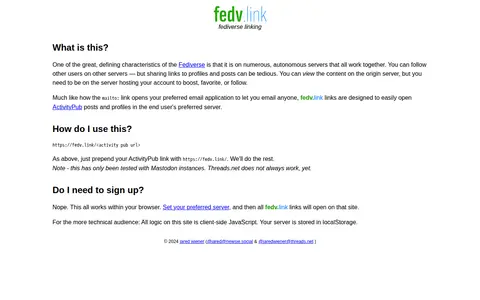
A browser-based tool that opens ActivityPub posts and profiles in the user's preferred server. Users prepend an ActivityPub link with the service's URL, and links then open on the configured server. It has only been tested with Mastodon instances, and Threads.net does not always work. No sign-up is needed; the server is stored in localStorage.

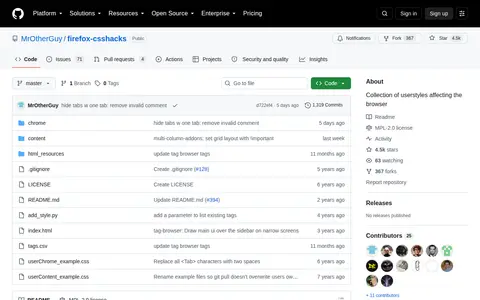
A collection of userstyles (CSS hacks) that modify the appearance of Mozilla Firefox. The stylesheets are mostly self-contained and can be mixed, though compatibility with third-party styles is not promised. They are tested only on Windows 10 and to a lesser extent on Linux, and setup involves loading userChrome.css and userContent.css in the Firefox profile.

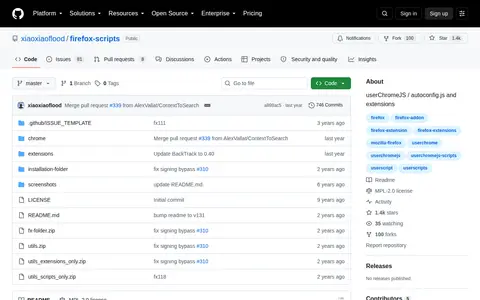
Firefox Scripts is a GitHub repository holding userChromeJS scripts, autoconfig.js and extensions for Firefox. The instructions say the zip content goes into the Firefox installation folder and scripts are saved into a chrome folder in the profile. The page states the scripts were tested on Firefox Developer Edition 131.0b4.
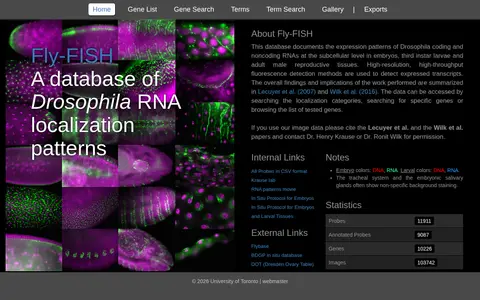
Fly-FISH is a database documenting subcellular expression patterns of Drosophila coding and noncoding RNAs in embryos, third instar larvae and adult male reproductive tissues, detected with high-resolution fluorescence methods. Data are accessed by searching localization categories, searching specific genes or browsing tested genes.

A site linking to the AppImage catalog, which lists AppImages. According to the page, AppImages run without further installation on most mainstream Linux distributions and from the official catalog are tested on the oldest Ubuntu LTS release. The page also states that the catalog is crowd-sourced and can be searched for over 1000 AppImages.

Microsoft Research publication proposing 18 generally applicable design guidelines for human-AI interaction. The guidelines were validated through evaluation rounds, including a user study with 49 design practitioners who tested them against 20 AI-infused products. The authors state the guidelines can serve as a resource for practitioners designing AI applications and for researchers developing interaction design guidelines.

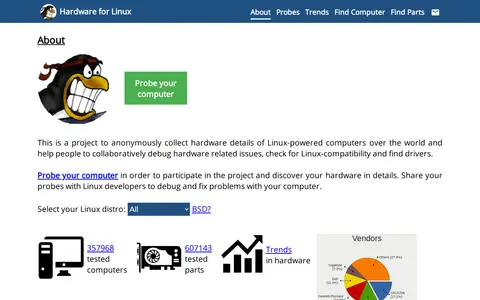
A project that anonymously collects hardware details of Linux-powered computers. It lets people probe their computers, share the results with developers, debug hardware-related issues, check Linux compatibility and find drivers. The site reports a high detailed database of hardware and lists recent probes and tested computers and parts.

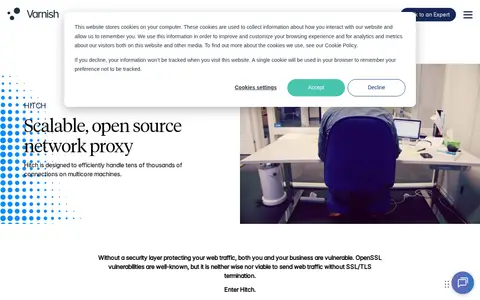
Hitch is a scalable, open source SSL/TLS proxy based on libev. It handles large numbers of connections on multicore machines, supports TLS 1.0, 1.1 and 1.2, and is the successor of the Stud project. It is licensed under a 2-clause BSD license and has been tested on Linux.

Java Design Patterns is a site showcasing Java-based design patterns, principles and code snippets. It presents a collection of software design patterns implemented in Java, software design principles, and the 30 Seconds of Java collection of reusable, tested, copy-pasteable Java 17 compatible code snippets. It also offers an open source Java Design Patterns book.

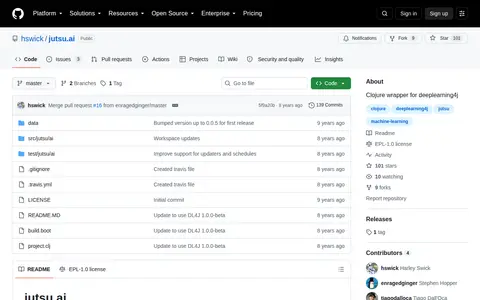
A Clojure wrapper for deeplearning4j with added syntactic sugar, aiming to provide a declarative API for machine learning on the JVM. It translates Clojure keywords into Java method calls, making many deeplearning4j configuration options accessible. The project is a work in progress, and configurations have been tested on basic feedforward nets, RNNs and CNNs.
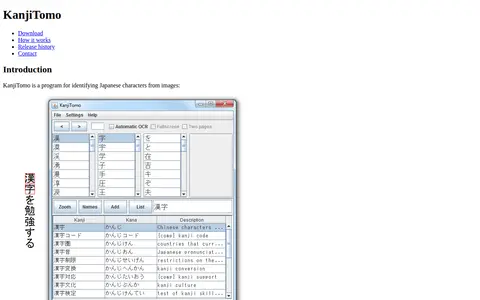
KanjiTomo is an OCR program for identifying Japanese text from images, optimized for kanji recognition. Pointing the mouse at any image on screen performs kanji and dictionary lookup at the same time, and both horizontal and vertical text are supported. Java is required, and it has been tested on Windows 10.

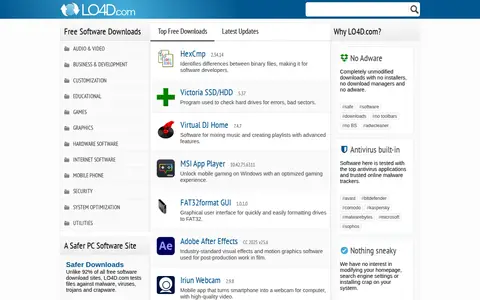
LO4D.com offers free software downloads for Windows PCs, with reviews, comparisons, alternatives and security reports including antivirus tests. It separates freeware from non-free titles by category and states that files are tested against malware and other threats.