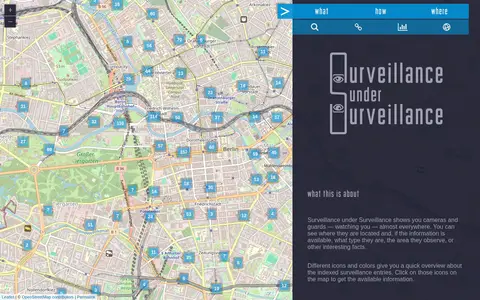

Surveillance under Surveillance is a map showing surveillance cameras and guards, with type, observed area and other information where available. It uses OpenStreetMap contributor data not visualized on the regular OpenStreetMap site, updated once an hour. New or revised entries can be added using an OSM account.
Directory
Search results
Published directory entries matching your search.
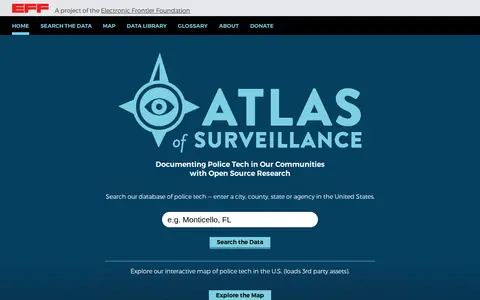
The Atlas of Surveillance is a project of the Electronic Frontier Foundation that maintains a database of surveillance technologies deployed by law enforcement in communities across the United States, including drones, body-worn cameras, automated license plate readers and facial recognition. It offers a searchable database and an interactive map of police tech in the U.S.
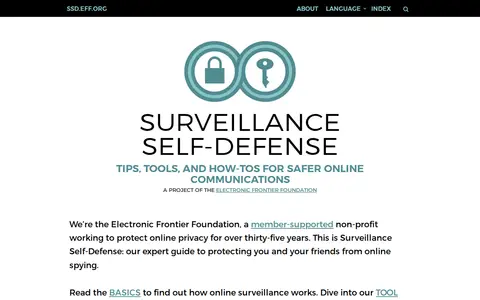
Surveillance Self-Defense is a project of the Electronic Frontier Foundation offering guides on protecting against online spying. It includes basics on how online surveillance works, tool guides for secure applications, and security scenarios for specific situations.
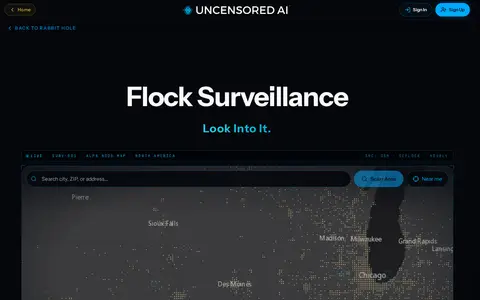
Flock Surveillance Map is a privacy tool for blocking ads, trackers, popups, proxies, or unwanted web behavior.
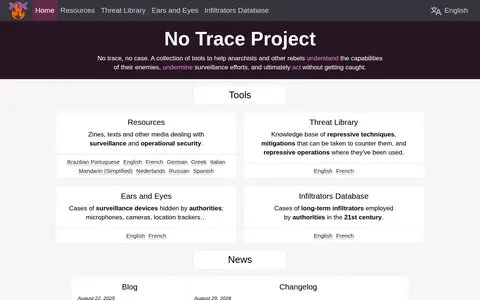
A collection of resources aimed at anarchists and other rebels, intended to help them understand the capabilities of their enemies, undermine surveillance efforts, and act without getting caught. It includes zines and other media on surveillance and operational security, a threat library of repressive techniques and mitigations, a database of hidden surveillance devices, and a database of long-term infiltrators.
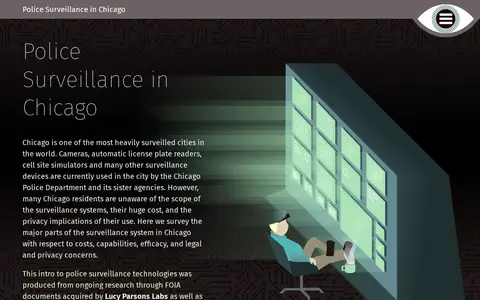
Map and dataset of police surveillance technologies and locations in Chicago.
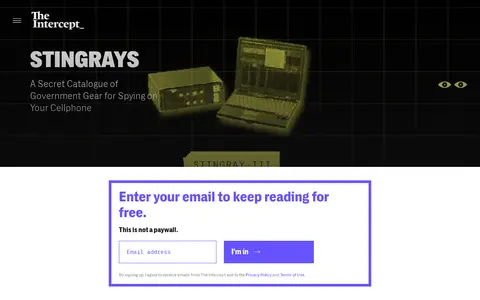
The Intercept catalogue of surveillance technology, vendors, capabilities, and related documents.
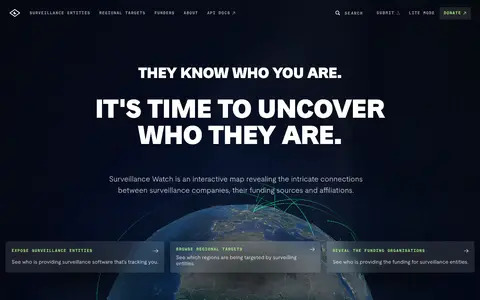
SurveillanceWatch is a privacy tool for blocking ads, trackers, popups, proxies, or unwanted web behavior.
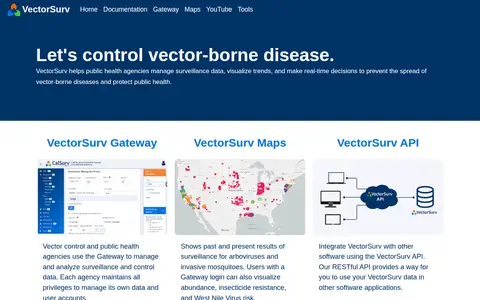
VectorSurv is a vector-borne disease surveillance system. Public health and vector control agencies use the Gateway to manage and analyze surveillance and control data, and each agency keeps privileges to manage its own data and user accounts. VectorSurv Maps shows past and present surveillance results for arboviruses and invasive mosquitoes. A RESTful API lets users integrate VectorSurv data with other software.
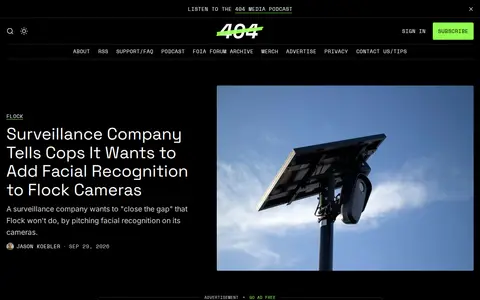
404 Media is an independent, journalist-founded digital media company that reports on how technology shapes the world. Its coverage includes hacking, cybersecurity, cybercrime, sex, artificial intelligence, consumer rights, surveillance, privacy and the democratization of the internet, through investigative reports, longform features, blogs and scoops.
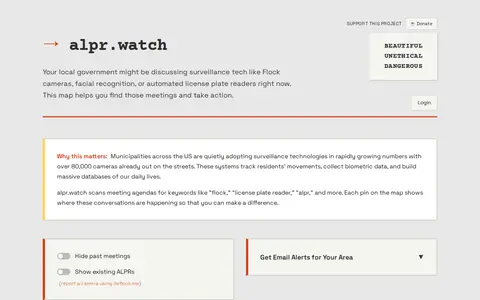
alpr.watch is a project that scans US local government meeting agendas for keywords such as flock, license plate reader and alpr, and maps where surveillance technology discussions are happening. It offers email alerts for a chosen area and a map of meetings and mapped ALPR cameras, and points to groups opposing surveillance.
The Cancer in Young People in Canada (CYP-C) Data Tool is a national pediatric cancer surveillance program led by the C17 Council with the Public Health Agency of Canada and the Canadian Partnership Against Cancer. It captures diagnosis, treatment and short-term outcomes to five years for patients under 19 at Canadian pediatric centres, and provides pan-Canadian surveillance data to inform research and planning for cancer control.
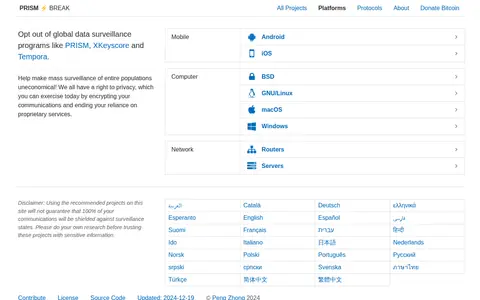
PRISM Break is a site that encourages opting out of global data surveillance programs such as PRISM, XKeyscore and Tempora by encrypting communications and ending reliance on proprietary services. It lists recommended projects by platform, including mobile, computer and network categories. The site states that using the recommended projects will not guarantee that all communications are shielded against surveillance states.
We must stop AI replicating the problems of surveillance capitalism provides machine-learning models, research, training resources, or evaluation…
Search chemistry data collections and supporting dataset from USA.
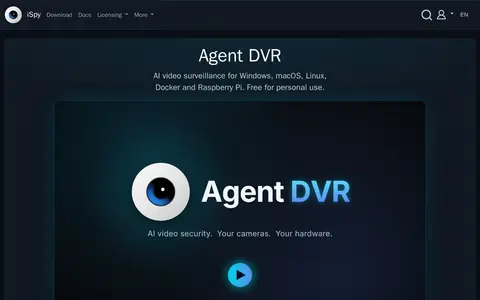
Agent DVR is video surveillance software that turns a computer into a full NVR, letting users watch live security cameras, record footage and get motion detection alerts from a web browser. It is a cross-platform application for Windows, macOS, Linux, Docker and Raspberry Pi, free for private local use.
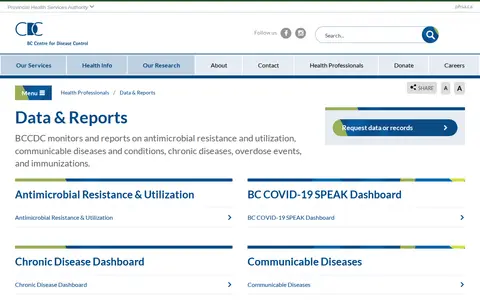
BCCDC Data is the data and reports section of the BC Centre for Disease Control website. It hosts public health-related data and reports aligned with the organization's service areas, including immunization, antibiotic resistance, hepatitis, and population and public health surveillance.
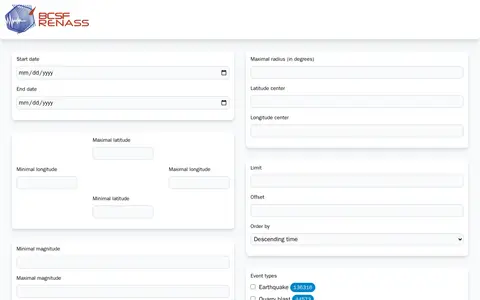
Find and access geophysics research data, with indexed dataset.
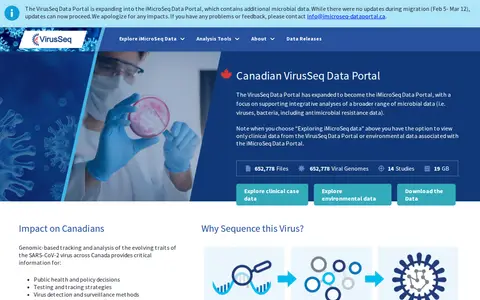
The Canadian VirusSeq Data Portal is a data portal for clinical case data that has expanded into the iMicroSeq Data Portal, which supports integrative analyses of broader microbial data such as viruses and bacteria, including antimicrobial resistance data. Genome Canada partnered with DNAstack to share VirusSeq data on Viral AI, a federated network for genomic variant surveillance and infectious disease research.
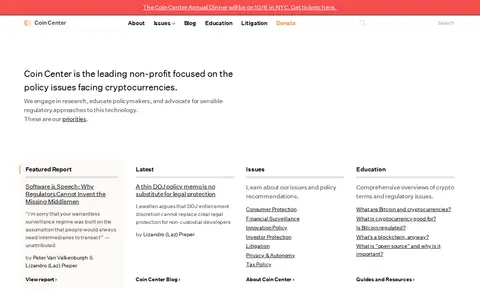
Coin Center is a non-profit focused on policy issues facing cryptocurrencies. It engages in research, educates policymakers, and advocates for sensible regulatory approaches to the technology. Its stated priorities include consumer protection, financial surveillance, innovation policy, investor protection, litigation, and privacy and autonomy. The site also offers educational overviews of crypto terms and regulatory issues.
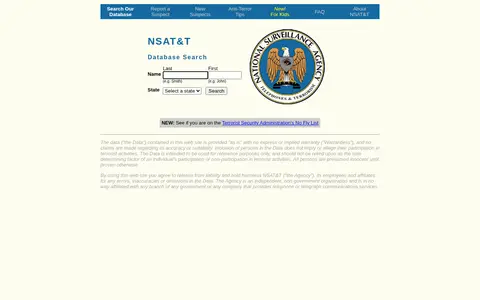
A website that presents a searchable database of names labeled as suspected terrorists under the name National Surveillance Agency for Telephones and Terrorism. It includes links for reporting a suspect, anti-terror tips, new suspects and an FAQ. The site states that inclusion does not imply participation in terrorist activities and that the agency is independent and non-government.
dDocs is a privacy-first, end-to-end encrypted document editor for real-time collaboration. It is positioned as a self-sovereign alternative to Google Docs that does not conduct user surveillance or train AI on user content.
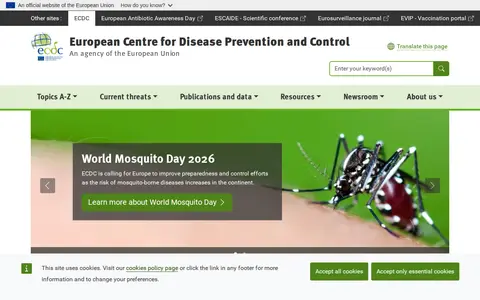
ECDC collects, analyses and shares data on over 50 infectious disease topics. Its experts assess risks to Europe and give guidance to help countries prevent and respond to outbreaks and public health threats. The site publishes updates, surveillance reports and assessments.

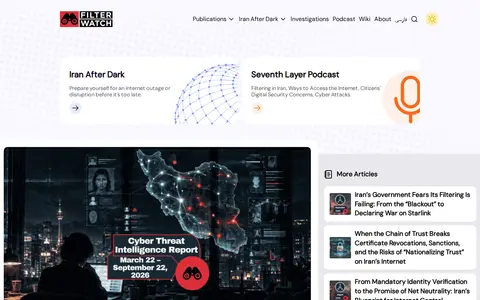
A project studying Iran's internet policies, including investigation of internet shutdowns, censorship, surveillance and cyber attacks. It publishes investigations, cyber threat reports, yearbooks and a podcast, and offers an academy section.