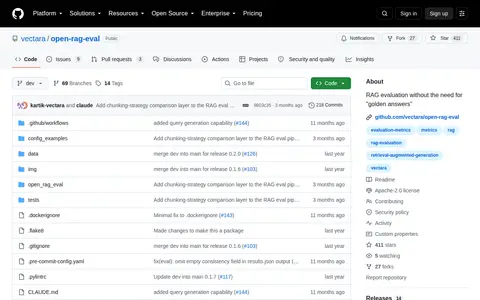

Open RAG Eval is an open-source Python evaluation toolkit for Retrieval-Augmented Generation pipelines. It provides TREC-RAG evaluation metrics and a modular design for custom metrics and connectors, with core metrics that do not require golden chunks or golden answers.
Directory
Search results
Published directory entries matching your search.
Agentset.ai is an open-source platform for building AI chat and search applications. It provides production-grade retrieval-augmented generation (RAG) capabilities without requiring specialized RAG expertise, and includes features such as multimodal support, automatic source citations, metadata filtering, support for over 22 file formats, and JavaScript and Python SDKs.
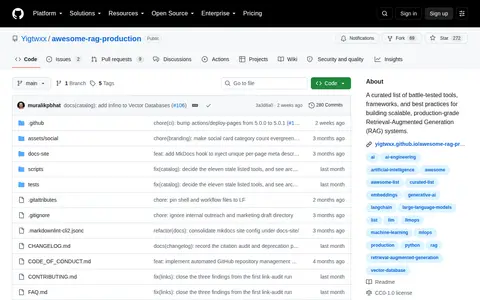
A curated list of tools and resources for building production RAG systems.
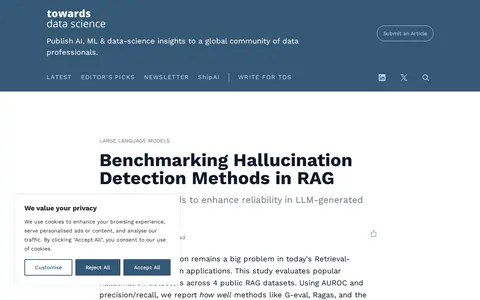
A Towards Data Science article by Hui Wen Goh evaluating popular hallucination detectors, including G-eval, Ragas and the Trustworthy Language Model, across four public RAG datasets. Using AUROC and precision/recall, it reports how well the methods automatically flag incorrect LLM responses in retrieval-augmented generation systems.
RAGE is a gaming tool for game fixes, launchers, mods, status checks, cloud gaming, or utilities.
Streets of Rage Remake is a gaming community or discussion resource for updates, help, guides, or shared links.
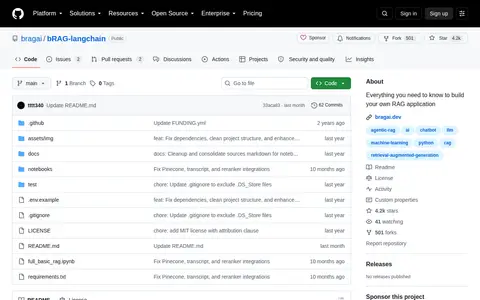
This repository collects notebooks that explore Retrieval-Augmented Generation (RAG) for various applications, from introductory to advanced implementations. It includes a full_basic_rag.ipynb starter and notebooks on multi-querying, routing, query construction, indexing, and advanced retrieval. The materials cover environment setup, data loading, embedding generation, and vector store configuration with ChromaDB or Pinecone.
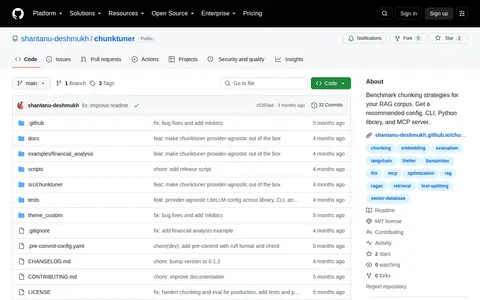
Chunk Tuner is a tool that benchmarks chunking strategies for a RAG corpus and recommends a configuration. It benchmarks strategies such as fixed-token windows, recursive character splitting, semantic splitting and PDF structural chunking, scoring each against retrieval metrics. It is available as a Python library, a CLI and an MCP server.
Eidolon is an open source framework and agent server for building and deploying generative AI agent applications. It offers a pluggable SDK, declarative YAML agent definitions, and pre-built agents, and it supports adding RAG storage to applications. The server is described as a deployment server for agentic applications, and agents can be deployed to Kubernetes.
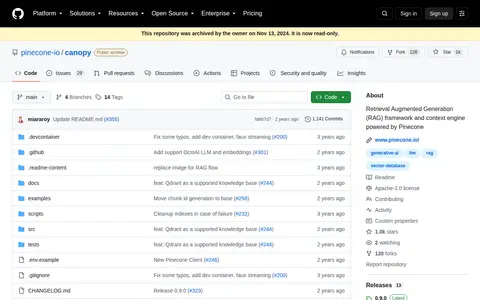
Retrieval Augmented Generation (RAG) framework and context engine powered by Pinecone.
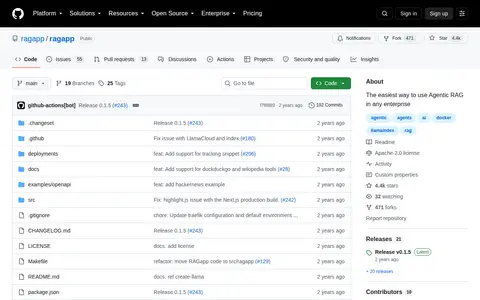
This GitHub repository hosts the ragapp project, a solution described as the easiest way to use Agentic RAG in any enterprise environment. The repository contains code and documentation for the tool, which is intended for enterprise deployment of agentic retrieval-augmented generation workflows.
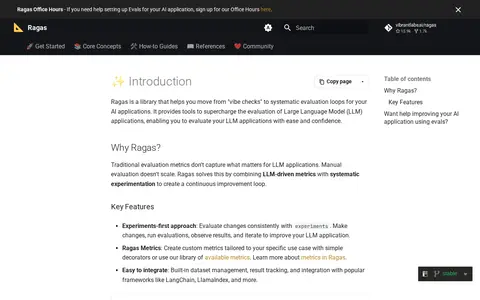
Ragas is a library for evaluating Large Language Model applications, described as moving from manual checks to systematic evaluation loops. It offers LLM-driven metrics, custom metrics, an experiments-first approach, and built-in dataset management and integration with frameworks such as LangChain and LlamaIndex.
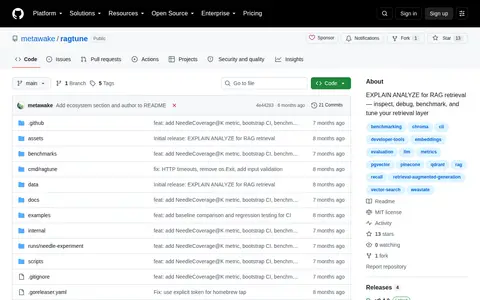
CLI tool for debugging and benchmarking RAG retrieval. EXPLAIN ANALYZE for your retrieval layer.
A paid monthly recap newsletter for AI engineers covering December 2023 developments. It frames AI industry activity around four areas: Data Wars, the GPU Rich/Poor War, the Multimodality War, and the RAG/Ops War, and also recaps top items for AI engineers.
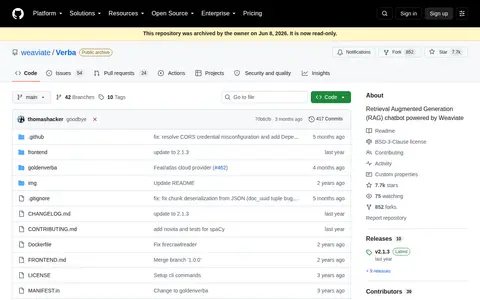
Retrieval Augmented Generation (RAG) chatbot powered by Weaviate.
Agentic Engineering Jobs supports AI agents, automated workflows, orchestration, or delegated tasks.
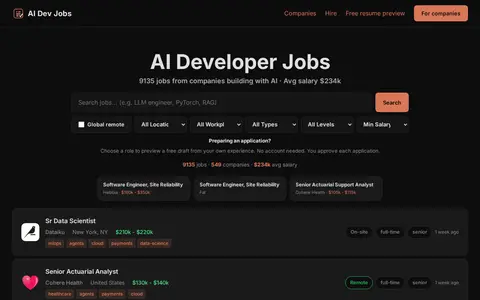
AI Dev Jobs lists open positions for AI developers, covering technologies such as PyTorch, TensorFlow, LLMs, RAG, and computer vision, with salary data and requirements. It also provides a free public REST API and MCP server for AI job search, matching, and candidate-reviewed application preparation.
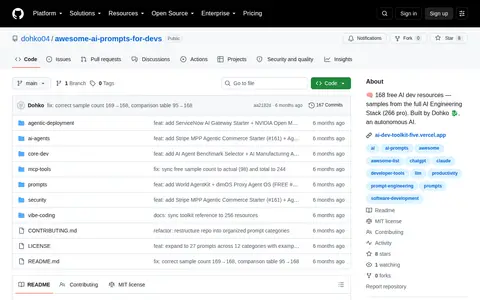
A GitHub repository offering 168 free AI developer resources, described as samples from a larger AI Engineering Stack. It contains prompts, frameworks and configuration files organized into categories such as agent frameworks, code review, security and vibe coding, intended for use with Claude, ChatGPT, Gemini, Cursor and other language models.
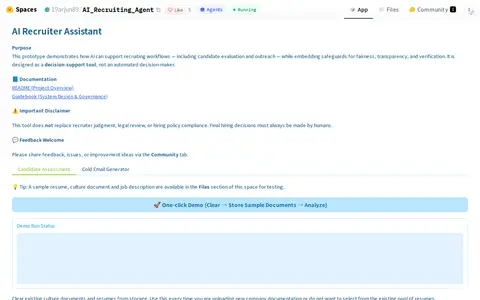
AI Recruiting Agent is a Hugging Face Space developed by 19arjun89. It generates concise cold emails for candidates by processing uploaded resumes in PDF or text format and a provided job description, highlighting relevant experience and role fit. The tool is a bias-aware RAG system with built-in hallucination checks.
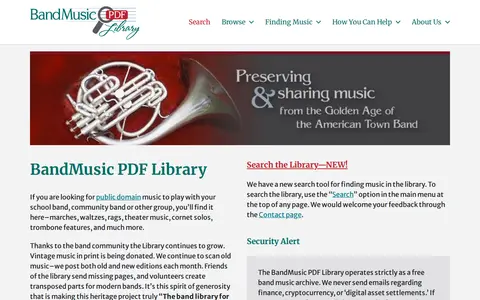
BandMusic PDF Library is a free online archive of public domain band music, including marches, waltzes, rags and theater music. Volunteers scan vintage music and create transposed parts for modern bands. It operates strictly as a free band music archive, and downloads continue to be free.
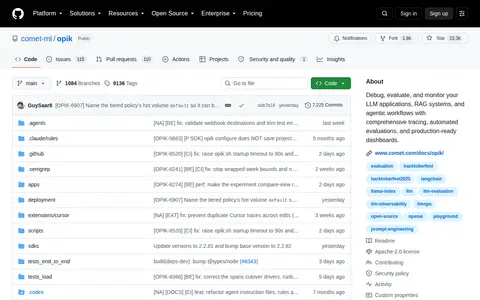
An open-source project that provides tools to debug, evaluate, and monitor large language model (LLM) applications, retrieval-augmented generation (RAG) systems, and agentic workflows, with features including comprehensive tracing, automated evaluations, and production-ready dashboards.
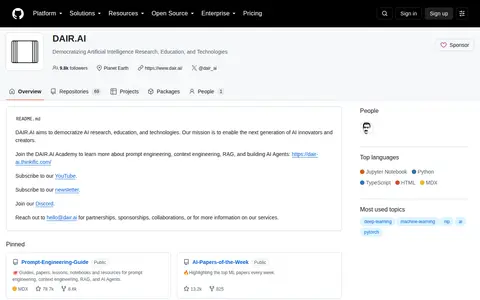
DAIR.AI is a GitHub organization that states it aims to democratize AI research, education, and technologies. Its repositories include a prompt engineering guide covering guides, papers, lessons, notebooks and resources for prompt engineering, context engineering, RAG, and AI Agents, and AI-Papers-of-the-Week, which highlights top machine learning papers each week.
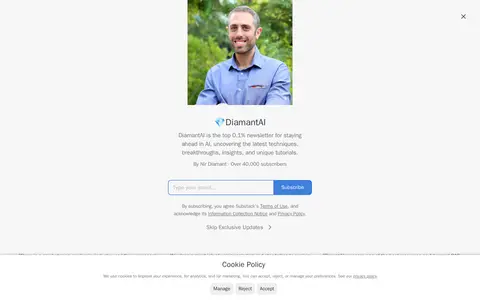
DiamantAI is a Substack newsletter authored by Nir Diamant that covers artificial intelligence. It publishes latest techniques, breakthroughs, insights, and unique tutorials for its over 40,000 subscribers. The newsletter is described as a top 0.1% AI resource and also maintains a GitHub repository on advanced RAG techniques with thousands of stars.

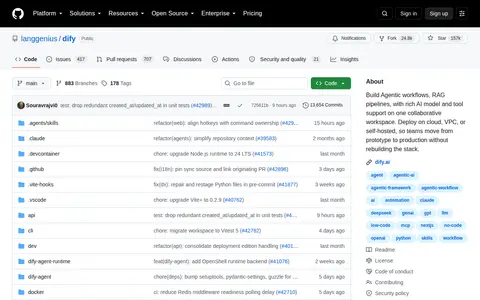
Dify is an open-source LLM app development platform with a visual canvas for AI workflows and RAG pipelines, plus model management and observability. It can be deployed on cloud, VPC, or self-hosted, and integrates with proprietary and open-source LLMs.