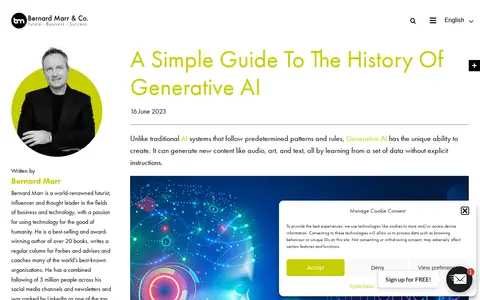

A Simple Guide To The History Of Generative AI is an article on Bernard Marr's website that explains the history of generative AI. It covers sections including the birth of generative AI, key milestones, its impact, and its evolving narrative, and notes that generative AI differs from traditional rule-based AI systems by its ability to create content.
Directory
Search results
Published directory entries matching your search.
The copyright conundrum of AI art is an article from The Verge examining copyright issues related to generative AI. It covers image generation tools including Midjourney, Stable Diffusion, and DALL-E, discusses questions of AI art ownership, and notes that copyright concerns impact generative AI development around training data and output control.
A blog post explaining CLIP, a transformer model from OpenAI that matches text embeddings with image embeddings. It offers high-level prompt engineering tips for generative art and includes over 3500 prompt output examples, along with a section of Colab notebook links.
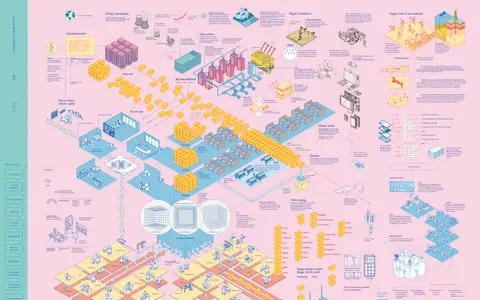
Cartography of generative AI is a project presenting a mapped account of generative AI in multiple languages. It discusses how tools automate writing and image generation through examples and statistical models trained on datasets, and examines the extraction of internet content for training datasets and related controversies.
Why generative AI scares artists but not content writers creates or edits images with generative AI and text-based controls.
Creates or edits images with generative models and visual controls.
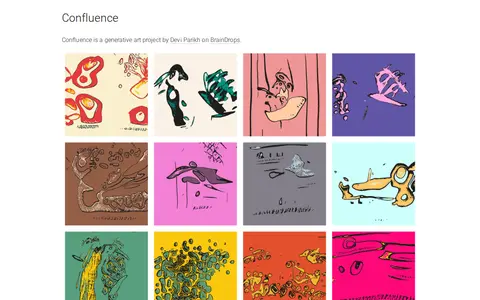
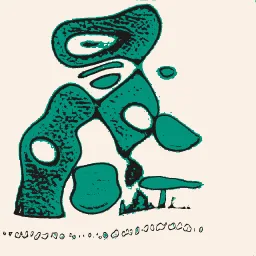
Confluence is a generative art project by Devi Parikh on BrainDrops. Pieces are generated with a neural generative model trained on the artist's physical sketchbook, re-rendered in palettes and interpreted by an AI model.
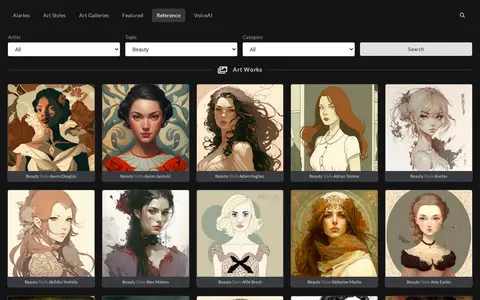
AI Art ES hosts an AI Art Style Reference on Aiartes, cataloging a wide range of art styles and artists including Aaron Douglas, Gustav Klimt, Hieronymus Bosch, and others for reference purposes.
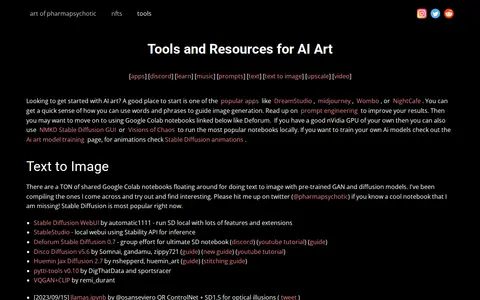
A page by pharmapsychotic collecting tools and resources for AI art, organized into sections such as text to image, upscaling, StyleGAN, text video, prompt engineering and music. It links to shared Google Colab notebooks for text-to-image work with pre-trained GAN and diffusion models, and notes Stable Diffusion WebUI for running SD locally.
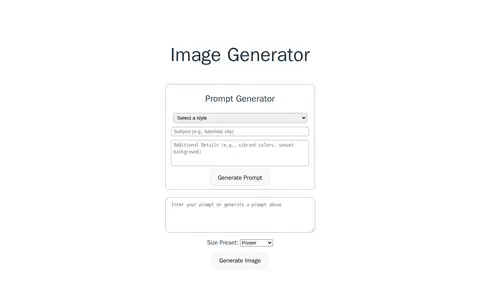
Art Genie creates or edits images with generative AI and text-based controls.
Pixelz AI Art Generator creates or edits images with generative AI and text-based controls.
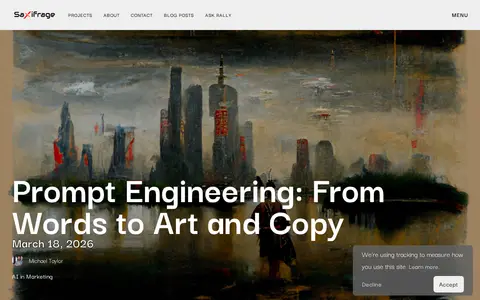
Prompt Engineering: From Words to Art - Saxifrage Blog creates or edits images with generative AI and text-based controls.
The Art of ChatGPT Prompting: A Guide to Crafting Clear and Effective Prompts creates or edits images with generative AI and text-based controls.
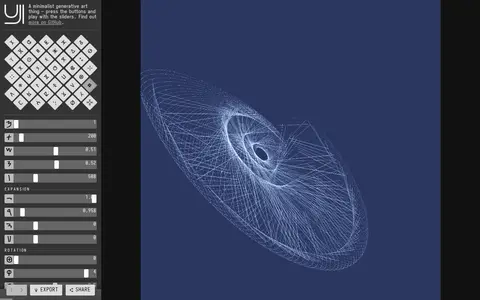
Uji is a minimalist generative art tool. Users interact with buttons and sliders to create generative art. Drawings can be exported as PNG, JPEG, SVG (black line on transparent background, suitable for pen plotting), or JSON of line segment geometry. Shared links preserve configured art parameters, and an undo button restores previous work.

Creates or edits images with generative models and visual controls.
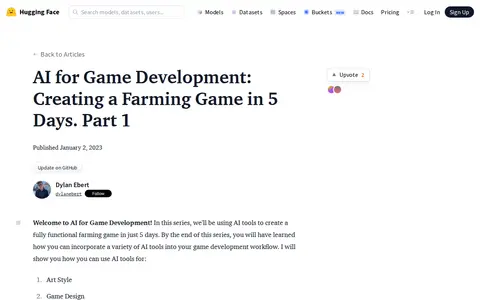
A tutorial series by Dylan Ebert showing how AI tools can be incorporated into a game development workflow. It describes creating a fully functional farming game in five days, covering art style, game design, 3D assets, 2D assets and story. The first part covers choosing an art style with Stable Diffusion, generating concept art and bringing it into Unity; readers are assumed to know Unity and C#.
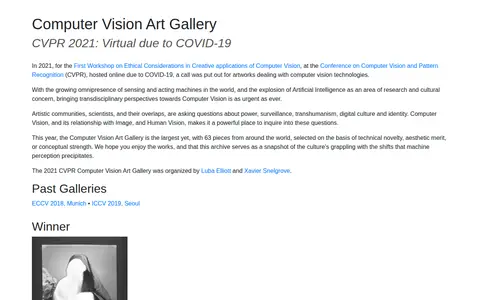
Computer Vision Art Gallery is a site for the CVPR 2021 art gallery, held virtually due to COVID-19. It lists a winner, shortlisted works and all accepted works, each credited to artists with titles and years.
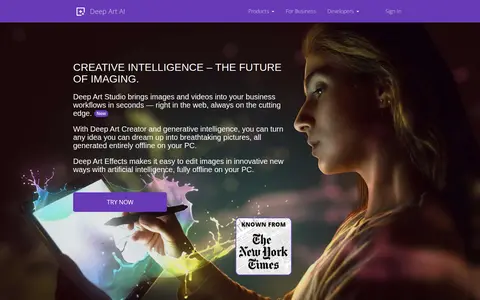
Deep Art Effects is software that turns photos and videos into neural art using artistic style transfer of famous artists. It also offers image processing such as scaling images to four times the original size and automatic background cutout, with processing running offline on the user's PC.
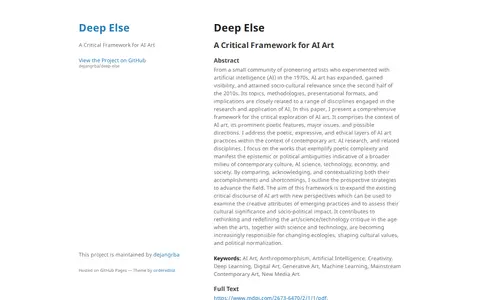
Deep Else is a paper presenting a critical framework for exploring AI art, covering its context, poetic features, issues and possible directions. It examines the poetic, expressive and ethical layers of AI art practices within contemporary art, AI research and related disciplines.
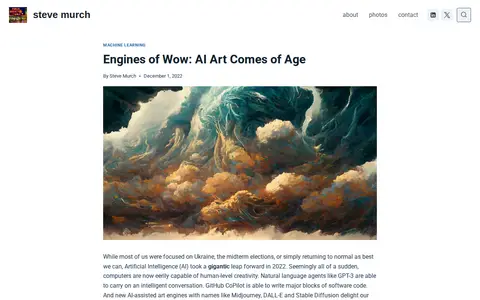
Engines of Wow: AI Art Comes of Age is a three-part blog series by Steve Murch that discusses recent advances in AI-generated art, including tools like Midjourney, DALL-E, and Stable Diffusion, and explores issues of creativity, ownership, and derivative work.
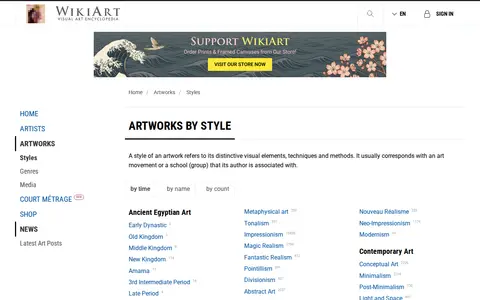
Paintings by Style on WikiArt is a webpage that catalogs artworks by art style, with styles ranging from Gothic to Impressionism. It defines art style as the distinctive visual elements, techniques, and methods of an artwork, which typically correspond to an art movement or the school or group its creator is associated with.
Creates or edits images with generative models and visual controls.
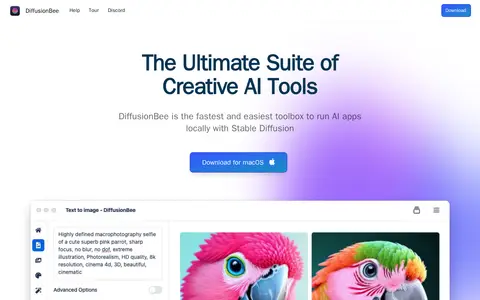
DiffusionBee is a Stable Diffusion application for generating AI art locally on a computer. It is free of charge and runs offline, so prompts, models and generated images stay on the device. The package includes text to image, image to image, generative fill, an image upscaler, video tools, control images and local model training. A macOS download is provided.