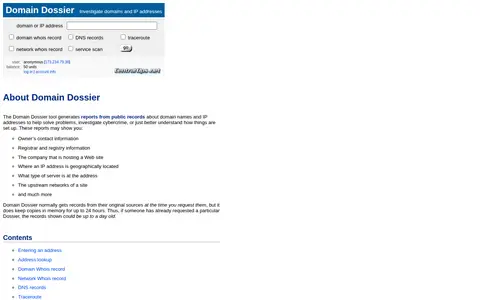
Domain Dossier is a tool that generates reports from public records about domain names and IP addresses. The reports may show owner contact information, registrar and registry details, the hosting company, IP address geographic location, server type and upstream networks. It accepts domain names and IP addresses; results are normally retrieved from original sources when requested, with copies kept in memory for up to 24 hours.
Directory
Search results
Published directory entries matching your search.
Domainr is a domain name search service with instant, per-keystroke search and context-aware suggestions for top-level domains. It is described as an ICANN-accredited domain status API provider with direct access to domain registry data. The Fastly Domain Research API checks whether a domain is available, premium-priced or for sale in a major aftermarket. Domainr is part of Fastly.
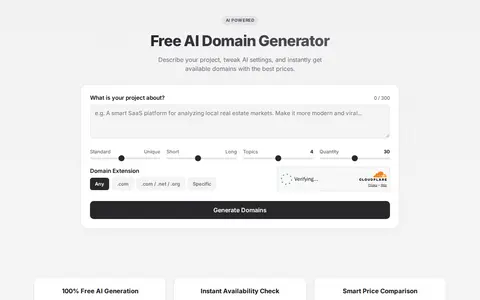
Free AI Domain Generator turns a project description into suggested domain names. Users enter a project topic and can choose style, length, topic options, quantity and domain extension. The tool checks live registrar data to filter out taken domains and compares live registration prices across providers including Namecheap, Porkbun and Dynadot.
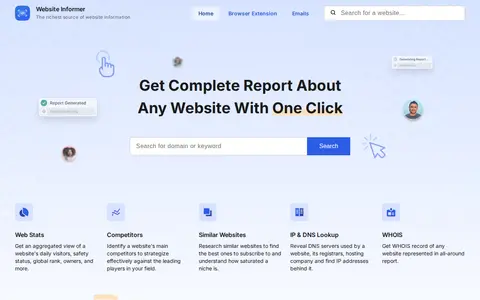
Website.informer offers a free aggregated report on any domain, including WHOIS, visitors, IP and DNS details, competitors, and owners. It provides website statistics such as daily visitors, safety status, and global rank, plus competitor and similar-site research. It also offers IP and DNS lookup, WHOIS records, a browser extension for website analysis and security checks, and email-to-domain matching from WHOIS data.

CATH is a free online database providing information on evolutionary relationships of protein domains, developed by the Orengo group at University College London. Structures from the Protein Data Bank are split into domains and classified by class, architecture, topology and homologous superfamily. Gene3D adds sequence data from UniProtKB and Ensembl, assigning domains to superfamilies.
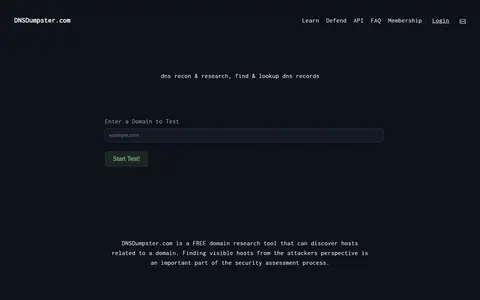
A free domain research tool that discovers hosts related to a domain and looks up DNS records. It presents visible hosts from an attacker's perspective for red and blue teams, and is intended for reconnaissance, penetration testing, bug bounties, threat analysis and network OSINT.
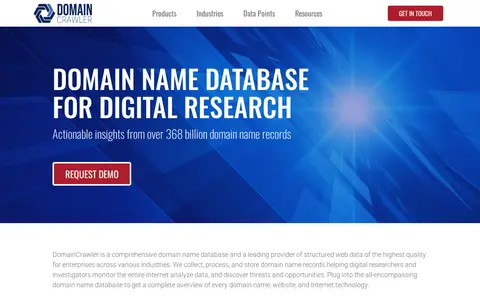
Domain Crawler is a web tool for finding, checking, or analyzing online information related to domains, networks, and digital services.
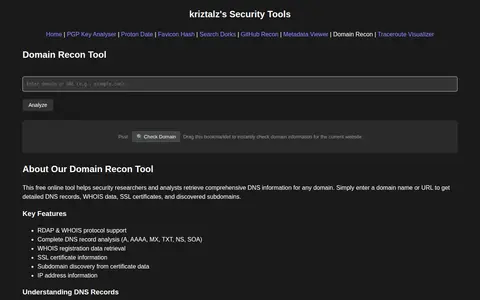
Domain Recon Tool is a free online tool for security researchers and analysts that retrieves DNS records, WHOIS and RDAP data, SSL certificates, IP addresses and subdomains for a domain or URL. It supports complete DNS record analysis and WHOIS registration data retrieval.
DARPA Memex is a program seeking to develop next-generation search technologies for discovering, organizing and presenting domain-specific content. It aims to extend search beyond a centralized model to the deep web and nontraditional content. The program initially plans to address fighting human trafficking. It is specifically not interested in deanonymizing servers, attributing identity to IP addresses, or accessing non-public information.
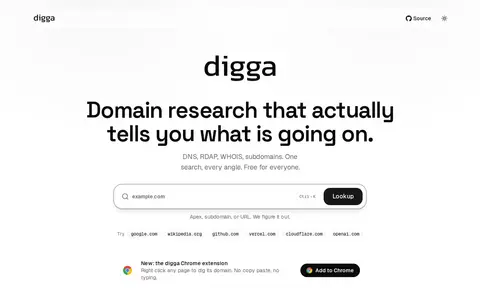
digga is a free domain and infrastructure research tool that looks up DNS records, RDAP and WHOIS data, subdomains, IP details and email authentication in one report. It supports many DNS record types and passive subdomain enumeration. The project is open source under AGPL 3.0 with no accounts or paywalls.
Internet Census 2012 is a research paper describing a distributed port scanner built on insecure embedded devices with empty or default credentials. It scanned all IPv4 addresses and includes service probes for common ports, ICMP ping, reverse DNS and SYN scans. Data gathered during the research was released into the public domain.
Domain intelligence tool for researching WHOIS data, ownership patterns, and connected domains.
DNSai is a collection of DNS and email security tools on one page. It covers DNS record lookups, WHOIS, blacklist checks, SPF, DKIM and DMARC builders and validators, email header analysis and bulk domain scanning. The tools return plain-English AI summaries, and each is available through an API and MCP connectors.
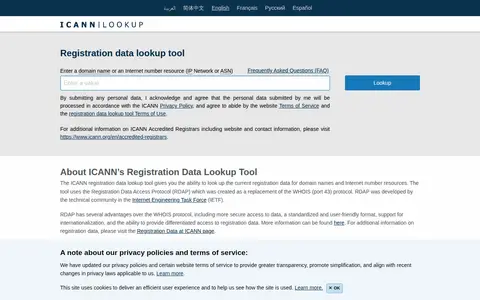
The site allows you to look up domain registration information (WHOIS) on the internet
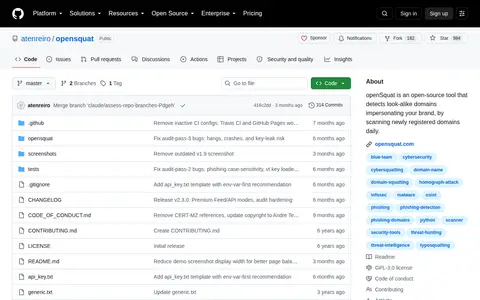
Open source tool that searches newly registered domain feeds to find typosquatting, IDN homograph, doppelganger and bitsquatting domains impersonating
SmallSEOTools is a collection of free SEO tools for checking backlinks, tracking keyword positions and more. It groups text analysis, image editing, keyword, backlink, website management, tracking, domain and meta tag tools. A separate paid plan covers plagiarism checking, image search and related features.
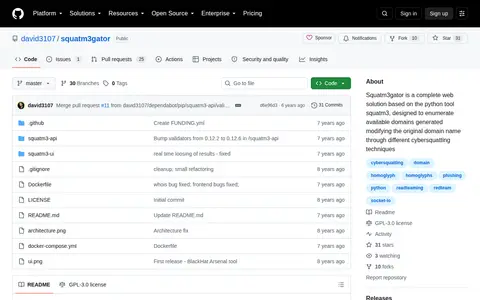
Enumerate available domains generated modifying the original domain name through different cybersquatting techniques
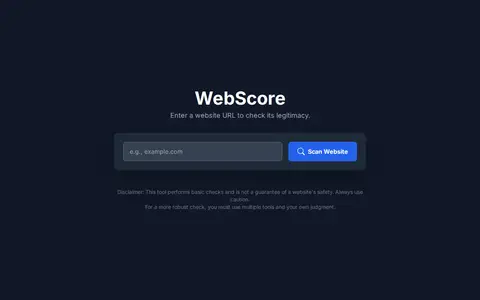
WebScore is a website legitimacy checker that produces a detailed report on a scanned URL. The report includes columns for URL Scanned, Uses HTTPS, Domain Age, Wayback History and Google Safe Browsing.
Webscout provides intelligence on IP addresses for defenders of democracies and critical infrastructure. Its platform ingests network and intelligence feeds, adds context, detects threats, and supports investigation and response. It enriches IPs with data on geolocation, network ownership, VPNs, Tor, residential proxies, and provider attribution, delivered by API, bulk feed, or SIEM integration. It also offers honeypots and domain intelligence.
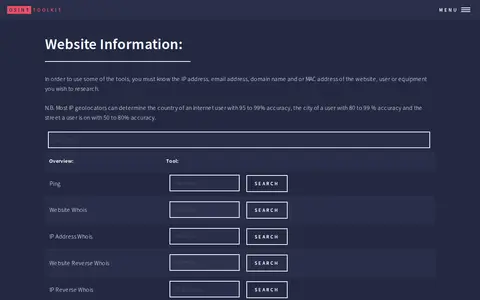
OSINT Toolkit Website Information is a collection of tools for researching websites, IP addresses, domains, emails and MAC addresses. It lists lookups including Ping Website, Whois, reverse Whois, network and TLD lookup, IP history and geolocation, MAC vendor lookup, DNS report and header and source code search. The page states that some tools require the IP address, email address, domain name or MAC address of the target.
OSINT.sh tool for checking historical WHOIS records and domain ownership changes.
Verisign WHOIS lookup for checking domain registration records and registry information.
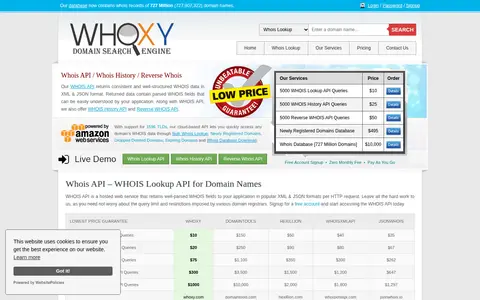
Whoxy is a hosted web service that returns parsed WHOIS fields to applications in XML or JSON format over HTTP requests. It follows WHOIS registry referral chains to find the correct servers, and supports 2026 domain extensions including gTLDs and ccTLDs. The page notes a free account signup and query pricing by volume.
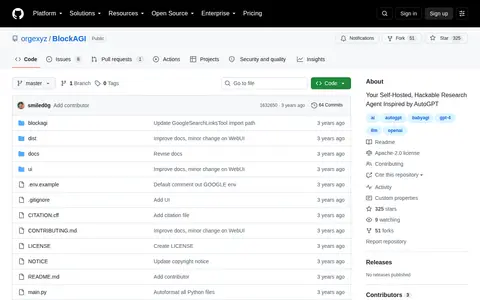
BlockAGI conducts iterative, domain-specific research, and outputs detailed narrative reports to showcase its findings.