
nist.gov
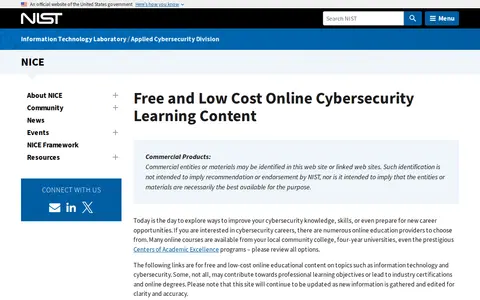
Applied Cybersecurity provides educational videos, lessons, tutorials, or self-learning resources.
Directory
Published directory entries matching your search.
Applied Cybersecurity provides educational videos, lessons, tutorials, or self-learning resources.

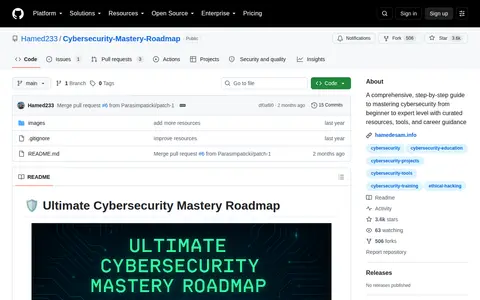
Cybersecurity Mastery Roadmap is a GitHub repository or organization with source code, releases, documentation, or project resources.

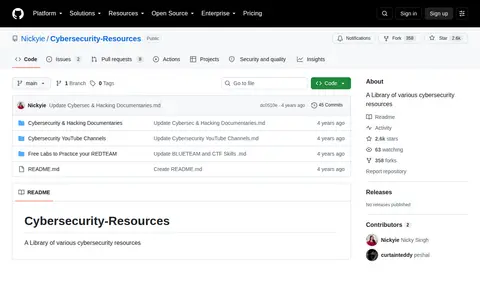
Cybersecurity-Resources is a GitHub repository or organization with source code, releases, documentation, or project resources.

Rawsec's CyberSecurity Inventory is a developer resource for coding, documentation, communities, security research, or software tools.

404 Media is an independent, journalist-founded digital media company that reports on how technology shapes the world. Its coverage includes hacking, cybersecurity, cybercrime, sex, artificial intelligence, consumer rights, surveillance, privacy and the democratization of the internet, through investigative reports, longform features, blogs and scoops.

Ars Technica is a technology publication founded in 1998 that covers news, reviews, and analysis of IT, science, space, health, gaming, cybersecurity, tech policy, computers, mobile devices, and operating systems. It also produces long-form features and in-depth explainers.

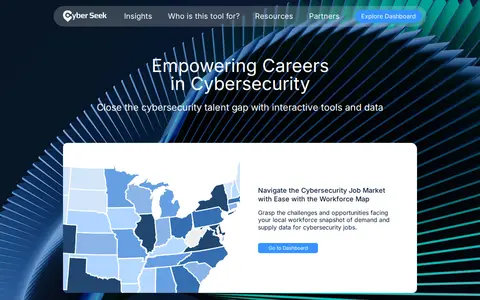
CyberSeek provides interactive tools and data intended to close the cybersecurity talent gap. It offers a Workforce Map of local demand and supply, a Career Pathway Dashboard covering salaries, credentials and skillsets, and an Education and Training Providers Map for finding nearby educators or training centers. It also publishes metrics on cybersecurity hiring and job openings.
pwn.college is an education platform where learners develop and practice core cybersecurity skills in a hands-on fashion. It is maintained by a team of hackers at Arizona State University and powers much of ASU's cybersecurity curriculum. The platform is open and free to participants worldwide.

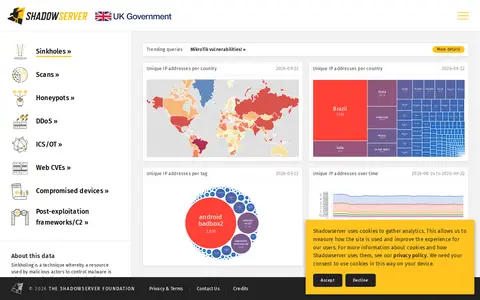
The Shadowserver Dashboard is a public cybersecurity statistics platform operated by The Shadowserver Foundation. It aggregates data from the organization's daily security monitoring activities, presenting high-level statistics derived from over 100 daily reports. These reports cover exposed attack surfaces, vulnerabilities, network misconfigurations, network compromises, and observed attacks. The dashboard provides insights into emerging threats and offers situational awareness to the wider cybersecurity community while preserving the anonymity of involved parties, and does not expose granular IP-level data.

UK technology publication covering enterprise computing, software, cybersecurity, cloud services and hardware.

Technology publication covering enterprise IT, software, cybersecurity, artificial intelligence and devices.
Open source intelligence toolkit for gathering and analyzing information from websites and online sources.

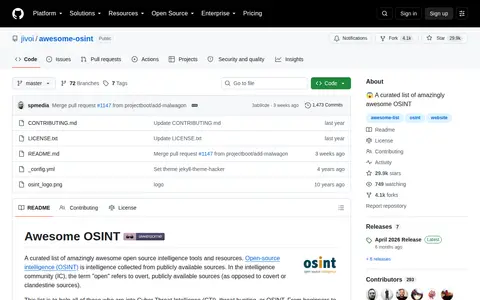
GitHub awesome list collecting OSINT tools, datasets, training links, and research resources.
Threat intelligence search service for checking IPs, domains, hashes, and security indicators.

Fortinet threat intelligence portal for security updates, IP reputation, malware, and web filtering data.

h8mail is a Python tool for email OSINT and password breach hunting. It finds passwords through breach and reconnaissance services or local data, supports premium lookup services, and can search .txt and .gz files locally using multiprocessing.

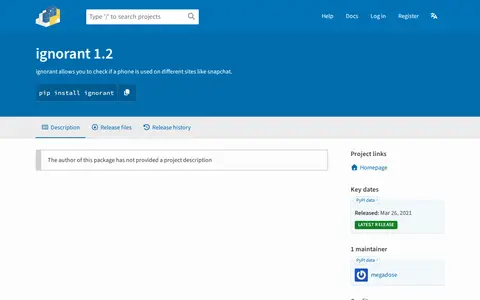
Python OSINT tool that checks whether a phone number is linked to accounts on popular online services.

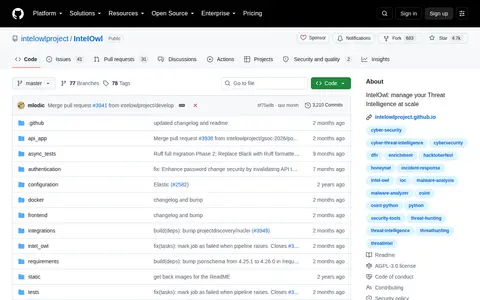
Open source threat intelligence platform for analyzing observables, files, and security indicators.

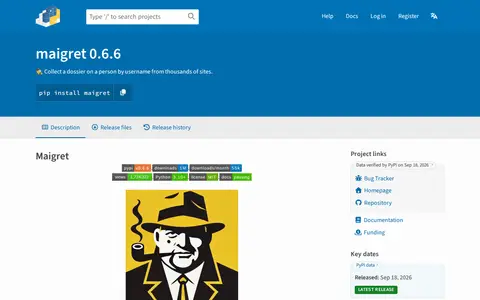
An open source tool for searching usernames across many websites to help with online identity research.
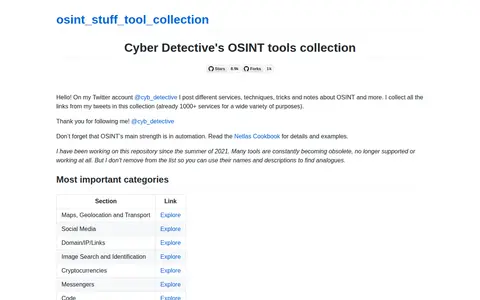
Cipher387's large OSINT tool collection covering social media, domains, people, maps, and more.

Uses AI agents to complete tasks, coordinate tools or automate multi-step workflows.

Start.me toolbox with anti-money-laundering, sanctions, corporate, and financial investigation resources.

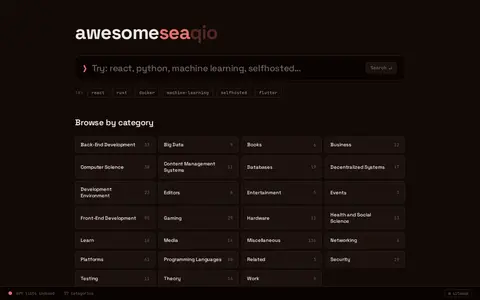
Directory for browsing curated awesome lists, developer resources, and topic collections.

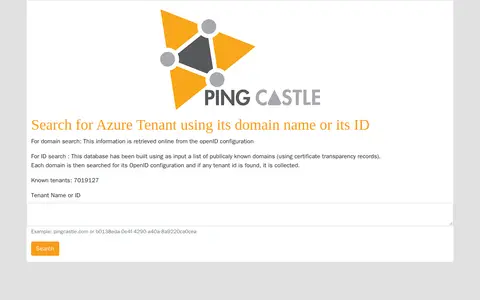
PingCastle Cloud provides a search page for Azure tenants by domain name or tenant ID. Domain searches use online OpenID configuration data, while ID searches rely on a database built from publicly known domains from certificate transparency records, with each domain checked for OpenID configuration and collected tenant IDs. It lists known tenants.