
vert.sh
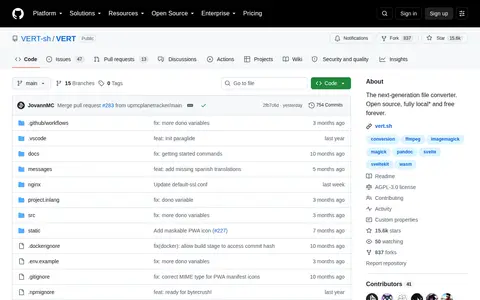
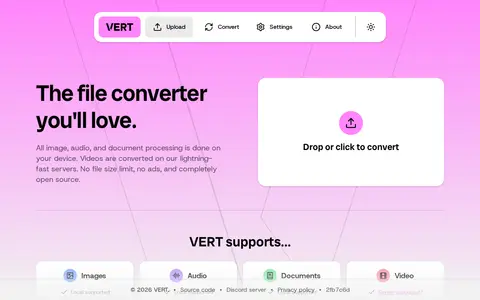
VERT is an open-source file converter that handles image, video, audio and document files. Processing is done on the user's device, and the site states there are no ads, no tracking and no file size limit.
Directory
Published directory entries matching your search.
VERT is an open-source file converter that handles image, video, audio and document files. Processing is done on the user's device, and the site states there are no ads, no tracking and no file size limit.

VERT is a file conversion utility that uses WebAssembly to convert files on the user's device rather than in the cloud. It is built in Svelte and TypeScript, supports images, audio, documents and video, and states support for over 250 file formats. Local in-browser video conversion is supported, with some conversions possibly requiring server-side processing.

Vertex helps edit, convert, generate, search, or organize images and visual assets.

Vertex42 provides professionally designed spreadsheet templates, calculators and calendars for business, home and educational use, including templates for Microsoft Excel, Google Sheets and OpenOffice.org. It also offers Microsoft Word templates and Excel tutorials for beginners.

Gemini Enterprise Agent Platform, formerly known as Vertex AI, is a comprehensive platform for developers to build, scale, govern, and optimize agents. It provides tools and services for agent lifecycle management.
Vertigo reports local, regional, campus or community news in Australia.
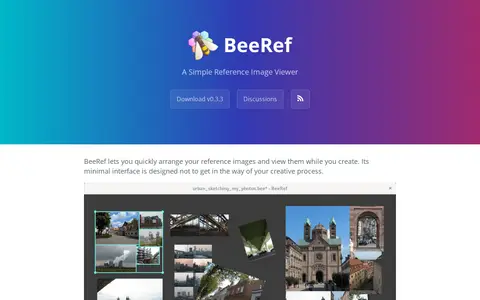
BeeRef is a simple reference image viewer that lets users arrange reference images and view them while creating. Images can be moved, scaled, rotated, cropped and flipped, mass-scaled to the same width, height or size, and mass-arranged vertically or horizontally. Text notes can be added. Images are embedded in the .bee file, a sqlite database.

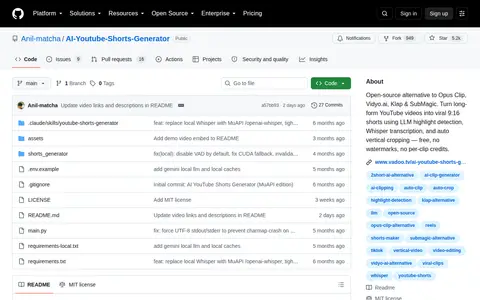
Open-source alternative to Opus Clip, Vidyo.ai, Klap & SubMagic. Turn long-form YouTube videos into viral 9:16 shorts using LLM highlight detection, Whisper transcription, and auto vertical cropping — free, no watermarks, no per-clip credits.

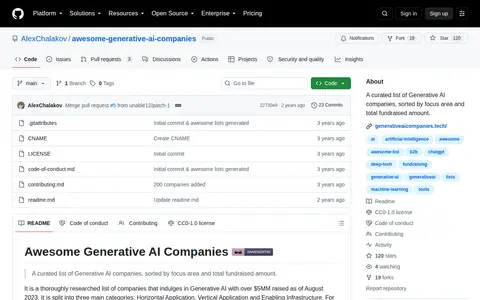
A curated GitHub list of generative AI companies, sorted by focus area and total fundraised amount. It covers companies with over $5MM raised as of August 2023, split into horizontal application, vertical application and enabling infrastructure categories.
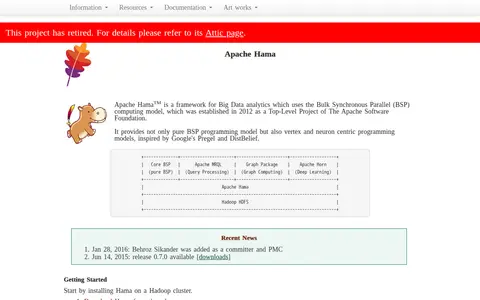
Apache Hama is a retired Apache Software Foundation Top-Level Project established in 2012. It is a framework for Big Data analytics that uses the Bulk Synchronous Parallel (BSP) computing model. It also provides vertex-centric and neuron-centric programming models inspired by Google's Pregel and DistBelief. Its components include core BSP, Apache MRQL for query processing, a graph computing package, and Apache Horn for deep learning, and it integrates with Hadoop HDFS.

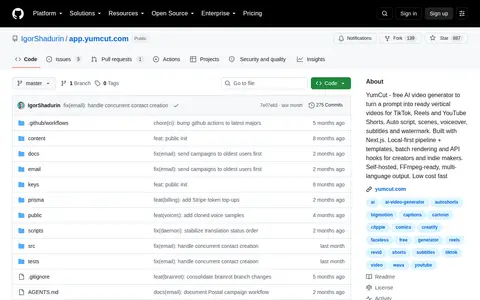
YumCut - free AI video generator to turn a prompt into ready vertical videos for TikTok, Reels and YouTube Shorts. Auto script, scenes, voiceover, subtitles and watermark. Built with Next.js. Local-first pipeline + templates, batch rendering and API hooks for creators and indie makers. Self-hosted, FFmpeg-ready, multi-language output. Low cost fast

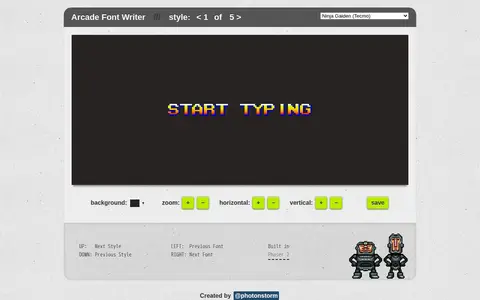
A browser-based tool for creating text in hundreds of fonts taken from classic arcade games. It offers style selection and controls for background, zoom, and horizontal and vertical positioning, with options to save the text.

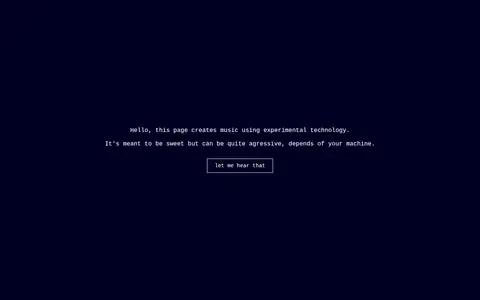
The audio visual generator page creates music using experimental technology. Users click in a rectangle to generate points; the vertical position of each point determines the pitch of its note. The resulting sound can be sweet or aggressive depending on the user's machine.

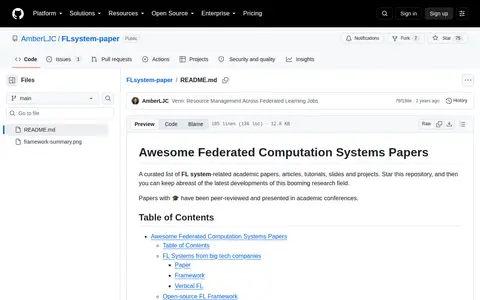
A curated GitHub list of federated learning system papers, articles, tutorials, slides and projects. It groups entries such as systems from big tech companies, vertical FL, open-source frameworks, edge and mobile systems, optimization, security and privacy, applications and surveys. Papers reviewed and presented at academic conferences are marked with a graduation cap symbol.

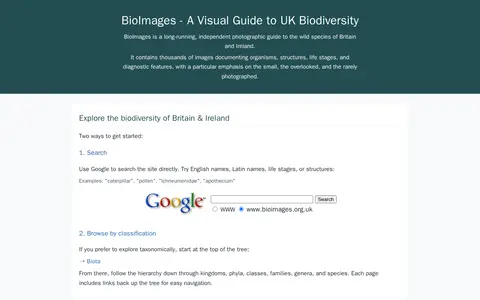
BioImages is a personal photographic guide to the biodiversity of Britain and Ireland. Users can search the site through Google or browse a taxonomic hierarchy from biota down to species. It covers most major organism groups except birds and other vertebrates, with images showing multiple angles, life stages and diagnostic features. Images are hosted by DiscoverLife and are intended as visual support for identification.

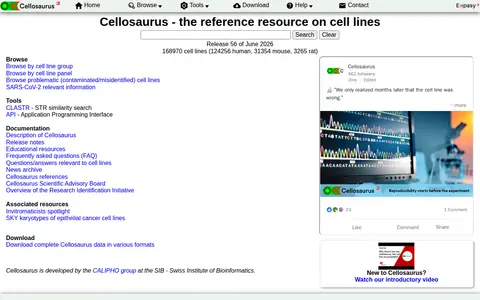
Cellosaurus is a knowledge resource and database that aims to describe cell lines used in biomedical research. Its scope includes immortalized, naturally immortal tissue limited-life distributed cell lines, and vertebrate cell lines with emphasis on human, mouse and rat, plus invertebrate and plant cell lines. Records include names, synonyms, accession numbers, species of origin and comments. It also offers search tools, downloads and documentation.

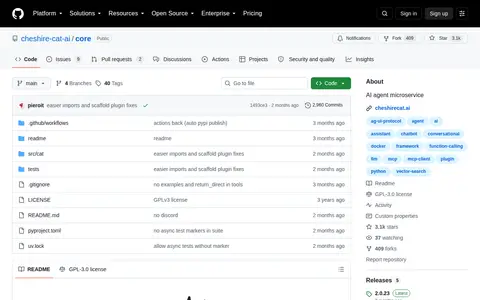
Web framework to create vertical AI agents. FastAPI based, plugin system inspired to WordPress, admin panel, vector DB included.

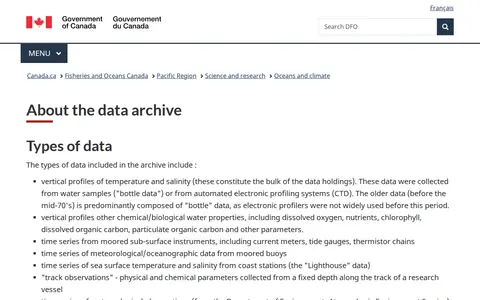
An archive of oceanographic data from Fisheries and Oceans Canada's Pacific Region. It holds vertical profiles of temperature, salinity and other water properties, time series from moored instruments, buoys, coast stations and research vessel track observations. Geographic coverage includes B.C. coastal and shelf waters, the open North Pacific, Beaufort Sea and Arctic Archipelago, with records mainly from the 1930s onward. Data are stored as ASCII files and a searchable header database exists.
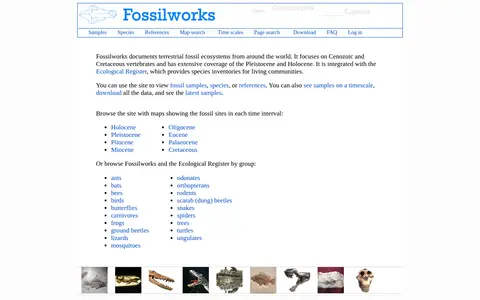
Fossilworks documents terrestrial fossil ecosystems worldwide, focusing on Cenozoic and Cretaceous vertebrates with extensive Pleistocene and Holocene coverage. It is integrated with the Ecological Register, which provides species inventories for living communities. Users can view fossil samples, species or references, see samples on a timescale, and download all data.
Image Pixel Sorter is a browser page tool that sorts the pixels of a dragged-in image vertically by brightness and horizontally by hue. Images must be dragged from the computer into the page, and images from the web must first be moved to the desktop. Small images are recommended because large ones are slow.

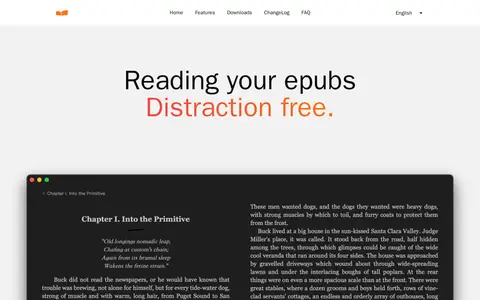
Jane Reader is an epub reader for macOS and Windows with a library for managing ebooks. It offers automatic light/dark mode, six color themes, one- or two-column layouts, built-in fonts, customizable margins, line height and font size, saved reading locations and window sizes, chapter and page numbers, and a vertical mode for Chinese and Japanese. The software is in beta.
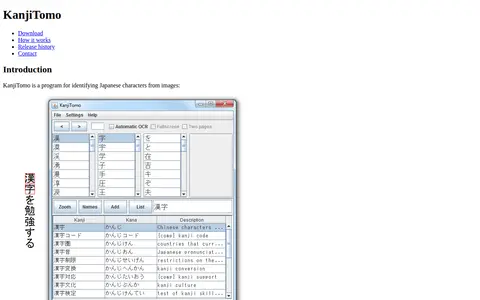
KanjiTomo is an OCR program for identifying Japanese text from images, optimized for kanji recognition. Pointing the mouse at any image on screen performs kanji and dictionary lookup at the same time, and both horizontal and vertical text are supported. Java is required, and it has been tested on Windows 10.

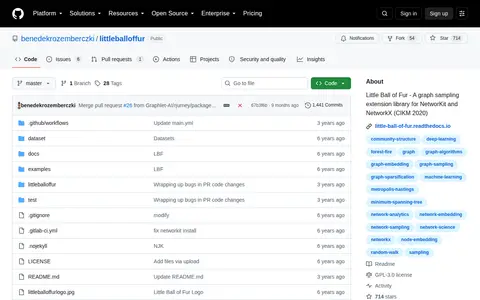
Little Ball of Fur is a graph sampling extension library for Python and a graph sampling extension library for NetworKit and NetworkX. It consists of methods that can sample from graph structured data, covering vertex, edge, and exploration sampling techniques with a unified application public interface.

MangaBerri brings manga discovery and chapter reading together. Users can browse the catalogue by genre, look up a title or author, and explore a series before deciding where to begin. The reader uses a vertical scrolling layout that works on mobile and desktop, and an account can sync a library and reading progress.