the-fork.vercel.app
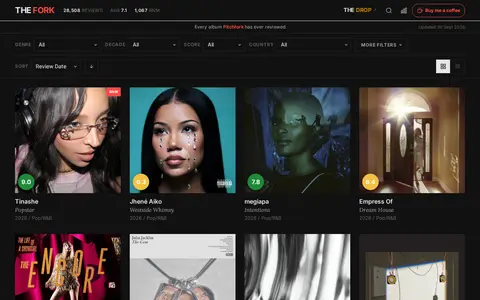
The Fork is an audio or music resource for streaming, discovery, editing, production, or library management.
Directory
Published directory entries matching your search.
The Fork is an audio or music resource for streaming, discovery, editing, production, or library management.

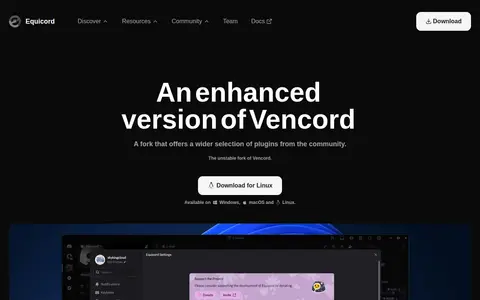
Equicord is a fork of Vencord offering a wider selection of plugins from the community, described as the unstable fork of Vencord. It is available on Windows, macOS and Linux and provides access to third-party plugins alongside those in Vencord.

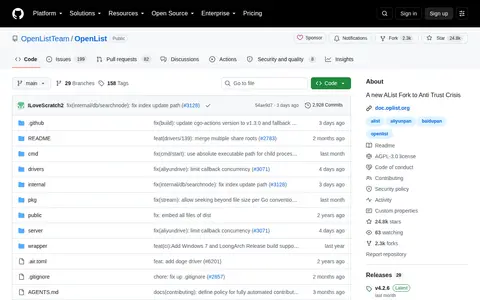
OpenList is a community-driven fork of AList, described as a resilient, long-term governance fork built to defend open source against trust-based attacks. It is maintained by the OpenList Team under the AGPL-3.0 license. The project states that there are currently no paid plans or commercial deployments and that use of existing features does not involve any costs.

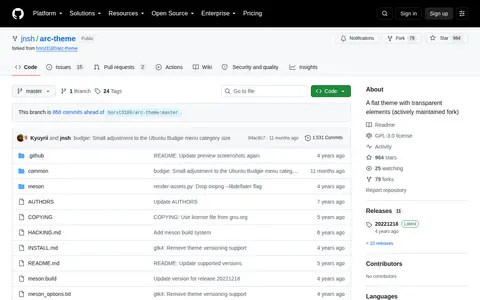
Arc is a flat GTK theme with transparent elements for GTK 2, GTK 3 and GTK 4, plus GNOME Shell, Cinnamon, Unity, Metacity, Xfwm and Plank. It is an actively maintained fork of horst3180's original theme, unmaintained since May 2017, and aims to keep it updated with new toolkit and desktop versions while preserving the original design. It comes in four variants and is distributed under GPL-3.0.

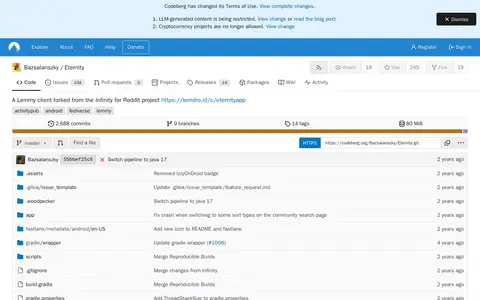
Eternity is a Lemmy client for Android written in Java, forked from the Infinity for Reddit project. The project describes itself as currently in early development, with unfinished features and bugs. Its listed features cover browsing Lemmy feeds and communities, engagement such as voting and commenting, managing multiple accounts and instances, and customization options including themes.

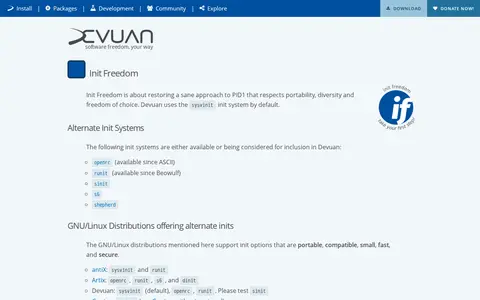
Devuan is a fork of Debian without systemd that uses sysvinit by default. Its Init Freedom page describes restoring a PID1 approach that respects portability, diversity and freedom of choice, and lists alternate init systems and distributions using them. openrc has been available since ASCII and runit since Beowulf; sinit, s6 and shepherd are considered for inclusion.

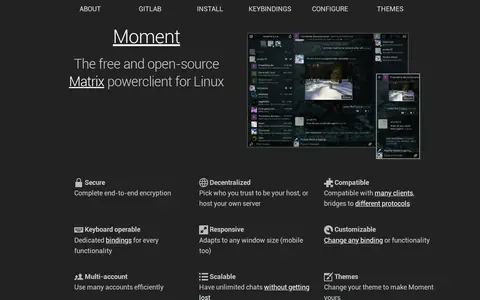
Moment is described as a free and open-source Matrix powerclient for Linux. It is a maintained fork of Mirage and is presented as keyboard operable, with dedicated bindings for every functionality. The page also states it is responsive, compatible with many clients, bridges to different protocols, and supports multiple accounts and themes.

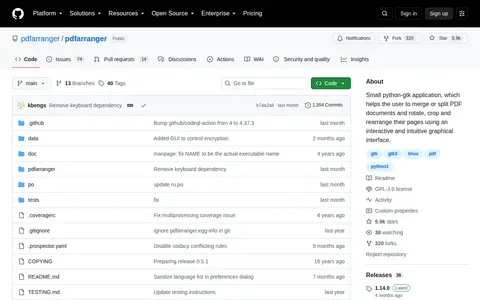
PDF Arranger is a small python-gtk application that merges or splits PDF documents and rotates, crops and rearranges their pages through a graphical interface. It is a front end for pikepdf and a fork of PDF-Shuffler. It supports image file import if img2pdf is installed.

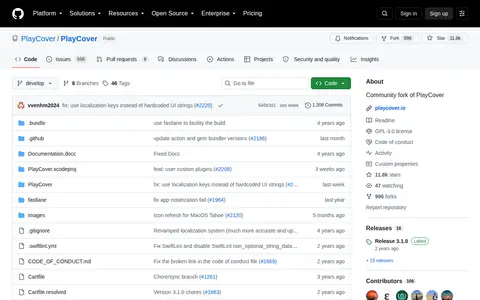
PlayCover is a community fork of PlayCover that runs iOS apps and games on Apple Silicon Macs running macOS 12.0 or newer, with mouse, keyboard and controller support. It wraps applications to imitate an iPad so they run natively, and allows mapping custom touch controls to the keyboard.

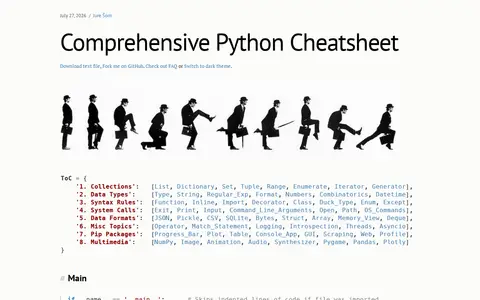
A Python cheat sheet covering collections, data types, syntax rules, system calls, data formats and pip packages. It also lists multimedia topics. The page offers a downloadable text file, a GitHub fork link and a dark theme option.
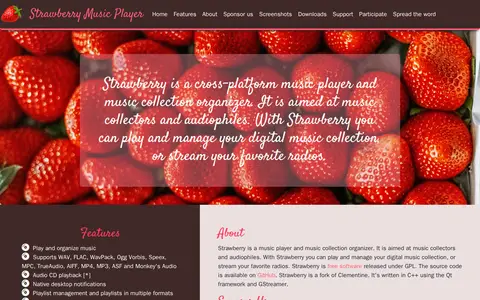
Strawberry is a cross-platform music player and music collection organizer for Linux, macOS and Windows, aimed at music collectors and audiophiles. It lets users play and manage their digital music collection or stream radio stations. The free software is a fork of Clementine, written in C++ with the Qt framework and GStreamer.

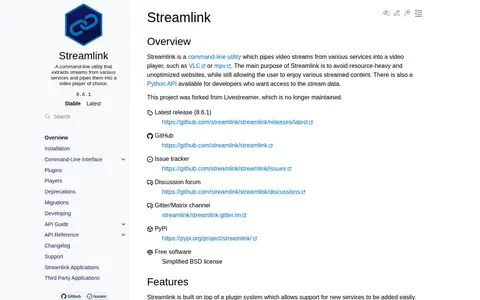
StreamLink is a command-line utility that extracts video streams from various services and pipes them into a video player such as VLC or mpv. It uses a plugin system to support services including Twitch and YouTube, and a Python API is available for developers. The project was forked from Livestreamer, which is no longer maintained.

The University of North Dakota is described as the oldest and largest college in North Dakota. It offers more than 250 accredited on-campus and online degrees, with programs including cyber security, music therapy, air traffic management and business analytics.
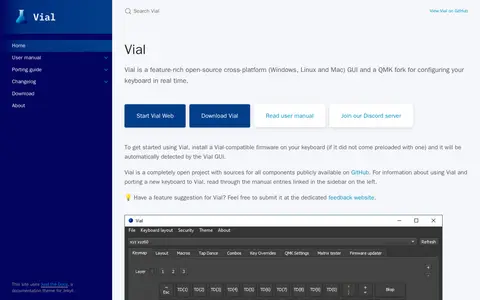
Vial is an open-source cross-platform GUI and a QMK fork for configuring a keyboard in real time, available for Windows, Linux and Mac. It requires a Vial-compatible firmware installed on the keyboard, which the Vial GUI then automatically detects. Sources for all components are publicly available on GitHub.