neal.fun
The Deep Sea is an educational resource for documentaries, courses, books, reference material, or self-learning.
Directory
Published directory entries matching your search.
The Deep Sea is an educational resource for documentaries, courses, books, reference material, or self-learning.

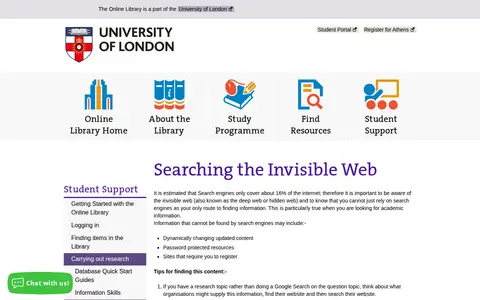
A library support page explaining the invisible web, also called the deep web or hidden web. It states that search engines cover about 16% of the internet and advises against relying on them alone, especially for academic information. It lists content search engines cannot find, such as dynamically changing content, password protected resources and sites requiring registration, and suggests web directories and asking a librarian.

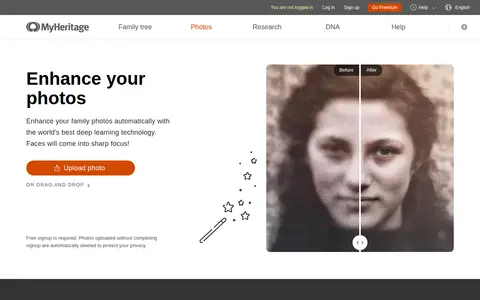
MyHeritage Photo Enhancer uses deep learning technology to enhance photos by increasing the resolution of faces that appear in them. The tool is presented as producing results for historical photos where faces are often small and blurry, and it also works on new color photos.

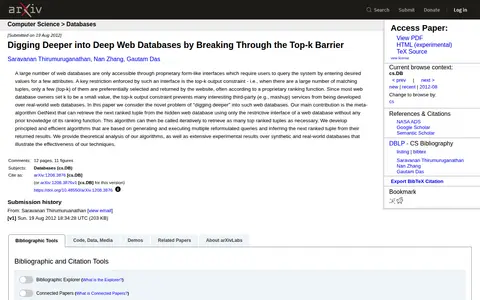
An arXiv paper on digging deeper into hidden web databases limited by the top-k output constraint. It presents the GetNext meta-algorithm, which retrieves the next ranked tuple through a restrictive interface without prior knowledge of the ranking function, and algorithms that generate and execute multiple reformulated queries. Theoretical analysis and experiments over synthetic and real-world databases are reported.
ORDaR is the institutional research data repository for Lorraine's geosciences. Its thematic coverage includes Earth dynamics, Earth chemistry, mineral and energy resources, the resource cycle, deep geological waste disposal, hydromechanics, soil and subsoil environmental management, water, ecotoxicology and biodiversity.
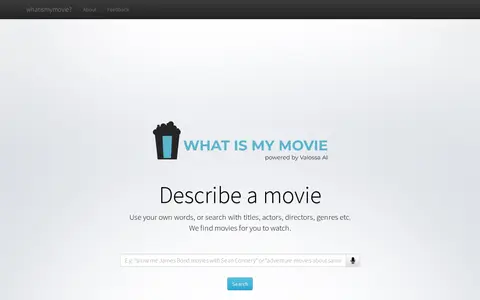
Whatismymovie.com is a descriptive movie search engine created by Valossa, a spin-off company of the University of Oulu, Finland. It lets users describe a film in their own words and matches queries against metadata derived from deeper analysis of video content. The site is presented as a showcase of Valossa's technology, and the demonstration has analysed more than 130,000 movies.