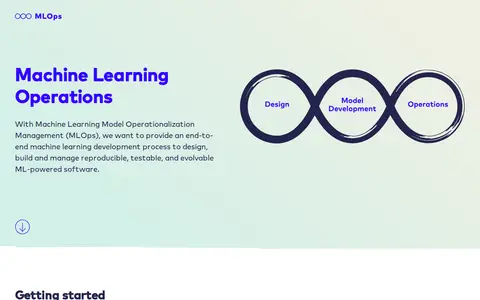
ML-Ops is a site about Machine Learning Operations. It covers motivation for MLOps, designing ML-powered software, the end-to-end ML workflow lifecycle, three levels of ML-based software, MLOps principles, CRISP-ML(Q), the MLOps Stack Canvas and ML model governance. It describes MLOps as aiming to unify the release cycle for machine learning and software.
Directory
Search results
Published directory entries matching your search.
MLOps Community is a global community for machine learning engineers focused on MLOps. It facilitates knowledge sharing, real-world problem solving, networking, and career advancement through in-person meetups and conferences, virtual tech talks, podcasts, workshops, and masterclasses. It reports membership of over 70,000 to 90,000 ML practitioners.
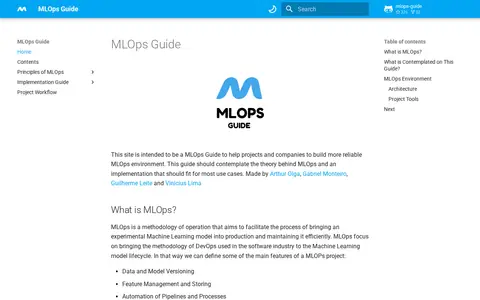
A guide explaining MLOps concepts and how to build an MLOps environment. It covers theory and a tutorial using tools such as DVC, CML, IBM Watson Machine Learning, IBM Watson OpenScale, Terraform and Cookiecutter. The guide is described as modular, allowing tools to be swapped according to project preferences and use cases.
MLOps Now supports deploying, serving, monitoring, or operating AI and machine-learning systems.
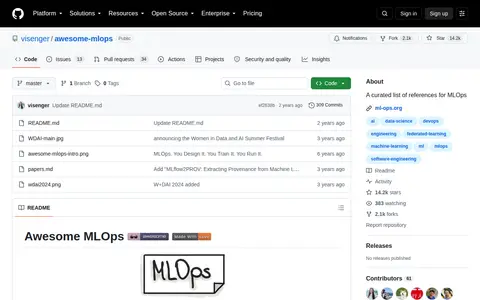
Machine Learning Operations - An awesome list of references for MLOps.
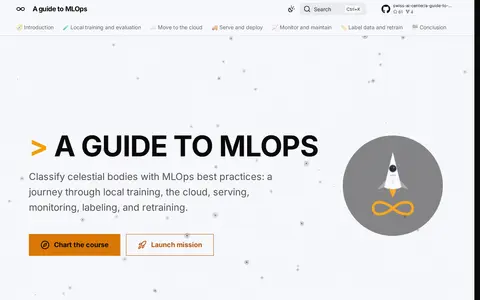
A guide to MLOps is an open-source tutorial from the Swiss AI Center team that walks engineers and small teams from notebook experiments to production. It covers local training and model evaluation, moving the model to the cloud, serving and deploying, monitoring and maintaining, and labeling data and retraining, using tools such as DVC, Git, GitHub Actions, CML, Docker, BentoML, Fluent Bit, Evidently AI, and Label Studio.
A Hugging Face Space that classifies whether given text was written by a human or a language model. Users enter text in an input box and receive a classification result. The Space is shown as sleeping due to inactivity.
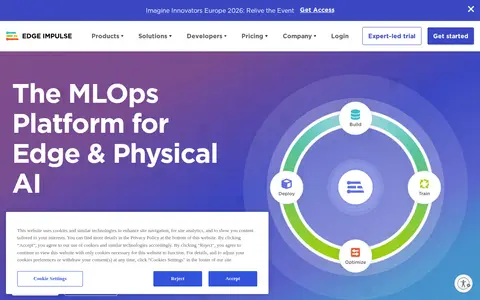
Edge Impulse is an MLOps platform for edge AI and physical AI. It provides native MLOps workflows covering end-to-end pipelines, security, versioning and model monitoring, and is used to develop, deploy and manage AI solutions at scale across the edge hardware ecosystem. A Developer plan is offered at $0 per month.
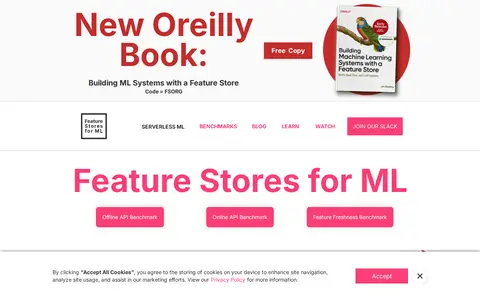
Feature Stores for ML is a global community of data science professionals, researchers, and engineers focused on feature stores for machine learning pipelines. It creates educational content about feature stores and the surrounding data and AI ecosystem, hosts monthly industry meetups, and provides resources including blog posts, videos, benchmarks, and an MLOps dictionary.
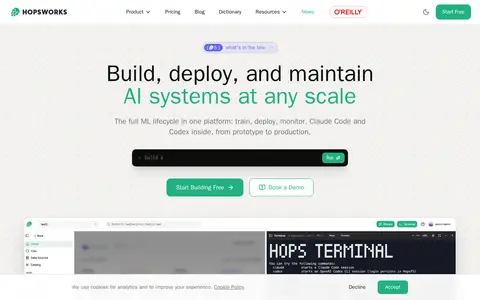
Hopsworks is a platform for building, deploying, and scaling production machine learning systems. It combines a feature store with MLOps tooling, using dual online and offline storage to manage, reuse, and serve features. The platform covers the ML lifecycle: train, deploy, and monitor. An O'Reilly book covers building batch, real-time, and LLM systems with feature stores.
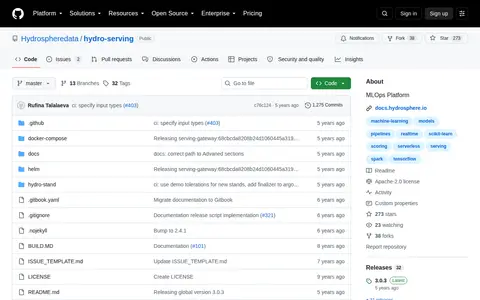
Hydrosphere is a GitHub repository for an MLOps platform. The repository provides documentation for getting started with the platform, including installation instructions and guidance for deployment using Docker and Kubernetes.
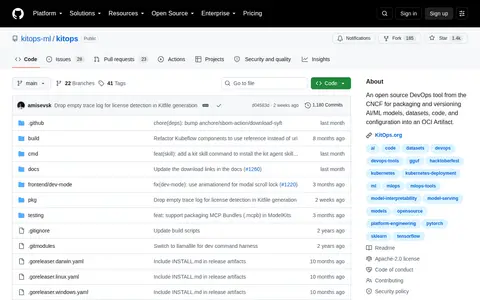
Open source MLOps project that eases model handoffs between data scientist and DevOps.
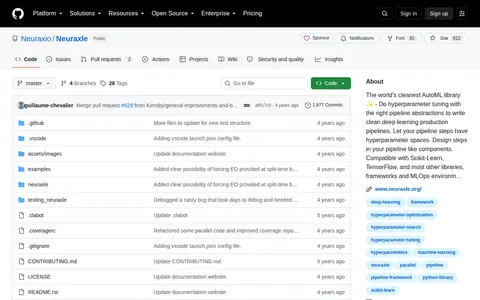
Neuraxle is an AutoML library that supports hyperparameter tuning via pipeline abstractions to build clean deep learning production pipelines. Pipeline steps can have associated hyperparameter spaces, and the library is compatible with Scikit-Learn, TensorFlow, and most other libraries, frameworks, and MLOps environments.
Simplifies and accelerates MLOps by bridging the gap between ML models and edge hardware.
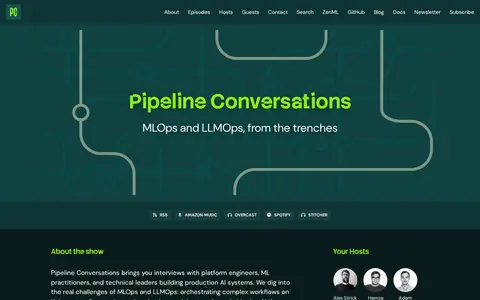
Pipeline Conversations is a podcast from ZenML featuring interviews with platform engineers, ML practitioners and technical leaders building production AI systems. Episodes cover MLOps and LLMOps topics including Kubernetes workflows, model fine-tuning and evaluation, LLM security, cost optimization, prompt engineering and agents in production.
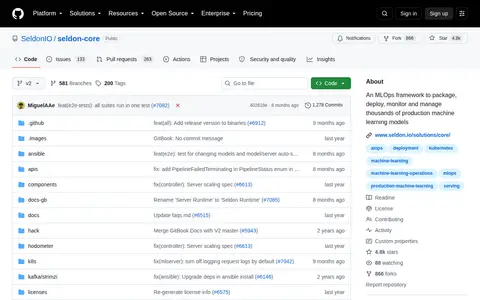
MLOps framework to package, deploy, monitor and manage thousands of production machine learning models.
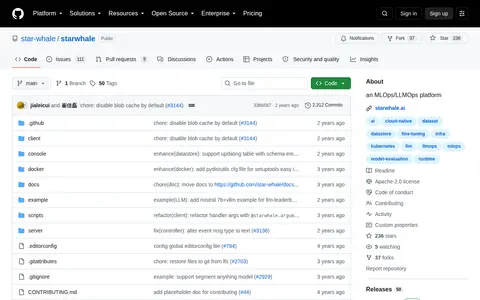
An MLOps/LLMOps platform for model building, evaluation, and fine-tuning.
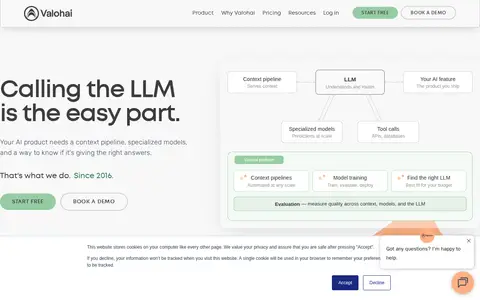
Valohai is an MLOps platform for AI products that combine LLMs and specialized models. It provides experiment tracking, data versioning, hyperparameter optimization, pipeline automation and compute orchestration, and runs on existing AWS, Azure, GCP or on-prem infrastructure. Pricing is per user license across Pro and Enterprise tiers.
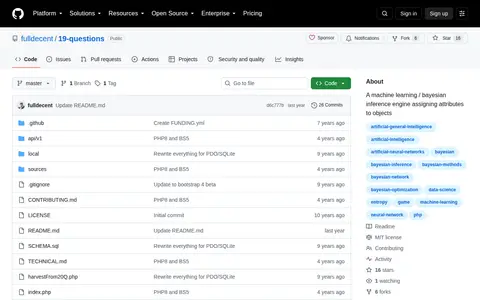
19 Questions is an open source machine learning and Bayesian inference engine designed to assign attributes to objects. Its source code is hosted in a public GitHub repository under the fulldecent organization, and contributions to the project are accepted from the public.
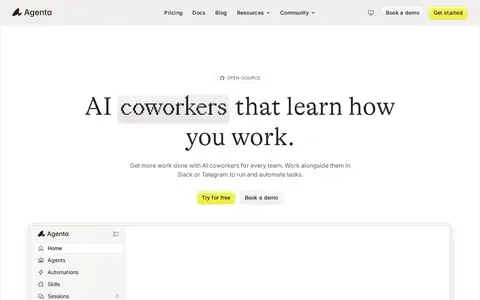
Agenta is an open-source workspace for AI agents. Agents are built through chat, improved with feedback, and shared with a team, either self-hosted or in the cloud. Integrations and messaging in Slack or Telegram are described on the site.

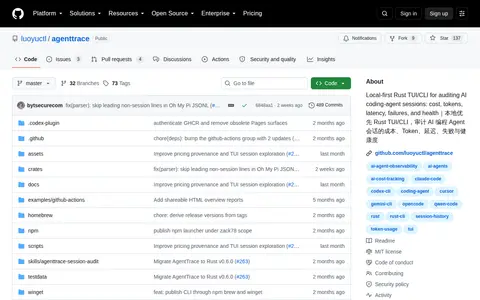
agenttrace is a local-first terminal TUI and report generator for AI coding-agent session history. It reads logs from several coding agents and produces reports on cost, tokens, time, and slow-run diagnosis. Prompts, code, and logs stay on the local machine.
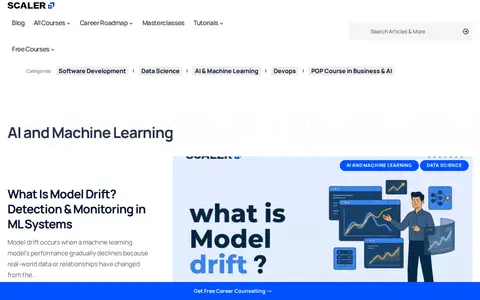
This is a Scaler blog category page collecting articles on artificial intelligence and machine learning. Posts listed include MLOps projects, becoming an AI research scientist, model drift detection and monitoring, and retrieval-augmented generation evaluation metrics. The page also links to categories such as software development and data science, and offers career counselling.
A deprecated GitHub repository described as an AI Gateway, a core infrastructure stack for building production-ready AI applications. It provides a universal API for inferencing over 100 LLMs and lists supported providers and endpoints such as OpenAI and Groq.
Open-source project that supports deploying, serving, monitoring, or operating AI and machine-learning systems.