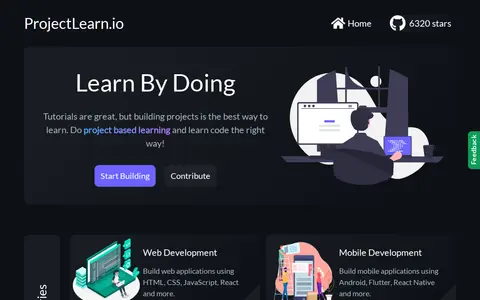

A project-based learning resource for coding across web development, mobile development, game development, machine learning and artificial intelligence. It presents the approach of learning by doing and building projects rather than only following tutorials.
Directory
Search results
Published directory entries matching your search.
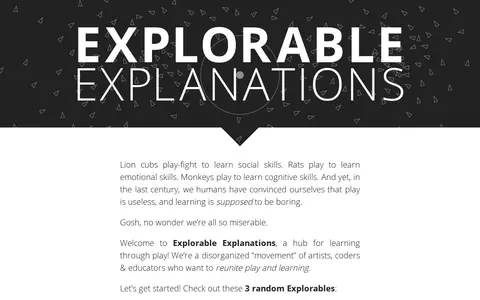
Explorabl.es hosts Explorable Explanations, a community-driven hub focused on play-based interactive learning. Run by a collective of artists, coders and educators, the platform offers interactive educational content across multiple subjects, lets users make their own explorable explanations, and provides public access to its open sauce code. The project is framed as an ongoing experiment to reunite play and learning.
MEKA is an open source implementation of methods for multi-label learning and evaluation, based on the WEKA Machine Learning Toolkit. It includes dozens of multi-label methods from the scientific literature and a wrapper to the MULAN framework. The project is distributed via SourceForge, with code hosted on GitHub.
Georgetown University is a higher education institution based in Washington, DC, founded in the late 1700s. It offers a wide range of degree and certificate programs across 11 schools, with an educational model that combines academic learning and personal development centered on justice-oriented values. The university operates multiple DC campuses, including the historic Hilltop Campus and the Capitol Campus located near national decision-making centers. It also conducts research and community-based projects addressing local and global challenges.
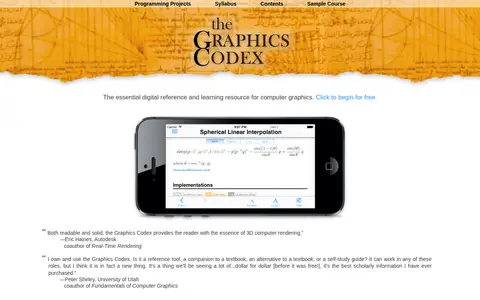
The Graphics Codex is a digital reference and learning resource for 3D computer graphics by Morgan McGuire. It contains 400 cross-referenced equation and diagram entries and 14 chapters on physically-based shading and rendering, with programming projects and citations to primary sources. It is a purchased app with monthly free updates.
Calculus Made Easy is an HTML edition of Silvanus P. Thompson's book on calculus, originally published in 1910. The site offers a table of contents covering differentiation and integration topics, and notes the text is based on the Project Gutenberg PDF version converted to HTML by hand.
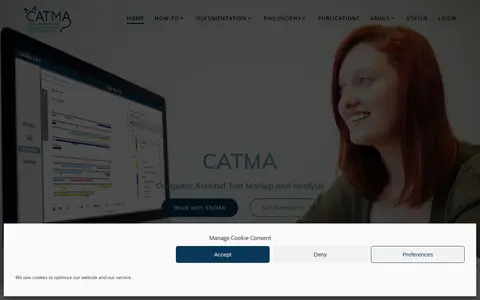
CATMA (Computer Assisted Text Markup and Analysis) is a free, browser-based tool for annotating, analyzing, interpreting and visualizing text. It supports collaborative project work, custom tagset creation, and offers TEI-XML export, Git access, a GitMA Python package, and a JSON API for data access. Users can generate interactive visualizations including word clouds and distribution graphs.
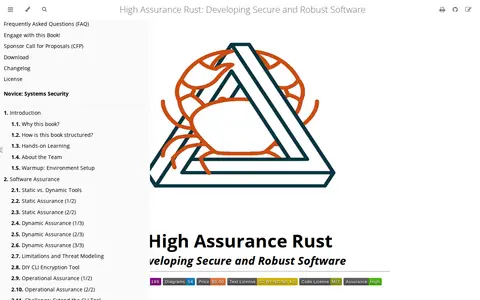
High Assurance Rust is a book about developing secure and robust software. It presents a project-based approach to systems programming and low-level software security, teaching Rust by re-implementing a major dynamic collection from its standard library. It discusses using open-source software assurance tools, including rustc, libFuzzer, rr, qemu, differential fuzzing and deductive verification.
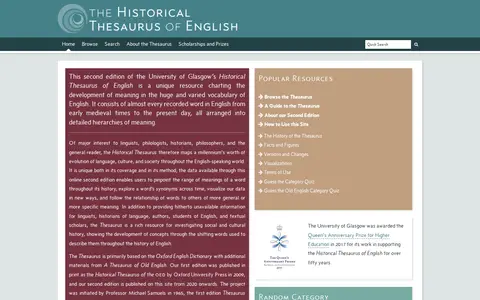
The Historical Thesaurus of English is a University of Glasgow resource that documents the evolution of English word meanings from early medieval times to the present. It organizes nearly all recorded English words into hierarchical meaning structures, based primarily on the Oxford English Dictionary and A Thesaurus of Old English. The first print edition was published in 2009, and the online second edition has been released on the project site from 2020 onwards. It is intended for use by linguists, historians, and students of English.
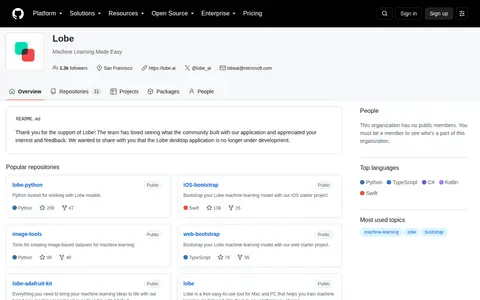
Lobe is a free tool for Mac and PC that helps users train machine learning models and ship them to any platform. The GitHub organization hosts starter projects for iOS and web, a Python toolset for working with Lobe models, and tools for creating image-based datasets. The team states the Lobe desktop application is no longer under development.
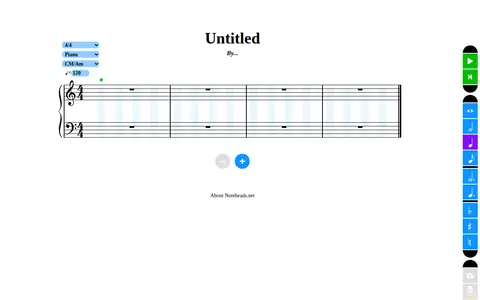
Noteheads is a free browser-based tool for composing and sequencing music, aimed at kids and beginners, that creates printable sheet music and scores. It supports note types, time signatures, keys and several instruments, and offers save, MIDI download and print options. The creator describes it as a hobby project.
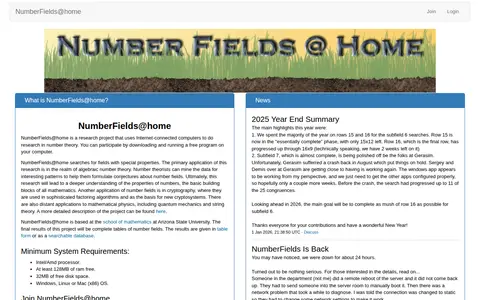
NumberFields@home is a research project that uses Internet-connected computers to do research in number theory, with participants downloading and running a free program. It searches for fields with special properties, with the primary application in algebraic number theory. It is based at the school of mathematics at Arizona State University and uses BOINC.
Apache OpenNLP is a machine learning based toolkit for the processing of natural language text. It supports tasks such as sentence segmentation, tokenization, lemmatization, part-of-speech tagging, named entity extraction, chunking, parsing, language detection and coreference resolution. The project is developed by volunteers and welcomes contributions, from small documentation fixes to new components.
A hands-on, project-based introduction to programming with Python by Eric Matthes, published in its third edition in December 2022. The book covers basic concepts such as variables, lists, classes, and loops, and guides readers through projects including a Space Invaders-inspired arcade game, data visualizations, and a simple web application.
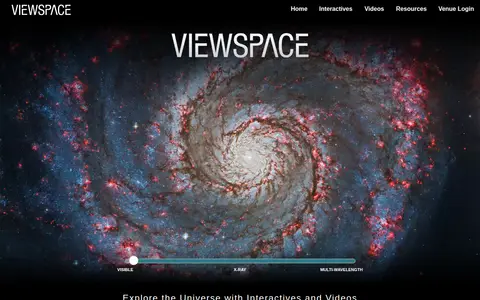
ViewSpace is a free, web-based collection of astronomy and Earth science videos and interactives. It offers image tours, image sliders, and a video library that let users explore the planet, solar system, galaxy, and universe. The project is developed by the Space Telescope Science Institute with NASA support and has been exhibited in museums, planetariums, and science centers since 2000.
WebWhiteboard is a web-based whiteboard tool for online collaboration. It supports brainstorming, idea sharing and project management, and does not require user sign-up to access. The tool is free to use.
Jinming Yang's GitHub profile describes him as a frontend engineer and AI-first builder based in Shenzhen, China. It links to current projects including ai-workflow, Vsync, UnMarket and aide, and lists legacy projects such as dom-to-code, gpt-runner and ios-scriptable-tsx.
The Data Visualisation Catalogue is a project by Severino Ribecca that provides a non-code-based library of information visualization types. The site serves as a learning and inspiration resource, offering a searchable guide to chart methods such as bar charts, heatmaps and treemaps. Example images mostly use dummy data.
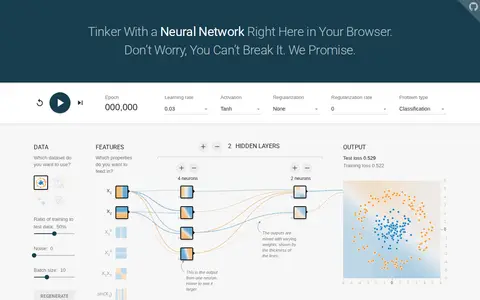
A Neural Network Playground is a browser-based educational visualization created by Daniel Smilkov and Shan Carter for experimenting with a real neural network. Users adjust controls to explore how a network learns from data. The project is open sourced on GitHub under the Apache License so its features can be tailored to a topic or lesson.
Deraya University is an institution in Minya, Egypt, with four colleges: Pharmacy, Physical Therapy, Dentistry and Business. The site describes practice-based learning through labs, clinics and field projects, international exchanges and visiting faculty, and clinics and medical caravans serving Minya and neighbouring governorates.
FoLiA is an XML-based format for linguistic annotation intended for representing and exchanging written language resources such as corpora. It aims to accommodate many annotation types through a generalized paradigm without committing to a particular label set, language or linguistic theory. The project includes documentation, a RelaxNG schema and software libraries.
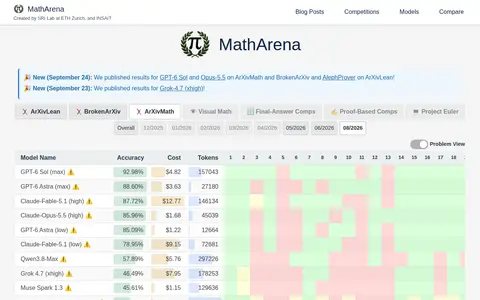
MathArena evaluates large language models on uncontaminated math benchmarks. It presents model analysis across competitions such as ArXivLean, BrokenArXiv, ArXivMath, Visual Math, Final-Answer Comps, Proof-Based Comps and Project Euler. A competition is selected to load tables and a leaderboard, and clicking a cell shows the raw model output.
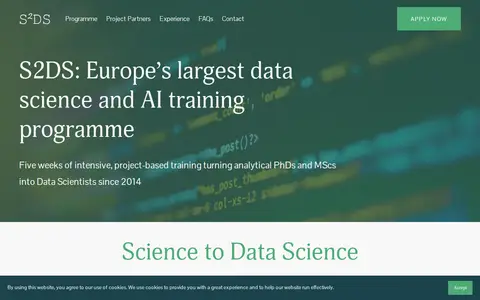
S2DS (Science to Data Science) is a data science bootcamp that offers intensive project-based training to help academics transition into data science roles. It is Europe's largest data science and AI training programme, providing real business experience, mentorship, and agile management skills.
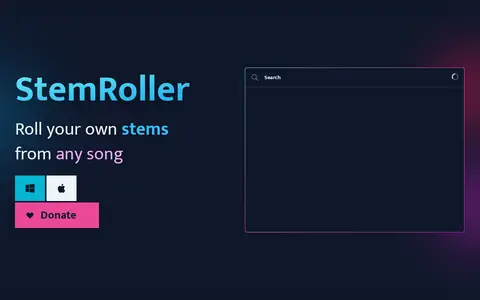
StemRoller is an open-source application that uses AI and machine learning to isolate instruments and vocals from songs. After a user searches for a song title, it finds the song online and splits it into four stems: vocals, drums, bass and everything else, also creating an instrumental track of the non-vocal stems. It is based on Facebook's Demucs research project.