The MCHF/MCDHF Database is a NIST collection of transition data from relativistic theories computed by different computational methods. The Landé gJ factor is provided for a few collections. Data is accessed by selecting an element from the periodic table, then a spectrum, a reference number, and a property. Atomic structure codes used in the calculations, including HFFortran95, ATSP, ATSP2K and GRASP2K, are available for download.
Directory
Search results
Published directory entries matching your search.
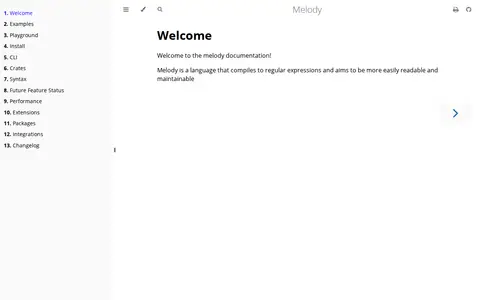
Melody helps developers write, search, review, test, or manage code and projects.
Method helps developers write, search, review, test, or manage code and projects.
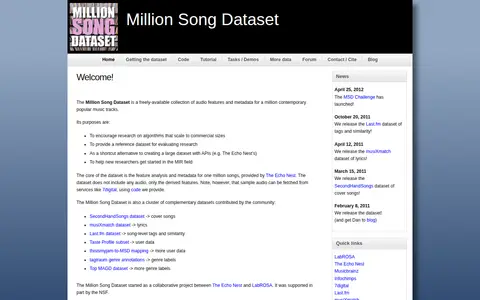
The Million Song Dataset is a freely available collection of audio features and metadata for one million contemporary popular music tracks, provided by The Echo Nest. It aims to support research on algorithms at commercial scale and provide a reference dataset for evaluation. It contains derived features, not audio, though sample audio can be fetched via provided code.
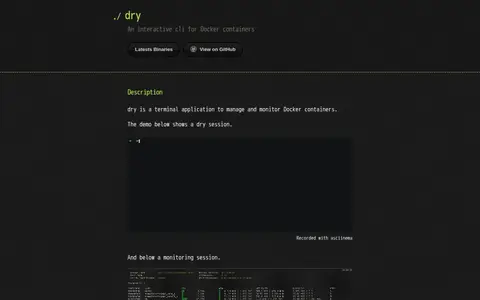
moncho helps developers write, search, review, test, or manage code and projects.
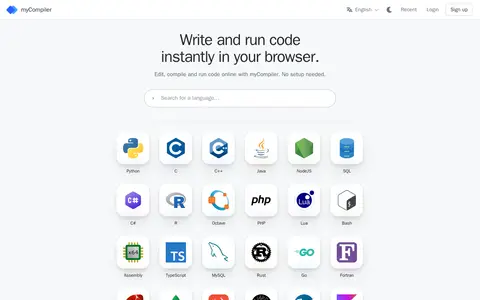
myCompiler helps developers write, search, review, test, or manage code and projects.
City of Houston open data site offering datasets such as building code enforcement violations, payroll and food service facility inspections. It aims to encourage civic engagement, improve transparency and facilitate access to public information.
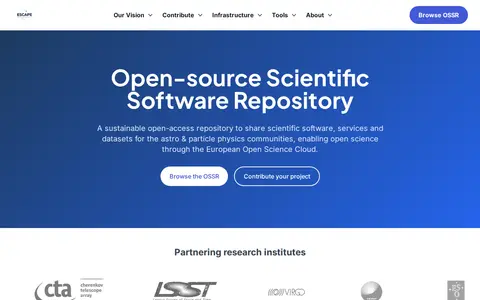
The ESCAPE Open-source Scientific Software Repository is a curated Zenodo community for sharing scientific software, services and datasets for astro-particle and particle physics communities. Submissions are reviewed for metadata, licensing and documentation, and hosted on Zenodo with persistent DOIs. A Python library supports CodeMeta metadata generation, validation and publishing automation.
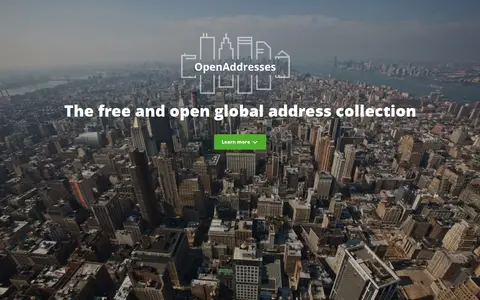
OpenAddresses is a free and open global collection of address data. It combines street names, house numbers and postal codes with geographic coordinates to connect digital to physical places. The data can be parsed and imported into a database, placed on a map, or used for geocoding, and is openly licensed.
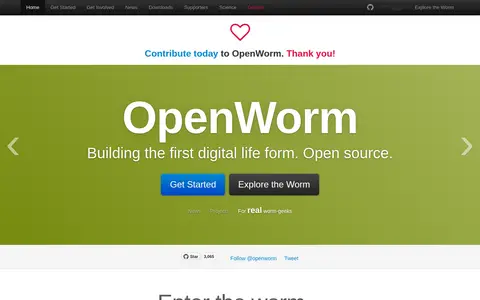
OpenWorm is an open source project that aims to create a virtual C. elegans nematode in a computer. Its sub-projects include a worm body simulator with physics of muscles, soft tissues and fluids, WormSim for interacting with the worm in a browser, DevoWorm for developmental processes, a 3D Browser, the NeuroML Connectome, and Geppetto. Code and models are released under the MIT licence.
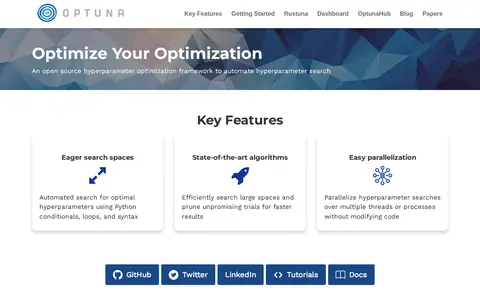
Optuna is an open source automatic hyperparameter optimization software framework designed for machine learning. It provides an imperative, define-by-run style user API with eager search spaces, algorithms that prune unpromising trials, and parallelization of searches over multiple threads or processes without modifying code. It is framework agnostic and can be installed with pip on Python 3.10 or newer.
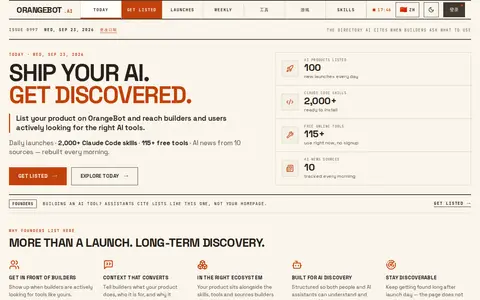
OrangeBot.AI is a curated directory referenced by AI when builders seek tool recommendations. It tracks over 2,000 Claude Code skills, offers free in-browser development tools, and publishes a daily brief covering updates from Hacker News, GitHub Trending, Product Hunt, Hugging Face, Techmeme, and App Store rankings.
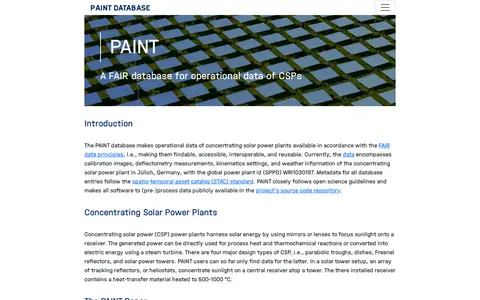
PAINT is a database making operational data of concentrating solar power plants available under FAIR data principles: findable, accessible, interoperable, and reusable. Its current data covers calibration images, deflectometry measurements, kinematics settings, and weather information from the solar tower plant in Jülich, Germany. Metadata follows the STAC standard, and software for data processing is publicly available in the project's source code repository.
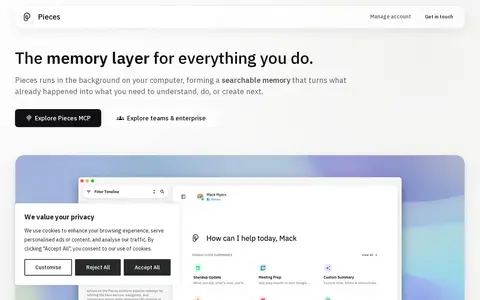
Pieces is a memory layer that runs in the background on a computer, forming a searchable record of work from apps the user already uses. It captures activity chronologically so users can search, filter and revisit moments, and carry context into AI tools. Memories are saved on-device by default, and capture from copy and paste is opt-in.
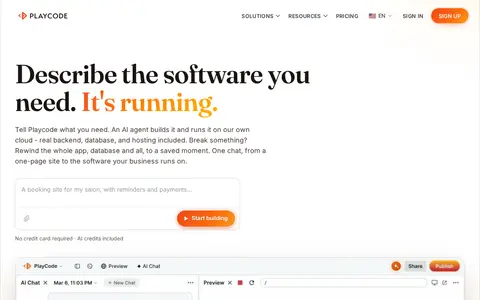
PlayCode helps developers write, search, review, test, or manage code and projects.
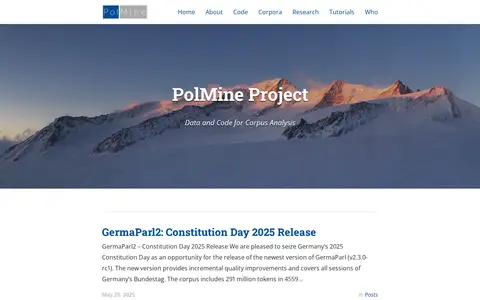
PolMine is a project providing data and code for corpus analysis. It publishes releases of the GermaParl corpus of plenary protocols of the German Bundestag, including a version covering all sessions from 1949 to 2021 in annotated form. Post updates describe incremental quality improvements to the corpus and look ahead to further work.
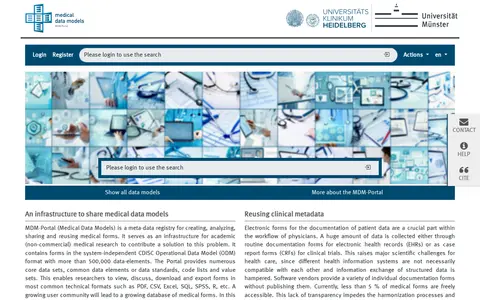
The MDM-Portal is a meta-data registry for creating, analyzing, sharing and reusing medical forms. It serves as infrastructure for academic non-commercial medical research and provides core data sets, common data elements, data standards, code lists and value sets. Researchers can view, discuss, download and export forms in formats including PDF, CSV, Excel, SQL, SPSS and R.
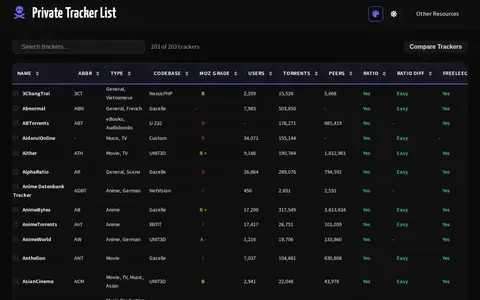
A spreadsheet page comparing private trackers, with columns for name, abbreviation, type, codebase, grade, users, torrents, peers, ratios, freeleech, points, hit-and-run rules, birthdays, and join dates. It also lists trackers from Jackett that have not yet been added.
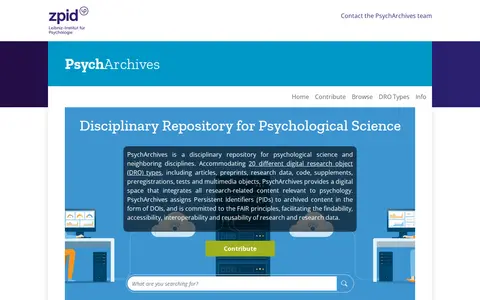
PsychArchives is a disciplinary repository for psychological science and neighboring disciplines. It accommodates 20 digital research object types, including articles, preprints, research data, code, supplements, preregistrations, tests and multimedia objects, and assigns DOIs to archived content.
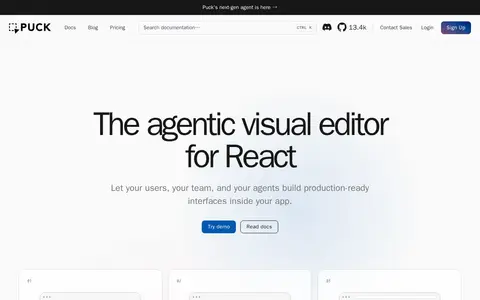
Puck helps developers write, search, review, test, or manage code and projects.
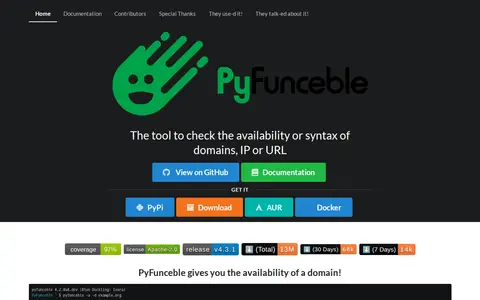
Pyfunceble helps developers write, search, review, test, or manage code and projects.
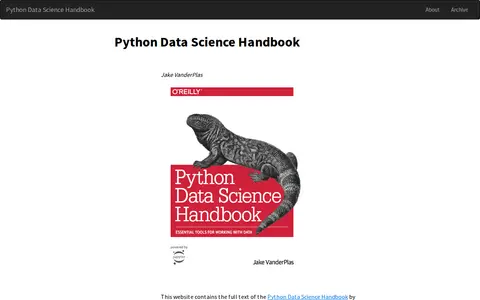
The Python Data Science Handbook by Jake VanderPlas is published as a website containing the full text, organized into chapters on IPython, NumPy, Pandas, Matplotlib and machine learning. The text is released under the CC-BY-NC-ND license and the code under the MIT license; the content is available on GitHub as Jupyter notebooks.
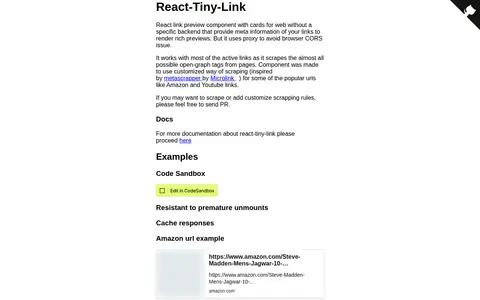
React Tiny Link helps developers write, search, review, test, or manage code and projects.
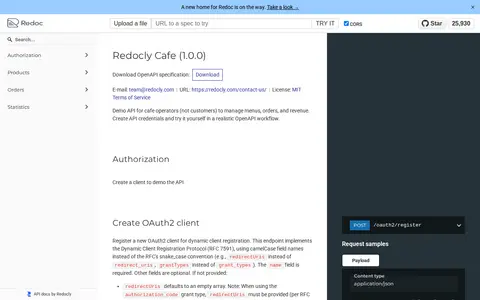
ReDoc helps developers write, search, review, test, or manage code and projects.